
Are there cost differences between low pressure and steam roof cleaning?
Yes. Low pressure roof cleaning is generally less expensive because it uses less energy and simpler equipment, while steam cleaning typically costs more due to specialist machinery, heating and longer preparation; the final price depends on the roof’s size, condition, access requirements and cleaning objective.
Low pressure roof cleaning is usually the lower-cost option, while steam roof cleaning generally carries a higher price. The difference arises from the equipment, energy, preparation time and level of control required. However, the cheapest method is not automatically the most suitable. The final cost should reflect the roof material, contamination, access, building use and required result rather than the cleaning system alone.
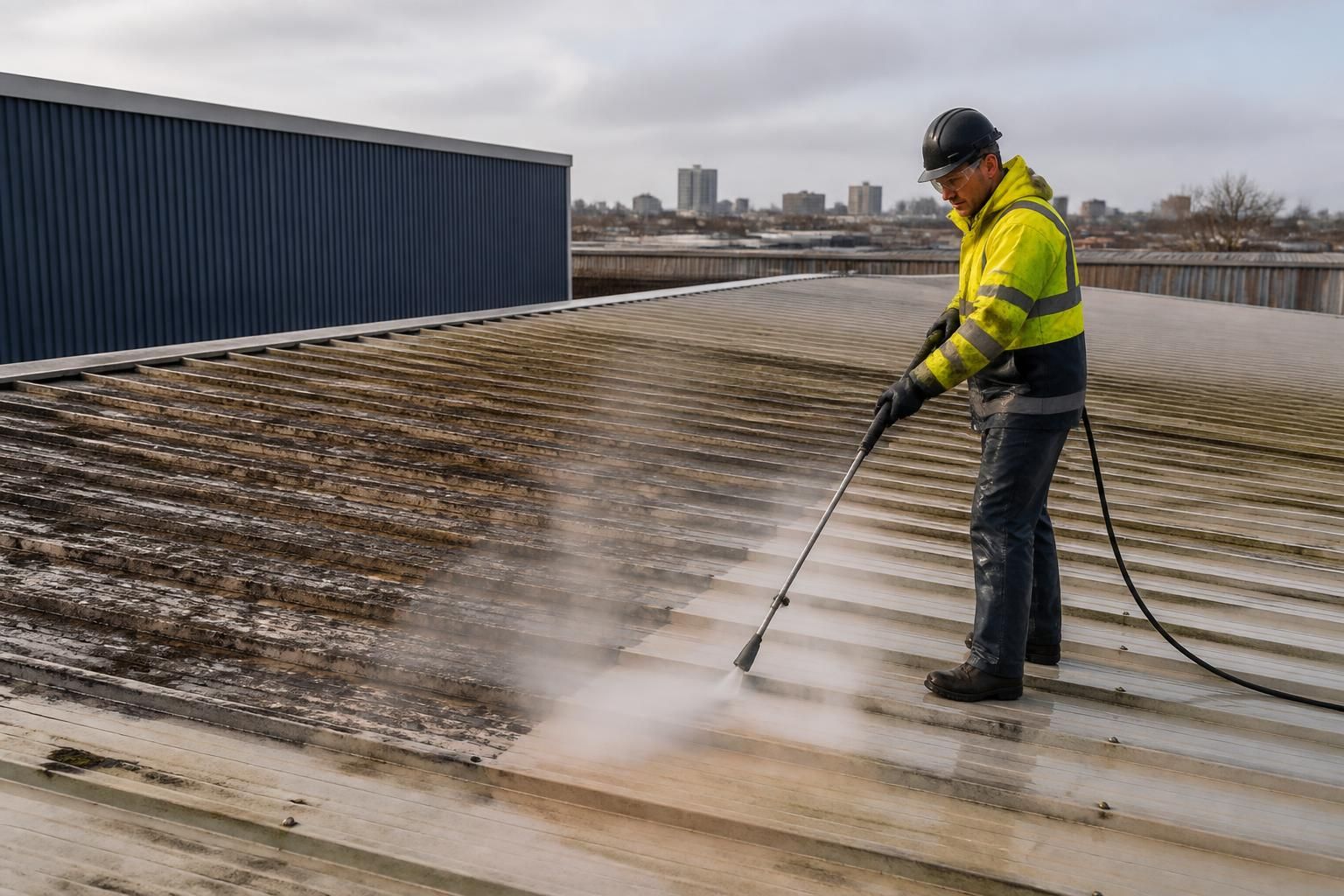
Low pressure cleaning normally uses water delivered at controlled pressure, often alongside a suitable cleaning treatment. It requires less energy than steam equipment and can usually be completed with comparatively straightforward machinery. This tends to make it more economical for larger roof areas where the main requirement is to remove moss, algae, dirt and general organic staining without applying the force associated with high pressure washing.
Low pressure cleaning can still involve substantial preparation. Technicians may need to protect roof fixtures, isolate sensitive areas, manage plant or equipment near the building and collect or control contaminated run-off. If heavy growth has developed, additional treatment or follow-up work may be necessary. These factors can affect the overall price even when the cleaning method itself is relatively economical.
Steam cleaning generally costs more because the water must be heated and the equipment is more specialised. Set-up, fuel or electricity use, temperature control and production of steam can increase the time and resources required for the work. Steam cleaning may also need a more carefully planned approach around roof membranes, sealants, vents, rooflights, solar equipment and other heat-sensitive components.
The higher initial cost of steam can be justified where heated cleaning is particularly effective against stubborn deposits, biological growth, grease or ingrained soiling. It may reduce the need for aggressive chemicals or repeated mechanical treatment in some situations. Whether this creates a saving overall depends on the roof condition and the cleaning objective. Steam is not automatically the best choice for every roof, and heat must be assessed against the manufacturer’s guidance and the condition of the surface.
Several project factors can have a greater effect on the quotation than the choice between low pressure and steam:
- Roof size and layout: Large, open areas may be more efficient to clean than smaller roofs with many sections, plant items or changes in level.
- Access: Restricted access, fragile roof areas, surrounding structures and the need for powered access equipment can increase preparation and working time.
- Roof condition: Thick moss, lichen, embedded dirt, failed coatings and neglected drainage systems generally require more labour than light surface contamination.
- Roof construction: Metal cladding, coated sheets, concrete tiles, slate, membrane systems and other materials have different cleaning tolerances and preparation requirements.
- Health and safety controls: Commercial roof work may require detailed risk assessments, method statements, edge protection, exclusion zones and coordination with occupants or other contractors.
- Run-off management: Water and cleaning residues may need to be contained, filtered or directed safely so that drains, landscaping and neighbouring property are protected.
- Working hours: Cleaning around trading hours, traffic, deliveries or site operations can add planning and labour requirements.
- Aftercare: Biocidal treatment, inspection, minor reporting or scheduled maintenance may be included separately from the initial cleaning.
When comparing quotations, check whether both methods include the same scope of work. A lower price may exclude access equipment, preparation, treatment, run-off control, waste handling or post-cleaning inspection. It is also important to confirm whether the quotation covers the complete roof or only visibly accessible areas, and whether follow-up treatment is recommended rather than assumed to be included.
For a commercial or industrial property, the most useful comparison is therefore the total cost of achieving and maintaining the required roof condition. Low pressure may offer the better value where the roof is suitable and the contamination can be removed without heat. Steam may be more cost-effective where its cleaning action reduces labour, chemical use or the likelihood of repeat work. A professional assessment should establish the safest effective method before a price is finalised.
The roof survey should consider the covering, coatings, age, previous repairs, drainage, access and contamination. It should also identify areas where low pressure or steam cleaning is unsuitable or needs to be carried out with additional controls. Once these points are understood, the quotation can explain not only the price difference but also what each method is expected to achieve and why it has been selected.
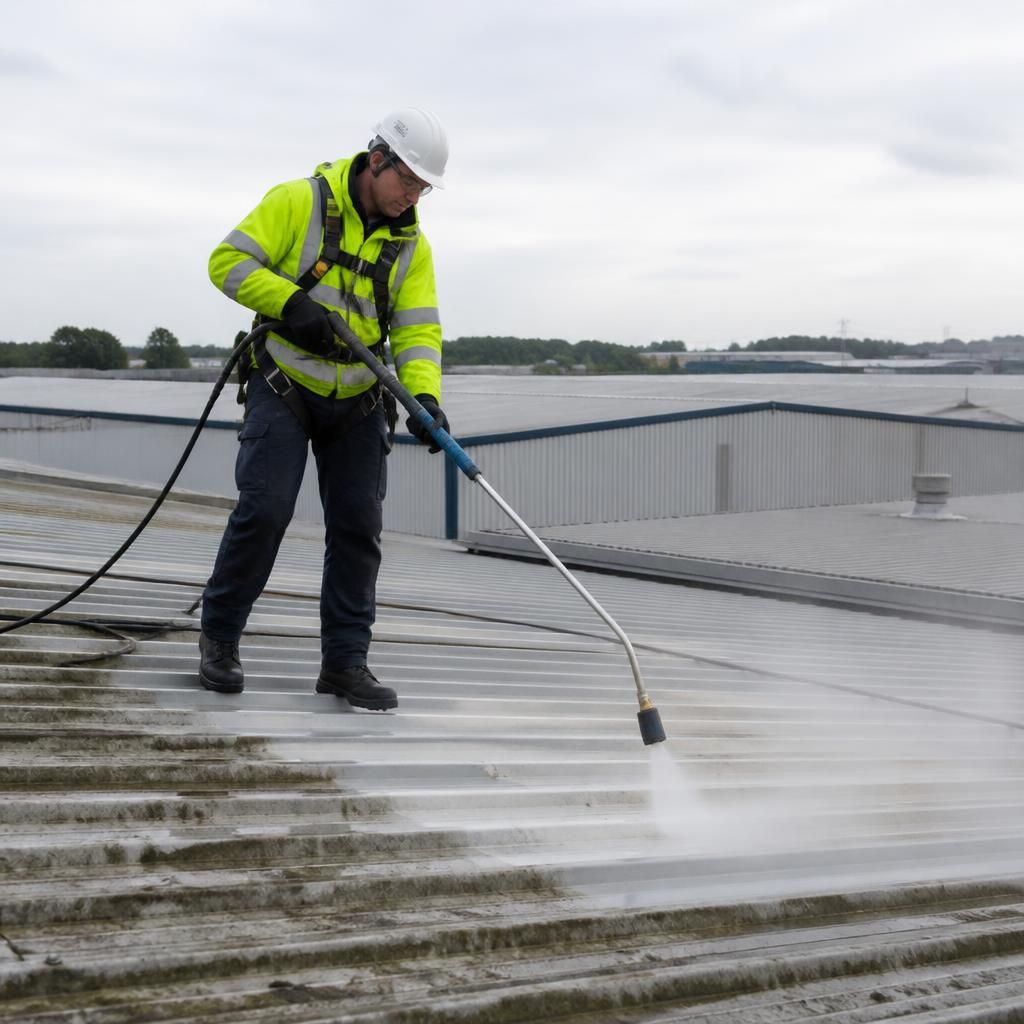
The cost difference between low pressure and steam roof cleaning is mainly determined by the equipment, energy and preparation each method requires. Low pressure cleaning is typically less expensive for suitable roofs with moss, algae, dirt and general organic staining, while steam cleaning usually has a higher initial cost because it requires heated water, specialist machinery and closer temperature control.
Price should be compared against the complete scope of work rather than the cleaning method alone. A quotation should state whether it includes access equipment, roof preparation, cleaning treatments, run-off management, waste handling, inspection and any recommended follow-up work. Steam may offer better overall value where heated cleaning removes stubborn deposits with less chemical use or reduces the need for repeat treatment. A roof survey is therefore important before choosing the lower initial price, particularly where the roof has fragile coverings, restricted access, heavy contamination or heat-sensitive components.
Request a roof cleaning cost assessment
Request a roof cleaning cost assessment to compare low pressure and steam cleaning against your roof’s condition, access requirements and cleaning objectives. We will recommend a suitable method and provide a clear quotation based on the complete scope of work.