
What types of industrial roofing materials can be safely cleaned?
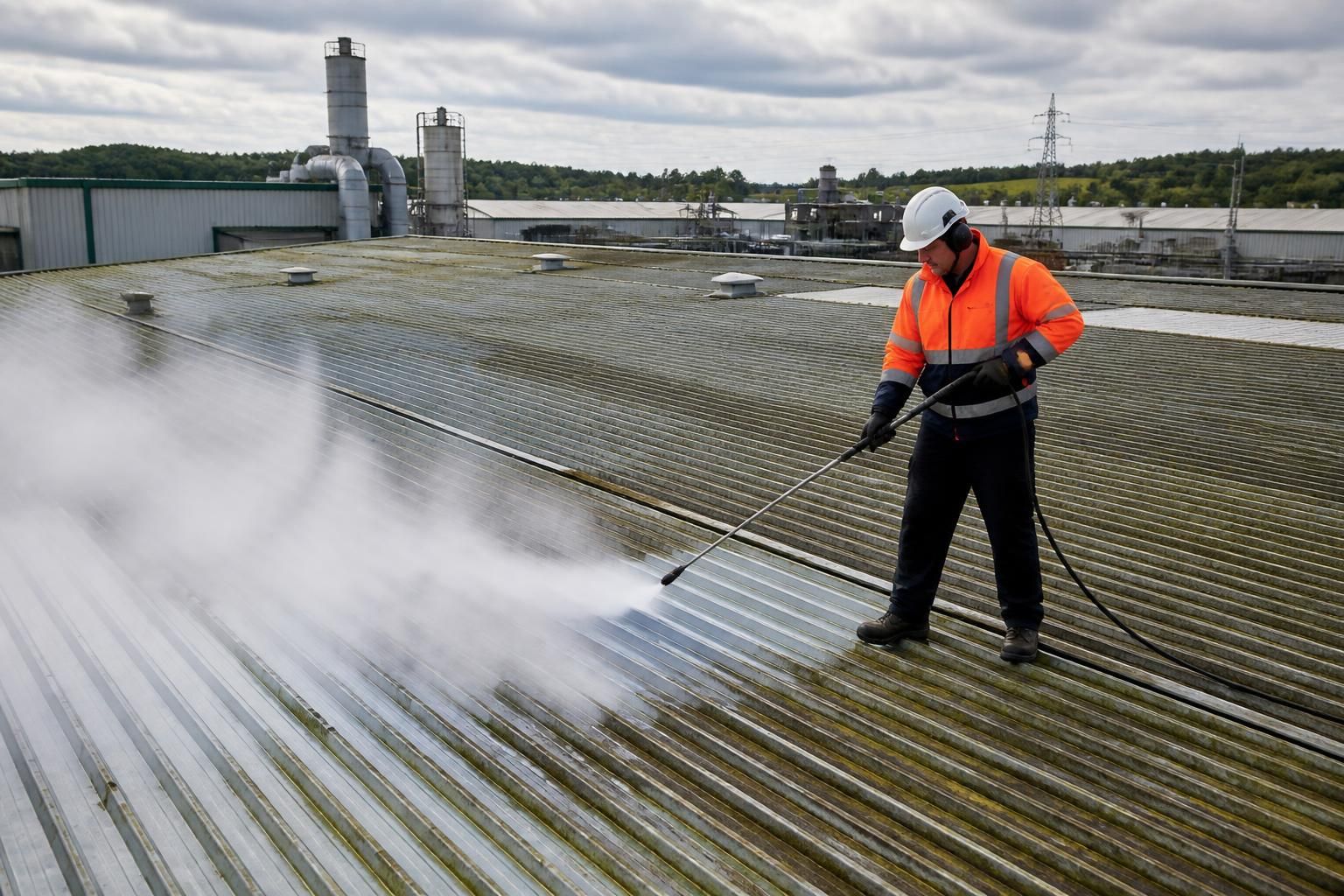
Most industrial roofs can be safely cleaned when the method is matched to the material and its condition. Suitable surfaces include profiled metal, coated steel, aluminium, concrete, asbestos-free fibre cement, EPDM, PVC, TPO, fibreglass and mineral-finished roofing systems, using controlled low-pressure washing, steam cleaning or approved treatments to remove dirt, algae, moss and grime without damaging the covering.
Most common industrial roofing materials can be safely cleaned, provided the cleaning method is matched to the roof covering, its age, surface finish and condition. Suitable materials include profiled and coated metal, aluminium, concrete, asbestos-free fibre cement, EPDM, PVC, TPO, fibreglass and mineral-finished roofing systems. Cleaning is normally carried out using controlled low-pressure washing, steam cleaning, soft-brushing and compatible treatment products rather than aggressive high-pressure blasting.
The material itself is only part of the assessment. Before work starts, the roof should be inspected for corrosion, failed coatings, open laps, damaged flashings, exposed reinforcement, loose ballast, brittle areas and previous repairs. A covering that is normally suitable for cleaning may need a gentler approach, localised hand cleaning or repair before the wider surface is treated.
Profiled steel and coated metal roofing can generally be cleaned effectively. Dirt, bird fouling, algae, moss and atmospheric deposits are removed with a controlled pressure setting and a suitable detergent or steam-cleaning process. The operator must avoid forcing water beneath side laps, end laps, flashings and penetrations. Excessive pressure can damage protective coatings, expose bare steel or drive water into the building. Corroded areas and chalking or delaminating paint also require particular care, as cleaning cannot restore a failed coating system.
Aluminium roofing and cladding is usually suitable for low-pressure cleaning and gentle detergent application. Aluminium can be marked by abrasive pads, harsh chemicals and excessive pressure, particularly where the surface has an anodised, painted or powder-coated finish. The cleaning solution should be compatible with the finish, thoroughly rinsed where appropriate and tested on an inconspicuous area before full application.
Concrete roof units and slabs can normally tolerate controlled cleaning, although porous or weathered concrete may retain moisture and biological growth. Moss should be loosened rather than forcibly blasted from the surface, and care is needed around joints, seals, drainage outlets and repaired sections. Where reinforcement is already exposed or the concrete is spalling, the condition should be assessed before cleaning because aggressive treatment may worsen the damage.
Asbestos-free fibre-cement roofing can be cleaned when it is sound and correctly identified. The surface is relatively vulnerable to abrasion and may become damaged if subjected to high pressure or walked on unnecessarily. Low-pressure application, soft agitation and controlled rinsing are generally more appropriate. Any suspected asbestos-containing material must not be treated as ordinary fibre cement.
EPDM, PVC and TPO membranes can be safely cleaned using methods that protect the membrane and its seams. These synthetic coverings are commonly affected by algae, dirt, leaf debris and atmospheric grime, but the surface can be punctured, stretched or degraded by unsuitable chemicals and aggressive equipment. Cleaning should be carried out at low pressure, with compatible products and particular attention to welded or bonded seams, edge details, outlets and areas where the membrane has lifted or blistered.
Fibreglass and GRP roofing is generally cleanable, but its resin surface and protective finish can become scratched or dulled by abrasive methods. Gentle pressure washing, steam cleaning or approved treatment products may be appropriate following a small test area. Brittle panels, exposed fibres, cracked sections and deteriorated rooflights should be isolated from unnecessary access and reported before cleaning continues.
Mineral-finished felt and other bituminous roofing systems may be cleaned with a carefully controlled approach. Loose mineral granules can be stripped away by high-pressure water, while heat, solvents and unsuitable detergents may soften or damage the bitumen. Moss and organic growth should be removed without disturbing the waterproofing layer, and defects around laps, upstands and penetrations should be recorded for repair.
Asbestos-containing roofing requires separate controls. Asbestos cement and other asbestos materials should not be pressure washed as part of a standard industrial roof-cleaning service because poorly controlled work can release hazardous fibres and contaminate water or surrounding areas. The material should first be identified through suitable records, a survey or competent assessment. If cleaning is necessary, it must be planned in accordance with current UK asbestos legislation and guidance, using a contractor with the appropriate competence, controls, waste arrangements and, where required, licensing. In many cases, encapsulation, careful non-abrasive treatment or another management option is more appropriate than conventional cleaning.
Rooflights, coatings and installed equipment also affect the method. Older translucent rooflights may be brittle even when the surrounding metal sheets remain sound. Solar panels, ventilation units, smoke vents, cable routes, lightning protection, plant supports and fall-protection systems must be protected from impact and chemical contamination. Cleaning around these features may require manual work or separate specialist instructions from the manufacturer or maintenance provider.
A suitable industrial roof-cleaning assessment normally considers:
- the roof covering, surface finish and any known manufacturer restrictions;
- the age, weathering, corrosion and structural condition of the roof;
- the type and extent of moss, algae, lichen, dirt, bird fouling or industrial deposits;
- the condition of laps, seams, flashings, gutters, outlets, rooflights and penetrations;
- the safest access arrangement, including edge protection and suitable access equipment;
- the cleaning solution, pressure, temperature and rinsing requirements; and
- how dirty water, treatment residues and dislodged debris will be contained and disposed of.
Small test areas are useful where the material, coating or contamination is unfamiliar. They confirm whether the chosen process removes the deposit without lifting paint, removing mineral granules, affecting colour or marking the surface. The method can then be adjusted before the main clean begins.
In practical terms, a sound metal, concrete, asbestos-free fibre-cement, EPDM, PVC, TPO, fibreglass or mineral-finished roof is usually suitable for professional cleaning. The safest result comes from treating the roof as a specific system rather than applying one pressure setting or chemical to every surface. Where the covering is damaged, suspected to contain asbestos or affected by failing coatings, cleaning should be preceded by a competent survey and, where necessary, specialist repair or asbestos advice.
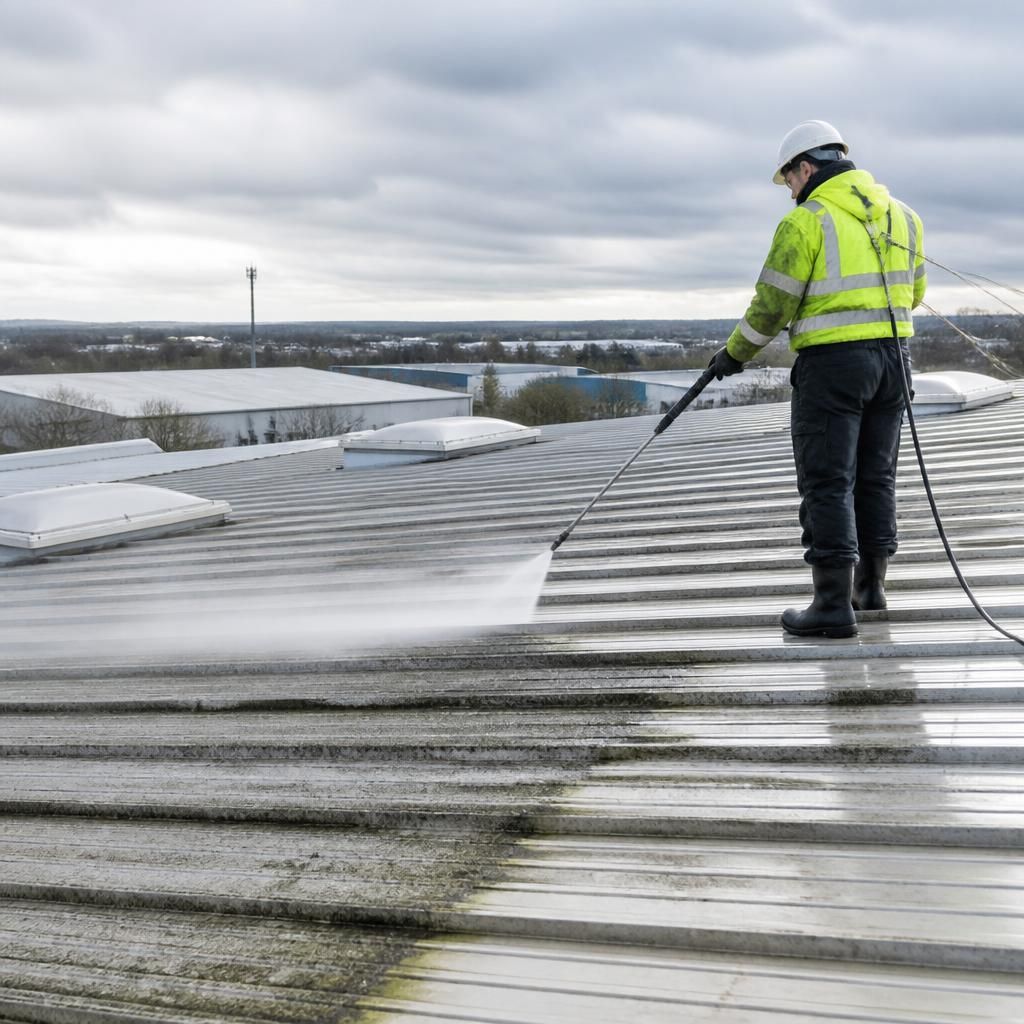
Industrial roofs made from sound metal, concrete, asbestos-free fibre cement, EPDM, PVC, TPO, fibreglass and mineral-finished systems can usually be cleaned safely when the process is matched to the covering. Controlled low-pressure washing, steam cleaning and compatible treatments remove dirt, algae and moss without the damage associated with aggressive pressure. The roof’s condition must be checked first, particularly around seams, flashings, rooflights, coatings and drainage points. Suspected asbestos-containing roofing requires separate assessment and specialist controls; it should not be pressure washed as part of routine roof cleaning.