What environmental considerations should be taken into account when choosing industrial roof cleaning services?
When choosing industrial roof cleaning services, assess how the contractor controls chemical use, water consumption, contaminated runoff and waste, while protecting drainage systems and surrounding land. They should select suitable low-impact methods, recover or safely dispose of wash water and debris, and work in line with relevant UK environmental and waste-management requirements.
Environmental considerations when choosing industrial roof cleaning services include chemical selection, water use, contaminated runoff, waste handling, drainage protection and the potential impact on surrounding land and wildlife. A suitable contractor should assess the roof and site before work begins, select the least harmful effective method, prevent pollutants entering drains or watercourses, and keep clear records of how wastewater, residues and cleaning materials are managed.
Method selection and chemical use
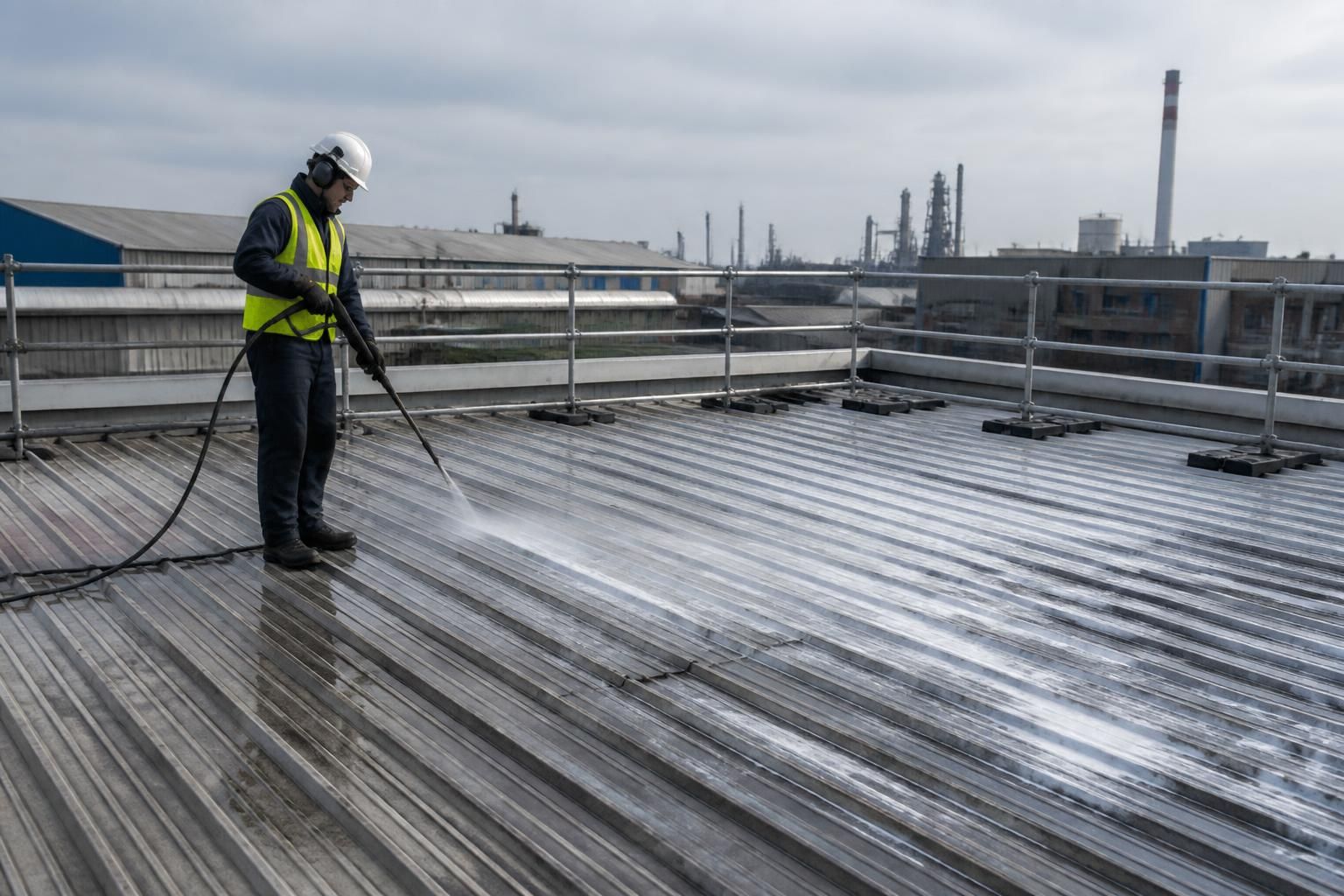
The cleaning method should match the roofing material, contamination and condition of the roof. Low-pressure washing, controlled steam cleaning, soft brushing or targeted treatment may reduce the need for aggressive chemicals, but no method is automatically environmentally preferable in every situation. Excessive pressure can spread contaminated material, while steam can still create polluted wash water. Chemical treatments should be used only where necessary, at the correct concentration and with suitable controls to prevent drift, overspray and contact with unprotected surfaces.
Ask whether the contractor will provide information about the products being used, including safety data and environmental precautions. Biocides, detergents, degreasers and algae treatments can harm aquatic life if they enter surface-water drains, streams or ponds. The contractor should identify chemical risks before starting, store products securely, prevent spills and have a procedure for dealing with accidental releases. Where a non-chemical approach can achieve the required result without damaging the roof, it may be the more appropriate option.
Water consumption and wastewater control
Responsible contractors plan water use rather than allowing unrestricted washing. They should use equipment that provides suitable control over flow and pressure, avoid unnecessary rinsing, and consider whether collected or recycled water can be used safely for appropriate stages of the work. Water-saving measures must not compromise the removal of contaminants or lead to residues being left on the roof.
Wash water from an industrial roof can contain oils, metals, biological growth, detergents, coatings, dirt and particles from the roof surface. It should not be allowed to run into gullies, surface-water drains, soil or nearby watercourses without confirming that the discharge is permitted and suitably controlled. Drain covers, temporary bunds, drain mats, collection systems, wet vacuums or pumped containment may be required, depending on the site and the level of contamination.
Discharge arrangements should be agreed before work begins. A connection to a foul sewer may require the water company’s consent, while discharge to surface water or land may require approval from the relevant environmental regulator. Requirements vary across England, Wales, Scotland and Northern Ireland, so the contractor should identify the applicable local rules rather than assuming that wastewater can be released on site. If discharge is not appropriate, the water should be collected and sent to an authorised facility.
Debris, sludge and other waste
Roof moss, silt, leaves, damaged coating, contaminated absorbents and used containers should be collected rather than swept into drainage systems. Waste must be assessed and stored securely so that it cannot be blown or washed away. The contractor should use an appropriately authorised waste carrier and send the material to a suitable facility, retaining the relevant waste documentation. If contamination makes the material hazardous, it must be handled, labelled and disposed of under the additional requirements that apply to hazardous waste.
Industrial roofs may also contain substances that require specialist attention, such as oil residues, lead-based coatings or asbestos-containing materials. Cleaning should stop if suspected asbestos or another unidentified hazardous substance is found. The material should be assessed by a competent person and managed under the appropriate specialist procedure. A general roof-cleaning team should not disturb or remove it as part of routine cleaning.
Protection of the building and surrounding environment
Environmental protection includes preventing damage to the roof, façade, insulation, sealants, rainwater goods and neighbouring surfaces. A competent contractor should inspect the roof and drainage layout, identify vulnerable areas, protect plant and equipment, and control overspray. Cleaning residues should not be deposited on cladding, vehicles, landscaping or access routes, where they may later be washed into drains.
Consideration should also be given to birds, bats and other wildlife. Nesting birds and protected species may be present around roof edges, plant rooms and roof-mounted equipment. Work planning should account for visible nests, roosting locations and sensitive habitats. If protected wildlife may be affected, the contractor should seek appropriate advice before proceeding and adjust the programme or method where necessary.
Energy use, noise and site emissions
Pressure washers, steam systems, pumps, access equipment and waste vehicles all use energy and may create noise or exhaust emissions. These impacts can be reduced through efficient equipment, sensible work planning, avoiding unnecessary idling and consolidating waste collections where practical. Noise controls may be particularly important near occupied premises, hospitals, schools or residential areas. The contractor should follow the site’s working-hour and environmental requirements.
Evidence of responsible working
Before appointing a contractor, ask for a written method statement or environmental plan covering chemical use, water supply, drainage protection, runoff collection, spill response, waste transfer and final disposal. The plan should be specific to the premises rather than a generic document. It should also explain who is responsible for monitoring the controls and what will happen if unexpected contamination or a discharge incident occurs.
Useful evidence may include product information, waste-transfer documentation, records of wastewater disposal, staff training records and details of the contractor’s environmental procedures. Memberships and policies can support due diligence, but they should not replace a site-specific assessment. The most reliable choice is a contractor that can explain the environmental risks of the proposed method, demonstrate how those risks will be controlled and provide records after the work is complete.
For an industrial roof, the lowest-impact service is not necessarily the one using the least water or no chemicals; it is the one that removes the contamination effectively while preventing polluted runoff, unnecessary waste and damage to the roof or surrounding environment. A properly planned cleaning specification should therefore balance cleaning performance, roof integrity, legal compliance and practical environmental controls.
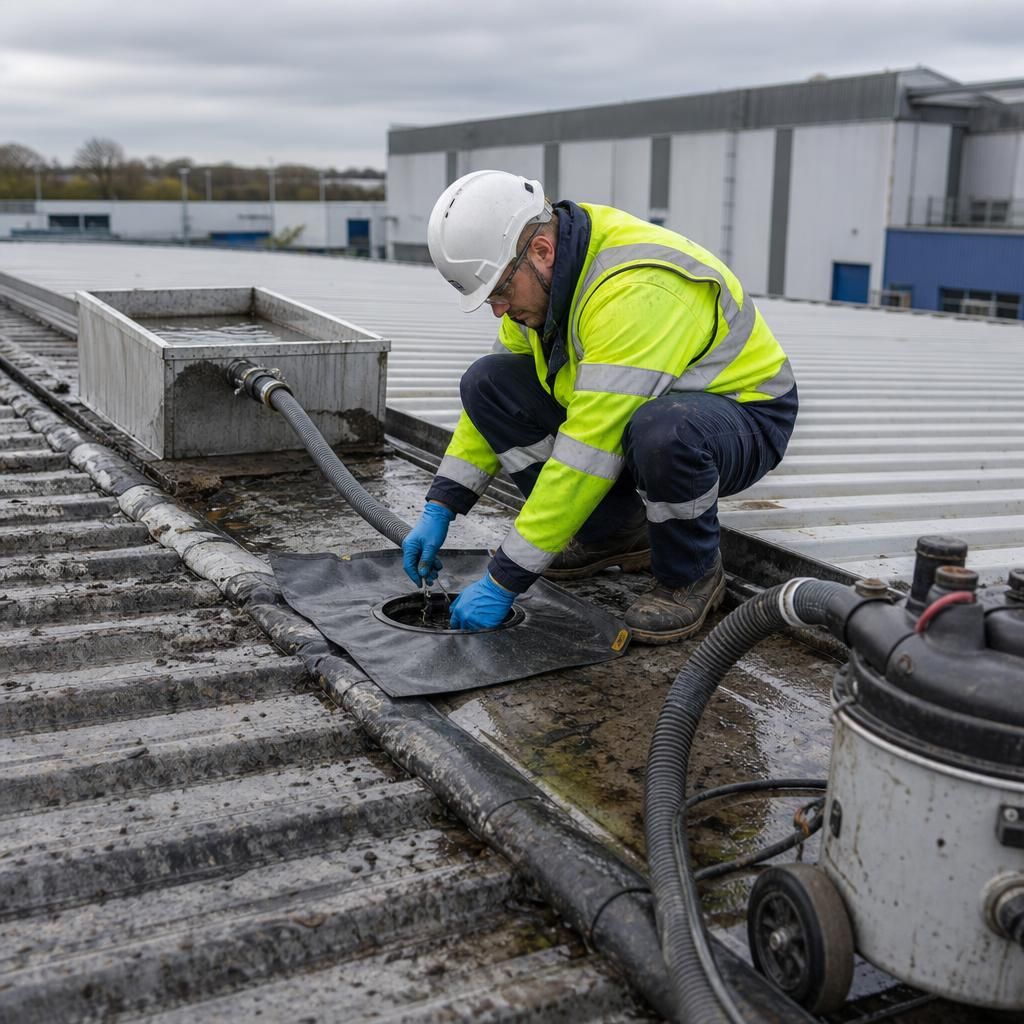
Industrial roof cleaning should include a plan for capturing and controlling contaminated wash water. Runoff may contain detergents, oils, metals, biological growth and roof debris, so it must not be allowed to enter surface-water drains, soil or nearby watercourses without the necessary assessment and permission.
A responsible contractor will identify drainage routes before work starts and use suitable controls, such as drain covers, bunding, collection systems or wet vacuums. Wastewater should then be discharged through an approved route or collected for disposal at an authorised facility, with records retained where required.