
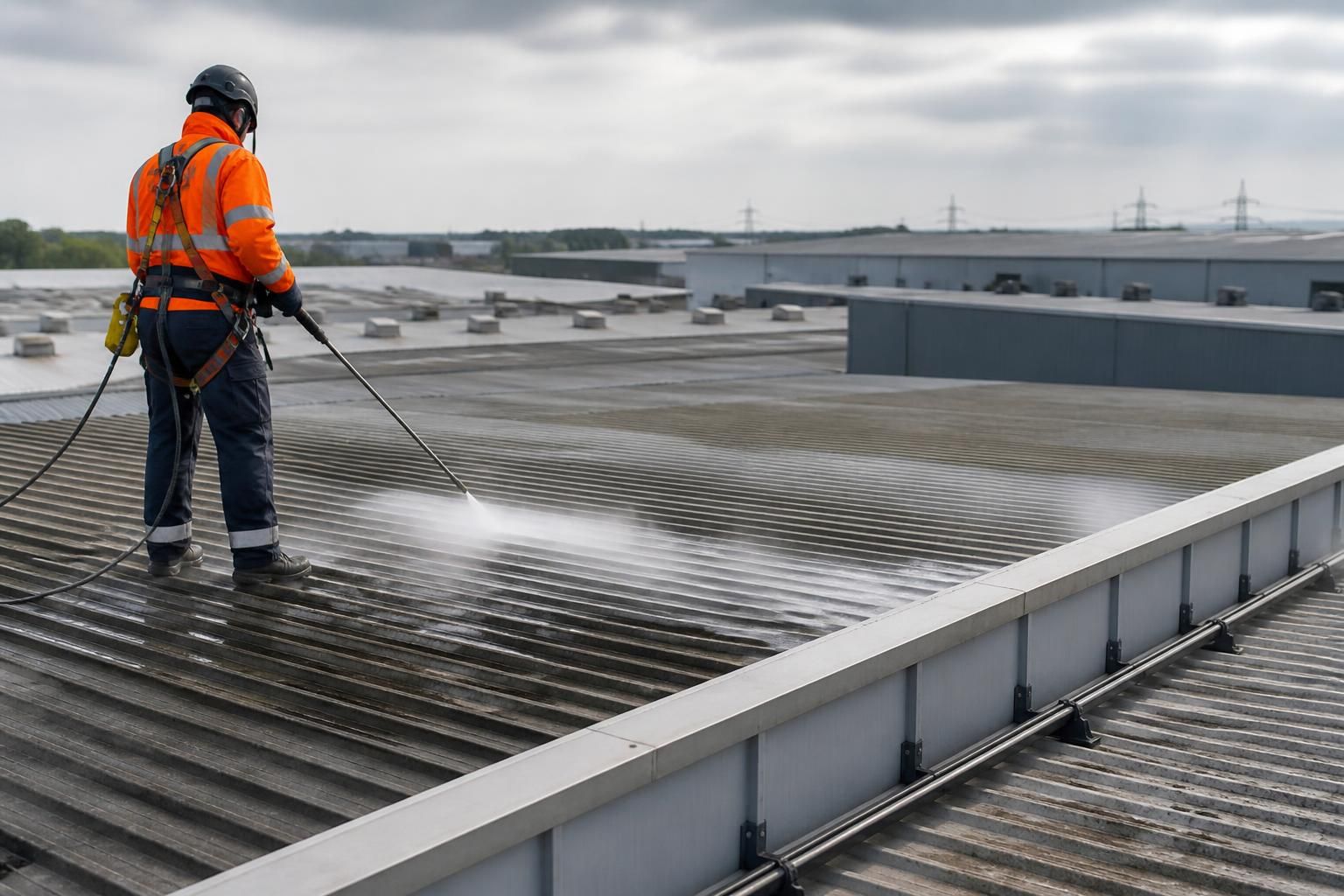
What environmental considerations are taken into account during industrial roof cleaning?
Industrial roof cleaning should minimise environmental impact through responsible water use, controlled runoff, appropriate cleaning products and proper waste disposal. Low-pressure or steam cleaning is selected where suitable to reduce water consumption and prevent contaminants or chemicals from entering drains, soil and nearby watercourses.
Environmental considerations during industrial roof cleaning centre on preventing contaminated water, cleaning products, loosened debris and waste from entering drains, soil or watercourses. The cleaning method, water volume, chemical selection, runoff controls, waste arrangements, weather conditions and protection of nearby habitats should all be assessed before work begins.
Site assessment and method selection
A responsible contractor starts with an inspection rather than applying the same process to every roof. The assessment should consider the roofing material, condition of coatings and sealants, the type of dirt or biological growth present, drainage routes, nearby watercourses, sensitive landscaping and the location of occupied areas. It should also identify whether the roof contains hazardous materials. If asbestos-containing materials or other hazardous substances are suspected, cleaning should stop until the appropriate survey and specialist controls are in place.
The least intensive effective method is normally preferred. Low-pressure washing, soft washing or steam cleaning may reduce the risk of damaging the roof and can limit the amount of water or chemical treatment required, depending on the surface and contamination. Mechanical removal, brushing or targeted treatment may be more suitable than full-area pressure washing in some locations. The selected method should balance cleaning performance with the risk of coating failure, surface erosion, runoff and repeat cleaning.
Responsible water use
Industrial roofs can involve substantial surface areas, so water use should be planned rather than left uncontrolled. This includes using equipment that delivers water at the required flow, avoiding unnecessary rinsing, treating heavily contaminated areas selectively and stopping work if conditions make containment ineffective. Steam cleaning can use less water for some applications, but its suitability depends on the roof material, contamination and available recovery arrangements. Water efficiency should therefore be assessed as part of the complete cleaning system, not judged solely by the equipment type.
Runoff and drain protection
Roof cleaning can mobilise silt, moss, algae, bird fouling, oils, metals, old coatings and residues from previous treatments. These materials must not be allowed to flow unchecked into surface-water drains, unprotected ground or nearby streams and ponds. Before cleaning, the team should identify drainage points and decide whether they need temporary covers, isolation, bunding, collection or controlled diversion.
Surface-water drainage generally leads to the environment without the same treatment provided by a foul-water system. For that reason, wash water should never be directed into a surface-water drain simply because it is convenient. Where discharge is permitted, it should follow the relevant site requirements and any applicable approval or consent. If the water is contaminated or its composition is uncertain, it should be collected for suitable treatment or disposal rather than released.
Cleaning products and biocides
Chemicals should be used only where they are necessary, suitable for the roof material and applied at the lowest effective concentration. The product information and safety data should be checked before use, including precautions for aquatic life, plants, metals, coatings and people working nearby. A product described as biodegradable is not automatically harmless when concentrated or discharged into a watercourse.
Where a chemical treatment is required, the application should be controlled to prevent spray drift and overspray. Wind, rain and the forecast should be considered, as rainfall soon after application can carry treatment residues into drainage systems or surrounding ground. Containers and diluted products should be stored securely, and spills should be dealt with using the site’s spill-response arrangements.
Collection and disposal of waste
Debris removed from the roof should be gathered rather than swept into gutters or washed from the site. Moss, silt, nesting material, damaged coating fragments and other solid waste should be kept separate from clean recyclable materials where practical. Contaminated sludge and wash water may require different handling from ordinary green waste, particularly where oils, metals, chemicals or hazardous building materials are present.
Waste should be transferred through appropriate disposal arrangements, with records retained where required. A competent contractor should be able to explain how collected debris and wastewater will be handled and should not rely on an unverified claim that material is harmless or suitable for general disposal.
Protection of wildlife and surrounding areas
Roof spaces, eaves, gutters and plant rooms can provide nesting or roosting opportunities for birds and bats. The site should be checked for active nests and other signs of protected wildlife before work starts. Cleaning may need to be delayed, restricted or redesigned if wildlife could be disturbed or harmed. This is particularly important when work involves pressure, steam, chemicals, roof-edge access or removal of established vegetation.
Vegetation, landscaped areas, rainwater harvesting systems, ventilation intakes, vehicles and neighbouring properties should also be protected from spray, falling debris and contaminated runoff. Temporary sheeting, localised containment or a different application method may be required where these areas cannot be isolated.
Energy use and emissions
Environmental planning also includes the energy and transport involved in the work. Equipment should be selected for the size and condition of the roof, rather than using unnecessarily large pumps, generators or access machinery. Efficient planning of equipment deliveries, water supplies, waste collections and access arrangements can reduce avoidable vehicle movements and fuel use.
Access equipment should be used efficiently and positioned to provide safe coverage without repeated repositioning. This is not a reason to compromise worker safety: reducing emissions must never involve unsafe access, inadequate edge protection or unsuitable equipment for the roof structure.
Weather, timing and monitoring
Dry, stable weather is often preferable because it improves control of water and treatments. Heavy rain, strong winds, freezing conditions and poor visibility can increase runoff, spray drift, energy use and the likelihood of repeat work. A competent team should monitor conditions during the project and pause cleaning if containment or safe application can no longer be maintained.
During the work, drains, collection points and surrounding ground should be checked for signs of overflow, staining or uncontrolled discharge. Any spill or unexpected release should be contained promptly, reported through the agreed site procedure and cleaned up using suitable materials. A completion record should note the method used, products applied, waste removed and any environmental incidents or follow-up requirements.
For an industrial roof cleaning project, the most environmentally responsible approach is therefore a documented, site-specific plan: inspect the roof and surroundings, choose the least intensive effective method, use water and chemicals sparingly, contain and monitor runoff, protect wildlife and drainage, and dispose of collected waste through proper channels. These controls help maintain the roof without transferring the contamination problem to the wider site or environment.
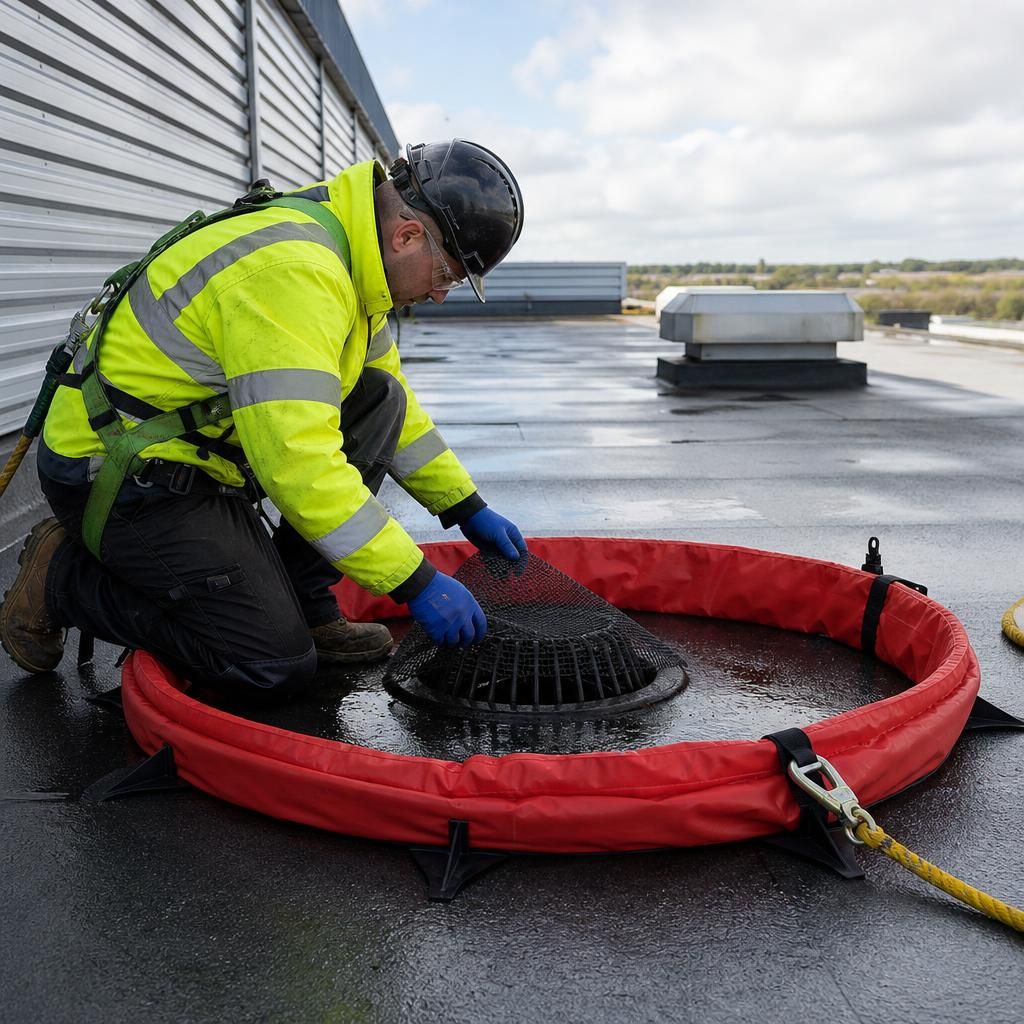
Runoff control is a central environmental consideration during industrial roof cleaning because wash water can carry moss, silt, bird fouling, oils, coating residues and cleaning products into the drainage system. Before work starts, the team should identify all roof outlets and determine whether water can be contained, collected or safely diverted.
Surface-water drains generally discharge to the environment without the treatment associated with foul-water systems, so contaminated wash water must not be released into them without suitable approval. Drain covers, bunding, collection points and controlled disposal may be required, with the method adjusted or work paused if heavy rain makes containment unreliable.