
What cleaning methods are most effective for maintaining the integrity of industrial roofs made from materials like EPDM and fibreglass?
The most effective methods for cleaning industrial EPDM and fibreglass roofs are controlled low-pressure washing, soft-bristle agitation and, where appropriate, steam cleaning with material-safe detergents. These techniques remove dirt, algae and staining while reducing the risk of surface damage, water ingress and deterioration to protective coatings.
The most effective methods for maintaining industrial roofs made from EPDM and fibreglass are controlled low-pressure washing, soft-bristle agitation and, where appropriate, carefully managed steam cleaning using detergents confirmed as compatible with the roofing system. These methods remove dirt, algae, moss, bird fouling and atmospheric staining without the excessive force, heat or chemical action that can damage membranes, coatings, joints and surface finishes.
Begin with a roof condition assessment. Cleaning should be planned around the condition and construction of the roof, rather than treated as a standard pressure-washing task. The assessment should identify exposed seams, laps, edge details, outlets, inspection points, repairs, surface crazing, blisters, loose trims and areas where the membrane or fibreglass finish has deteriorated. Drainage routes should also be checked so that removed contamination does not block outlets or enter systems where it could cause a problem.
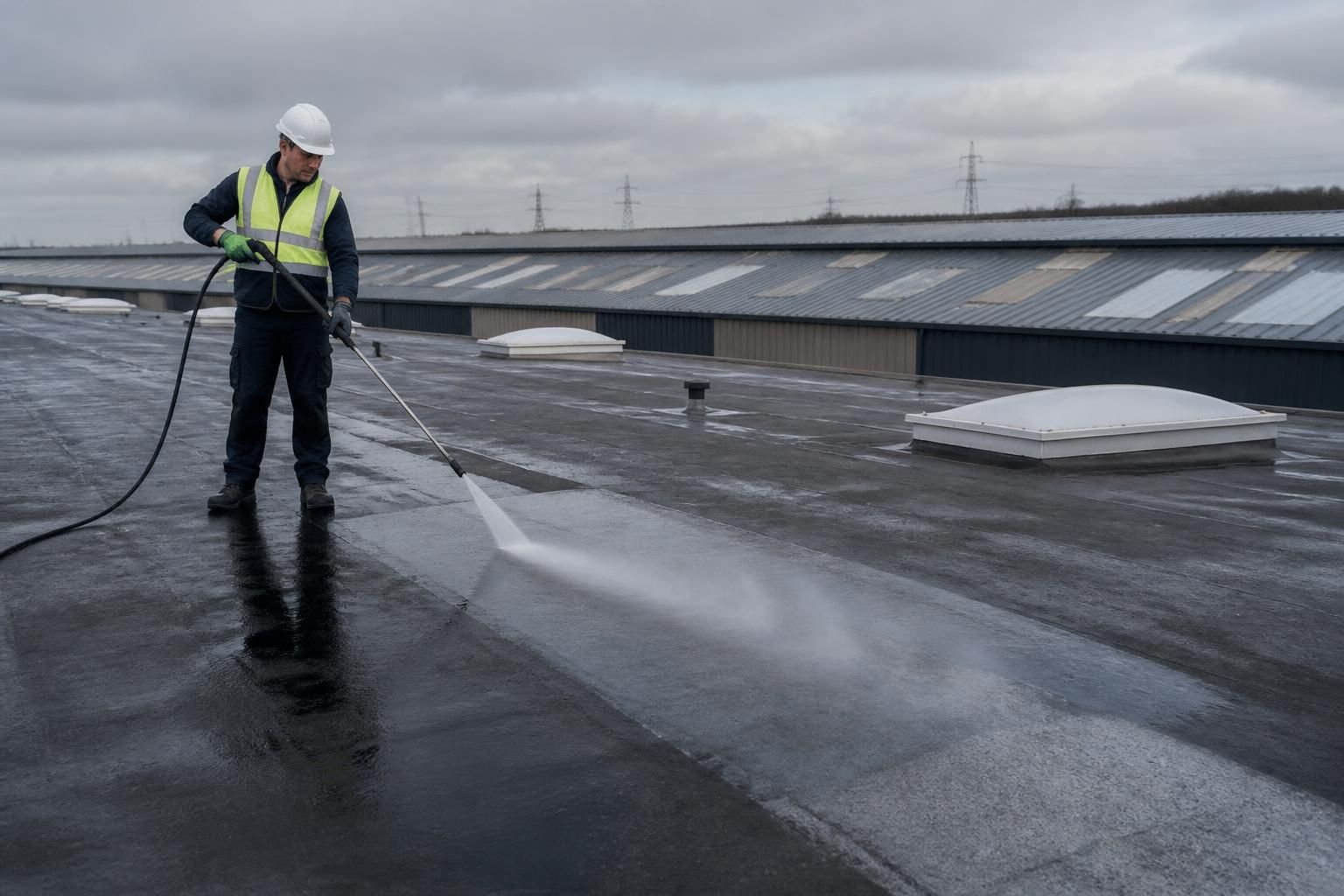
Controlled low-pressure washing is usually the primary method. A low-pressure application can lift general grime, biological growth and surface deposits while limiting the risk of forcing water beneath EPDM joints, flashing, trims or damaged areas. The pressure, nozzle selection, spray distance and water volume should be adjusted to suit the roof’s condition. Operators should work progressively and avoid directing water into seams, penetrations, vents, rooflights or defective details.
EPDM is a flexible rubber membrane, so aggressive cleaning can cause unnecessary movement or damage to the surface. High-pressure jetting, concentrated spray patterns and repeated passes over the same area may mark the membrane, disturb adhesive-bonded joints or expose weaknesses around detailing. A controlled fan spray, combined with suitable manual agitation, is generally safer than attempting to remove all contamination with water pressure alone.
Soft-bristle agitation is useful for bonded contamination. Where dirt, algae or lichen has adhered to the surface, a soft brush can loosen it without the abrasion associated with stiff brushes, rotary tools or scraping. Brushes should be used with care around seams and vulnerable details. Moss and heavier growth should be lifted rather than forcibly pulled, particularly where roots have entered cracks, laps or deteriorated coatings.
Steam cleaning can be appropriate, but only under strict control. Low-moisture steam may help remove ingrained staining, grease or biological contamination from suitable fibreglass surfaces and some compatible roof finishes. It must not be assumed to be safe for every EPDM membrane, adhesive, coating or repair. Excessive heat can soften, distort or accelerate deterioration of certain materials, while thermal shock may affect ageing fibreglass or brittle coatings. A small test area and confirmation of material compatibility should precede wider application.
Fibreglass industrial roofs, often described as GRP roofs, may have a resin surface, a protective topcoat or a painted finish. Cleaning should preserve that finish rather than abrade it. Strong solvents, aggressive degreasers, abrasive pads and harsh alkaline products can dull the surface, weaken the coating or alter its appearance. Where oil or industrial deposits are present, the detergent should be selected for the contamination and checked against the manufacturer’s guidance or the known roof specification.
Detergent selection and rinsing are as important as the cleaning equipment. A material-safe, biodegradable detergent can help break down organic deposits and reduce the need for mechanical force. Products containing solvents or chemicals known to attack rubber, resin, sealants or protective coatings should be avoided. Detergent should not be allowed to dry on the roof, and rinsing should be controlled so that residues and loosened contaminants are collected or directed to an approved drainage route where required.
A suitable cleaning process normally includes:
- Reviewing available roof information, previous repairs and any manufacturer’s cleaning recommendations.
- Inspecting the membrane, fibreglass finish, seams, flashings, outlets, rooflights and access routes before work begins.
- Removing loose debris manually without dragging sharp or abrasive material across the roof.
- Testing the proposed detergent and cleaning method in an inconspicuous area.
- Applying the selected low-pressure wash, soft-bristle agitation or controlled steam treatment in manageable sections.
- Giving additional attention to shaded and poorly drained areas where biological growth is more likely to return.
- Rinsing without directing water beneath laps, into defects or towards unprotected openings.
- Checking the finished roof for remaining contamination, blocked outlets, disturbed details or newly visible defects.
Methods that should generally be avoided include unrestricted high-pressure jetting, abrasive blasting, metal scraping, unapproved solvent cleaning and the use of rotary equipment that can remove the roof’s protective finish. Walking or positioning equipment on the roof should also be controlled. Boards, suitable access equipment and designated walkways may be needed to distribute loads and prevent damage, particularly where the roof is older or has limited load-bearing capacity.
Cleaning cannot correct failed seams, punctures, delamination, widespread coating failure or structural defects. If these conditions are found, they should be recorded and referred to the appropriate roofing specialist before cleaning continues in the affected area. Separating cleaning from repair work helps prevent contamination from being pushed into defects and avoids treating a maintenance issue as a cosmetic one.
For ongoing maintenance, the most suitable approach is a planned inspection and cleaning programme based on the roof material, surrounding environment, level of biological growth, nearby industrial emissions and drainage performance. Keeping EPDM and fibreglass surfaces free from organic build-up helps inspection teams identify defects earlier, but the cleaning method must remain gentle enough to preserve the membrane, resin, coatings and watertight detailing that protect the building.
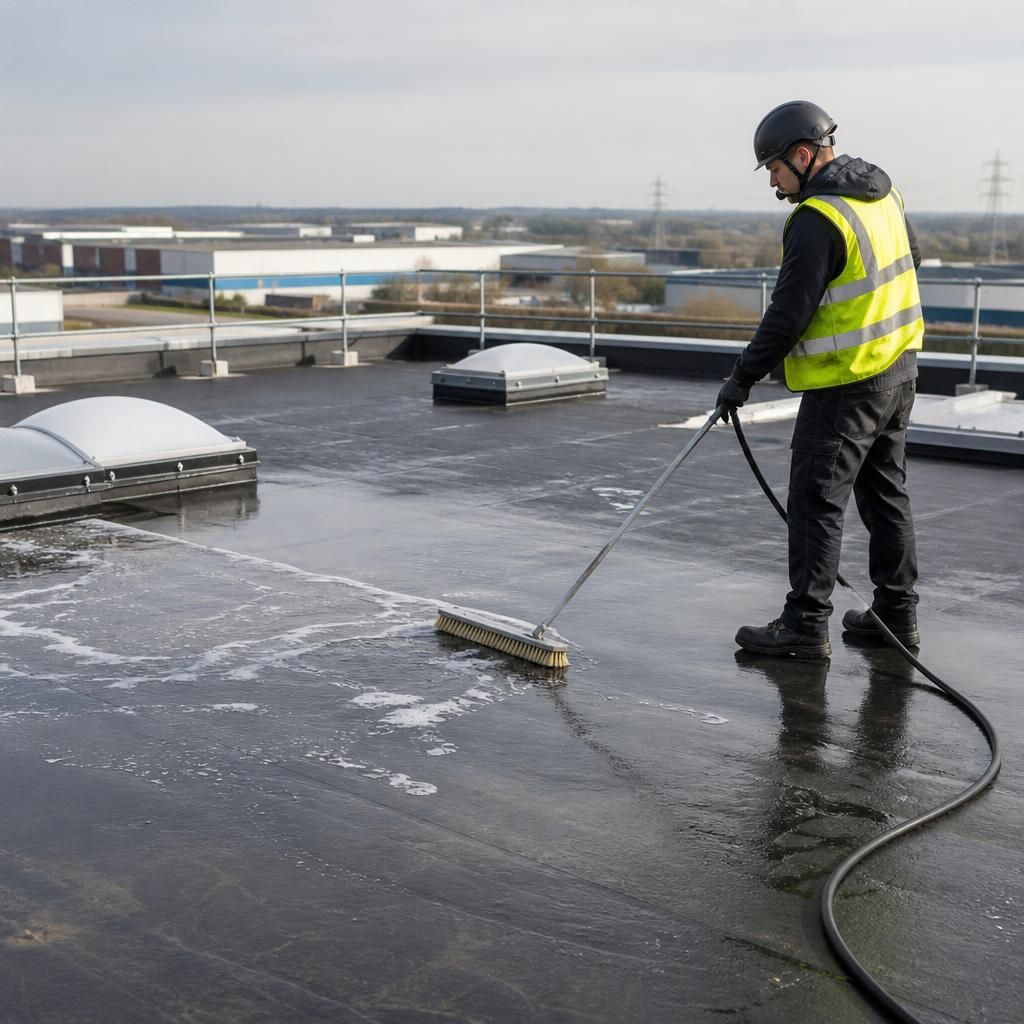
Low-pressure cleaning with a material-compatible detergent is generally the safest starting method for industrial EPDM and fibreglass roofs. It removes surface dirt, algae and atmospheric deposits without the concentrated force that can disturb EPDM seams, damage fibreglass topcoats or drive water beneath vulnerable details.
The proposed detergent and equipment settings should first be tested in an inconspicuous area. Operators can then adjust pressure, spray distance, brush agitation and rinsing to suit the roof’s condition. Steam cleaning should only be used where the membrane, resin, coating and repair materials are confirmed to tolerate the heat. This controlled approach protects the roof finish while allowing defects, blocked outlets and deteriorating details to be identified during the work.