
What are the specific steps involved in the industrial roof cleaning process?
The industrial roof cleaning process involves a site survey, risk assessment, access planning, preparation of the roof and drainage systems, controlled removal of dirt and organic growth, treatment where required, and a final inspection. The method is selected according to the roofing material, contamination, roof condition and environmental controls needed to protect the building and surrounding area.
The industrial roof cleaning process is a controlled sequence of inspection, risk management, preparation, cleaning, treatment and verification. The exact method is selected according to the roof’s material, age, condition, construction, contamination and drainage arrangements. A competent contractor should never begin by applying pressure or chemicals before confirming that the roof and surrounding areas can be cleaned safely.
- Initial site survey and consultation. The work begins with a site survey to understand the building, roof layout and cleaning requirements. This includes identifying the roofing system, access points, rooflights, vents, plant, service routes, fragile areas and features such as gutters, valleys and outlets. The survey also considers the type of contamination present, including surface dirt, moss, algae, lichen, bird fouling, atmospheric deposits, oil residues or construction debris. Existing damage, corrosion, open joints, failed sealants and areas of ponding are recorded so that cleaning does not conceal defects or worsen them.
- Roof condition and material assessment. Different industrial roofing materials tolerate different cleaning techniques. Metal cladding may require controlled pressure and suitable detergents to avoid damaging coatings or accelerating corrosion. EPDM, fibreglass, single-ply membranes and coated systems may require low-pressure cleaning and carefully selected treatments. Older, brittle or poorly bonded surfaces may need a more conservative approach, while heavily soiled roofs may require staged cleaning rather than one aggressive application. Where the roof’s construction or condition is uncertain, the appropriate information is confirmed before work starts.
- Risk assessment and method statement. The contractor prepares a task-specific risk assessment and method statement covering work at height, fragile surfaces, roof edges, access equipment, weather conditions, electrical installations, chemicals, falling materials and water run-off. It should define exclusion zones, personal protective equipment, emergency arrangements, communication procedures and the responsibilities of everyone involved. Any restrictions imposed by the building operator, landlord or site manager are incorporated into the plan.
- Access and protection planning. Safe access is selected according to the building’s height, configuration and surrounding ground conditions. Depending on the site, this may involve scaffold, mobile elevated work platforms, access towers, roof ladders, edge protection or fall-restraint systems. Equipment must be suitable for the surface and positioned to avoid overloading vulnerable roof areas. Ground-level areas beneath the work zone are protected with barriers and signage, and arrangements are made to prevent people, vehicles and stored materials entering the exclusion zone.
- Weather and operational checks. Cleaning is planned around conditions that could affect safety or the finish. High winds, rain, ice, poor visibility and extreme temperatures may make access equipment or roof work unsuitable. The team also checks whether nearby operations, deliveries, ventilation systems or open doors could be affected by spray, odour, noise or falling debris. Work may be phased so that parts of the premises remain operational without exposing occupants or equipment to contamination.
- Preparation of the roof and surrounding areas. Before cleaning, loose debris is removed where practical and vulnerable items are protected. Rooflights, vents, electrical components, air-handling equipment, solar installations, skylight frames and openings are identified and shielded as necessary. Gutters, downpipes and drainage outlets are checked and protected against blockages. If a temporary filtration, collection or diversion arrangement is needed, it is installed before water or cleaning solution is introduced.
- Dry removal of loose contamination. Leaves, litter, loose moss, nesting material and other detachable debris are removed using suitable manual tools or controlled equipment. This reduces the amount of material entering the drainage system and allows the underlying roof condition to be inspected more accurately. Bird fouling and potentially hazardous material are handled using appropriate precautions rather than being disturbed indiscriminately.
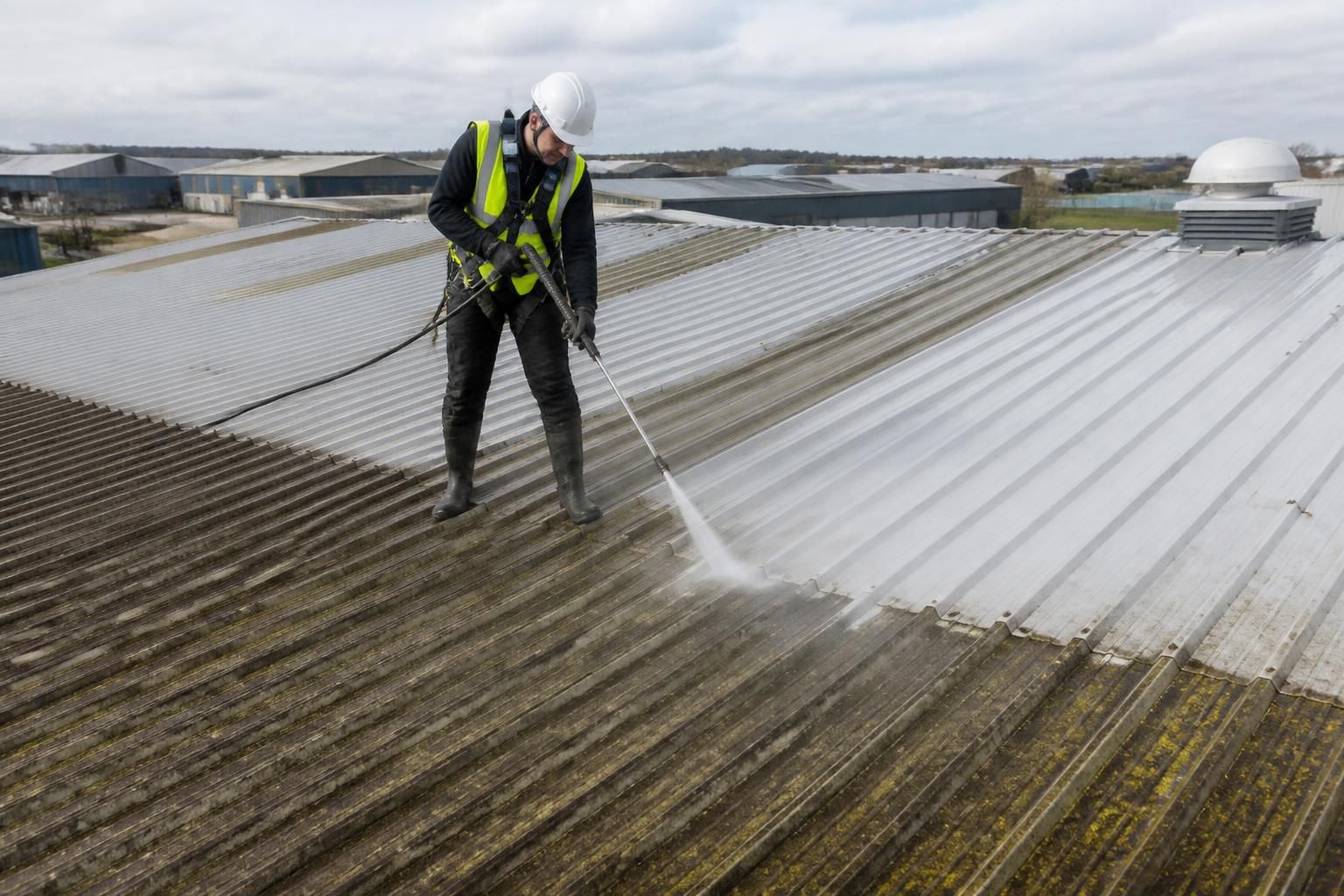
- Selection and application of the cleaning method. The cleaning method is matched to the roof and the contamination. Low-pressure washing is often appropriate where the surface or membrane could be damaged by excessive force. Steam cleaning may be used where heat and controlled moisture help remove ingrained deposits, subject to the material manufacturer’s requirements and the condition of the roof. Mechanical agitation, soft brushing or approved detergents may be used for particular deposits. Pressure is kept to the minimum needed for effective cleaning, and operators avoid directing water beneath laps, flashings, seals or cladding joints.
- Controlled removal of dirt and organic growth. Cleaning is normally carried out in manageable sections, working from the highest suitable point towards the drainage system while preventing uncontrolled run-off. The operator maintains a consistent distance and angle from the surface and monitors the result as work progresses. Moss and lichen may need careful loosening rather than forceful blasting, particularly on aged coatings or areas where roots have affected the surface. Stubborn deposits may be treated and revisited instead of being removed through excessive pressure.
- Application of treatment where required. Once the main contamination has been removed, an appropriate biocidal, fungicidal or protective treatment may be applied if specified in the method statement. The product must be compatible with the roofing material, used in accordance with its instructions and controlled to prevent drift or entry into unsuitable drainage systems. Treatment is not a substitute for cleaning, and it should not be applied where it could affect roof warranties, occupants, vegetation, watercourses or building services.
- Management of wastewater and removed material. Wastewater, sludge and dislodged organic matter are controlled throughout the work. The team prevents contaminated water from entering surface-water drains, soil, watercourses or areas where it could affect people, vehicles and equipment. Collected waste is handled and disposed of in accordance with the site requirements and applicable UK environmental controls. Drainage points are cleared progressively rather than being left to receive a large volume of material at the end of the project.
- Cleaning of gutters, outlets and associated details. Industrial roof cleaning should include attention to the drainage system where this forms part of the agreed scope. Gutters, valleys, outlets and downpipes are cleared of loosened debris and checked for restricted flow. Flashings, trims, joints and penetrations are visually reviewed for obvious issues, although cleaning does not replace a specialist roof repair or a detailed condition survey. Any defects outside the cleaning scope are recorded and reported to the responsible client contact.
- Final rinse and surface review. After the cleaning stage, the roof is reviewed for remaining deposits, streaking, missed sections, standing water and possible damage. Any additional cleaning is carried out using the same material-appropriate controls. The team also checks nearby walls, walkways, cladding and ground surfaces for splash or run-off and cleans these areas where required by the agreed scope.
- Removal of equipment and reinstatement. Protective coverings, barriers, collection equipment and access systems are removed in a controlled manner. Drainage outlets are checked again, surrounding areas are left clear, and any temporarily isolated equipment or access routes are reinstated by authorised personnel. The site is not considered complete until it is safe for normal use and free from avoidable debris or trip hazards.
- Completion inspection and reporting. A final inspection confirms the work completed, the areas treated, the cleaning method used and any limitations caused by access, weather or roof condition. Photographs may be provided to show the finished surfaces and identify defects that were visible during the work. The completion record should also note any recommended follow-up, such as monitoring recurring organic growth, clearing drainage at planned intervals or arranging a separate roof repair assessment.
For an occupied industrial site, this process is usually coordinated with the building manager so that access, deliveries, staff movements and sensitive equipment remain protected. A well-planned clean is not simply a matter of removing visible dirt: it combines material knowledge, safe access, controlled water use, drainage protection and a documented final check. These controls help preserve the roof covering while producing a clean, presentable and maintainable surface.
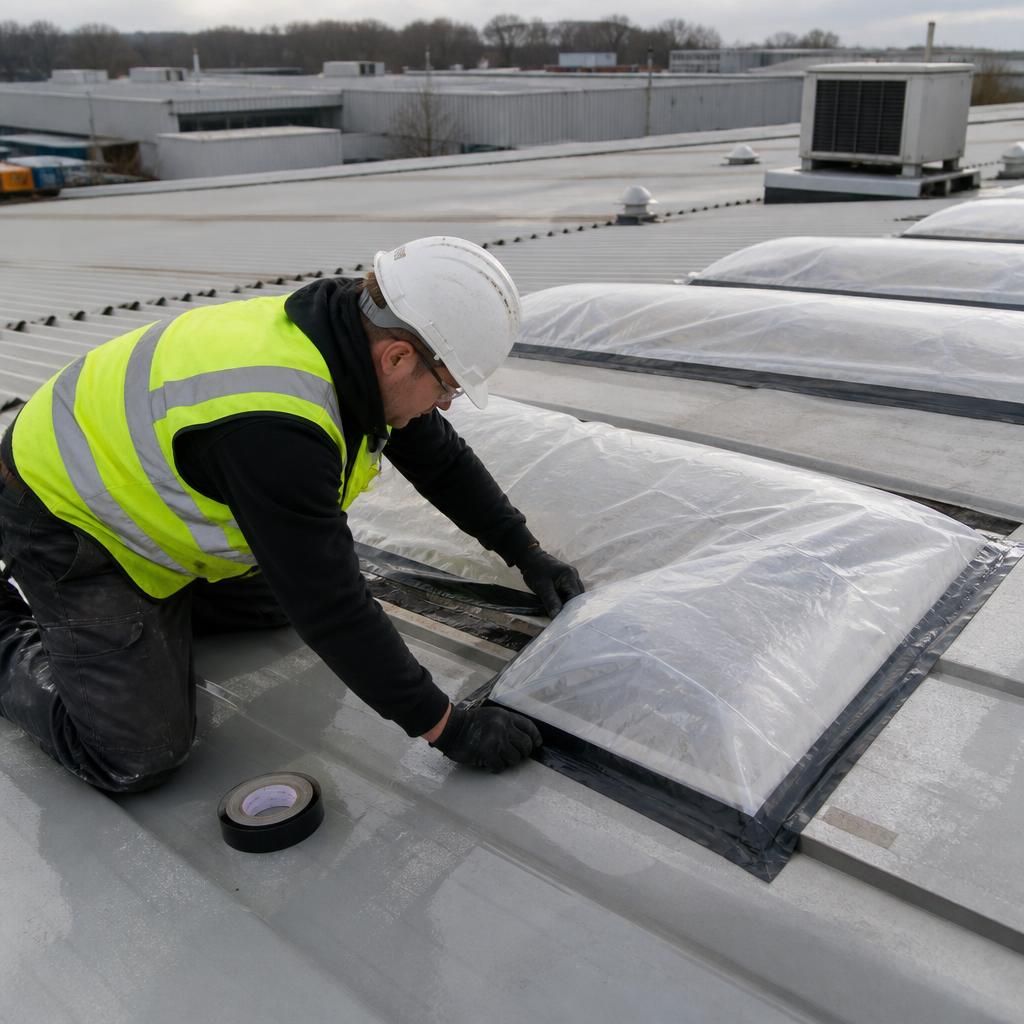
Preparation and drainage protection are essential parts of industrial roof cleaning. Before water or treatment is applied, the cleaning team protects rooflights, vents, plant, electrical equipment and other vulnerable areas. Loose debris is removed first, reducing the risk of blocked outlets and allowing the roof surface to be inspected.
Gutters, valleys and drainage outlets are checked throughout the work rather than left until the end. Wastewater, sludge, moss and treatment residues are controlled so they do not enter unsuitable drains, affect surrounding areas or create hazards below. This preparation helps the cleaning method work effectively while reducing the risk of damage, flooding and uncontrolled run-off.