
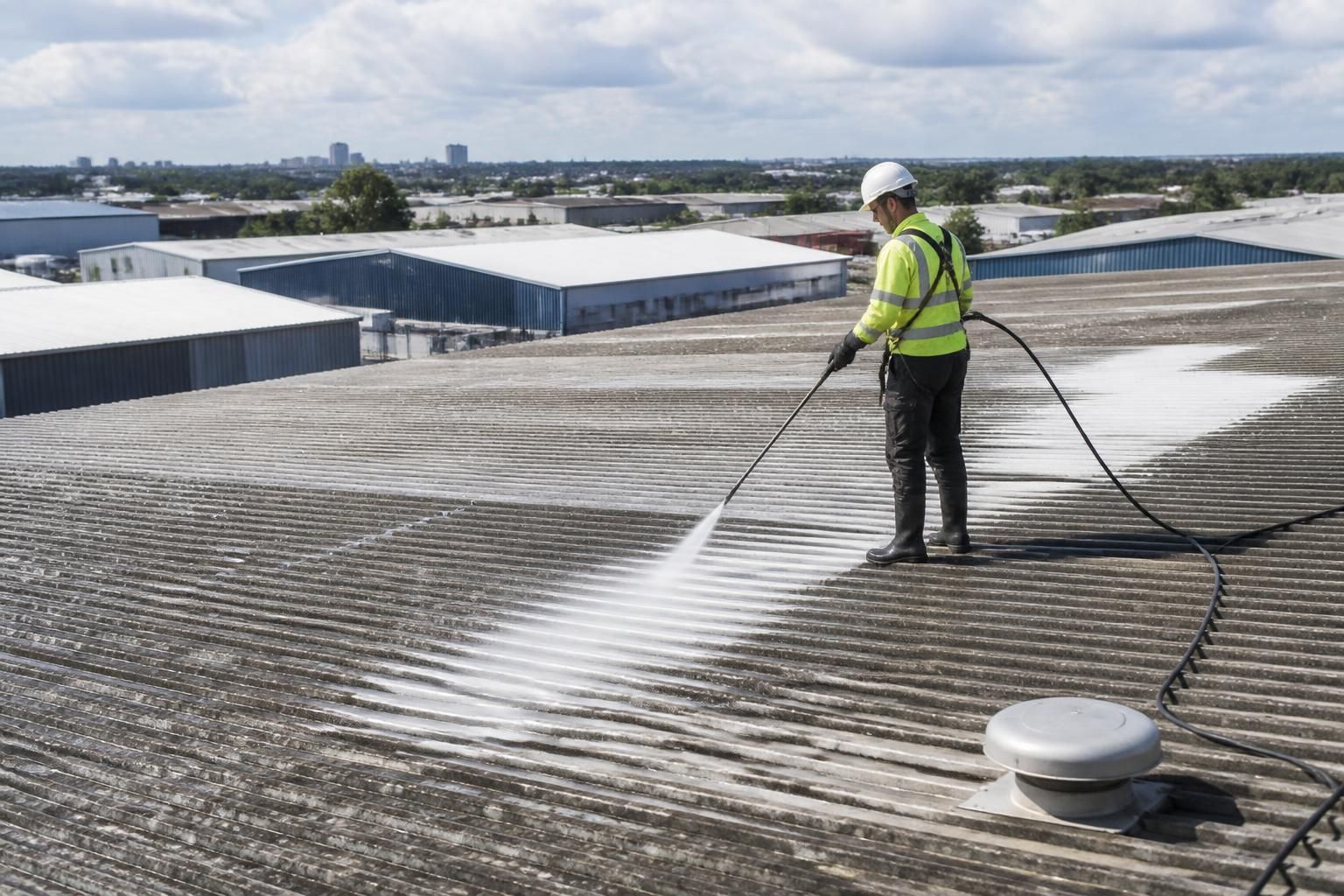
What are the benefits of using low-pressure cleaning methods for industrial roofs?
Low-pressure cleaning removes dirt, algae, moss and surface contaminants from industrial roofs without subjecting roofing materials, seals or protective coatings to the force associated with high-pressure washing. This gentler approach supports safer maintenance, helps preserve the roof’s integrity, reduces the risk of water ingress and can extend the service life of the roofing system.
Low-pressure cleaning is often the preferred method for industrial roofs because it removes dirt, algae, moss, bird fouling and other surface contaminants without exposing the roofing system to the mechanical force of high-pressure washing. When correctly specified and controlled, it helps protect membranes, coatings, seals, joints and fixings while providing a thorough, more predictable clean.
The term “low pressure” does not mean ineffective cleaning. Results depend on selecting the correct pressure, water flow, temperature, cleaning solution, dwell time and access method for the roof material and level of contamination. A professional contractor should assess these factors before work begins rather than applying one pressure setting across the whole building.
Protects the roof surface and its components
Industrial roofing systems can include single-ply membranes, coated metal sheets, built-up felt, EPDM, fibreglass, asphalt and composite panels. These materials may be durable, but their surfaces can be damaged by excessive pressure or an unsuitable cleaning technique. High-pressure water can lift edges, disturb laps, strip protective coatings, mark softer membranes and force water beneath seals or flashings.
Low-pressure application reduces these risks. It allows contaminants to be treated and rinsed away with less mechanical impact, helping to retain the roof’s existing finish and protective layers. The method is particularly useful where the roof has ageing details, exposed joints, delicate coatings or areas that require careful inspection during cleaning.
Reduces the risk of water ingress
Water ingress is not caused by cleaning pressure alone, but forceful washing can aggravate weaknesses around seams, penetrations, rooflights, outlets, flashings and service fixtures. Water may be driven into vulnerable details or behind partially failed coverings. Low-pressure cleaning limits the force directed at these areas and gives the operatives better control around known risk points.
This does not remove the need for a roof survey. Existing defects, open joints and failed seals should be identified before cleaning, recorded and dealt with through the appropriate maintenance process. Cleaning should never be used to conceal a defect or treated as a substitute for roof repair.
Helps extend the serviceable life of the roofing system
Moss, algae, organic debris and airborne grime can retain moisture against a roof surface. Persistent moisture may contribute to staining, biological growth, blocked drainage routes and the gradual deterioration of some finishes. Removing these contaminants with a controlled low-pressure process helps the roof dry more effectively and makes its condition easier to monitor.
It is more accurate to say that low-pressure cleaning supports roof longevity than to claim that it guarantees a particular service life. The result depends on the roof’s age, construction, exposure, drainage, previous maintenance and the condition of its coatings and seals. Regular, suitable cleaning can nevertheless help prevent avoidable deterioration and allow emerging problems to be identified earlier.
Provides effective cleaning without unnecessary abrasion
Industrial roofs often collect layers of contamination rather than a single type of dirt. Dust can combine with traffic emissions, bird fouling, lichen, moss and organic matter to form a tenacious film. Low-pressure cleaning can be combined with an appropriate detergent or biocidal treatment to loosen this material before it is rinsed away.
Where a treatment is used, it should be compatible with the roofing material, applied in a controlled manner and allowed to work for the required period. Operatives should avoid aggressive scrubbing or repeated passes where these could wear the surface. Some contamination may require staged treatment rather than a single intensive wash, particularly on older or heavily soiled roofs.
Improves safety and access control
Reducing the force of the water can help limit splashback, overspray and the risk of dislodging surface materials. It also gives operatives greater control when working near roof edges, rooflights, fragile panels and installed equipment. However, low pressure is not automatically a low-risk activity. Industrial roof cleaning still requires suitable access equipment, edge protection, fall prevention or restraint systems, exclusion zones and a method statement based on the site conditions.
Access arrangements should also protect people and property below the work area. The cleaning team may need to control pedestrian routes, isolate sensitive equipment, cover vulnerable areas and manage hoses and wastewater. A safe system should account for weather, roof condition, electrical services, fragile surfaces and the movement of plant or vehicles around the building.
Supports more controlled wastewater management
Low-pressure cleaning generally makes it easier to control the direction and spread of wash water, although the volume of wastewater still depends on the equipment and cleaning process used. Run-off can contain detergents, biological material, oil residues, dirt and particles from the roof surface. It should not be allowed to enter surface-water drains or surrounding ground without suitable controls.
Before work starts, the contractor should consider drain protection, collection or diversion arrangements, filtration where appropriate and the lawful disposal of contaminated water. Cleaning products should be selected with the roof, surrounding environment and drainage arrangements in mind. These controls are part of responsible industrial roof maintenance, not an optional addition to the cleaning itself.
Can reduce avoidable maintenance costs
A suitable low-pressure process can help reduce the likelihood of damage associated with overly aggressive washing, including disturbed coatings, damaged seals and water forced into vulnerable details. It can also make defects more visible, helping the client plan repairs before minor issues develop into more extensive maintenance requirements.
Cost savings should not be judged by the cleaning price alone. The correct comparison includes the risk of surface damage, the need for remedial work, disruption to operations, access requirements and the future maintenance condition of the roof. A properly planned clean is usually more valuable than a rapid process that leaves contamination behind or creates new defects.
Why the method must be tailored to the roof
Low-pressure cleaning is not suitable in exactly the same way for every roof. The contractor should confirm the roofing material, coating condition, drainage layout, contamination type and any manufacturer or warranty requirements. A small test area can help establish whether the proposed pressure and cleaning solution achieve the required result without marking, lifting or softening the surface.
Following cleaning, the roof should be checked for remaining contamination, blocked outlets, exposed defects and areas requiring repair. A clear record of the method used and any issues observed can support future planned maintenance. For industrial premises, this combination of controlled cleaning, competent access and condition reporting provides the main benefit: a cleaner roof maintained with less unnecessary stress on the roofing system.
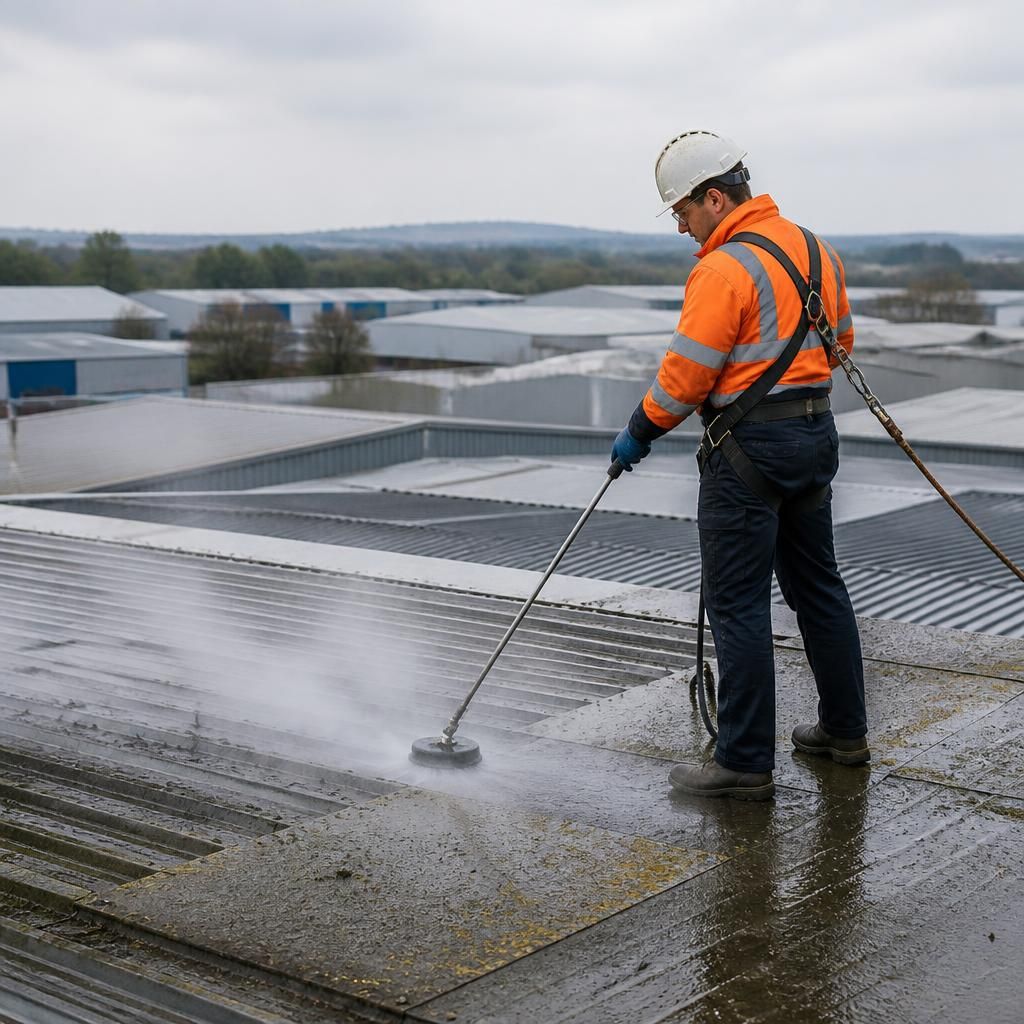
Low-pressure cleaning protects industrial roof surfaces by removing contamination with less mechanical force than high-pressure washing. This helps reduce the risk of lifting membrane edges, disturbing seals, stripping protective coatings or driving water beneath laps, flashings and roof penetrations.
The method is particularly suitable for roofs with ageing details, EPDM membranes, fibreglass, coated metal or other surfaces that could be marked or damaged by aggressive washing. A competent contractor will adjust the pressure, water flow, cleaning solution and dwell time to the roof material and contamination, using a small test area where appropriate. Low pressure does not replace a roof inspection, but it provides a controlled way to clean the surface while preserving its existing protective layers and making defects easier to identify.
Discuss Low-Pressure Cleaning for Your Industrial Roof
Discuss your industrial roof with Encanto Exterior Cleaning to identify whether a controlled low-pressure cleaning method is suitable for its materials, condition and contamination. We can assess the roof and recommend an appropriate cleaning and maintenance approach.