
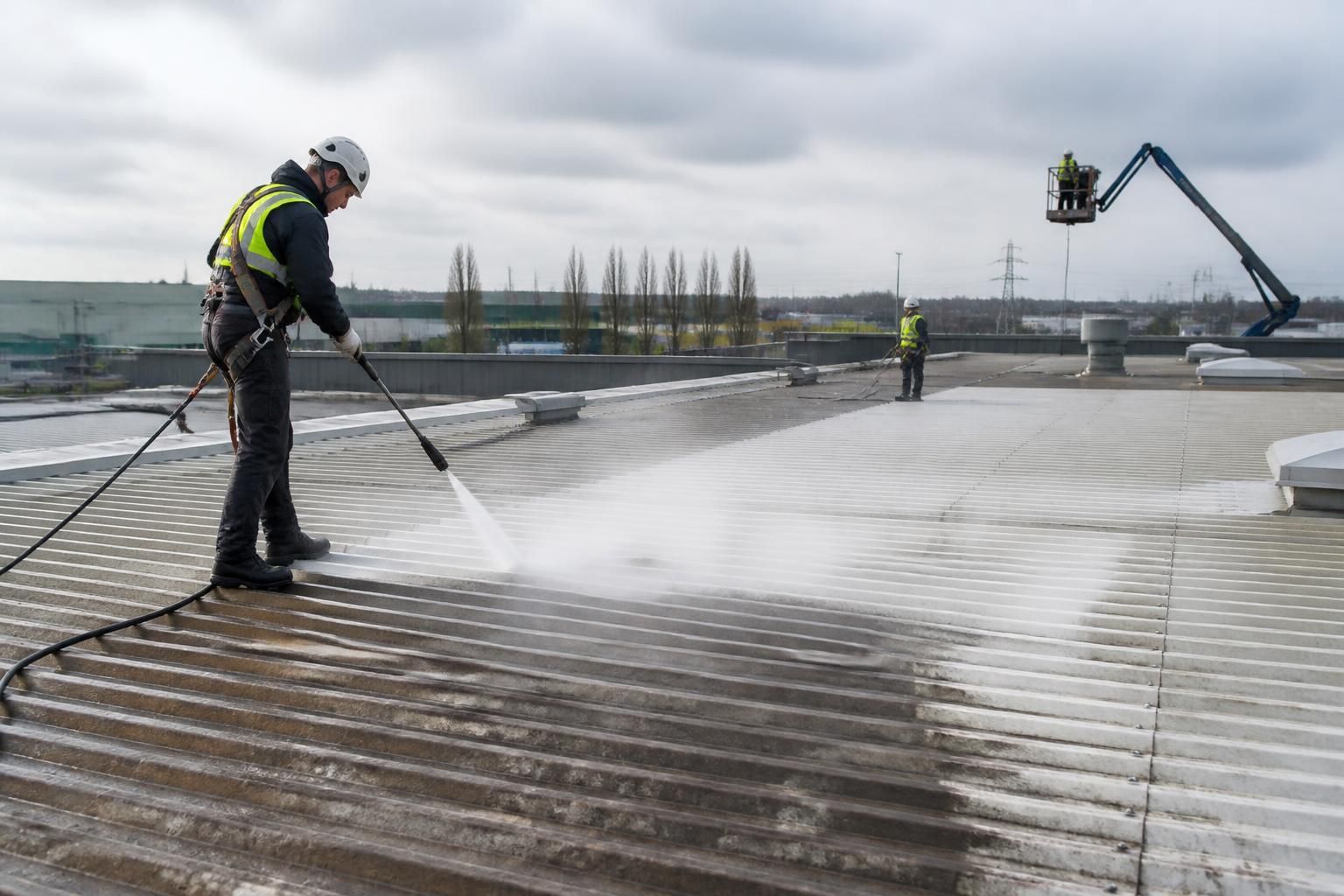
How does the experience level of an industrial roof cleaning team impact the quality and safety of the cleaning project?
An experienced industrial roof cleaning team can assess roof condition, select suitable cleaning methods and use access equipment safely, reducing the risk of damage, missed areas and accidents. Their knowledge also supports better preparation, environmental controls and consistent project delivery.
The experience level of an industrial roof cleaning team directly affects the quality, safety and reliability of the project. An experienced team can identify roof-specific risks before work begins, choose a cleaning method that removes contamination without damaging the roof, use access equipment correctly and control water, debris and runoff. This reduces the likelihood of surface damage, missed areas, worker injuries, disruption to the site and avoidable remedial costs.
More accurate inspection and planning
Industrial roofs vary considerably in construction, age, condition and access requirements. A competent team does not treat every roof as a standard pressure-washing job. Before cleaning, it should assess the roof covering, joints, laps, seals, outlets, gutters, rooflights, plant, fragile areas and any visible defects. It should also consider the building’s use, internal operations, pedestrian routes, vehicle movements and the presence of tenants or other contractors.
Relevant experience helps operatives recognise problems that may not be obvious from ground level, such as deteriorated coatings, exposed reinforcement, loose flashings, blocked drainage points or areas that cannot safely support foot traffic. Where materials or conditions are uncertain, the correct response may be to request further information, arrange a specialist survey or exclude a vulnerable area rather than proceed without suitable controls.
Better selection of cleaning methods
Experience improves the choice of pressure, temperature, cleaning products, dwell time and rinsing method. A team familiar with industrial roofing understands that aggressive cleaning can strip protective coatings, open weak joints, force water beneath laps or damage older and brittle surfaces. It will normally begin with the least aggressive effective method and adjust the process according to the roof material and contamination.
For example, low-pressure washing may be appropriate for removing general dirt, algae and organic growth from a sound surface, while steam cleaning or a controlled treatment may be more suitable where contamination is embedded or chemical use needs to be limited. EPDM, fibreglass, coated metal and other roofing systems each require appropriate handling. Testing a small, representative area can confirm that the proposed method achieves the required result without affecting the finish.
An experienced operative also knows when cleaning should stop. Severe corrosion, damaged membranes, suspected asbestos-containing materials, unstable coatings or significant water ingress may require specialist advice or repair before cleaning can safely continue.
Safer work at height
Roof cleaning combines work at height, wet surfaces, changing weather, powered equipment and potentially fragile structures. Experience helps the team plan how the roof will be reached and how operatives will move across it without relying on unsafe shortcuts. Depending on the structure, suitable controls may include mobile elevating work platforms, scaffold, edge protection, temporary walkways, crawling boards, restraint systems or other access arrangements.
Access equipment must be selected for the building and task, positioned on suitable ground and operated by people with the necessary competence. Experienced teams understand the importance of maintaining exclusion zones, protecting people below, securing hoses and cables, and preventing equipment or debris from contacting rooflights, cladding, vehicles and plant. They also account for rescue arrangements, emergency access, wind conditions and changes in site activity.
Good safety performance is not based solely on wearing personal protective equipment. It depends on a documented risk assessment and method statement, a site briefing, appropriate supervision, equipment checks and continuous monitoring as conditions change. Experience enables supervisors to recognise when the original plan is no longer adequate and to pause or revise the work.
More consistent cleaning quality
Inexperienced operatives may concentrate on visible areas while overlooking roof edges, parapets, behind plant, drainage channels, service penetrations and sheltered sections where dirt and biological growth often remain. An experienced team works methodically and understands where contamination is likely to accumulate.
It can also distinguish between staining that can be removed and permanent discolouration, corrosion or coating failure that cleaning alone cannot correct. This allows the work to be specified and evaluated realistically. Quality control may include pre-cleaning photographs, test areas, checks during the work and a final inspection of the roof surface, gutters, outlets and surrounding areas. Any defects discovered during cleaning should be recorded and reported rather than concealed by the finished appearance.
Improved protection of the building and its contents
Roof cleaning can affect more than the external surface. Water may enter through defective details, reach internal areas or affect electrical equipment, stock and production processes. Experienced contractors plan how water will be directed and removed, protect sensitive plant and coordinate with the building’s facilities team where necessary.
They are also more likely to identify operational constraints, such as delivery schedules, fire exits, ventilation systems, access roads and areas that must remain open. This helps reduce disruption and prevents cleaning activity from creating a separate hazard for the people using the premises.
Stronger environmental controls
Roof cleaning can dislodge silt, moss, coatings and cleaning residues. Experience helps the team prevent contaminated water from entering surface-water drainage systems or neighbouring areas. Appropriate controls may include drain covers, collection methods, temporary bunding, controlled rinsing and lawful disposal of collected waste.
The team should also select products according to the roof material, contamination and drainage arrangements, using only what is necessary and following the product information and site requirements. Environmental planning is particularly important where the premises are close to watercourses, public areas or sensitive landscaping.
More dependable project delivery
Experienced contractors generally identify access, weather, water supply, power, waste handling and coordination requirements before the work starts. This makes the programme and quotation more realistic and reduces last-minute changes. They can also communicate clearly about areas requiring repair, restrictions on access and the expected finish, rather than promising a result that the roof condition cannot support.
Experience does not remove every risk, and a long operating history is not a substitute for competent personnel, suitable equipment and proper planning. When appointing an industrial roof cleaning team, consider its experience with the specific roof types and access challenges involved, the quality of its risk assessments and method statements, how it manages fragile or damaged areas, and whether it provides clear records of the work. The strongest combination is relevant practical experience supported by formal safety procedures, trained operatives, effective supervision and transparent reporting.
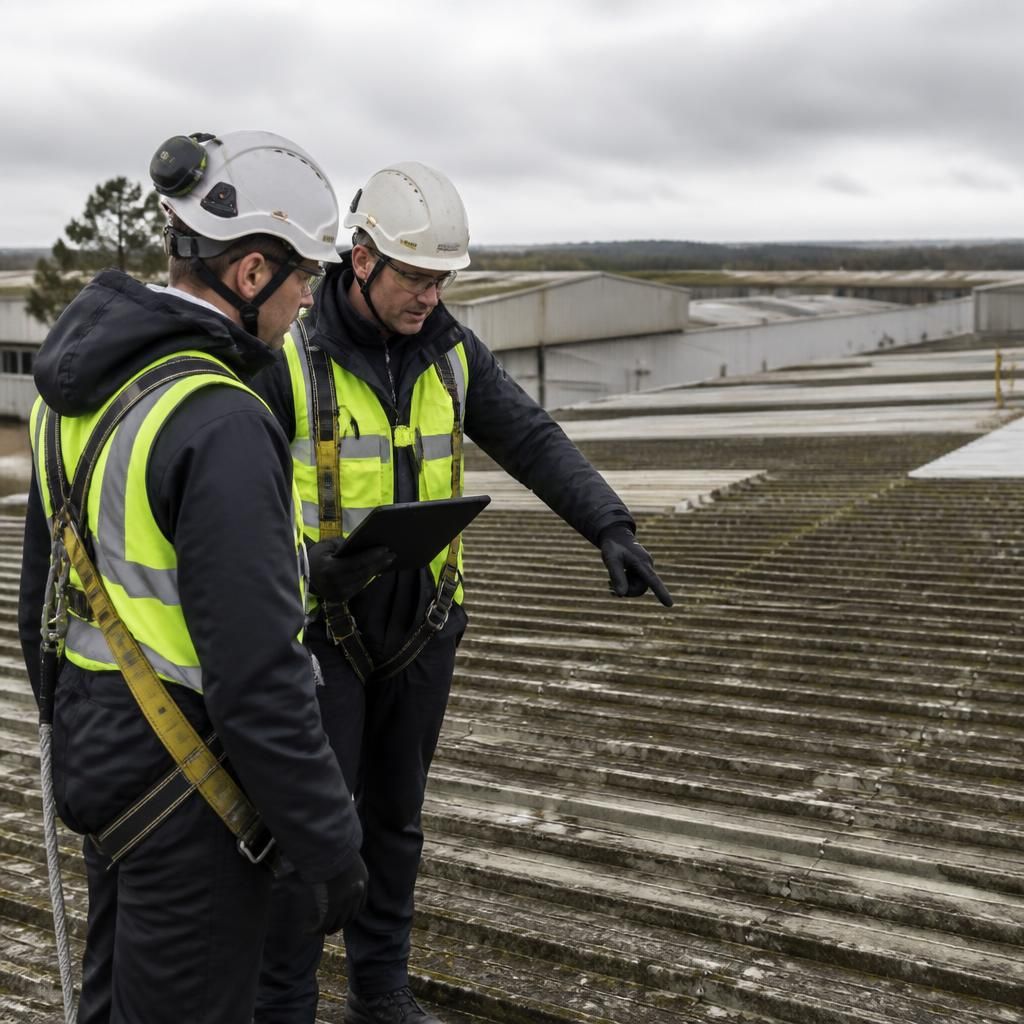
Experience matters because industrial roof cleaning must be adapted to the roof’s material, condition and access requirements. A knowledgeable team can recognise fragile areas, deteriorated coatings, exposed fixings and vulnerable joints before selecting a suitable cleaning method.
This helps prevent excessive pressure, heat or chemical use from damaging membranes, coatings, seals and rooflights. Experienced operatives also understand how to work safely around plant, drainage outlets and roof edges, using appropriate access equipment and exclusion zones. The result is more consistent coverage, fewer avoidable risks and a lower chance of cleaning causing damage that requires repair.