
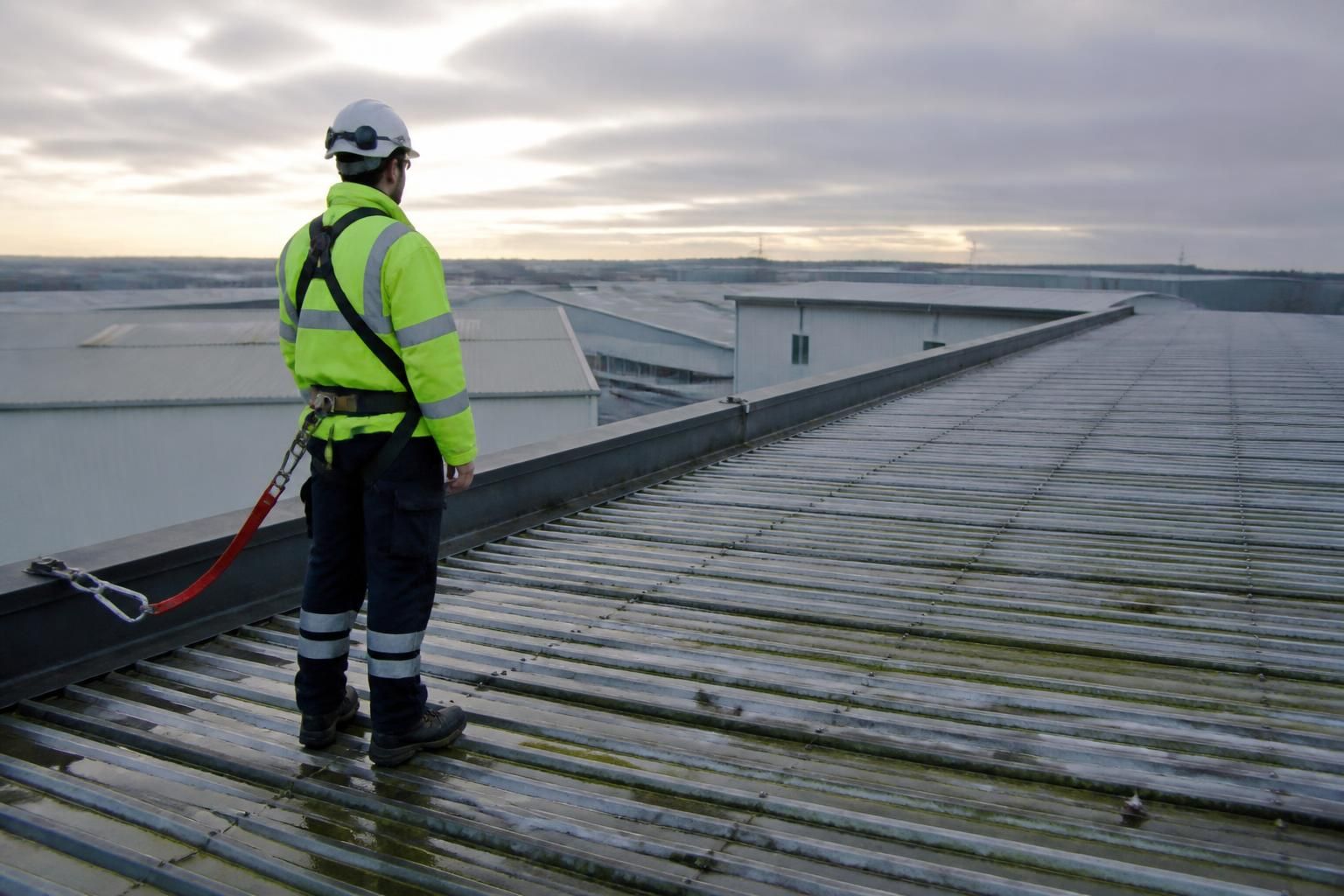
How often should industrial roofs be cleaned to maintain their integrity?
Industrial roofs should generally be inspected at least annually and professionally cleaned every two to five years, depending on the roof material, surrounding environment and level of contamination. Roofs beneath trees, near industrial processes or exposed to heavy pollution may require more frequent cleaning to prevent moss, debris, staining and blocked drainage from affecting their integrity.
Industrial roofs should generally be inspected at least once a year and professionally cleaned every two to five years, although the correct interval depends on the roof material, surrounding environment and type of contamination. A roof beneath trees, close to manufacturing processes or exposed to heavy traffic pollution may need cleaning more frequently, while a relatively exposed roof with little organic growth may need less frequent intervention.
Cleaning should form part of a planned roof maintenance programme rather than being carried out only after problems become visible inside the building. Dirt, moss, algae, bird fouling, leaves and airborne deposits can retain moisture against the roof surface, conceal defects and restrict the movement of rainwater. Over time, this can contribute to corrosion, coating deterioration, blocked outlets, staining and damage around laps, joints, fixings and roof edges.
An annual inspection helps establish whether the existing cleaning interval remains suitable. The inspection should assess the roof covering, flashings, seals, gutters, valleys, outlets, rooflights, penetrations and areas where water may collect. It should also identify whether contamination is superficial or beginning to affect drainage and the roof surface. Cleaning can then be scheduled according to the roof’s actual condition rather than relying on a fixed date.
The main factors that determine how often an industrial roof should be cleaned include:
- Roof location: Buildings near factories, busy roads, ports, construction activity or agricultural land can accumulate more dust, soot, particulate matter and organic debris.
- Vegetation: Trees close to the building increase the amount of leaves, seeds and organic matter reaching the roof and gutters. Shaded areas also remain damp for longer, encouraging moss and algae.
- Industrial activity: Dust, process residues, grease or chemical deposits may require a shorter cleaning cycle and a more carefully selected cleaning method.
- Roof design: Low-pitched roofs, internal gutters, parapets and areas with limited drainage are more likely to retain water and debris.
- Roof material and coating: Metal cladding, coated steel, single-ply membranes, EPDM, fibreglass and asbestos cement each have different tolerances. The cleaning method must be compatible with the surface and any protective finish.
- Previous maintenance: A roof that has been neglected may need an initial remedial clean before it can move to a routine maintenance cycle.
- Weather exposure: Persistent rain, frost, wind and fluctuating temperatures can worsen the effect of blocked drainage and trapped moisture.
A professional clean may be required sooner than planned if gutters or outlets are filling with debris, moss is becoming established, water is ponding, or staining and deposits are spreading across the roof. Internal signs such as damp patches, leaks, musty odours or damaged ceiling finishes should also trigger an inspection. These symptoms do not always mean that cleaning is the sole solution, so the roof should be assessed for failed seals, corrosion, damaged sheets and other defects at the same time.
For many commercial premises, a practical approach is to inspect the roof and drainage system annually, clear minor debris as necessary and arrange a more comprehensive clean on a two-to-five-year cycle. This cycle should be shortened where contamination is heavy or drainage is vulnerable. A post-winter inspection is often useful in the UK, while cleaning is usually best planned when weather conditions allow the roof to dry properly and access equipment can be used safely.
The cleaning process must be appropriate for the roof. Low-pressure washing, soft washing or steam cleaning may be suitable for some coated metal surfaces and robust coverings, whereas aggressive pressure washing can damage protective coatings, force water beneath laps or disturb fragile materials. EPDM and fibreglass roofs require compatible techniques, and asbestos-containing roof sheets must be managed in accordance with applicable UK requirements rather than treated as ordinary roofing. The roof manufacturer’s maintenance instructions and any warranty conditions should always be checked before work begins.
Cleaning frequency should also be coordinated with other maintenance activities. Gutter clearance, downpipe checks, removal of vegetation, inspection of rooflights and examination of sealants can often be completed during the same planned visit. Keeping records of inspection findings, contamination levels, cleaning dates and identified defects makes it easier to track deterioration and adjust the schedule.
Regular cleaning cannot prevent every form of roof failure, but it helps maintain clear drainage, exposes defects earlier and reduces the amount of moisture and contamination held against the roof. For an industrial building, the most reliable schedule is therefore condition-based: annual inspections, routine debris control and professional cleaning at intervals suited to the site’s environment, roof construction and level of contamination.
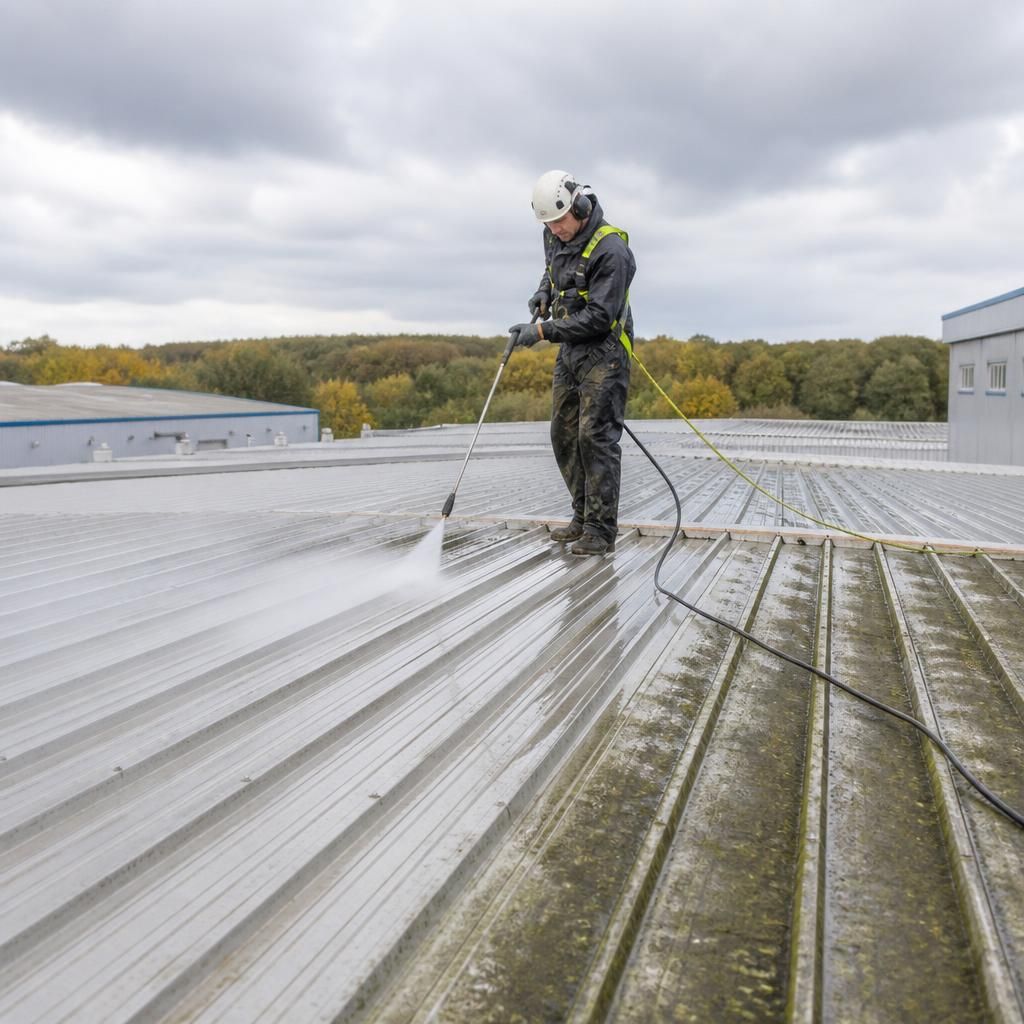
Industrial roof cleaning should be scheduled according to the roof’s condition and surrounding environment, rather than a fixed date alone. Annual inspections can identify when accumulated debris, moss, algae, bird fouling or industrial deposits are beginning to retain moisture or obstruct drainage.
Cleaning may be needed sooner where trees overhang the building, manufacturing activity produces airborne residue, or the roof has internal gutters and outlets that collect debris. During an inspection, particular attention should be given to ponding water, blocked outlets, deteriorating coatings, corrosion and contamination around laps, joints and fixings. Addressing these issues before they cause leaks helps preserve the roof covering and supports a more effective planned maintenance cycle.