
How often should industrial roofs be cleaned for optimal maintenance?
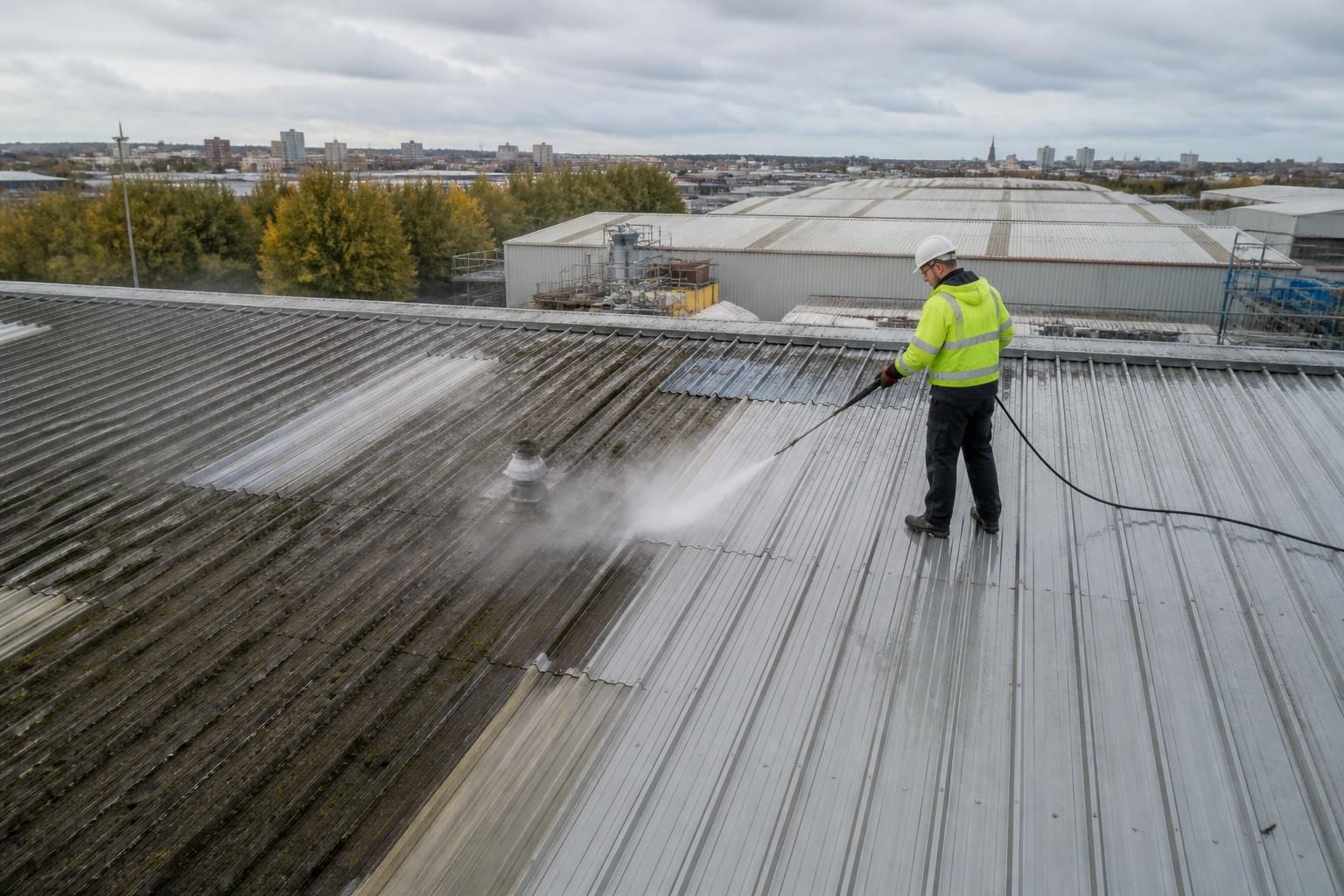
Industrial roofs should usually be professionally inspected at least annually and cleaned when dirt, moss, algae, bird fouling or industrial residues begin to accumulate; many sites require an annual or two-yearly cleaning schedule. The correct frequency depends on the roof material, surrounding environment, drainage performance, pollution levels and the manufacturer’s maintenance guidance.
Industrial roofs should usually be professionally inspected at least annually and cleaned when contamination begins to affect the roof surface, drainage or building operations. Many commercial sites are suited to an annual or two-yearly cleaning schedule, but the correct interval depends on the roof material, local environment, exposure to pollution, vegetation, bird activity, drainage performance and the manufacturer’s maintenance guidance.
Cleaning should form part of a planned maintenance programme rather than being delayed until the roof appears heavily soiled or begins to leak. A roof can remain structurally sound while accumulated organic growth, industrial residue or standing water gradually increases the risk of surface deterioration and blocked drainage.
Factors that determine cleaning frequency
- Location: Roofs close to busy roads, manufacturing areas, quarries, construction sites or dense urban environments often collect more soot, dust, airborne particles and chemical residue than roofs in cleaner surroundings.
- Vegetation: Trees near the building can deposit leaves, pollen and organic debris. These materials may retain moisture and encourage moss or algae, particularly on shaded roof sections.
- Bird activity: Persistent bird fouling can create hygiene concerns, obstruct outlets and contribute to surface contamination. Sites with nesting or roosting activity may require more frequent inspection and localised cleaning.
- Roof design and material: Profiled metal sheets, coated steel, asbestos-cement, EPDM, fibreglass and other roofing systems have different tolerances and cleaning requirements. The method must be suitable for the surface and must not damage coatings, seams, membranes or protective finishes.
- Drainage: Gutters, valleys, outlets and downpipes that collect debris need closer monitoring. Poor drainage can cause standing water, overflow and accelerated deterioration, even where the main roof surface looks relatively clean.
- Building use: Food, pharmaceutical, manufacturing, warehousing and public-sector premises may have stricter hygiene, appearance or operational requirements. Roof maintenance may therefore need to be coordinated with wider compliance and facilities-management programmes.
- Previous condition: A roof with established moss, algae, lichen, heavy staining or industrial deposits may need an initial restorative clean followed by more regular inspections to prevent rapid re-accumulation.
A practical maintenance timetable
An annual inspection is a sensible baseline for most industrial premises. This should assess the roof covering, flashings, seals, fixings, rooflights, gutters, outlets, access routes and areas where contamination is accumulating. Inspection findings can then determine whether the whole roof requires cleaning or whether targeted work is more appropriate.
An annual clean may be appropriate where the roof is exposed to heavy pollution, bird fouling, nearby vegetation or frequent debris. A two-yearly cleaning cycle may be suitable for a relatively clean site with effective drainage and limited organic growth, provided inspections between cleans confirm that the roof remains in satisfactory condition. Some buildings require interim gutter or outlet clearance even when a full roof clean is not yet necessary.
Cleaning should also be scheduled after construction work, refurbishment, demolition or nearby industrial activity if dust, mortar, render, paint or other residues have settled on the roof. These deposits can be more difficult to remove if they are allowed to harden or react with the surface over time.
Signs that an industrial roof needs cleaning sooner
- Visible moss, algae, lichen or spreading dark organic staining.
- Leaves, silt, bird fouling or other debris collecting around outlets and in gutters.
- Standing water remaining after normal rainfall.
- Overflowing gutters, blocked downpipes or damp staining below roof edges.
- Industrial dust, oil, chemical residue, cement, paint or other site-related deposits.
- Slippery access areas or contamination creating a safety concern for maintenance personnel.
- A noticeable deterioration in the appearance of roof coatings or external building surfaces.
- Reports of dampness, leaks or internal staining, which should be investigated rather than treated as a cleaning issue alone.
These signs do not always mean that the entire roof needs the same treatment. A professional assessment can distinguish between general cleaning, localised contamination removal, gutter maintenance, coating repairs and defects that require a roofing contractor.
Why delaying cleaning can increase maintenance requirements
Organic growth holds moisture against the roof surface and may obscure defects, seams and fixings during routine inspections. Debris in drainage channels can restrict water flow, while industrial deposits may stain or degrade protective coatings. Repeated wetting and drying, frost exposure and poor drainage can then place additional stress on vulnerable areas.
Cleaning does not repair failed membranes, damaged sheets, defective flashings or corroded fixings. However, it helps keep inspection points visible, supports effective drainage and allows defects to be identified before they become more disruptive. Roof cleaning should therefore be coordinated with planned repairs and condition surveys rather than treated as a substitute for them.
How the cleaning programme should be planned
- Review the roof type, age, manufacturer’s guidance and previous maintenance records.
- Inspect the roof and surrounding areas for contamination, access limitations, drainage problems and signs of damage.
- Identify sensitive features such as rooflights, membrane joints, coated panels, solar equipment and fragile surfaces.
- Select a compatible method, such as controlled low-pressure cleaning or steam cleaning, rather than assuming that high pressure is suitable.
- Plan work around weather conditions, site operations, environmental controls and safe access requirements.
- Clear and check gutters, outlets and downpipes as part of the wider maintenance visit where appropriate.
- Record the roof condition, areas cleaned, defects identified and recommended date for the next inspection.
Industrial roof cleaning should be carried out by trained operatives using suitable access equipment and a method appropriate to the roof system. Excessive pressure, unsuitable chemicals and uncontrolled runoff can damage surfaces, affect drainage systems or create avoidable environmental and safety risks.
For most sites, the best approach is to arrange an annual professional inspection, establish a cleaning interval based on the findings, and bring the next visit forward when contamination or drainage problems return. A condition-based programme protects the roof more effectively than relying on a fixed date alone and helps ensure that cleaning remains proportionate to the building’s actual exposure and maintenance needs.
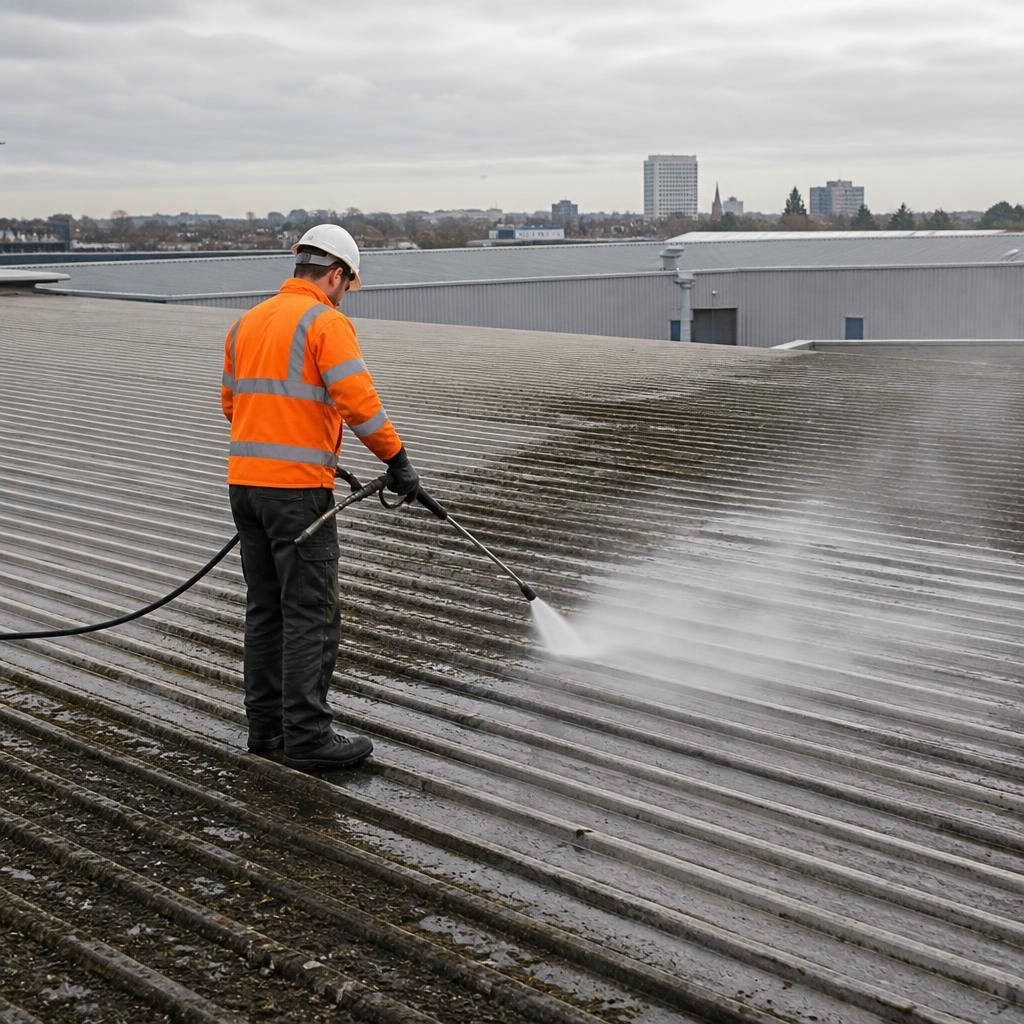
Industrial roof cleaning should be scheduled according to the roof’s condition and exposure, rather than a fixed date alone. An annual professional inspection provides a useful baseline, while sites affected by pollution, vegetation, bird fouling or poor drainage may need cleaning more frequently.
During each inspection, check for organic growth, industrial deposits, blocked gutters, standing water and contamination around rooflights, seams and outlets. Targeted cleaning may be sufficient where only drainage channels or isolated areas are affected. A full clean is more appropriate when deposits are widespread or beginning to affect drainage, surface condition or safe access.
After cleaning, record the roof’s condition and agree the next inspection date. This condition-based approach helps prevent unnecessary cleaning while ensuring that accumulating debris and contamination are dealt with before they contribute to avoidable maintenance problems.