
How does industrial roof cleaning contribute to building maintenance?
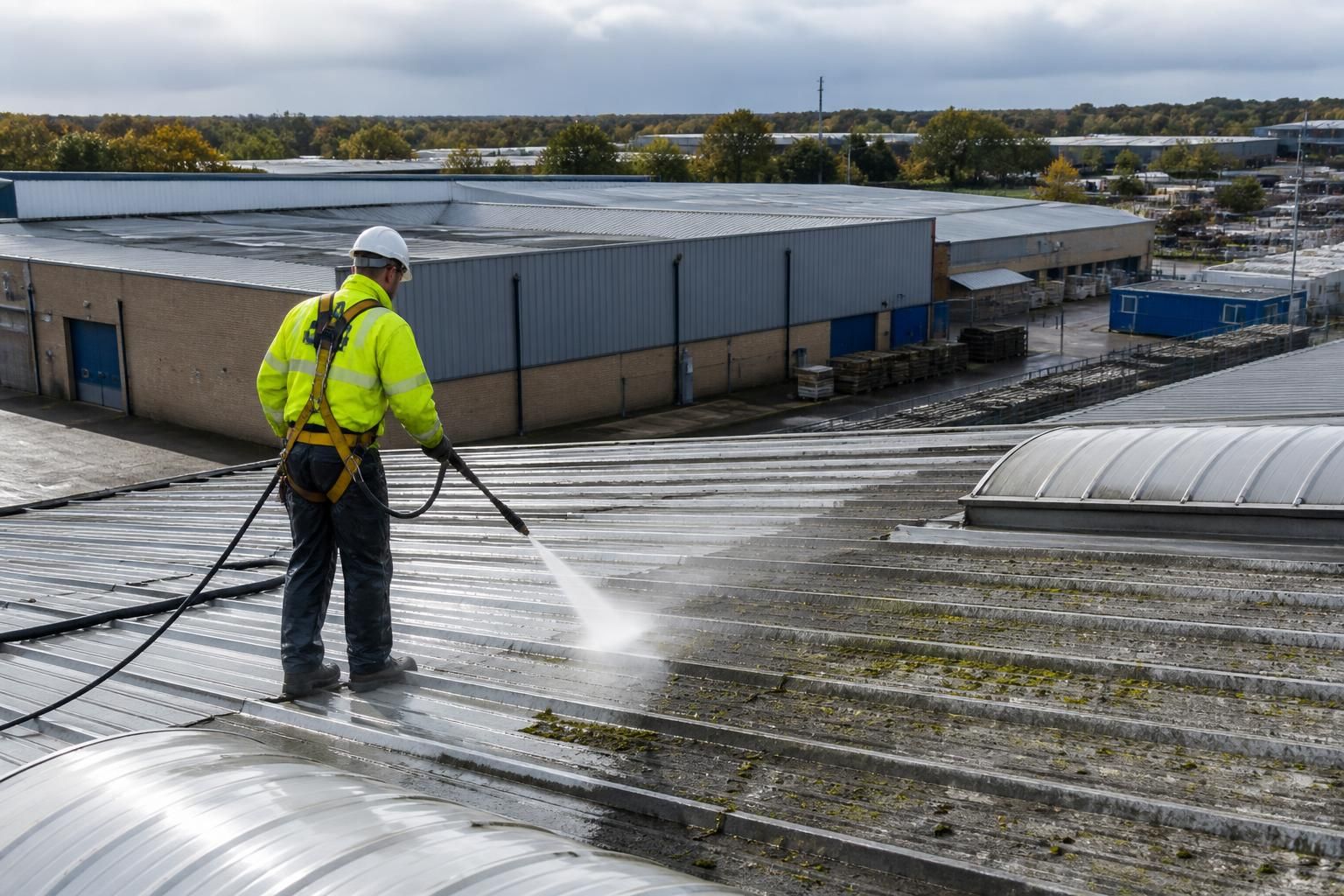
Industrial roof cleaning contributes to building maintenance by removing moss, algae, dirt, debris and pollutants that can retain moisture, obstruct drainage and accelerate roof deterioration. Regular, correctly specified cleaning helps protect roofing materials, identify defects early, maintain safe access and reduce the risk of more costly repairs or disruption.
Industrial roof cleaning contributes to building maintenance by removing moss, algae, dirt, debris and atmospheric pollutants that can retain moisture, obstruct drainage and accelerate deterioration. When it is properly planned and carried out using a method suited to the roof construction, cleaning helps preserve the roof covering, supports early defect identification, protects building contents and reduces the likelihood of disruptive repairs.
It is a maintenance activity, not a substitute for roof repairs. Cleaning removes harmful contamination and improves visibility, but damaged sheets, failed seals, corroded fixings, open laps, punctures and defective flashings still require assessment and repair by a suitably competent roofing professional. The main value of cleaning is that it keeps the roof in a more manageable condition and allows these issues to be identified before they develop into larger problems.
Preventing moisture-related deterioration
Moss, algae, leaves, silt and general industrial soiling can hold moisture against a roof surface. On metal roofs, persistent damp contamination may contribute to corrosion, particularly where the coating has already been damaged or where water collects around fixings and joints. On other roof systems, organic growth can penetrate or disturb surface finishes, while trapped moisture may increase the risk of staining, degradation and leaks.
Removing this contamination allows the roof to dry more effectively and reduces the length of time that moisture remains in contact with vulnerable areas. Cleaning is particularly useful where a roof has shaded sections, nearby trees, poor ventilation or exposure to airborne dust and industrial pollutants. It should always be combined with checks for the underlying cause of moisture retention, such as defective drainage or inadequate falls.
Keeping drainage routes clear
Industrial roofs often include gutters, outlets, valley gutters, downpipes, roof channels and drainage points that are essential to controlling rainwater. Leaves, moss, silt and windblown debris can restrict these routes, causing water to back up onto the roof or overflow onto façades, loading areas and walkways.
As part of a planned cleaning visit, these areas can be cleared and inspected for blocked outlets, standing water, damaged joints and signs of overflow. Maintaining effective drainage helps reduce loading on the roof structure, limits water ingress around edges and penetrations, and protects the wider building envelope from staining and saturation. Gutter and drainage cleaning should be included within the maintenance scope where it is safe and practical to do so, rather than assuming that cleaning the main roof surface is sufficient.
Extending the useful condition of roofing materials
Contamination can conceal the condition of the roof and, in some cases, contribute to the breakdown of protective coatings. A carefully selected cleaning process removes deposits without unnecessarily abrading the surface or forcing water beneath laps, seals or edge details. This can help preserve coated metal, membranes, tiles, concrete surfaces and other industrial roofing materials.
The method must be matched to the substrate. Low-pressure washing may be appropriate for some coated surfaces, while steam cleaning can remove biological growth and ingrained soiling with less reliance on chemical treatment. Delicate membranes, aged coatings and systems with exposed insulation require particular care. Aggressive pressure, unsuitable chemicals or mechanical scraping can cause more damage than the contamination itself, so the cleaning specification should be agreed following a roof assessment.
Supporting early defect detection
A heavily soiled roof can hide cracked panels, corrosion, failed sealant, loose flashings, damaged outlets and other defects. Cleaning improves visibility across the roof and gives maintenance personnel a better opportunity to record areas requiring further attention. It can also reveal recurring problems, such as staining beneath a failed joint or moss growth associated with persistent dampness.
Cleaning contractors should not present a visual inspection as a structural survey or guarantee that every defect has been identified. However, observations made during the work can provide useful maintenance information when recorded clearly and passed to the responsible building or facilities manager. Photographs, marked-up site plans and notes about inaccessible areas can help organise follow-up repairs and future cleaning visits.
Reducing operational and safety risks
Debris and organic growth can create slip hazards on roof access routes, walkways, platforms and areas used by maintenance teams. Blocked drainage can also lead to wet surfaces and overflowing water around entrances, service yards or plant areas. Removing contamination and keeping designated access routes clear supports safer routine inspections and maintenance activities.
Roof cleaning itself involves significant risks, including falls from height, fragile roof surfaces, unprotected edges, skylights, rooflights, electrical services, plant and contaminated run-off. A safe system of work should therefore be based on a site-specific assessment. It may require edge protection, suitable access equipment, exclusion zones, fall protection, controlled water use and coordination with the building occupier. Fragile areas must never be treated as ordinary walking surfaces, and operatives should not rely on visual appearance alone to determine whether a roof can support access.
Protecting internal assets and business operations
Roof defects and blocked drainage can allow water to enter production areas, warehouses, offices and plant rooms. Even a minor leak can affect stock, packaging, electrical equipment, machinery, insulation and internal finishes. In operational premises, water ingress may also interrupt production, storage or distribution activities.
Planned cleaning helps reduce avoidable exposure to these risks by keeping the external envelope in a more serviceable condition and highlighting defects before they become urgent. Work should be scheduled around the building’s activities, weather conditions and access requirements. Appropriate protection is also needed for skylights, ventilation openings, loading areas, vehicles and sensitive equipment during the cleaning process.
Improving the quality of planned maintenance
Industrial roof cleaning is most effective when incorporated into a wider planned maintenance programme. The programme should consider the roof material, age and condition, surrounding trees and buildings, local exposure, drainage performance, previous repairs, access arrangements and the consequences of a leak. Cleaning intervals should be based on these factors and on inspection findings, rather than applied as an identical schedule to every property.
A suitable maintenance process normally includes:
- Reviewing available roof information, previous repair records and known access restrictions.
- Inspecting the roof and surrounding areas to identify contamination, fragile sections, drainage issues and visible defects.
- Choosing a cleaning method, pressure level, treatment and access system compatible with the roof construction.
- Protecting people, vehicles, plant, drainage systems and sensitive areas from cleaning operations and run-off.
- Removing waste and organic material responsibly, without allowing debris or chemicals to enter unsuitable drainage systems.
- Recording completed work, inaccessible areas, defects observed and recommendations for further action.
- Reviewing the roof after cleaning and arranging repairs or specialist surveys where required.
Managing environmental and compliance considerations
Cleaning can produce contaminated water containing dirt, biological growth, oils or residues from the roof surface. Run-off should be controlled so that it does not enter surface-water drains, watercourses, neighbouring land or areas where it could create a hazard. The cleaning plan should address collection, filtration, containment and disposal requirements, as well as the responsible use of detergents and treatments.
Some roofing materials require additional controls. Roofs containing asbestos, for example, must be assessed and managed in accordance with applicable regulations and competent specialist procedures. They should not be cleaned using a process that could release hazardous fibres. Similarly, coated systems, photovoltaic equipment, roof-mounted plant and rainwater harvesting arrangements may require specific precautions or separate specialist input.
Balancing cleaning with repair and replacement decisions
Cleaning can improve the appearance and serviceability of a roof, but it should not be used to disguise advanced deterioration. If the covering has widespread corrosion, repeated leaks, severe coating failure or structural concerns, cleaning may need to form part of a broader repair or replacement plan. In some cases, a survey before cleaning is the most appropriate first step, particularly where the roof is old, fragile or poorly documented.
For most industrial premises, the practical benefit comes from combining suitable cleaning with regular inspections, prompt minor repairs, effective drainage maintenance and accurate records. This approach helps building owners and facilities teams make informed decisions, control avoidable risks and maintain the roof as part of the whole building rather than treating cleaning as an isolated cosmetic service.
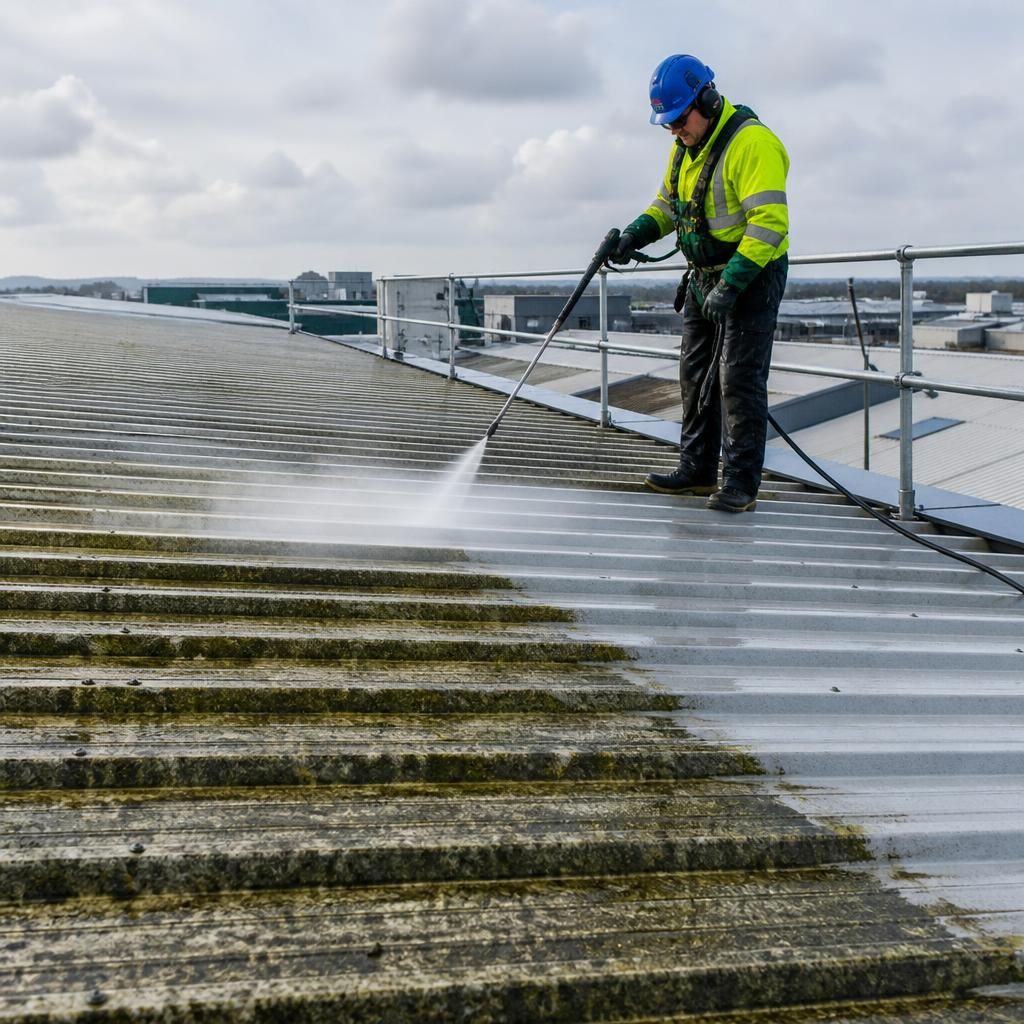
Industrial roof cleaning supports building maintenance by removing contamination that holds moisture, blocks drainage and conceals defects. Clearing moss, leaves, silt and industrial deposits helps rainwater flow correctly and makes it easier to identify corrosion, damaged seals, loose fixings and failing flashings before they contribute to water ingress.
Cleaning should form part of a planned maintenance programme rather than replace repairs. A suitable method protects the roofing material, while records of defects, inaccessible areas and drainage issues help facilities teams arrange follow-up work and manage the roof’s condition more effectively.