
What specific cleaning products and solutions are most effective and safe for use on EPDM and fibreglass roof surfaces?
The safest effective option is a manufacturer-approved, non-abrasive roof cleaner that is pH-neutral or mildly alkaline, biodegradable and free from petroleum solvents, strong acids, caustic alkalis and aggressive oxidisers; a mild detergent solution is generally suitable for both EPDM and fibreglass (GRP) surfaces. Products should be tested on a small area first and thoroughly rinsed, while abrasive powders, solvent-based degreasers and unapproved bleach or biocide treatments should be avoided because they can damage the membrane or fibreglass finish.
The safest effective products for EPDM and fibreglass (GRP) roofs are manufacturer-approved, non-abrasive cleaners that are pH-neutral or mildly alkaline, biodegradable and free from petroleum solvents. A properly diluted mild detergent solution will usually remove general dirt, traffic film, bird fouling and light organic growth without harming the roof surface. The product must still be compatible with the specific membrane, gelcoat, trims, sealants and any applied coating, as roof systems can vary.
EPDM is a synthetic rubber membrane. It is resilient, but solvents, petroleum-based products, abrasive powders and unsuitable degreasers can cause swelling, softening, staining or loss of surface performance. Fibreglass roofs are generally formed from glass-reinforced plastic with a resin and gelcoat surface. These surfaces can be dulled or scratched by abrasive cleaning, while aggressive chemicals may attack the resin, alter the finish or affect older, weathered areas.
Suitable product types include:
- pH-neutral roof cleaners: These are appropriate for routine removal of dust, dirt and light atmospheric deposits from both EPDM and GRP, provided the manufacturer permits their use.
- Mild, non-caustic detergents: A low-strength detergent solution can loosen oily film and general soiling without relying on harsh chemistry. It should be used at the specified dilution rather than applied neat.
- Manufacturer-approved membrane cleaners: EPDM manufacturers and roofing system suppliers may specify particular cleaners for their membranes, seams, adhesives and protective finishes. Their guidance should take priority over a general-purpose product label.
- GRP-safe cleaners: Products intended for fibreglass, gelcoat or GRP surfaces are preferable where the roof has a visible resin finish, coloured coating or protective layer.
- Specialist biocidal treatments: These may be appropriate for moss, algae or lichen, but only where the treatment is confirmed as suitable for the roof system and surrounding materials. They should not be selected solely because they are strong or fast-acting.
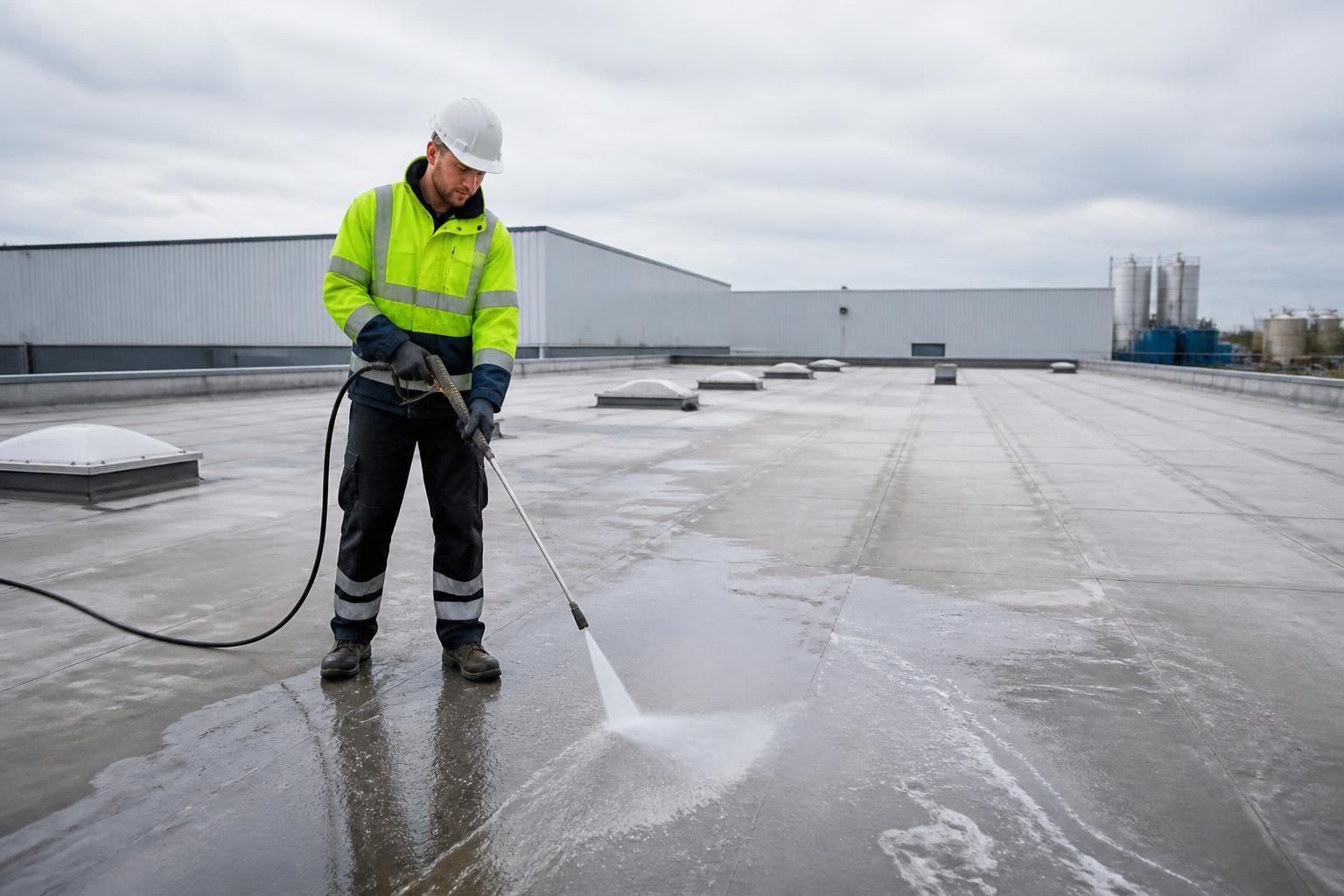
For normal maintenance, cleaning should begin with the least aggressive method: remove loose debris, apply the diluted solution, allow suitable dwell time without letting it dry, then agitate gently with soft brushes or suitable low-pressure equipment. Thorough rinsing is important because dried detergent or loosened contamination can leave marks and may affect adjoining surfaces. On commercial premises, the cleaning method should also account for drainage, rainwater goods, plant equipment, glazing, cladding and areas below the roof edge.
Products and substances that should generally be avoided include:
- Petroleum solvents, white spirit, paraffin, fuel-based degreasers and solvent-heavy adhesive removers;
- Strong acids, concentrated caustic alkalis and unapproved oxidising chemicals;
- Abrasive powders, scouring creams, wire brushes and stiff tools that can scratch GRP or abrade EPDM;
- Unapproved bleach, chlorine-based cleaners and concentrated disinfectants;
- Unlabelled moss and algae treatments with no stated compatibility for rubber membranes or fibreglass;
- Products containing harsh solvents intended for metal, masonry or industrial degreasing rather than roof membranes.
Bleach and biocides require particular care. They may remove visible organic growth, but an unsuitable concentration can discolour fibreglass, affect coatings, damage adjacent metals or compromise membrane accessories. Residues can also enter rainwater systems and create an environmental risk. Where biological growth is extensive, the correct treatment depends on the roof construction, the type of growth and the required control of runoff. Chemical treatment should therefore follow the product instructions and the roofing manufacturer’s requirements, not be used as a substitute for selecting the right cleaning process.
Before applying any cleaner across a roof, the product should be checked against the available roof specification or warranty information. A small, inconspicuous test area should then be cleaned using the proposed dilution and equipment. The area should be inspected after rinsing and drying for changes in colour, gloss, tackiness, swelling, streaking or coating adhesion. This is particularly important on older EPDM, oxidised GRP, repaired areas and roofs with previous coatings, sealants or waterproofing treatments.
The safest choice can also depend on the contamination. General dirt normally needs only a mild detergent. Grease or construction residue may require a specialist cleaner, but the product must be compatible with EPDM or GRP and removed promptly after use. Moss, algae and lichen may need controlled manual removal followed by an approved treatment. Bird fouling should be softened rather than scraped dry, and appropriate hygiene precautions should be used during its removal.
Cleaning products are only one part of protecting the roof. Excessive pressure, concentrated spray at laps and seams, aggressive brushing and careless use of access equipment can cause more damage than the detergent itself. Operatives should use controlled pressure, soft or non-abrasive tools and suitable protection around outlets, flashings, trims, rooflights and sealant joints. Any product used should be prevented from drying on the surface and rinsed away in accordance with the manufacturer’s instructions.
For commercial and industrial roofs, product selection should also include environmental controls. Runoff should not be allowed to enter surface-water drains unless this is permitted and appropriate. Where cleaning water contains detergent, biological material or chemical treatment, it may need to be contained, diverted or disposed of in line with site procedures and applicable environmental requirements. A biodegradable product is preferable, but biodegradability alone does not make unrestricted discharge acceptable.
In practice, a manufacturer-approved pH-neutral or mildly alkaline cleaner, used at the correct dilution with gentle mechanical action and thorough rinsing, is the most reliable routine option for both roof types. Where the surface is coated, heavily contaminated, repaired or subject to a warranty, the specification should be confirmed before cleaning. This avoids treating EPDM and fibreglass as interchangeable materials and helps preserve the membrane, finish, seals and long-term weather resistance.
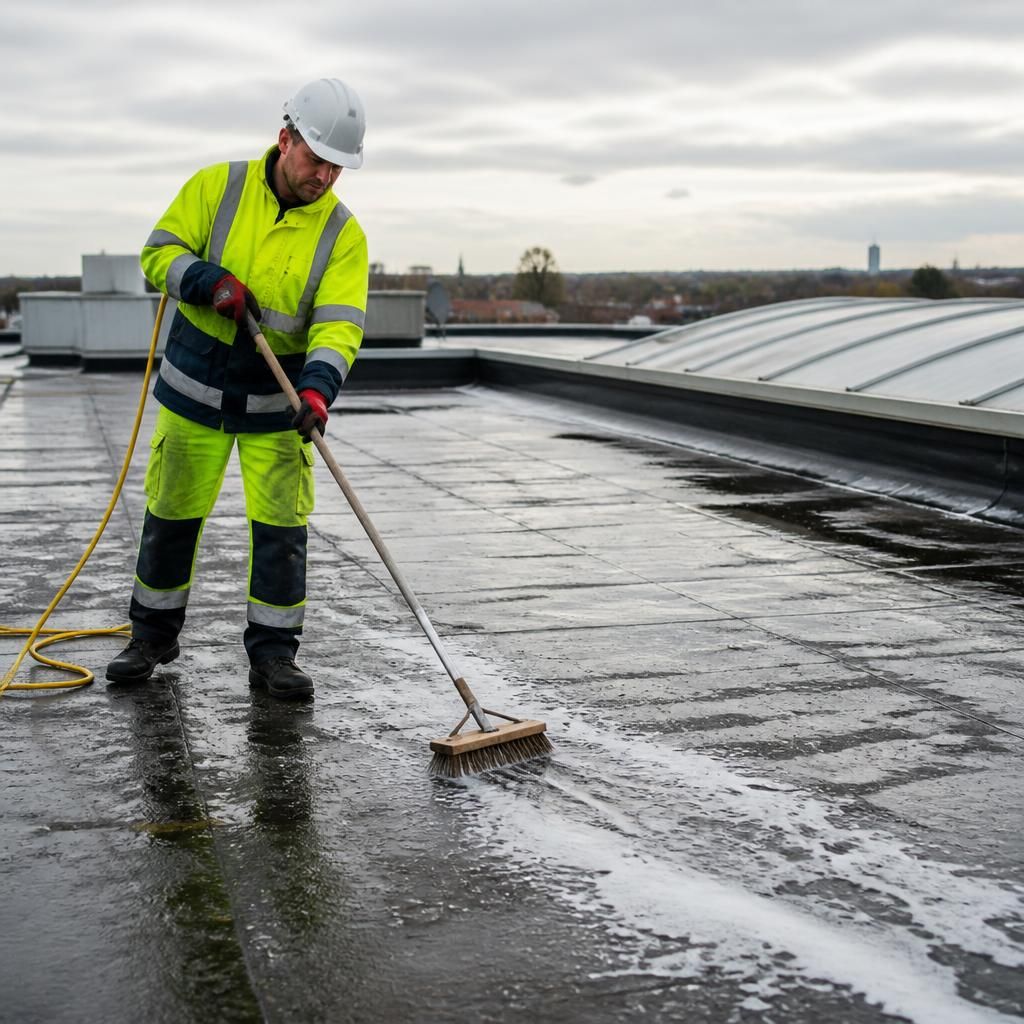
The safest cleaning solution for EPDM and fibreglass roofs is usually a manufacturer-approved, non-abrasive cleaner that is pH-neutral or mildly alkaline. A diluted mild detergent can remove routine dirt, bird fouling and light organic deposits without attacking the rubber membrane, fibreglass resin or gelcoat, provided it is confirmed as compatible with the roof system.
Product selection should be checked against the roof specification, warranty and any coatings, sealants or repairs. Before wider application, test the solution on a discreet area and inspect the surface after rinsing and drying. Do not use petroleum solvents, abrasive powders, wire brushes, strong acids, concentrated caustic products or unapproved bleach treatments. These can cause swelling, staining, scratching, loss of gloss or deterioration around seams and accessories. Apply the cleaner at the stated dilution, prevent it from drying, use gentle agitation and rinse thoroughly while controlling runoff.