
What signs indicate that an EPDM or fibreglass roof requires professional cleaning?
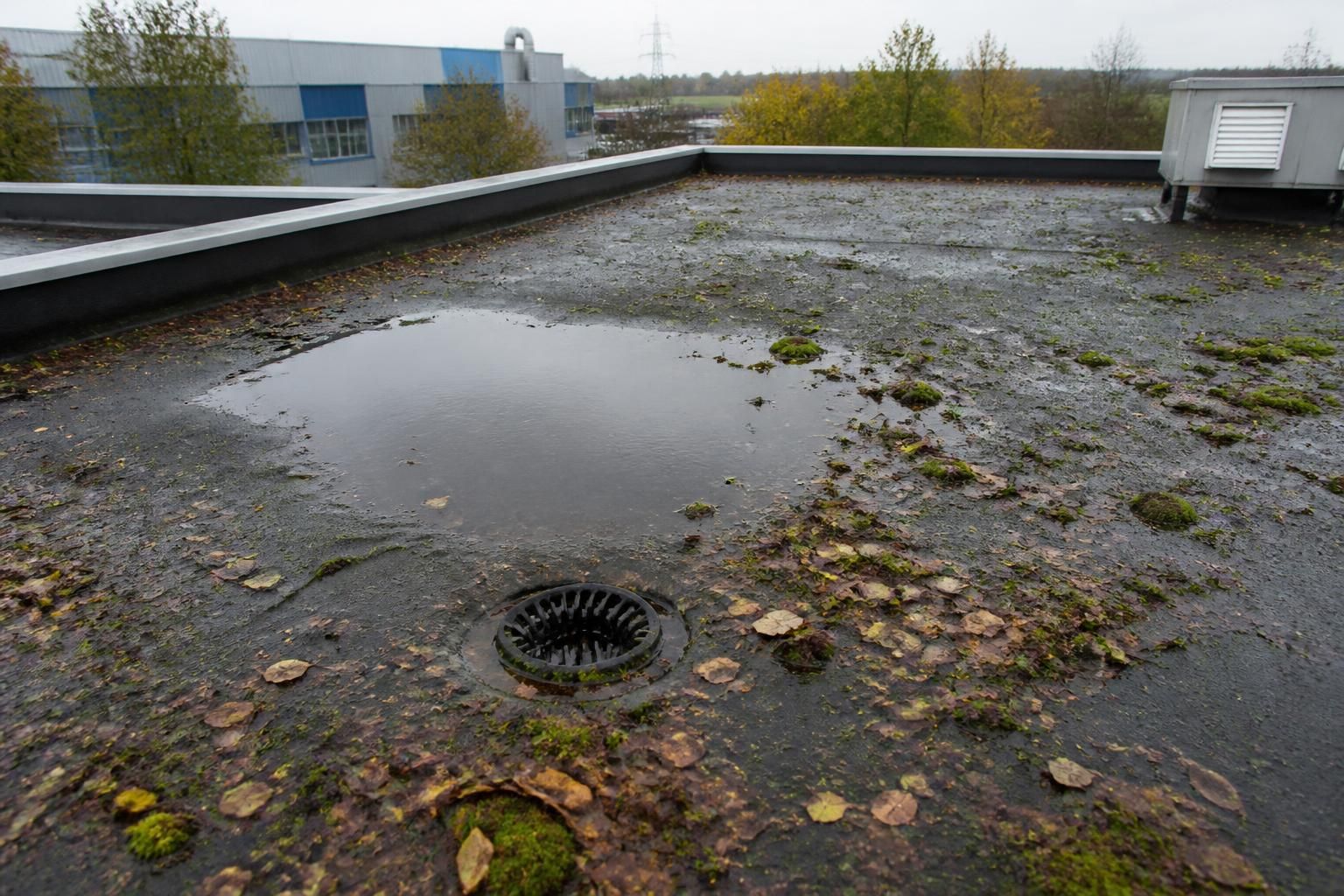
An EPDM or fibreglass roof may require professional cleaning when moss, algae, lichen, leaf debris, staining, blocked drainage outlets or persistent surface dirt are visible. Cleaning is also advisable if water is pooling, drainage is restricted or the roof’s appearance and surface condition are deteriorating, as unsuitable equipment or chemicals can damage these materials.
An EPDM or fibreglass roof is likely to require professional cleaning when organic growth, persistent staining, accumulated debris, blocked drainage or declining surface condition is evident. Early cleaning removes contaminants before they retain moisture, restrict drainage or contribute to damage. Because both materials can be affected by unsuitable pressure, solvents and abrasive methods, visible contamination should be assessed and treated with a system appropriate to the roof.
Common signs that professional cleaning is needed include:
- Moss, algae or lichen growth: Green, black or pale growth on the roof surface indicates prolonged moisture retention. Moss can hold water against the membrane, while lichen may attach firmly and become more difficult to remove if left untreated.
- Persistent dark or patchy staining: Discolouration may be caused by algae, atmospheric deposits, bird fouling, airborne pollution or decomposing organic matter. Staining that remains after normal rainfall generally requires controlled cleaning rather than additional scrubbing or aggressive pressure washing.
- Leaves, twigs and organic debris: Debris commonly collects around roof edges, outlets, rooflights, upstands and areas protected from wind. As it decomposes, it can create a nutrient-rich, damp layer that encourages biological growth and may contribute to blocked drainage.
- Blocked or slow-draining outlets: Water draining slowly, overflowing from outlets or remaining around drainage points is a clear reason to arrange an inspection and clean. The blockage may be caused by silt, leaves, moss or other deposits, although damaged outlets or inadequate falls must also be ruled out.
- Standing water or recurring ponding: Cleaning will not correct a structural drainage problem, but removing debris and deposits can restore the flow to outlets where surface contamination is the cause. Persistent ponding should be reported for further investigation because it may indicate blocked drainage, membrane movement or insufficient falls.
- Debris accumulating at roof edges and details: Build-up around parapets, seams, flashings, kerbs, penetrations and plant supports can conceal defects and keep these areas wet. Professional cleaning allows these details to be cleared while reducing the risk of lifting, tearing or disturbing the roof covering.
- A noticeable decline in appearance: A roof that has become visibly dull, dirty or heavily marked may need cleaning as part of planned property maintenance. On commercial premises, removing surface contamination can also help maintain a consistent and professional external appearance.
- Contamination following nearby works: Construction dust, cement residue, plaster, paint particles and other site deposits can settle on a roof. These materials should be identified before cleaning, as some require specialist removal and some may cause damage if allowed to harden or are treated with an unsuitable chemical.
- Bird fouling or localised contamination: Accumulated fouling can be corrosive to some associated components and may create hygiene concerns, particularly near entrances, ventilation equipment or occupied areas. It should be removed using suitable controls rather than dry brushing or uncontrolled washing.
Some warning signs indicate that cleaning may not be the only requirement. Cracked or lifted fibreglass, exposed reinforcement, blistering, punctures, cuts, loose edges, damaged trims and deteriorated sealant should be reported during the assessment. On EPDM, wrinkling, splitting, shrinking at edges or damage around penetrations may point to a repair issue. Cleaning should not be used to conceal or work over defects, and a specialist may recommend repairs before the roof is washed.
It is also important to distinguish dirt from material deterioration. EPDM can show weathering or surface changes that are not removed by cleaning, while fibreglass may have a worn or chalking finish caused by ultraviolet exposure. If the surface is already fragile, heavy pressure, stiff brushes, solvents or incompatible detergents can worsen the condition. A professional assessment should therefore consider the membrane type, age and condition, previous treatments, drainage layout and the type of contamination present.
Before cleaning, a suitable contractor should:
- inspect the roof and identify vulnerable areas, drainage points, seams, edges and penetrations;
- confirm whether the covering is EPDM, fibreglass or another material with different cleaning requirements;
- remove loose debris using controlled methods that do not damage the surface;
- select a compatible cleaning solution and test it in an inconspicuous area where appropriate;
- control water, runoff and access to protect the building, occupants, equipment and surrounding surfaces; and
- record any defects that need repair or further inspection rather than treating them as surface dirt.
Professional cleaning is particularly advisable when the roof is extensive, difficult to access, close to rooflights or plant, or connected to drainage systems that could be affected by debris and runoff. It is also safer when contamination is widespread or firmly bonded, because attempting to remove it with domestic pressure washers, scraping tools or household chemicals can damage the waterproofing layer.
A clean roof should still be monitored after the work. Check for renewed moss or algae, debris around outlets, recurring ponding, damaged details and new staining, especially after severe weather or nearby building work. Planned inspections and cleaning can identify developing problems early, but cleaning itself is not a substitute for a roof condition survey or repair work where defects are present.
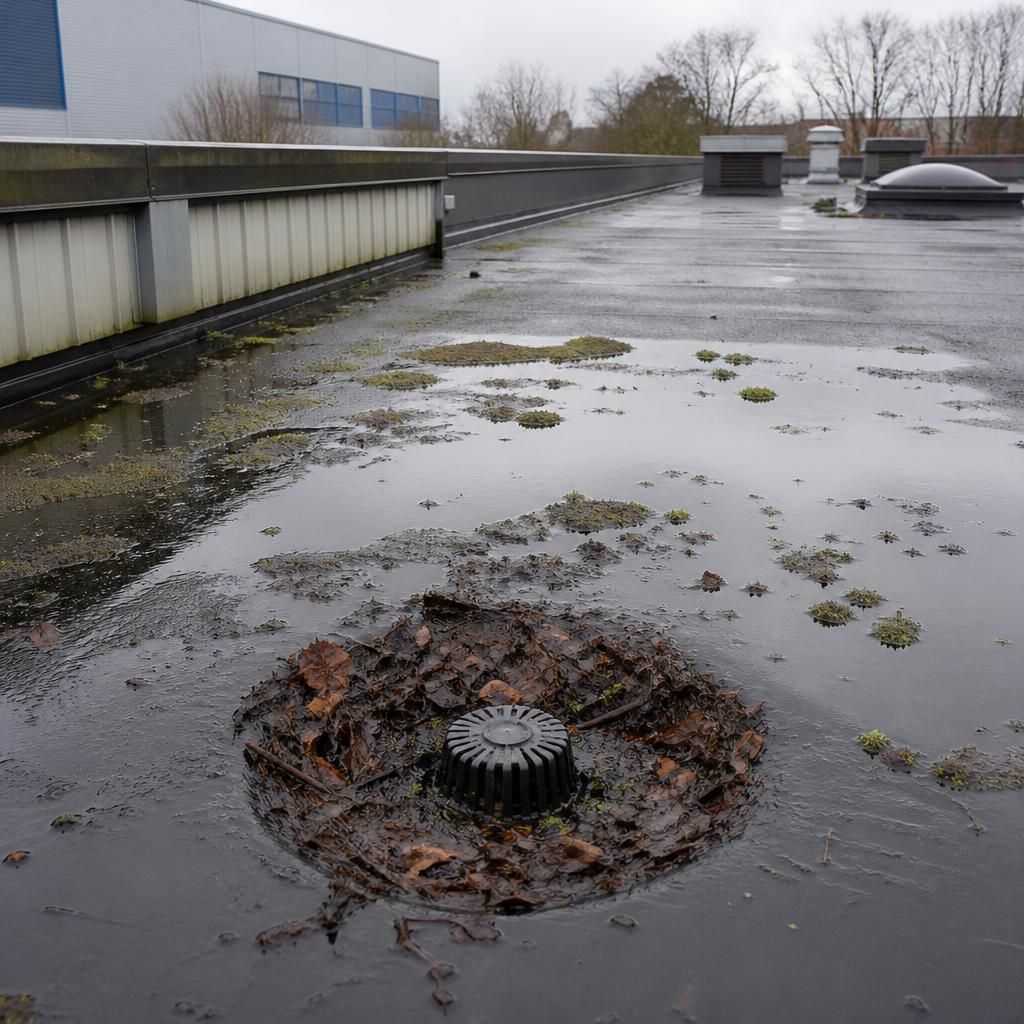
Slow drainage and recurring ponding are important signs that an EPDM or fibreglass roof may require professional cleaning. Leaves, moss, silt and decomposing organic matter can collect around outlets and restrict the flow of rainwater.
Professional cleaning can clear this contamination using controlled methods that protect the membrane, seams, trims and drainage fittings. However, cleaning will not correct inadequate falls, damaged outlets, membrane movement or other structural problems. If water remains after the outlets have been cleared, the roof should be assessed for repair rather than repeatedly washed.
Arrange a Professional EPDM or Fibreglass Roof Cleaning Assessment
If your EPDM or fibreglass roof shows moss, staining, debris build-up, restricted drainage or recurring ponding, arrange a professional cleaning assessment. Encanto Exterior Cleaning can assess the roof condition, identify any defects and recommend a safe, suitable cleaning approach.