
What protective measures are undertaken during the cleaning of EPDM and fibreglass roofs to prevent damage?
Professional EPDM and fibreglass roof cleaning uses a pre-cleaning inspection, suitable low-pressure or steam-cleaning methods, compatible solutions and controlled access to prevent damage. Technicians protect seams, trims, outlets and surrounding areas, avoid aggressive abrasion or heat, manage runoff and check the roof after cleaning for any defects.
Professional EPDM and fibreglass roof cleaning is carried out using a controlled, non-abrasive process designed to remove dirt, algae, moss and atmospheric deposits without weakening the membrane, gel coat, seams, trims or drainage details. The protective measures begin before cleaning starts and continue through access, product selection, water control and the final inspection.
Pre-cleaning inspection
The roof is inspected to identify its construction, condition and any areas that need special care. This includes checking for open seams, lifting or blistered sections, cracked fibreglass, damaged trims, exposed fixings, ageing sealants, ponding water and blocked outlets. Existing defects are recorded and brought to the customer’s attention before cleaning, as cleaning cannot safely substitute for roof repairs.
The inspection also considers whether the roof can safely support foot traffic. Where possible, operatives work from suitable access equipment rather than walking extensively on the roof. If access onto the surface is unavoidable, they use designated walkways or load-spreading boards where appropriate, keep weight away from unsupported edges and avoid standing on seams, outlets, rooflights or visibly weak areas.
Controlled access and protection of surrounding areas
- Access equipment is positioned to avoid contact with fragile roof edges, cladding, gutters and drainage components.
- Tools, hoses and equipment are managed so they do not drag across the membrane or scratch the fibreglass surface.
- Nearby walls, windows, doors, vents, signage, plant and vehicles are protected from splashes and dislodged debris.
- Gullies, outlets and downpipes are monitored during the work so removed moss and sediment do not create blockages.
- Runoff is controlled where necessary to prevent cleaning solution or contaminated water entering unsuitable drainage systems or affecting neighbouring areas.
Suitable pressure and cleaning techniques
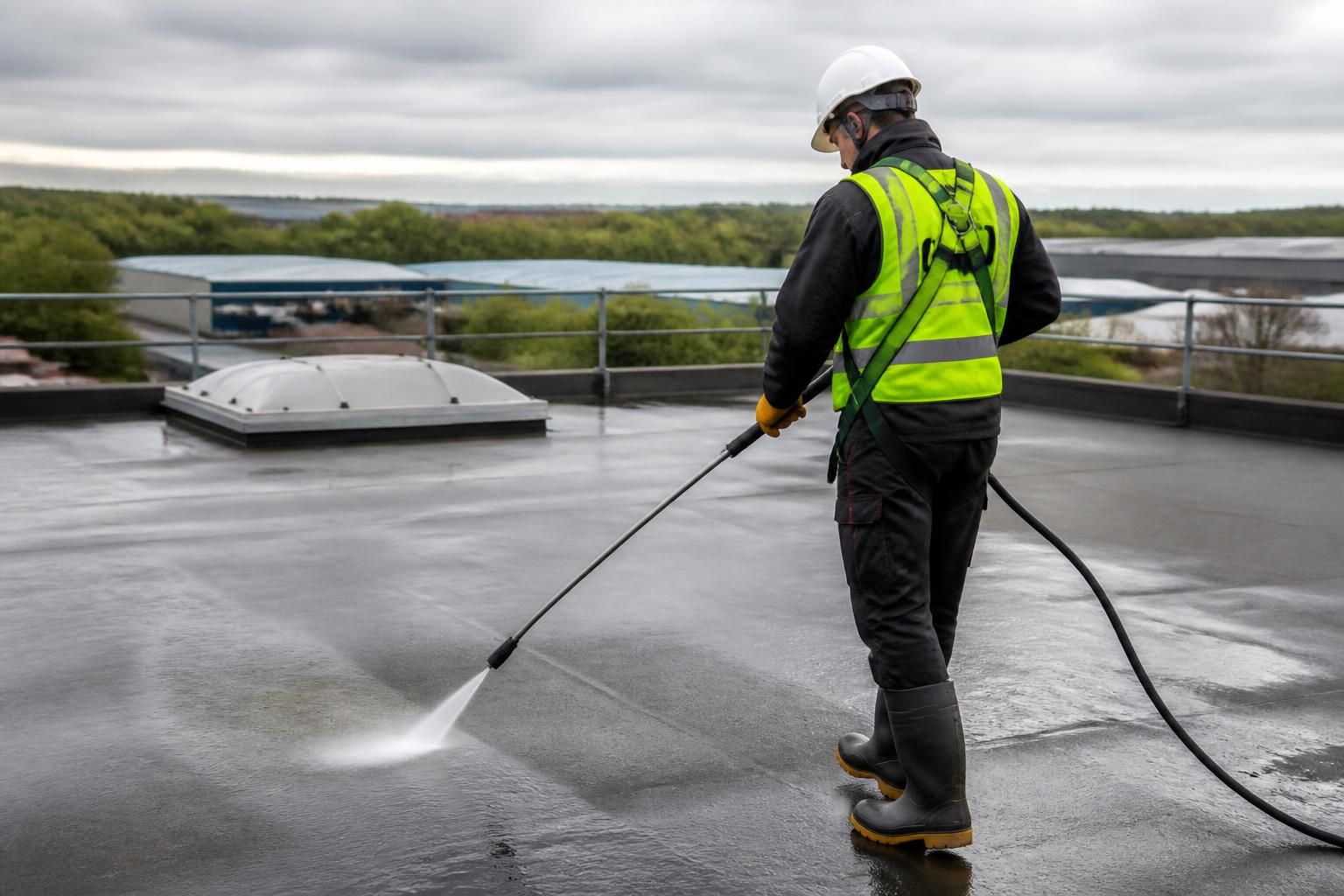
Water pressure is selected according to the roof material, its age and its condition. Excessive pressure can lift EPDM edges, force water beneath laps, damage sealants and erode the protective surface of fibreglass. For that reason, operatives generally use a low-pressure approach, controlled rinsing or carefully managed steam cleaning rather than aggressive jetting. The nozzle is kept at a suitable distance, and the operator avoids concentrating water on seams, flashing, trims and penetrations.
Steam cleaning may be appropriate for some deposits, but heat and moisture must be controlled carefully. Prolonged application in one area can affect adhesives, sealants or surface finishes, while trapped moisture can expose weaknesses around joints and fittings. The technique is therefore adjusted to the roof’s construction rather than applied as a standard treatment.
Material-compatible cleaning products
Cleaning solutions are chosen for compatibility with EPDM rubber and fibreglass, including the roof’s existing coating, sealants and trims. Products are applied at the correct dilution and are not left to dry on the surface. Small or less visible areas may be tested first to check for staining, softening, discolouration or an adverse reaction.
Strong solvents, abrasive powders, wire brushes, harsh degreasers and unsuitable disinfectants are avoided because they may affect the EPDM membrane, remove surface protection or dull and damage the fibreglass gel coat. Moss and algae are loosened with appropriate soft tools rather than scraped aggressively. The objective is to remove contamination while retaining the roof’s original surface finish.
Care around vulnerable roof details
Particular care is taken around membrane joints, fibreglass edges, upstands, roof penetrations, skylights, vents, outlets and perimeter trims. These areas are not used as footholds, and water is directed away from vulnerable laps rather than forced underneath them. Any loose debris is removed by hand or with controlled equipment before rinsing, reducing the need for repeated pressure or vigorous brushing.
Where moss has established around a joint or fitting, it is removed gradually so that the underlying sealant is not pulled away. If cleaning reveals a damaged seam, cracked laminate or failed flashing, the area is left in a safe condition and reported for assessment rather than concealed with additional product.
Weather and worksite controls
Cleaning is planned around suitable weather conditions. High winds can make access equipment and sheeting difficult to control, while freezing conditions can create slip hazards and allow water to expand within defects. Excessively hot, bright or rapidly drying conditions may cause products to dry unevenly, so the cleaning method and timing are adjusted accordingly.
Operatives also use appropriate personal protective equipment and maintain safe working practices around wet surfaces, electrical equipment, roof edges and access machinery. This protects the team while reducing the risk of dropped tools, uncontrolled hoses or accidental contact with the roof surface.
Final rinsing and inspection
After the contamination has been removed, the roof is rinsed in a controlled manner and checked for remaining deposits, pooling water, blocked drainage points and any defects that have become visible. Surrounding areas are inspected for splashes or displaced debris, and outlets are confirmed to be clear. The finished surface is assessed without assuming that a clean appearance means the roof is structurally sound.
These measures reduce the main causes of cleaning-related damage: excessive pressure, incompatible chemicals, uncontrolled heat, abrasive contact, concentrated foot traffic and blocked drainage. They also help distinguish pre-existing roof defects from issues caused by the cleaning process, providing a more reliable basis for ongoing EPDM and fibreglass roof maintenance.
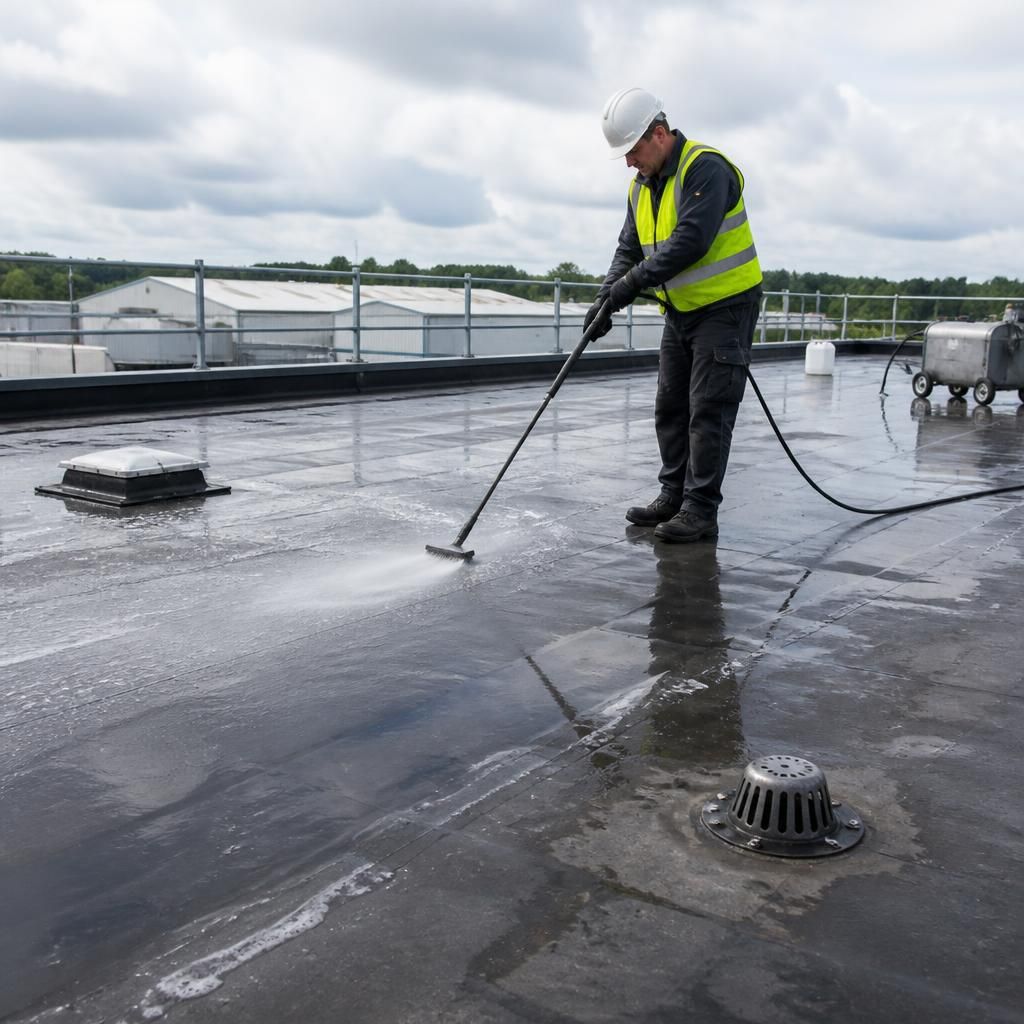
Controlled, low-impact cleaning protects EPDM and fibreglass roofs by preventing excessive pressure, heat and abrasion from affecting the membrane, gel coat, seams and sealants.
Before work begins, the roof is inspected and vulnerable details such as laps, trims, outlets, skylights and penetrations are identified. Operatives use suitable access equipment, keep tools and hoses from dragging across the surface, and select compatible cleaning solutions. Moss and algae are loosened with soft tools rather than aggressive scraping, while rinsing is directed away from joints to avoid forcing water beneath them.
Pressure, steam and dwell times are adjusted to the roof’s material and condition. A final inspection checks drainage points, surrounding areas and any defects revealed during cleaning, ensuring that maintenance does not conceal problems requiring repair.
Arrange a protective EPDM and fibreglass roof cleaning assessment
Arrange a protective EPDM and fibreglass roof cleaning assessment with Encanto Exterior Cleaning to identify vulnerable areas and confirm a suitable, low-impact cleaning method. Contact our team to discuss the roof’s condition, access requirements and ongoing maintenance needs.