
What environmental benefits are associated with professional cleaning of EPDM and fibreglass roofs?
Professional cleaning of EPDM and fibreglass roofs can extend their serviceable life by removing dirt, organic growth and contaminants that contribute to surface deterioration. This helps reduce premature replacement, construction waste and the environmental impact associated with manufacturing and installing new roofing materials, particularly when low-impact cleaning methods and responsible wastewater controls are used.
Professional cleaning of EPDM and fibreglass roofs can provide environmental benefits by extending the usable life of the roofing system, reducing premature replacement and limiting the waste and emissions associated with manufacturing, transporting and installing new materials. The benefit is greatest when cleaning is necessary, carried out using a method suited to the roof, and supported by responsible water, chemical and waste controls.
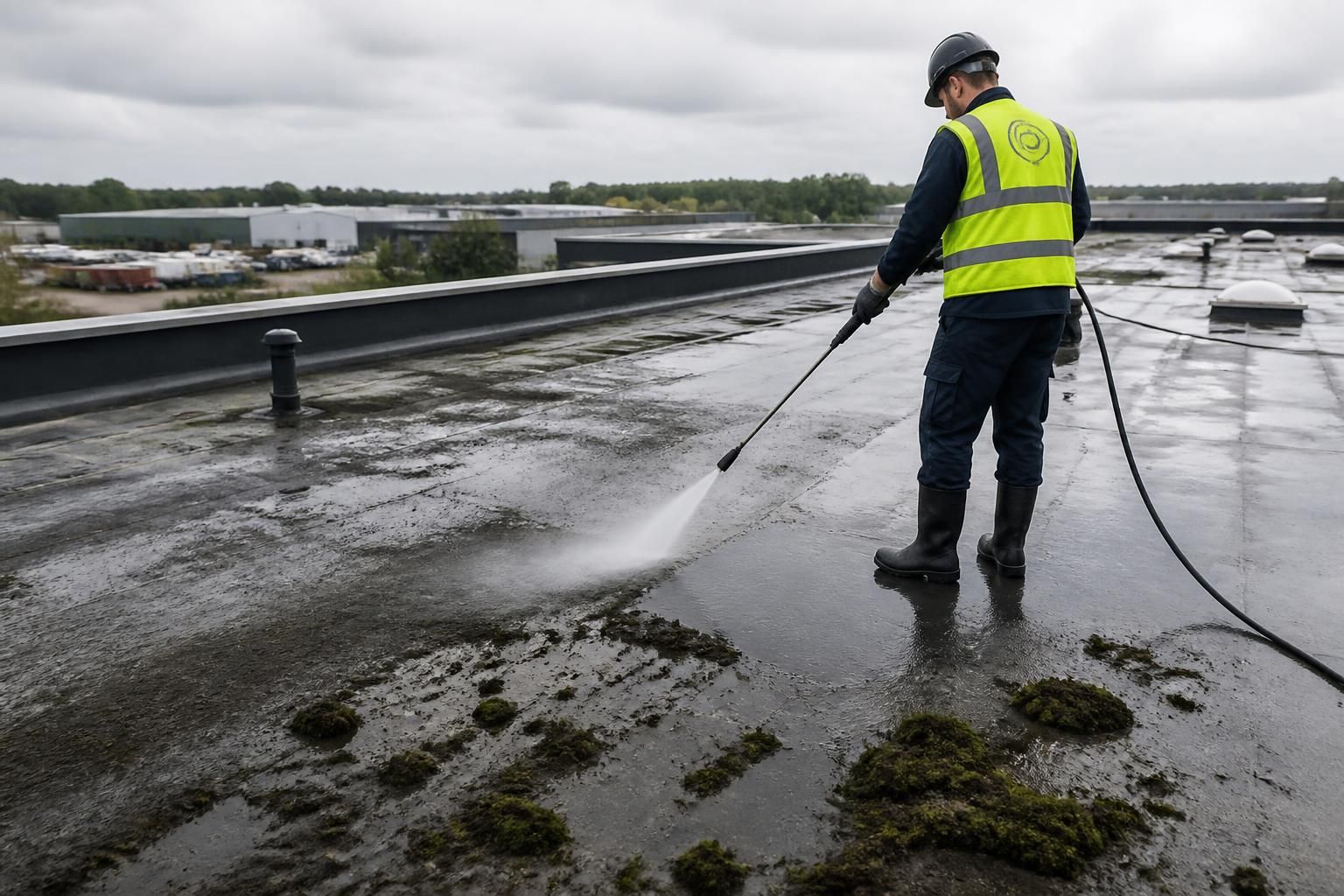
EPDM and fibreglass are durable roofing materials, but their surfaces can accumulate moss, algae, lichen, leaf debris, atmospheric grime, bird fouling and other contaminants. If these deposits remain in place, they can retain moisture, obstruct drainage and contribute to deterioration around seams, trims, outlets and other vulnerable details. Removing them helps preserve the condition of the existing roof rather than treating replacement as the first solution.
Key environmental benefits include:
- Longer roof service life: Regularly removing damaging organic growth and debris can help reduce avoidable surface deterioration. Keeping a sound roof in use for longer reduces demand for new membranes, resins, insulation, trims and associated construction materials.
- Less construction and demolition waste: Premature roof replacement can generate significant quantities of old membrane, fibreglass, insulation, fixings and packaging. Cleaning and planned maintenance can help defer this waste where the roof remains structurally suitable for continued use.
- Lower embodied environmental impact: Manufacturing roofing products requires raw materials, energy and transport. Avoiding unnecessary replacement also avoids the environmental impacts involved in removing the old system, delivering new materials and installing them.
- Reduced transport and site activity: A maintenance visit generally requires fewer materials and less intensive site activity than a full replacement project. This can reduce vehicle movements, deliveries, plant use and disruption around a commercial or industrial property.
- Better rainwater management: Clear outlets, gutters and drainage routes help rainwater leave the roof as designed. This can reduce standing water and the risk of contaminated overflow onto façades, access routes, planting areas or drainage systems.
Professional cleaning can also support environmental protection through better control of the cleaning process. Moss, algae, bird fouling and accumulated dirt may contain substances that should not be allowed to wash uncontrolled into surface-water drains or nearby ground. A competent contractor assesses the drainage arrangement, uses suitable containment or collection measures where required, and follows the applicable site and wastewater controls.
The cleaning method makes an important difference. EPDM may be damaged by aggressive abrasion, excessive pressure or incompatible chemicals, while fibreglass surfaces and protective coatings can also be affected by unsuitable equipment or solvents. Using controlled pressure, soft brushing, steam cleaning or an appropriate low-impact treatment can remove contamination while reducing the likelihood of damage that would shorten the roof’s life. Product selection should be based on the roofing manufacturer’s guidance and the nature of the contamination; a product should not be described as environmentally preferable simply because it is labelled biodegradable.
Responsible cleaning normally includes the following measures:
- Inspecting the roof, membrane, fibreglass finish, flashings, joints and drainage before selecting a method.
- Removing loose debris in a controlled way so that it does not enter rainwater systems or spread across the site.
- Using only the water, heat, pressure and cleaning solution necessary to achieve the required result.
- Protecting outlets and managing runoff where residues or cleaning agents could enter drainage systems.
- Collecting removed moss, silt and other solid waste for appropriate disposal rather than leaving it on surrounding ground.
- Rinsing only where appropriate and avoiding unnecessary water use, particularly on sites with sensitive drainage arrangements.
- Recording defects identified during cleaning so that small issues can be assessed and addressed before they require more extensive work.
There is an environmental cost to any cleaning activity, including the use of water, electricity or fuel, transport to site and disposal of collected material. For that reason, cleaning should form part of a planned maintenance programme rather than being undertaken without assessing whether it is needed. A roof with light, non-damaging surface soiling may not require the same treatment as one with heavy organic growth, blocked outlets or contamination affecting drainage and inspection.
Professional cleaning also improves the quality of roof inspections. Once dirt and growth have been removed, it is easier to identify open joints, damaged coatings, cracked fibreglass, failed sealants, ponding areas and blocked outlets. Early identification does not guarantee that repair will be possible, but it gives the building owner an opportunity to make a targeted intervention instead of allowing a manageable defect to develop into widespread water ingress and material loss.
For commercial and industrial properties, the most sustainable approach is therefore a combination of condition-based cleaning, compatible techniques and responsible site controls. Cleaning should never be used to conceal a roof that has reached the end of its serviceable life. Where the membrane or fibreglass system is fundamentally defective, replacement may eventually be necessary; however, professional cleaning can help ensure that replacement is based on actual condition rather than avoidable contamination or neglected maintenance.
Before work begins, it is sensible to confirm the roof’s material, its age and any manufacturer requirements, as well as the site’s drainage arrangements and environmental controls. After cleaning, keeping outlets clear, removing leaf debris promptly and arranging periodic inspections can help maintain the environmental benefit by reducing the need for aggressive remedial work and supporting the longest practical service life of the existing roof.
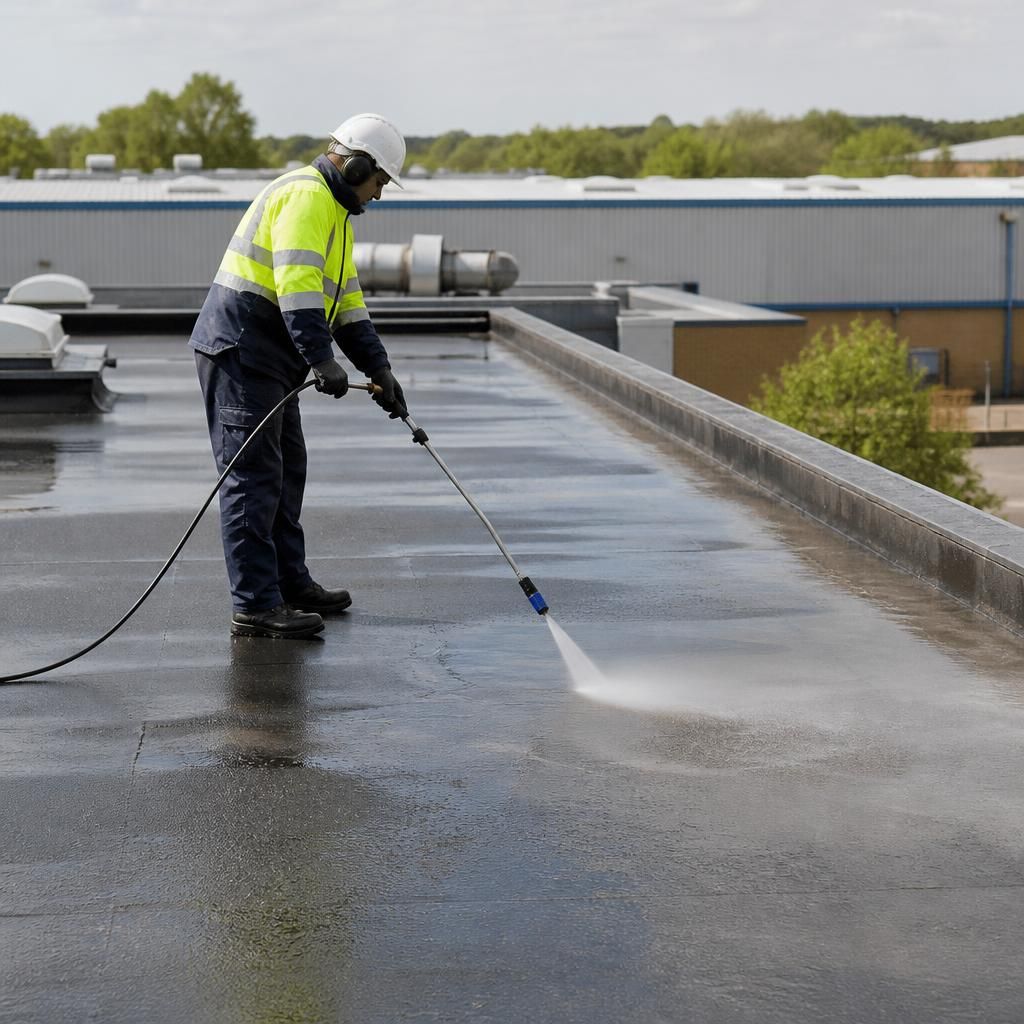
Professional cleaning can reduce the environmental impact of an EPDM or fibreglass roof by helping keep a serviceable roofing system in use for longer. Removing moss, algae, leaf debris and other moisture-retaining contamination helps protect vulnerable areas such as seams, joints, outlets and surface coatings, reducing the likelihood of premature replacement.
Deferring an avoidable replacement can prevent the associated removal, transport and disposal of the existing membrane, fibreglass, insulation and fixings. It also reduces the demand for new roofing materials and the energy, fuel and site activity involved in manufacturing and installing them. The cleaning method must still be carefully controlled: using compatible products, moderate pressure and appropriate runoff management helps protect the roof while preventing contaminated water and removed debris from entering surrounding ground or surface-water drainage.