
What cleaning techniques are best for maintaining EPDM and fibreglass roofs?
The best techniques for maintaining EPDM and fibreglass roofs are controlled low-pressure washing, soft-bristle cleaning and manufacturer-compatible, non-abrasive solutions. Avoid aggressive pressure, harsh chemicals and abrasive tools, as these can damage the waterproof membrane, surface finish, seals or protective coatings.
The best techniques for maintaining EPDM and fibreglass roofs are controlled low-pressure washing, soft-bristle cleaning and manufacturer-compatible, non-abrasive solutions. These methods remove dirt, moss, algae, bird fouling and surface deposits without unnecessarily stressing the waterproof membrane, fibreglass finish, joints, trims or sealants. Aggressive pressure washing, harsh chemicals and abrasive tools should be avoided because they can cause physical damage or affect the roof’s weather resistance.
Begin with a condition assessment. Before cleaning, the roof should be inspected for loose edges, open seams, blisters, cracks, damaged flashing, deteriorated sealant, exposed reinforcement and blocked outlets. Cleaning should not be used to disguise defects or compensate for a failing roof system. Any vulnerable areas should be recorded and protected, with repairs referred to an appropriately qualified roofing contractor where necessary.
Remove loose debris before applying water. Leaves, twigs, silt and accumulated litter should be cleared carefully using soft brushes or suitable hand tools. This prevents debris from being driven into outlets, laps and drainage channels during washing. Particular care is needed around roof outlets, gutters, upstands and perimeter trims, where trapped organic matter can retain moisture and encourage biological growth.
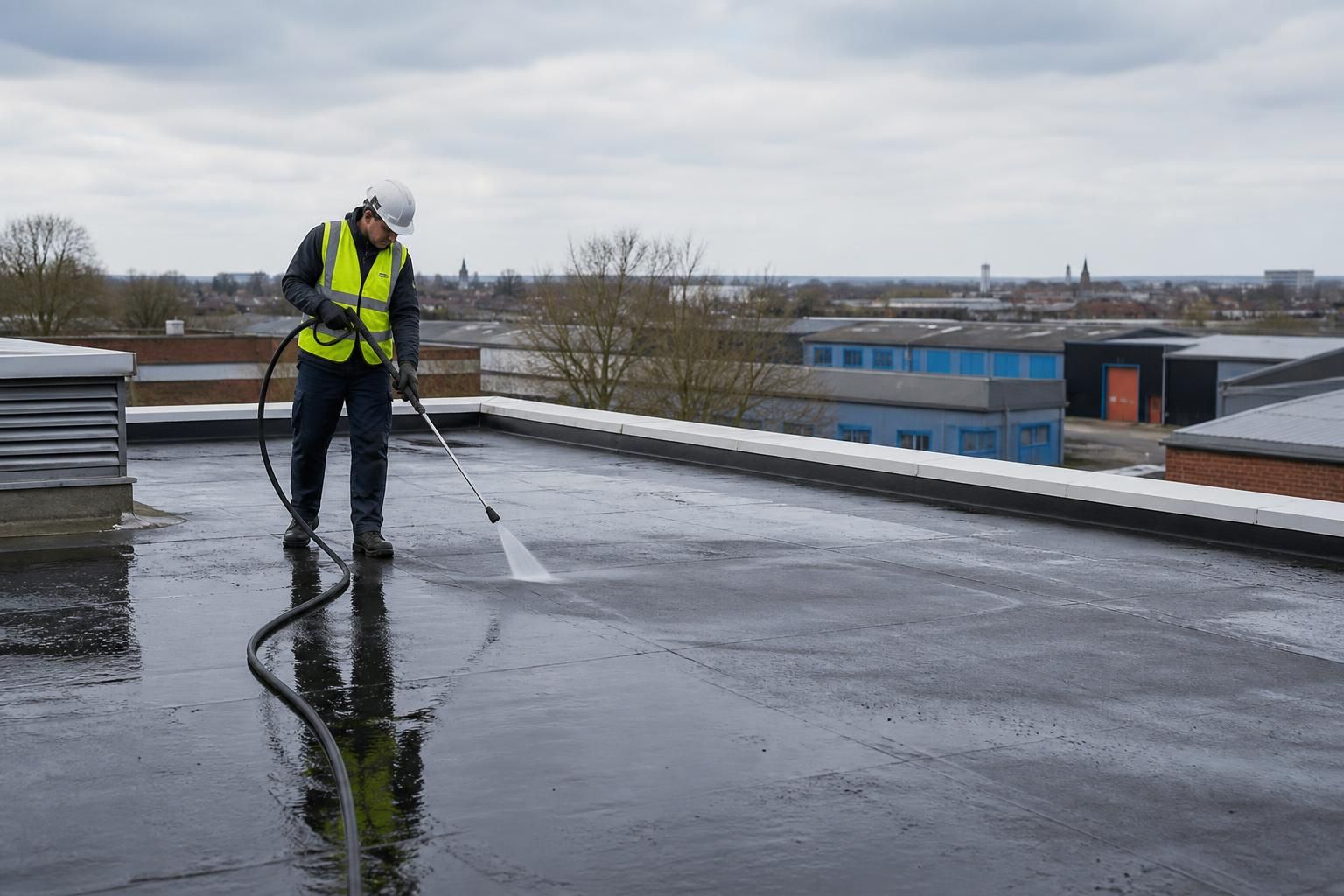
Use controlled low-pressure washing rather than a forceful jet. Water pressure should be set according to the roof’s condition and the cleaning equipment being used. The objective is to lift contamination from the surface, not to scour the membrane or force water beneath edges and joints. A trained operator keeps the nozzle at a safe distance, uses a suitable spray pattern and works progressively across the roof. Directing a concentrated jet at seams, flashing, seals, penetrations or roof edges can cause lifting, water ingress or premature deterioration.
Use soft-bristle agitation where deposits are established. Moss, algae and compacted dirt often need gentle brushing after the surface has been dampened or treated with a compatible cleaning solution. Soft brushes help loosen contamination while limiting abrasion. Wire brushes, scraper blades, sanding tools and other aggressive equipment are unsuitable for EPDM and fibreglass because they can mark the surface, remove protective finishes or expose underlying material.
Select cleaning solutions for the specific roof material. EPDM is a synthetic rubber membrane that can be affected by incompatible solvents, petroleum-based products and excessively strong chemicals. Fibreglass roofs and roof coatings can also be damaged or dulled by aggressive solvents, caustic products and abrasive compounds. Cleaning solutions should therefore be confirmed as suitable for the particular membrane, finish, sealants and coatings before use. A small, inconspicuous test area can help establish whether the product causes staining, softening, discolouration or loss of finish.
Biocidal or fungicidal treatments may be appropriate for moss, algae and lichen, but they should be selected and applied in line with the product instructions and the roofing manufacturer’s requirements. A treatment is not a substitute for removing heavy growth, and excessive chemical application can create risks for adjacent surfaces, drainage systems, plants and the wider environment. Run-off should be controlled and collected or directed responsibly wherever practical.
Rinse thoroughly but carefully. Remaining detergent and loosened contamination should be removed with a controlled flow of clean water. Incomplete rinsing can leave residues that attract dirt, affect the appearance of the surface or interact with the roof finish. Rinsing should not flood drainage points or drive water beneath laps, flashings, trims or penetrations.
Steam cleaning requires particular judgement. Low-temperature, low-pressure steam can be useful for certain types of contamination, but it is not automatically suitable for every EPDM or fibreglass roof. Excessive heat, prolonged application or concentrated steam can affect membranes, coatings, adhesives and sealants. Steam should only be considered following an assessment of the roof system and confirmation that the technique is compatible with the materials. The operator must control both temperature and pressure, especially around joints and details.
Protect vulnerable roof details during the work. Cleaning teams should avoid unnecessary foot traffic and use suitable access arrangements rather than placing concentrated loads on weak or unsupported areas. Rooflights, fragile panels, vents, skylights, solar equipment, cables and service penetrations should be identified before work starts. Protective measures may include exclusion zones, temporary coverings where appropriate and cleaning from safe access positions. Equipment, hoses and tools should not be dragged across the roof surface.
Keep drainage and surrounding areas under control. Gutters and outlets should be checked during and after cleaning so loosened material does not create a blockage. Run-off should be managed to prevent staining of façades, damage to landscaping or contamination of surface-water drainage. Nearby walls, windows, vehicles and plant may require protection from splashback and cleaning solution.
After cleaning, the roof should be checked again for remaining organic growth, exposed defects, blocked drainage and changes to the surface finish. Photographs and condition notes can provide a useful maintenance record, particularly for commercial properties and roofs forming part of a planned maintenance programme. Any newly visible crack, puncture, loose edge or failed seal should be reported rather than covered with an unapproved product.
In practice, the safest approach is a material-specific method: dry debris removal, a compatible pre-treatment where required, gentle soft-bristle agitation, controlled low-pressure rinsing and a final inspection. The precise process should be adjusted for the roof’s age, surface finish, contamination, weather conditions and manufacturer guidance. Regular professional cleaning carried out this way helps preserve appearance and drainage without compromising the waterproofing components that the roof depends on.
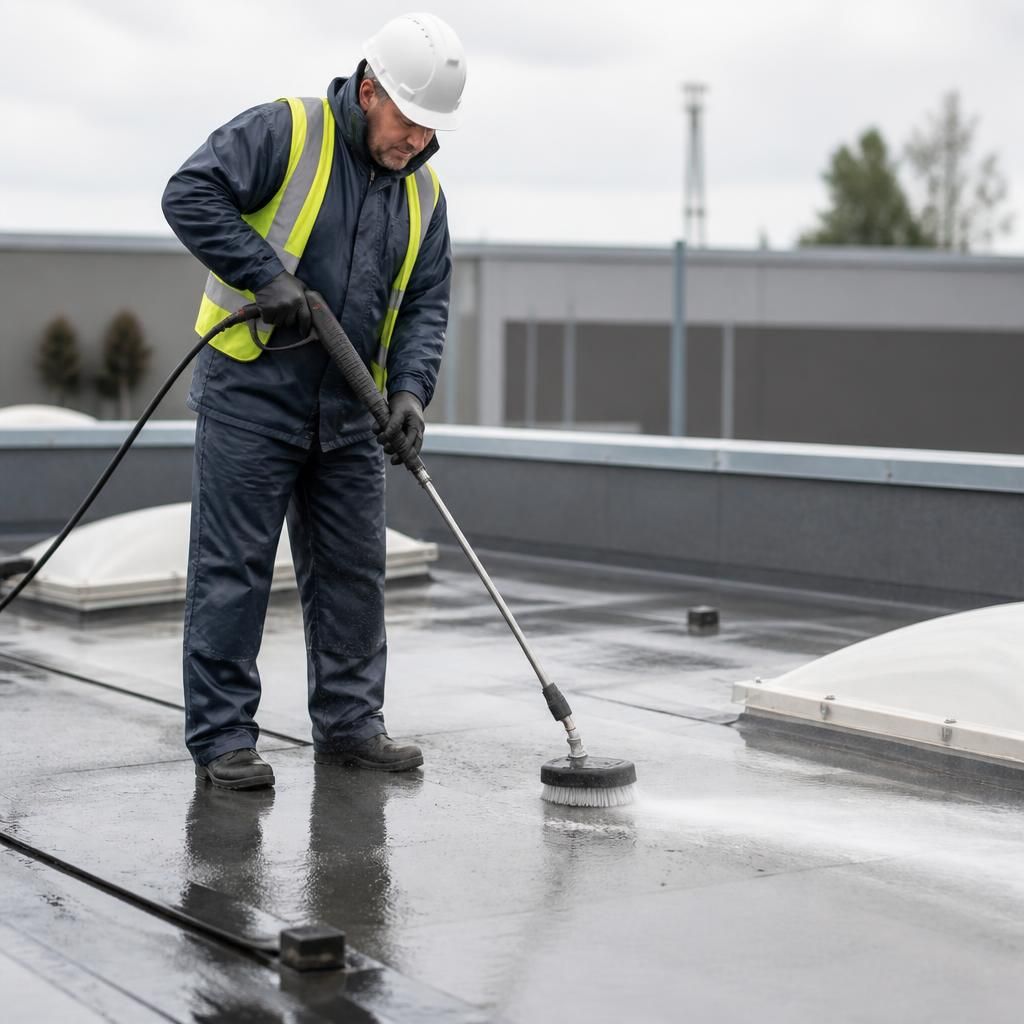
Controlled low-pressure washing combined with soft-bristle agitation is generally the safest cleaning approach for EPDM and fibreglass roofs. It loosens dirt, algae and bird fouling without scouring the waterproof membrane, dulling the fibreglass finish or forcing water beneath seams, trims and seals.
Cleaning teams should first remove loose debris, then use a manufacturer-compatible solution where required before gently brushing and rinsing. The pressure, temperature and cleaning product must be adjusted to the roof’s condition and surface, with particular care around joints, outlets, rooflights and penetrations.