
What are the risks of not regularly cleaning EPDM and fibreglass roofs?
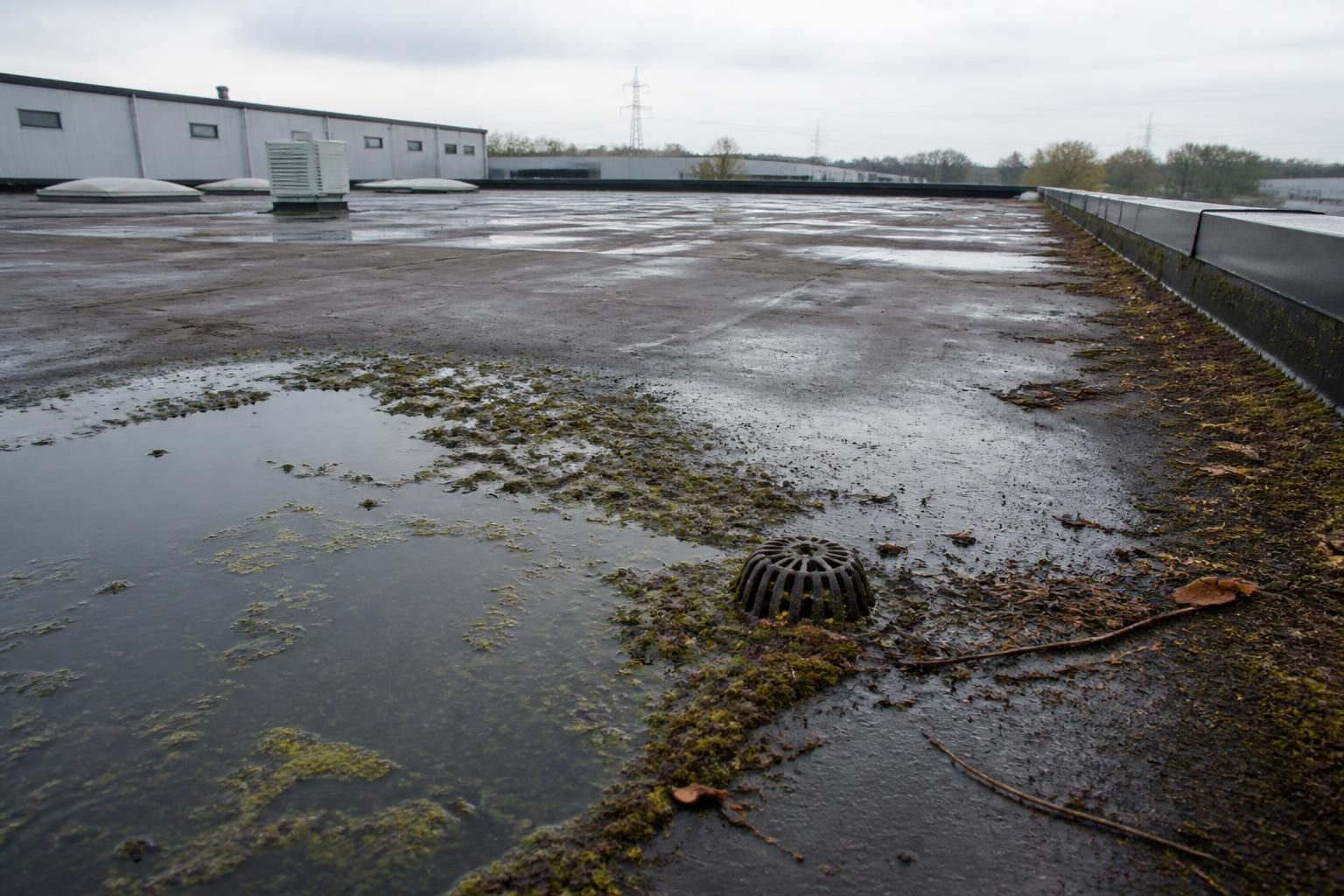
Failing to regularly clean EPDM and fibreglass roofs allows moss, algae, dirt and standing debris to retain moisture and obstruct drainage. Over time, this can contribute to surface deterioration, blocked outlets, leaks, staining, increased maintenance costs and premature roof repairs or replacement.
Not regularly cleaning EPDM and fibreglass roofs can allow organic growth, dirt and standing debris to retain moisture, obstruct drainage and conceal developing defects. Over time, this increases the risk of blocked outlets, ponding water, leaks, surface deterioration and avoidable repair or replacement costs. The severity depends on the roof’s age, design, exposure, drainage and the type of contamination present.
Blocked drainage and standing water
Leaves, moss, algae, silt and other debris can collect around outlets, gutters, edge trims and roof penetrations. When drainage is restricted, rainwater may remain on the roof rather than flowing away as designed. Persistent ponding places prolonged demand on the waterproofing system and can increase the likelihood of water reaching joints, seams, flashings or vulnerable details.
Standing water can also keep the surface damp for extended periods. This encourages further biological growth and makes contamination more difficult to remove. On a commercial property, a blocked outlet may affect a substantial roof area before the problem becomes visible from ground level.
Greater risk of leaks and concealed water damage
Moisture and debris can hide splits, punctures, failed sealant, lifting edges, damaged trims and defects around rooflights or plant supports. If these issues are not identified, water may enter the roof build-up and affect insulation, decking, internal finishes or stored materials. Damp insulation can lose performance, while concealed moisture may contribute to staining, mould or deterioration of underlying components.
Cleaning does not repair a defective roof, but it removes contamination that can prevent a proper inspection. It therefore forms part of a sensible maintenance programme, helping defects to be reported and assessed before they develop into more extensive failures.
Surface deterioration and reduced service life
Algae, moss and other organic growth retain moisture against the roof surface. Moss may also establish around laps, edges and minor surface imperfections, where its growth can make existing weaknesses more pronounced. Repeated wetting and drying, combined with accumulated grit and pollutants, can gradually affect the appearance and condition of the waterproofing system.
EPDM is a flexible synthetic rubber membrane, while fibreglass roofing is generally a resin-based system reinforced with glass fibres. They do not respond identically to contamination or cleaning. EPDM can be affected by unsuitable solvents, oils and aggressive abrasion. Fibreglass surfaces may experience staining, resin wear or a chalked appearance if harsh chemicals, excessive pressure or unsuitable equipment are used. The correct cleaning approach must therefore be selected for the specific roof system rather than treating every roof as the same material.
Damage caused by uncontrolled plant growth and debris
Roots can work into small gaps, joints or perimeter details, particularly where moss has been allowed to remain undisturbed. Wind-blown debris may rub against the surface or trap moisture beneath it. Sharp items, loose materials and discarded construction debris can also present a puncture risk, especially where people subsequently walk over them. Removing contamination carefully reduces these hazards and makes it easier to identify anything that should not be present on the roof.
Higher maintenance and operational costs
Neglected cleaning can turn a straightforward maintenance task into a reactive repair. A contractor may need to clear blocked drainage, remove established growth, investigate internal water damage and repair several affected details at the same time. Water ingress can also disrupt occupants, damage stock or equipment and require access to areas that are difficult to keep operational during normal business activities.
For property managers and facilities teams, an unclean roof is also harder to monitor. Staining and debris can conceal changes that would otherwise indicate a developing issue. Regular, documented cleaning creates an opportunity to review drainage, roof edges, penetrations and visible defects as part of planned maintenance.
Loss of appearance and professional presentation
Heavy staining, algae and moss can make an otherwise well-maintained commercial building appear neglected. This may be particularly noticeable on visible roof areas, canopies, extensions and buildings used by customers, tenants or the public. Contamination can also wash down façades and paving, creating additional cleaning requirements around the property.
Risks specific to commercial roof management
Commercial roofs often contain plant, access routes, rooflights, cables and service penetrations. Accumulated contamination can obscure these features and make inspection or safe access more difficult. Cleaning should be planned around the roof’s construction and use, with suitable precautions for fragile areas, edge protection, drainage outlets and any equipment installed on the roof.
It is important not to assume that a high-pressure wash is suitable. EPDM and fibreglass roofs may require controlled low-pressure cleaning, soft agitation, steam cleaning or a material-compatible treatment, depending on the contamination and manufacturer guidance. Cleaning products should be selected carefully, and run-off should be controlled so that loosened material or treatment residues do not enter sensitive drainage systems or affect surrounding surfaces.
How regular professional cleaning reduces these risks
- It removes moss, algae, leaves, silt and other moisture-retaining contamination.
- It helps keep gutters, outlets and drainage paths clear.
- It improves visibility during checks for damaged seams, trims, flashings and penetrations.
- It reduces the likelihood that established growth or trapped debris will worsen minor defects.
- It supports planned maintenance and helps avoid more disruptive reactive work.
- It preserves the roof’s appearance without relying on unsuitable chemicals or excessive pressure.
Cleaning frequency should be based on the roof’s condition and surroundings. Buildings beneath trees, near busy roads, in shaded areas or exposed to airborne dust and industrial pollution may need closer monitoring than cleaner, more open sites. After severe weather, building work or nearby construction, the roof should also be checked for debris and blocked drainage.
Professional cleaning should be carried out using methods and products appropriate for EPDM or fibreglass, with protection for roof details and safe control of access, water and run-off. If cleaning reveals ponding, damaged membrane, lifting edges, cracked resin, failed sealant or internal signs of water ingress, those issues should be assessed separately rather than concealed by further cleaning.
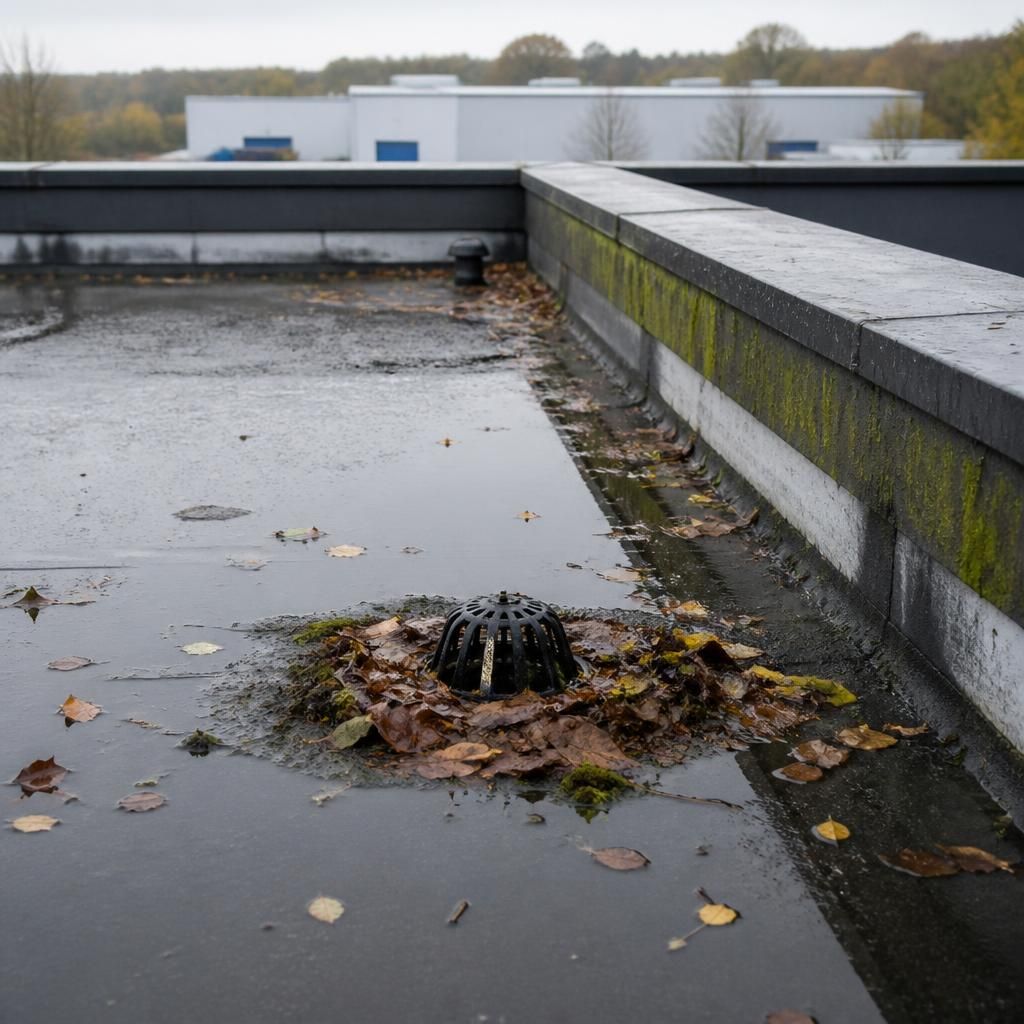
One of the main risks of neglecting EPDM and fibreglass roof cleaning is restricted drainage. Leaves, moss, algae and silt can collect around outlets, gutters and roof edges, allowing rainwater to pond instead of draining away as intended.
Persistent moisture encourages further organic growth and increases pressure on seams, trims, flashings and penetrations. It can also conceal developing defects, making leaks and concealed damage harder to identify. Careful professional cleaning helps keep drainage routes clear and provides a clearer view of the roof’s condition, while any defects found can be assessed separately.
Arrange a professional EPDM or fibreglass roof cleaning assessment
Arrange a professional EPDM or fibreglass roof cleaning assessment to identify contamination, drainage restrictions and visible defects before they lead to more disruptive repairs. Contact Encanto Exterior Cleaning to discuss a suitable cleaning and maintenance plan for your commercial roof.