
What are the best cleaning methods to maintain the integrity of EPDM and fibreglass roofing materials?
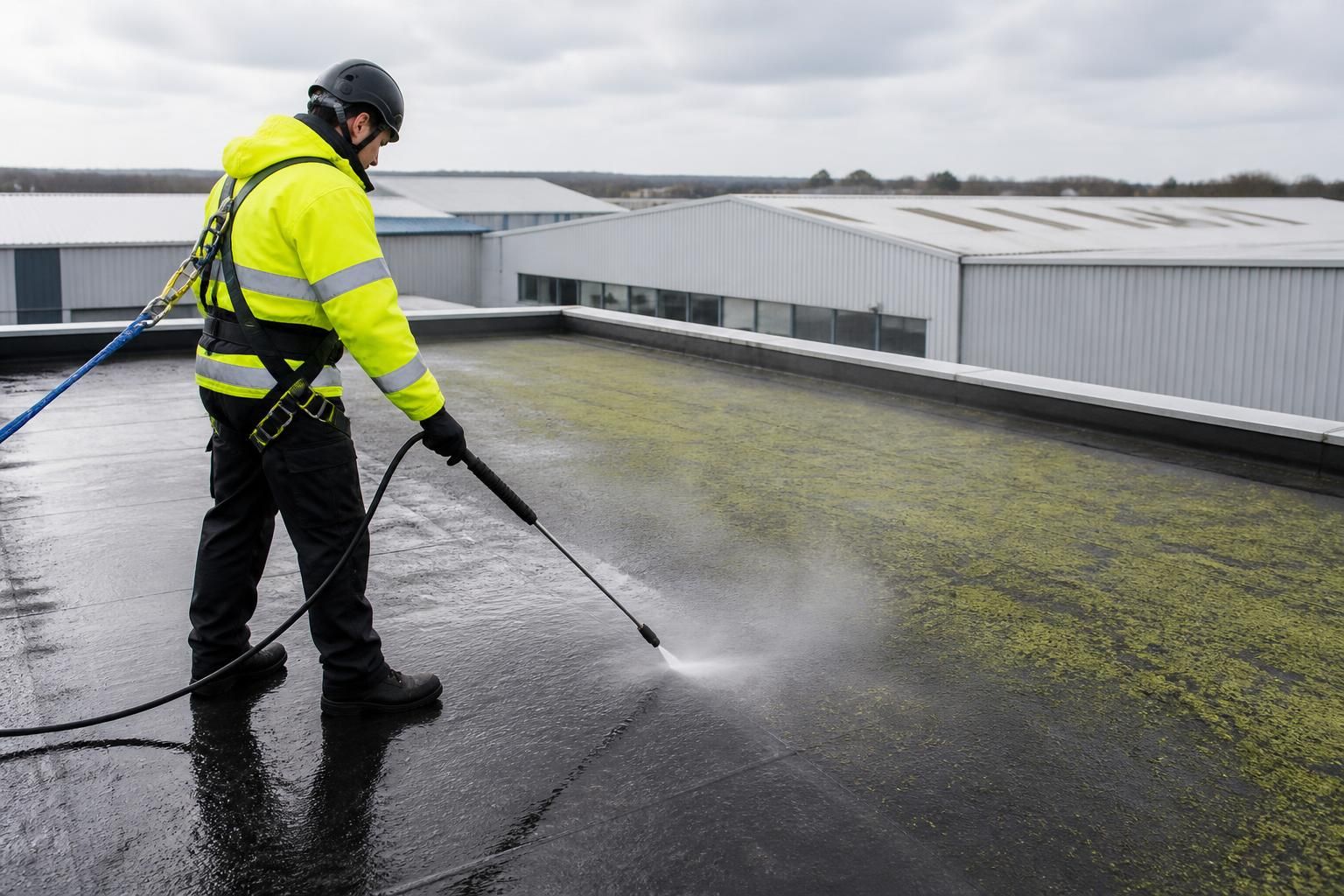
The best method is a controlled, low-pressure clean using a roof-safe detergent and soft-bristle agitation, followed by thorough rinsing to remove algae, moss, dirt and organic deposits without abrading the surface. EPDM and fibreglass should be assessed beforehand, with harsh solvents, incompatible chemicals, abrasive tools and excessive pressure avoided because they can damage membranes, coatings, seals and protective finishes.
The best way to maintain the integrity of EPDM and fibreglass roofing is a controlled, low-pressure cleaning process using a surface-compatible detergent, soft-bristle agitation and thorough rinsing. This removes dirt, algae, moss, bird fouling and other organic deposits without abrading the membrane, lifting the fibreglass finish or forcing water beneath laps, trims and seals.
Although both materials are used for durable flat and low-slope roofing, they require slightly different considerations. EPDM is a flexible rubber membrane with bonded or mechanically fixed joints, while fibreglass roofing is a rigid laminate incorporating resin and a protective topcoat. The cleaning method should therefore be selected after assessing the roof’s age, condition, surface finish, drainage and previous repairs rather than applying the same process to every roof.
A suitable cleaning process normally includes the following stages:
- Condition survey: Inspect the membrane or laminate, seams, edge details, flashings, outlets, trims, rooflights and sealants before work begins. Existing splits, blisters, exposed reinforcement, loose coatings, failed joints or areas of standing water should be recorded and protected.
- Removal of loose debris: Clear leaves, branches, silt and other loose material with soft tools. Avoid dragging sharp objects across the roof, as they can puncture EPDM or scratch the fibreglass topcoat.
- Small-area compatibility test: Test the proposed detergent and cleaning method in an inconspicuous area. This helps confirm that the product does not soften, discolour or dull the surface and that deposits can be removed without excessive agitation.
- Application of a roof-safe solution: Apply a diluted, non-abrasive detergent suitable for the specific roofing material. Allowing it to dwell for an appropriate period helps loosen organic growth and soiling, reducing the need for aggressive pressure or scrubbing.
- Gentle agitation: Use soft brushes or compatible pads to loosen stubborn deposits. On EPDM, work carefully around seams, bonded patches and perimeter details. On fibreglass, avoid tools that can abrade the topcoat or expose the underlying glass reinforcement.
- Controlled rinsing: Rinse with low-pressure water, working towards suitable drainage points. The objective is to remove loosened contamination and detergent residue, not to drive water under joints or across vulnerable details.
- Final inspection: Check that outlets are clear, residue has been removed and no damage has been exposed or caused. Any defects identified during cleaning should be documented and referred for appropriate roof repair.
EPDM-specific precautions
EPDM should be cleaned with products confirmed as compatible with rubber roofing. Strong solvents, petroleum-based products, aggressive degreasers and unapproved chemical treatments can affect the membrane or its adhesive details. Abrasive pads and stiff wire brushes may mark the surface and remove protective treatments. Cleaning equipment should not be used to lift, stretch or catch the membrane, particularly at laps, corners, upstands and around penetrations.
Where moss or lichen has established on EPDM, it should be loosened progressively rather than being torn away forcefully. Roots and accumulated organic matter can conceal damaged seams or retain moisture against the membrane. Once the growth has been removed, the roof should be rinsed thoroughly and inspected for staining, open joints and areas where water is not draining correctly.
Fibreglass-specific precautions
Fibreglass roofs depend on the condition of their resin and topcoat for protection. Cleaning should therefore be gentle enough to preserve that finish. Excessive pressure, abrasive cleaning and harsh alkaline or solvent-based products can dull the surface, remove coatings or expose the reinforcement. Any localised chalking, cracking, blistering or exposed fibres should be treated as a maintenance issue rather than concealed through more intensive cleaning.
Fibreglass can usually tolerate careful brushing when the correct tools and solution are used, but pressure should be reduced around joints, trims, outlets, rooflights and repaired sections. A clean surface also makes it easier to identify whether discolouration is removable contamination or evidence of coating deterioration.
When pressure washing or steam cleaning is considered
High-pressure washing is generally unsuitable for EPDM and should not be used as a default method on fibreglass. Concentrated water jets can damage seams, dislodge trims, penetrate defective details and spread contamination into drainage systems. They may also mark or erode a fibreglass topcoat. If specialist pressure or steam equipment is considered for a particular project, it should be operated at a controlled setting by an experienced technician, following the roof manufacturer’s guidance and after a test area has been approved.
Steam cleaning can be useful for certain deposits when carefully controlled, but heat and moisture must be managed around adhesives, sealants, flashings and membrane joints. It is not automatically safer than low-pressure detergent cleaning. The condition of the roof and the nature of the contamination determine whether it is appropriate.
Products and practices to avoid include:
- Petrol, paraffin, white spirit and other petroleum-based or solvent-rich products unless specifically approved for the roofing system.
- Strong acids, caustic cleaners, unapproved biocides and concentrated disinfectants.
- Wire brushes, abrasive pads, rotary tools and sharp scrapers.
- Uncontrolled high-pressure cleaning directed at seams, edges, flashings or penetrations.
- Leaving detergent, dirty water or treatment residue on the roof after cleaning.
- Walking unnecessarily on areas that are wet, fragile, damaged or not designed for regular foot traffic.
Safe access is part of protecting the roof. Technicians should use suitable access equipment, defined walkways or load-spreading measures where required, and avoid placing ladders or equipment directly on vulnerable membrane details. Drainage routes should be considered before cleaning so that loosened debris and detergents do not block outlets or enter areas where discharge is restricted. Appropriate precautions are also needed where the roof is adjacent to occupied premises, plant, electrical equipment or public areas.
Cleaning should not be used to compensate for underlying defects. A roof with failed seals, loose edges, ponding, significant blistering or structural movement may need repair or further assessment before it is washed. If the surface has been previously coated or repaired, the cleaning products and agitation method should be checked against the coating or repair manufacturer’s requirements.
For ongoing maintenance, remove loose debris before it accumulates, keep outlets and gutters clear, and arrange periodic professional inspections. The suitable cleaning interval depends on exposure, nearby trees, pollution, bird activity, roof fall and the amount of organic growth. A planned low-impact clean is preferable to allowing heavy deposits to build up and then attempting to remove them with aggressive equipment.
In practice, preserving EPDM and fibreglass depends less on using the most powerful equipment and more on correct assessment, compatible products, restrained agitation and careful rinsing. A documented inspection before and after cleaning provides a useful record of the roof’s condition and helps distinguish routine soiling from defects requiring repair.
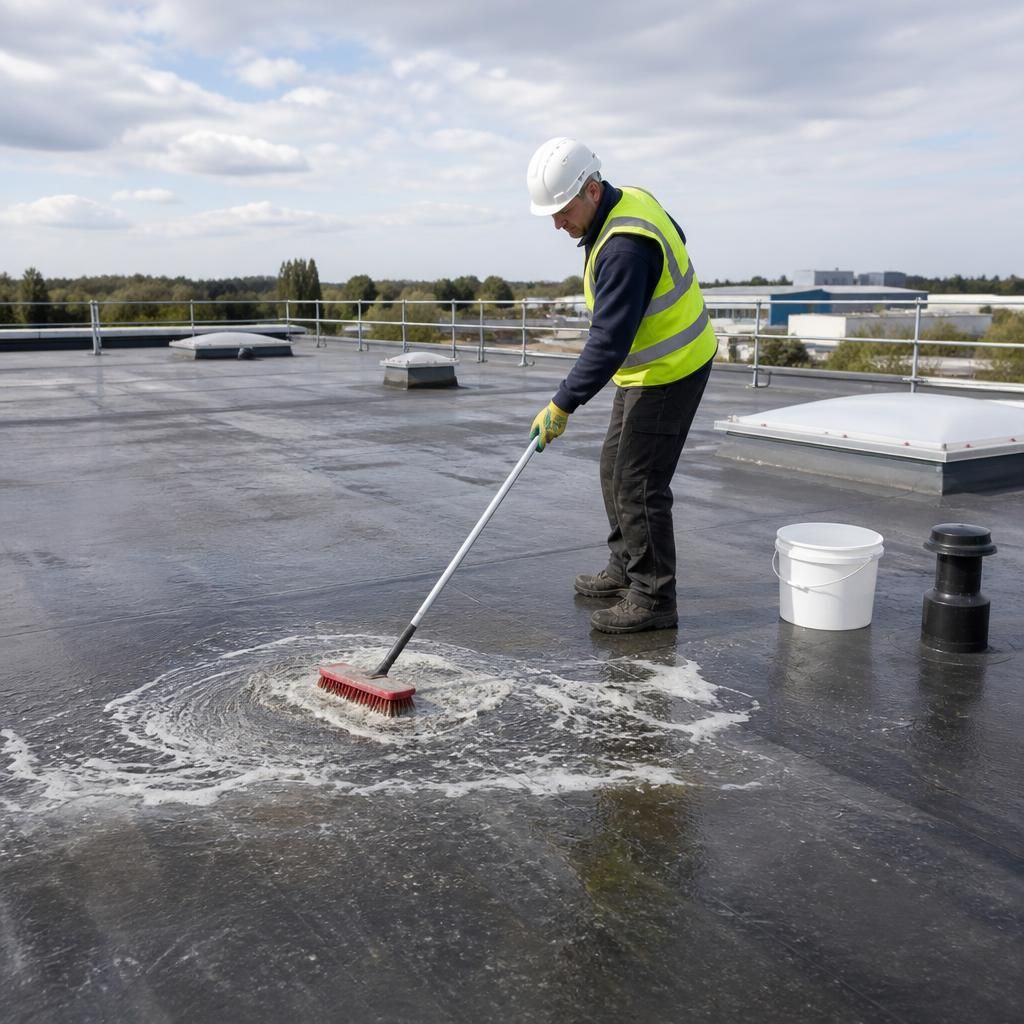
The safest method for maintaining EPDM and fibreglass roof integrity is a controlled, low-pressure clean using a material-compatible detergent and soft-bristle agitation. This removes algae, moss, bird fouling and accumulated dirt without abrading the fibreglass topcoat or disturbing the EPDM membrane, seams and bonded details.
Before cleaning, the roof should be inspected for failed seals, blisters, cracks, exposed fibres, loose edges and standing water. Test the proposed solution on a small inconspicuous area, then rinse thoroughly towards clear drainage outlets. Avoid solvents, abrasive tools and concentrated pressure, particularly around laps, trims, flashings, penetrations and repaired sections. Cleaning should expose defects for repair, not conceal them or place additional stress on a vulnerable roof.
Arrange an Expert EPDM or Fibreglass Roof Cleaning Assessment
Arrange an expert EPDM or fibreglass roof cleaning assessment to confirm the roof’s condition, identify sensitive areas and select a compatible cleaning method. Contact Encanto Exterior Cleaning to discuss a safe, planned approach for your property.