
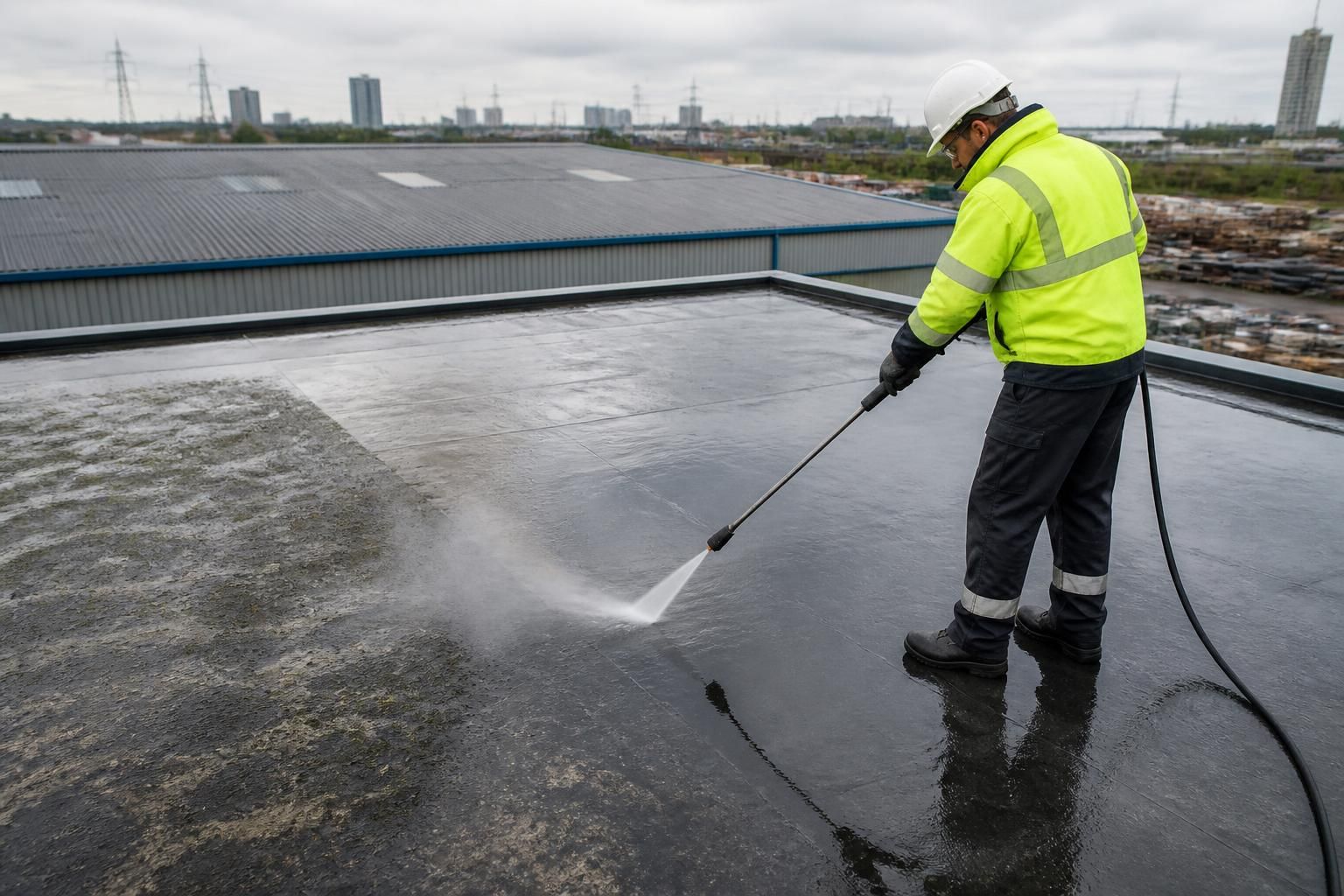
How often should EPDM and fibreglass roofs be professionally cleaned to maintain their durability and aesthetic appeal?
EPDM and fibreglass roofs should usually be professionally cleaned every two to three years, with an inspection at least annually to assess dirt, moss, algae, leaf debris and drainage. Roofs exposed to overhanging trees, industrial pollution, coastal conditions or persistent shading may require more frequent cleaning to protect the membrane, maintain appearance and prevent avoidable deterioration.
EPDM and fibreglass roofs should generally be professionally cleaned every two to three years, with an inspection at least annually. This interval helps control moss, algae, lichen, leaf debris, atmospheric soiling and blocked drainage before they contribute to surface deterioration, staining or water-related problems. The correct frequency depends on the roof’s condition and surroundings rather than its age alone.
Annual inspections are important even when a full clean is not yet required. An inspection can identify organic growth, standing water, blocked outlets, damaged trims, loose edges, surface contamination and early signs of deterioration. Cleaning can then be scheduled according to the actual level of soiling, avoiding both unnecessary work and delays that allow minor maintenance issues to worsen.
A roof may need cleaning more frequently where it is exposed to:
- Overhanging trees that deposit leaves, pollen, sap and twigs.
- Persistent shade, which keeps the surface damp and encourages moss or algae growth.
- Industrial emissions, traffic pollution or airborne dust.
- Coastal salt deposits or exposed weather conditions.
- Bird activity, nesting material or repeated organic contamination.
- Poor drainage, low roof falls or areas where water remains after rainfall.
- Nearby construction work that produces dust or other residues.
EPDM roofs are flexible rubber membranes, so the cleaning approach must avoid unnecessary abrasion, sharp tools, aggressive solvents and excessive pressure. Fibreglass roofs have a rigid laminate and resin surface, but they can still be affected by unsuitable chemicals, abrasive cleaning and damage to the finish. In both cases, professional cleaning should be based on an assessment of the roof covering, its age, existing repairs, drainage and the type of contamination present.
Professional cleaning is usually appropriate before organic growth becomes well established. Small amounts of surface algae or light staining may be manageable during planned maintenance, whereas dense moss, extensive lichen, heavy leaf accumulation or persistent black staining can require more controlled treatment. Removing contamination early reduces the need for forceful methods and makes it easier to protect the underlying roof surface.
Cleaning frequency should also be reviewed after nearby environmental changes. Tree growth, building works, changes to surrounding drainage or the installation of equipment that creates shaded areas can alter how quickly a roof becomes soiled. Conversely, a well-drained roof in an open, dry location may remain presentable for longer. A previous cleaning date should therefore be used as a guide, not as an automatic instruction to repeat the same work without inspection.
Signs that a professional clean may be due include visible green or black growth, streaking, widespread discolouration, accumulated leaves, blocked outlets, dirty perimeter details and water remaining on the roof after rainfall. A decline in appearance is not the only concern: organic matter can retain moisture, obstruct drainage and conceal defects around joints, trims and penetrations. Any evidence of leaks, bubbling, lifting, cracking or damaged detailing should be assessed as a repair issue as well as a cleaning issue.
The safest maintenance plan combines an annual condition inspection with planned professional cleaning at roughly two- to three-year intervals, adjusted for exposure and the roof’s condition. Cleaning should not be treated as a substitute for repairs, and it is preferable to resolve defective seals, damaged flashings or drainage problems before or alongside the cleaning work.
Before work begins, the cleaning method and any treatment should be checked against the roofing system and relevant manufacturer guidance. A suitable service will include protection of vulnerable details, controlled access, appropriate equipment, careful management of removed debris and a final check that outlets and drainage routes are clear. This approach helps preserve the durability and appearance of both EPDM and fibreglass roofs while reducing the risk of avoidable damage and expensive remedial work.
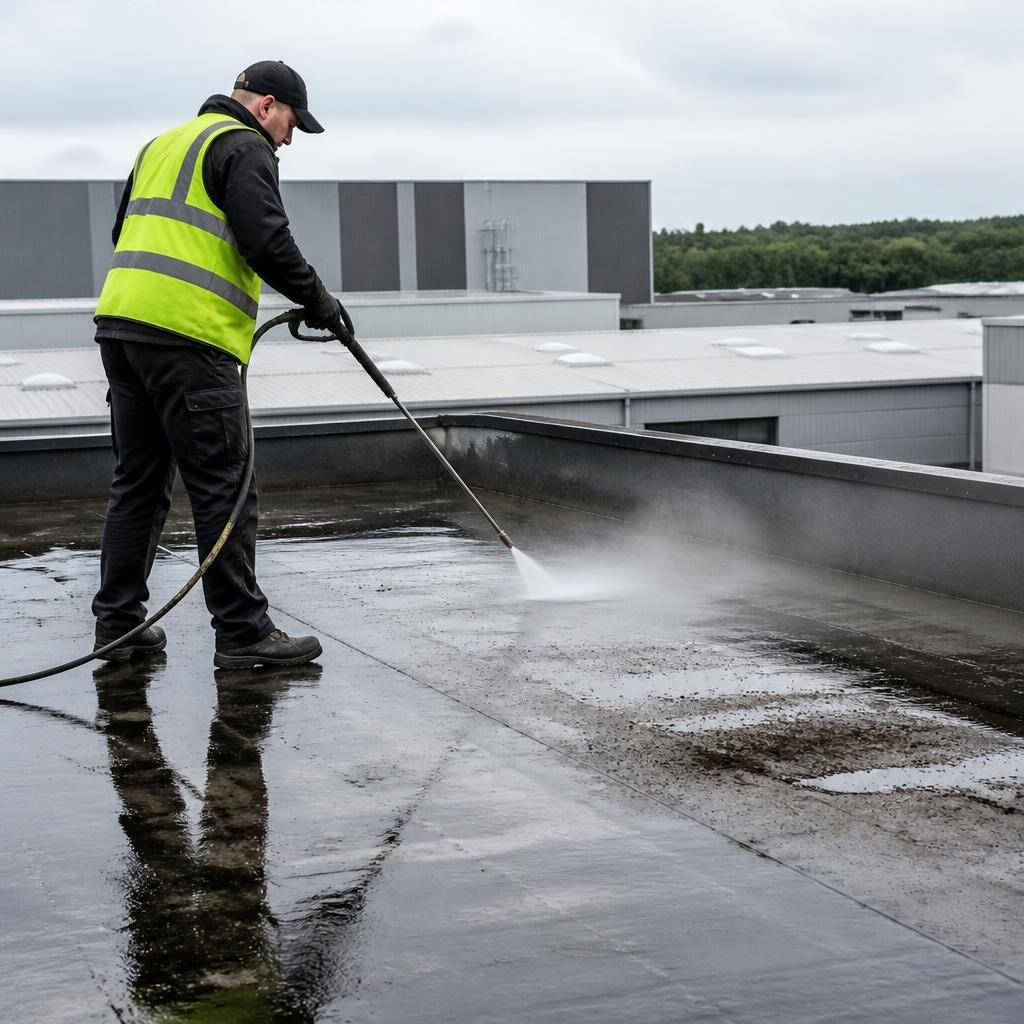
EPDM and fibreglass roofs should normally receive a professional clean every two to three years, supported by an annual condition inspection. This schedule should be shortened where the roof is shaded, surrounded by trees, exposed to pollution or affected by persistent debris and standing water.
Regular inspections help identify moss, algae, blocked outlets and organic debris before they retain moisture or conceal damage around joints, trims and penetrations. Professional cleaning should use methods suitable for the specific roof system, avoiding abrasive tools, aggressive chemicals and excessive pressure that could affect the EPDM membrane or fibreglass finish.
Arrange Your EPDM or Fibreglass Roof Cleaning Assessment
Arrange an EPDM or fibreglass roof cleaning assessment to review the roof’s condition, exposure and recommended cleaning interval. We can identify contamination, drainage concerns and areas requiring careful treatment before planned maintenance begins.