
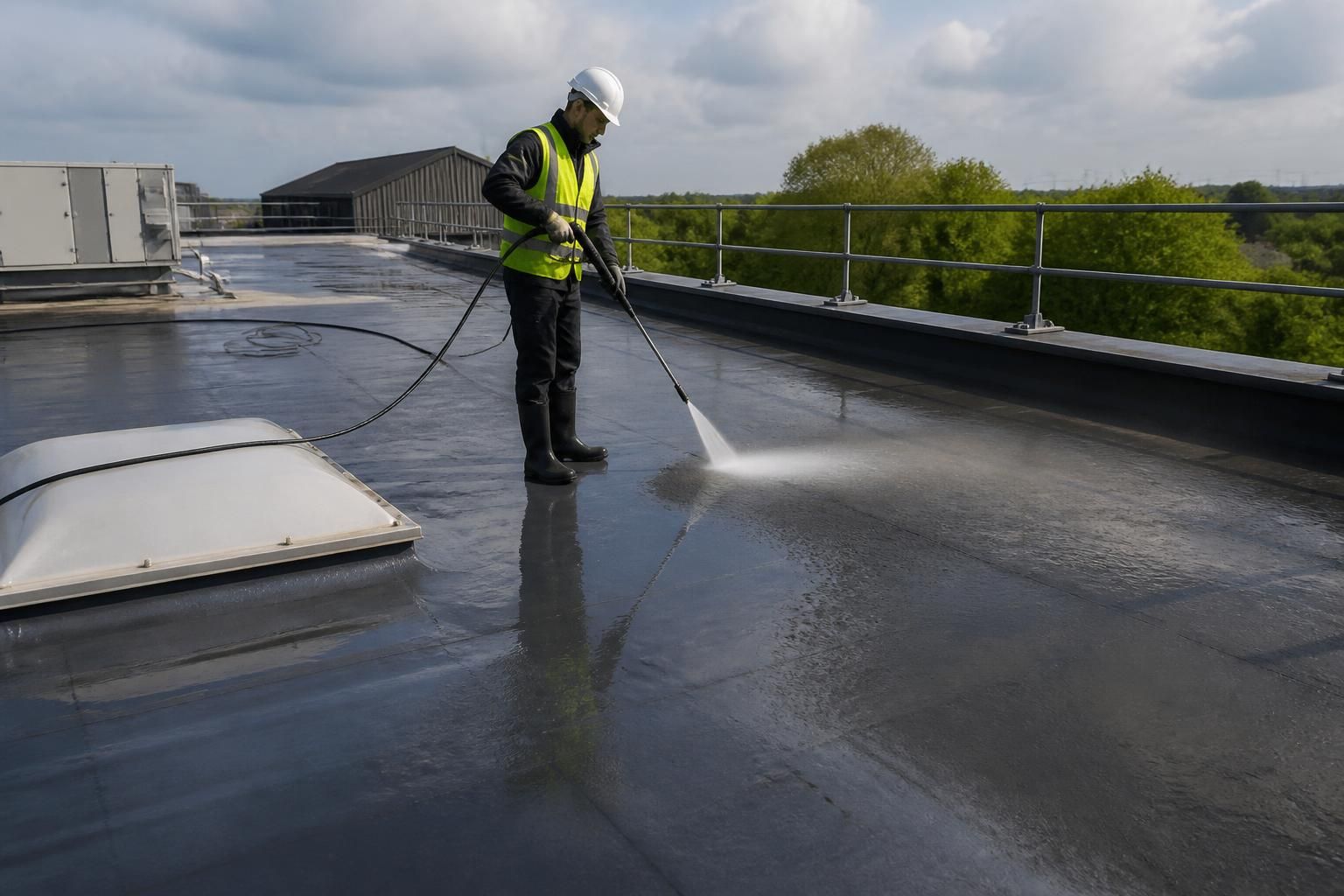
How often should EPDM and fibreglass roofs be professionally cleaned to ensure optimal performance?
EPDM and fibreglass roofs should generally be professionally inspected and cleaned at least annually, with more frequent attention where they are exposed to overhanging trees, heavy pollution, persistent damp or bird fouling. Regular cleaning removes moss, algae, dirt and debris before they retain moisture or obstruct drainage, while the exact interval should reflect the roof’s condition, surroundings and drainage performance.
EPDM and fibreglass roofs should generally be professionally inspected and cleaned at least once a year to support reliable performance and extend their service life. The appropriate interval depends on the roof’s surroundings, condition, drainage and use: roofs beneath trees, exposed to heavy pollution, affected by persistent damp or subject to bird fouling may need attention more frequently, often every six months.
Annual professional cleaning is a practical baseline because dirt, leaf debris, moss, algae and bird deposits can accumulate gradually without being obvious from ground level. These contaminants can retain moisture, restrict outlets and increase the risk of staining or biological growth. Regular removal helps the roof surface, edge details and drainage system remain in a serviceable condition.
The recommended frequency should be adjusted according to the following factors:
- Overhanging vegetation: Falling leaves, twigs and organic matter can block gutters, outlets and rainwater channels. Roofs beneath trees may require inspection and clearance more often than exposed roofs.
- Local pollution: Commercial, industrial and high-traffic locations can experience faster build-up of airborne dirt and residues. These deposits may combine with moisture and make the surface more difficult to maintain if left in place.
- Damp and limited sunlight: Shaded areas dry slowly, creating more favourable conditions for algae, moss and lichen. Persistent growth should be dealt with before it spreads around seams, edges or drainage points.
- Bird activity: Bird fouling is acidic and can be difficult to remove once it has dried. Frequent fouling may justify additional inspections and cleaning, particularly around plant, roof edges and sheltered areas.
- Roof design and drainage: Low-slope roofs and areas with poor falls can hold water and debris for longer. Drainage points should be checked as part of each visit rather than treating the main roof surface in isolation.
- Recent construction or building work: Dust, mortar residue, packaging and other site debris should be removed promptly after construction or maintenance work to prevent staining, blockages and avoidable surface wear.
EPDM is a flexible synthetic rubber membrane, so cleaning must avoid aggressive abrasion, excessive pressure and chemicals that are incompatible with the membrane or its bonded details. Fibreglass, also known as GRP roofing, has a hard resin surface but can still be damaged by unsuitable pressure, abrasive tools or harsh products, particularly where the finish is weathered or already deteriorating. Professional cleaning should therefore be based on the roof manufacturer’s guidance and the condition of the particular system.
A suitable maintenance visit normally includes a visual inspection before cleaning, removal of loose debris, controlled treatment of organic growth and careful rinsing or low-pressure cleaning where appropriate. The operative should also check outlets, gutters, laps, trims, flashings, penetrations and visible sealant. Cleaning is not a substitute for repairs: cracked resin, lifted edges, damaged membrane, open joints, blistering or persistent ponding should be recorded and assessed separately.
More frequent cleaning is not automatically better. Unnecessary cleaning, particularly with unsuitable equipment or chemicals, can place avoidable stress on roof finishes and details. The objective is planned maintenance at an interval that prevents contamination and drainage problems while using the least aggressive effective method. Where a roof remains visibly clean, drains freely and is not exposed to significant contamination, an annual inspection may confirm that a full cleaning visit is not yet required.
After severe weather, nearby building work or an incident involving excessive debris, the roof should be checked outside its normal schedule. A blocked outlet, large accumulation of organic matter or standing water should not be left until the next planned clean. Early attention can prevent moisture-related problems and reduce the likelihood that a minor maintenance issue develops into membrane, insulation or internal water damage.
For most commercial and industrial properties, an annual inspection and planned clean provides a sensible starting point, with the schedule reviewed after each visit. A six-monthly programme is more appropriate for roofs with heavy exposure or recurring contamination, while a condition-based schedule may suit cleaner, well-drained sites. Keeping inspection findings and cleaning dates on record helps identify changing conditions and supports consistent roof maintenance planning.
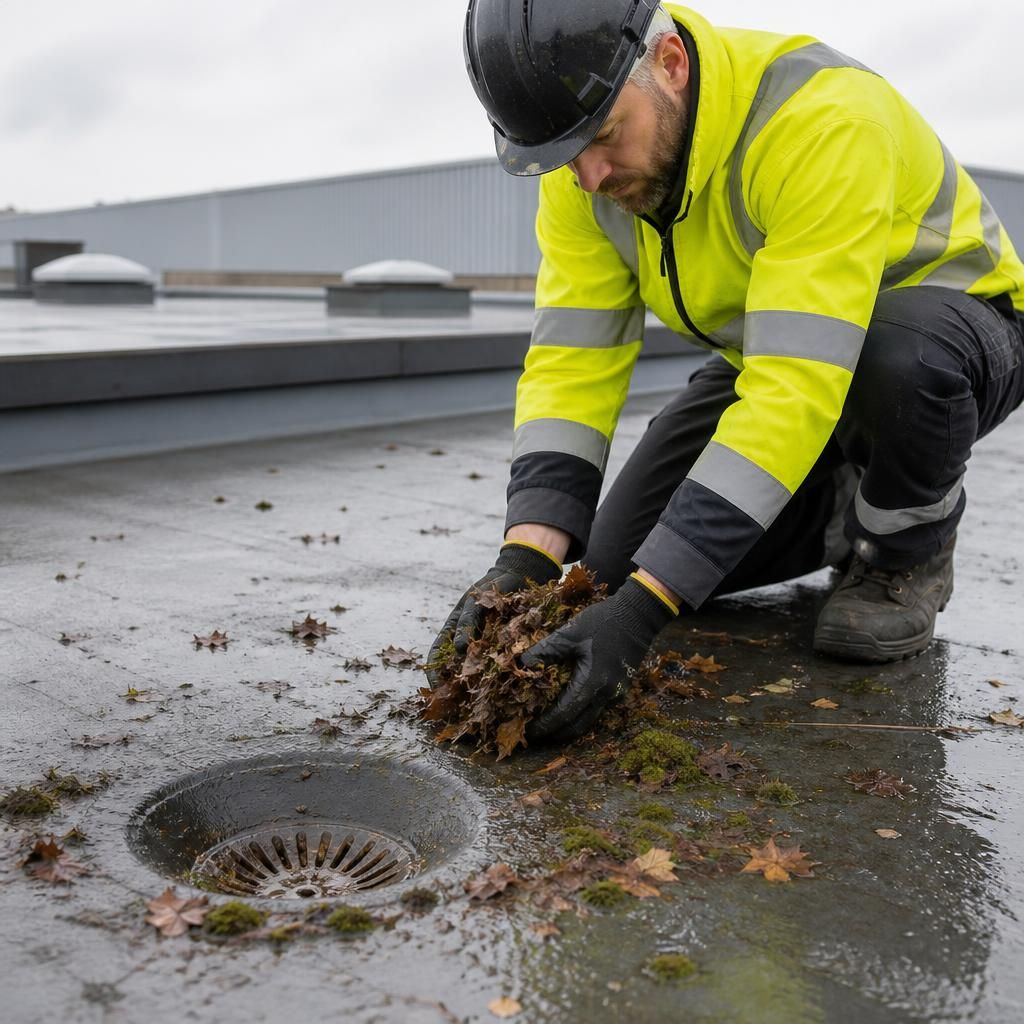
Professional cleaning frequency for EPDM and fibreglass roofs should be based on exposure, drainage and the amount of contamination rather than a fixed timetable alone. An annual inspection and planned clean is a sensible baseline for many commercial roofs, but shaded, tree-covered or heavily polluted sites may need attention more frequently.
During each visit, the roof should be checked for leaf debris, moss, algae, bird fouling, blocked outlets and areas of standing water. Cleaning can then be scheduled according to the roof’s condition, using methods suitable for the membrane or GRP surface. A condition-led approach prevents contamination from affecting drainage while avoiding unnecessary cleaning or aggressive treatment that could damage roof details.