
How can regular EPDM and fibreglass roof maintenance prevent costly repairs or replacements?
Regular EPDM and fibreglass roof maintenance removes dirt, organic growth and debris before they contribute to blocked drainage, surface deterioration or water ingress. Early cleaning and inspection help identify minor defects while they can still be repaired, reducing the risk of extensive damage and premature roof replacement.
Regular maintenance prevents costly EPDM and fibreglass roof repairs by removing debris and organic growth, keeping drainage clear, identifying defects early and limiting prolonged exposure to moisture, ponding water and ultraviolet light. Cleaning should be combined with a planned inspection, because a visually dirty roof may conceal failed joints, damaged flashings, punctures or areas where water is beginning to enter the building.
EPDM and fibreglass, also known as GRP, are durable roofing materials, but neither is maintenance-free. Their performance depends on the condition of the roof surface, edge details, outlets, trims, penetrations and adjoining components. A suitable maintenance programme helps preserve the waterproofing system rather than waiting until a leak makes the problem evident.
Keeping drainage routes clear: Leaves, silt, moss and other debris can collect around outlets, gutters and internal drains. If water cannot discharge properly, it may remain on the roof for prolonged periods. Persistent ponding can place additional stress on seams, joints and detailing, while overflowing water can damage façades, insulation, plant equipment and internal finishes. Removing debris and checking that drainage points remain functional reduces this avoidable risk.
Controlling organic growth: Moss, algae and lichen retain moisture against the surface and can spread across laps, trims and drainage details. Their roots or attachment points may make future cleaning more difficult and can obscure small defects. Carefully controlled professional cleaning removes contamination without treating the roof surface aggressively, allowing the condition of the membrane or GRP finish to be assessed more accurately.
Finding defects before they develop: Routine inspections can identify issues such as:
- open or deteriorating seams on an EPDM membrane;
- lifting edges, damaged trims or failed sealant;
- cracks, blisters, impact marks or worn areas in a fibreglass surface;
- punctures caused by maintenance activity, fallen objects or unsuitable foot traffic;
- defective flashing around rooflights, pipes, plant and other penetrations; and
- blocked, damaged or poorly sealed outlets and gutters.
These defects are generally easier to isolate and repair while they are localised. If they are left untreated, water can travel beneath a membrane or through the roof build-up, meaning the visible leak may be some distance from the original failure. Moisture can then affect insulation, decking, ceilings, electrical equipment and stored materials, increasing both the scope and disruption of remedial work.
Reducing moisture-related deterioration: EPDM is resistant to weathering, but contamination, standing water and mechanical damage can compromise the surrounding details and create routes for water ingress. Fibreglass roofs have a hard, resin-based surface, but cracks, worn coatings and damaged edges can allow water to reach the underlying layers. Maintenance does not eliminate normal ageing, but it helps prevent minor surface and detailing problems from becoming wider waterproofing failures.
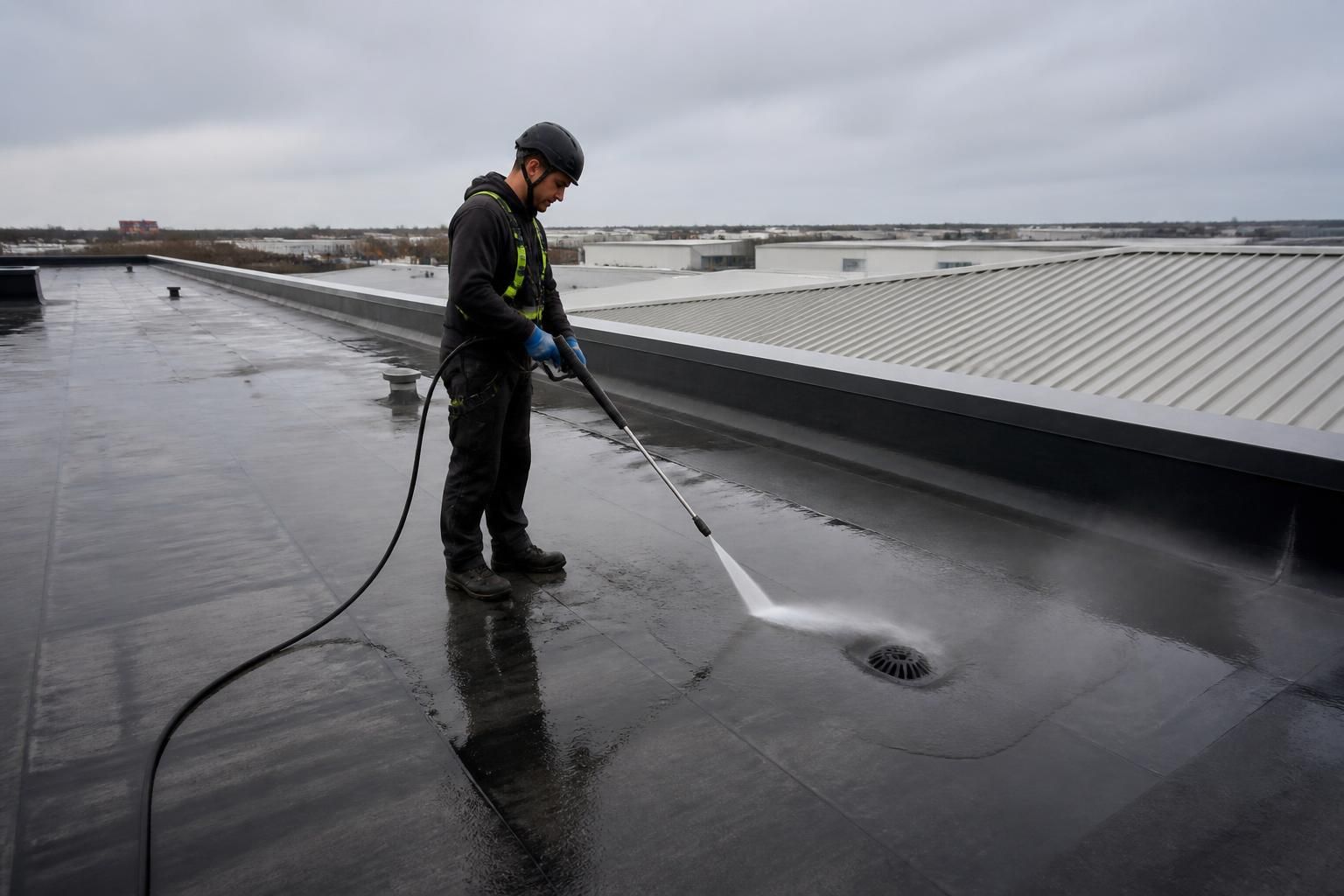
Protecting the roof from unnecessary damage: Cleaning methods must match the material and its condition. Excessive pressure, unsuitable chemicals, abrasive equipment and careless access can damage an EPDM membrane or the finish of a fibreglass roof. Professional work should use appropriate access equipment, controlled water pressure or steam where suitable, compatible cleaning products and defined walkways. Operatives should avoid dragging equipment across the roof and should not use the surface as a storage area.
Maintenance is also an opportunity to check nearby factors that can shorten roof life. Overhanging vegetation, defective rainwater goods, poorly positioned discharge pipes, building works and rooftop plant may introduce debris or concentrated water flow. Addressing these sources can reduce recurring contamination and prevent the same problem returning after cleaning.
Supporting planned repairs: A maintenance visit should record the areas cleaned, defects observed, drainage condition and any recommended follow-up work. Photographs and condition notes provide a useful reference for comparing changes over time and prioritising repairs. For example, a small failed seal around a penetration may be dealt with during planned maintenance, whereas delaying it could require the removal and reinstatement of a larger section of roofing.
Cleaning alone is not a substitute for repair. If the inspection identifies active leaks, extensive ponding, widespread cracking, loose materials or significant membrane damage, the roof should be assessed by a suitably qualified roofing professional. Cleaning should be adapted or postponed where it could worsen an existing defect, and any repairs should use materials and methods compatible with the installed roofing system.
For commercial and industrial premises, the most effective approach is a planned maintenance cycle based on the roof’s age, exposure, surrounding trees, drainage arrangement, access requirements and previous repair history. Professional cleaning and inspection can be scheduled alongside other facilities work, reducing the likelihood of emergency call-outs and helping building managers plan expenditure before deterioration affects operations.
Regular EPDM and fibreglass roof maintenance therefore protects more than the roof covering itself. It helps preserve drainage, waterproofing details, insulation, internal finishes and the building’s day-to-day use. By combining material-appropriate cleaning with documented inspections and prompt minor repairs, property owners and facilities teams can extend serviceable roof life and reduce the likelihood of premature replacement.
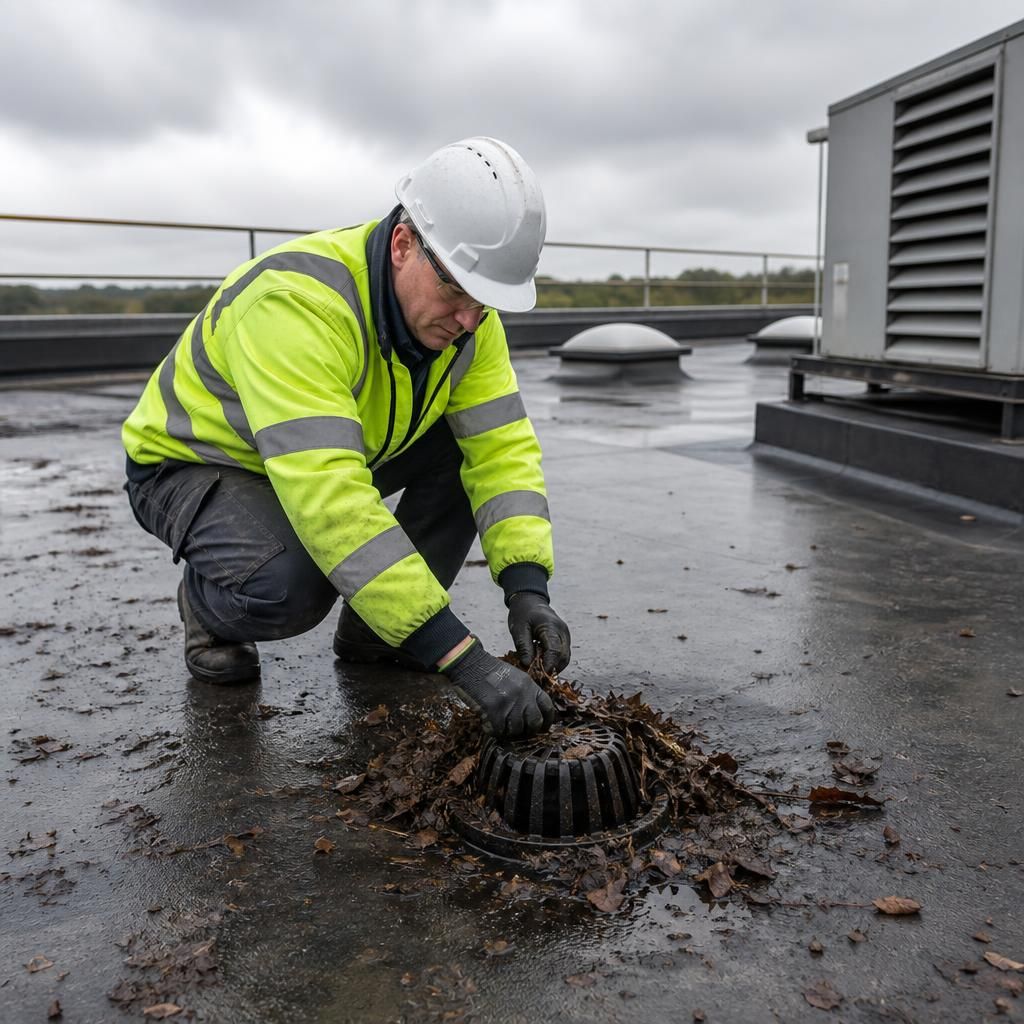
Regular EPDM and fibreglass roof maintenance prevents costly repairs by keeping drainage clear and identifying small defects before they develop into wider waterproofing failures. Removing leaves, silt, moss and other debris reduces the risk of blocked outlets and prolonged ponding, which can place additional strain on seams, trims, flashings and roof penetrations.
A planned cleaning visit also provides an opportunity to check for open EPDM seams, lifting edges, failed sealant, cracks, blisters, punctures and damaged GRP finishes. Addressing these issues while they remain localised can help prevent moisture reaching insulation, decking and internal finishes. Cleaning must be carried out with suitable equipment and compatible products so the membrane or fibreglass surface is not damaged during maintenance.
Arrange professional EPDM and fibreglass roof maintenance
Arrange professional EPDM and fibreglass roof maintenance with Encanto Exterior Cleaning to keep drainage clear and identify defects before they require extensive repairs. Contact our team to discuss a suitable cleaning and inspection schedule for your property.