How does pressure washing differ from soft washing in roof cleaning?
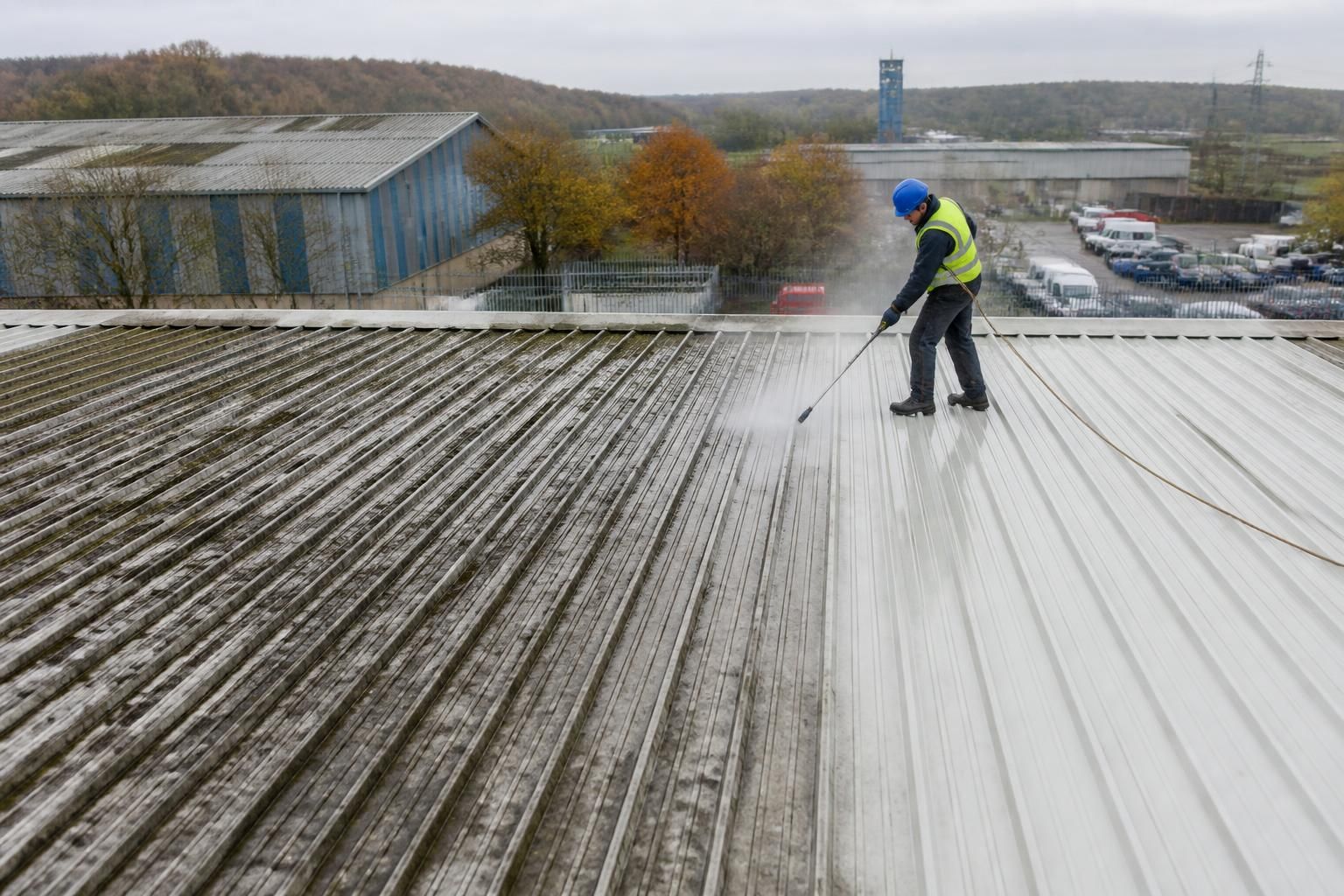
Pressure washing cleans roof surfaces with concentrated high-pressure water, while soft washing uses low-pressure application of specialist cleaning solutions to break down moss, algae and organic growth. Soft washing is generally safer for vulnerable roof tiles and coatings, whereas pressure washing is only suitable for robust materials and carefully controlled areas.
Pressure washing and soft washing differ mainly in how they remove contamination from the roof. Pressure washing relies on the mechanical force of concentrated, high-pressure water, while soft washing uses low-pressure water with specialist cleaning solutions to loosen and treat moss, algae, lichen and other organic growth. Soft washing is usually the safer approach for vulnerable roof materials and coatings; pressure washing is reserved for robust surfaces where the pressure can be controlled without causing damage.
How pressure washing works
Pressure washing directs water at the roof surface at a controlled pressure to dislodge dirt, loose debris, staining and, in some cases, surface growth. It can be effective on durable materials and areas where contamination has bonded firmly to the surface. The cleaning method, nozzle selection, distance from the roof and water pressure all need to be adjusted to suit the material and its condition.
On a suitable roof, pressure washing can provide a rapid visual improvement. However, excessive pressure or an unsuitable nozzle can strip protective finishes, damage pointing, force water beneath tiles, remove surface granules from roof coverings or break already weakened materials. It can also spread loosened moss and contaminated water across surrounding areas if collection and containment are not planned properly.
How soft washing works
Soft washing uses low-pressure application rather than forceful water impact. A compatible cleaning solution is applied to the affected areas so that it can break down organic growth and help release staining from the roof surface. The roof is then rinsed carefully, or the treatment is allowed to continue working where the system and material make that appropriate.
The process is particularly useful for moss, algae and lichen because these contaminants are not simply surface dust. They can attach to the covering, retain moisture and return if they are removed without treating the underlying growth. A suitable biocide or treatment can help control remaining spores and reduce regrowth, although the correct product, dilution, dwell time and application method must be selected for the roof and surrounding environment.
Which method is safer for roof cleaning?
For many tiled, coated or weathered roofs, soft washing presents less risk because it minimises direct impact on the covering. This is important where tiles are aged, brittle, porous or already showing signs of movement. It is also preferable where the roof has delicate coatings, solar equipment, sealed joints or details that could be affected by forceful water.
Pressure washing is not automatically unsuitable, but it should never be selected simply because it is faster. A survey should establish the roof material, age, condition, pitch, access requirements and type of contamination before any equipment is used. Some robust commercial roof coverings may tolerate carefully controlled pressure, while others require a low-pressure treatment even when they appear structurally sound.
How the correct method is selected
- Roof material: Concrete tiles, clay tiles, slate, metal, membrane systems and coated sheeting each respond differently to water pressure and cleaning chemicals.
- Condition: Cracking, delamination, loose tiles, failed sealants, corrosion, exposed substrates and previous coating damage may rule out pressure cleaning.
- Contamination: Surface dust may need only a gentle rinse, whereas moss, lichen, algae, oil-related deposits or atmospheric staining may require treatment and controlled removal.
- Roof design: Valleys, junctions, skylights, gutters, parapets and plant or ventilation equipment affect how water and debris should be managed.
- Surrounding areas: Runoff must be controlled to protect façades, paving, planted areas, vehicles, drainage systems and neighbouring property.
- Access and safety: The cleaning system must work with the available access equipment and avoid unnecessary roof traffic, particularly on fragile or steep surfaces.
Is pressure washing ever used with soft washing?
Yes. A commercial roof cleaning project may use a combination of techniques rather than one method across the entire roof. For example, soft washing may be used to treat organic growth, followed by a gentle rinse or carefully controlled pressure on a sound, suitable section. Pressure may also be used at ground level or on robust associated surfaces, such as certain paved areas, while the roof itself is treated at low pressure.
Using different methods in defined areas allows the cleaning process to reflect the condition and material of each surface. It also avoids applying unnecessary force to vulnerable sections simply to achieve a uniform method across the whole building.
Why rinsing and runoff control matter
Both methods produce contaminated water and loosened material that must be managed. Moss, silt, treatment residue and roof debris should not be allowed to enter unsuitable drainage systems or run across sensitive surfaces. Gutter protection, collection, controlled discharge and post-cleaning checks form part of responsible roof cleaning, particularly on commercial and industrial premises.
Cleaning solutions should be selected and used in accordance with the product instructions and site requirements. Nearby vegetation, watercourses, occupants, vehicles and building materials should be considered before application. Any overspray should be minimised, and affected surrounding surfaces should be rinsed or protected where necessary.
What to expect from the finished result
Pressure washing can produce an immediate change because contamination is physically removed during the wash. Soft washing may also give an immediate improvement, but treated organic growth can continue to break down after the initial visit. Some staining may fade progressively rather than disappear at once, especially where growth has penetrated textured or porous surfaces.
Neither method should be treated as a permanent barrier against future contamination. Roof exposure, shade, moisture, nearby trees, surface condition and drainage all influence how quickly moss and algae return. A suitable treatment and planned maintenance programme can help extend the period between intensive cleans.
Practical conclusion
Soft washing is generally the preferred starting point for roof cleaning where moss, algae or lichen are present and the covering could be damaged by high pressure. Pressure washing may be appropriate for selected robust roof materials and carefully controlled areas, but only after inspection and method selection by a competent contractor. The safest and most effective approach is the one that removes the contamination while preserving the roof covering, controlling runoff and avoiding unnecessary disturbance to the building.
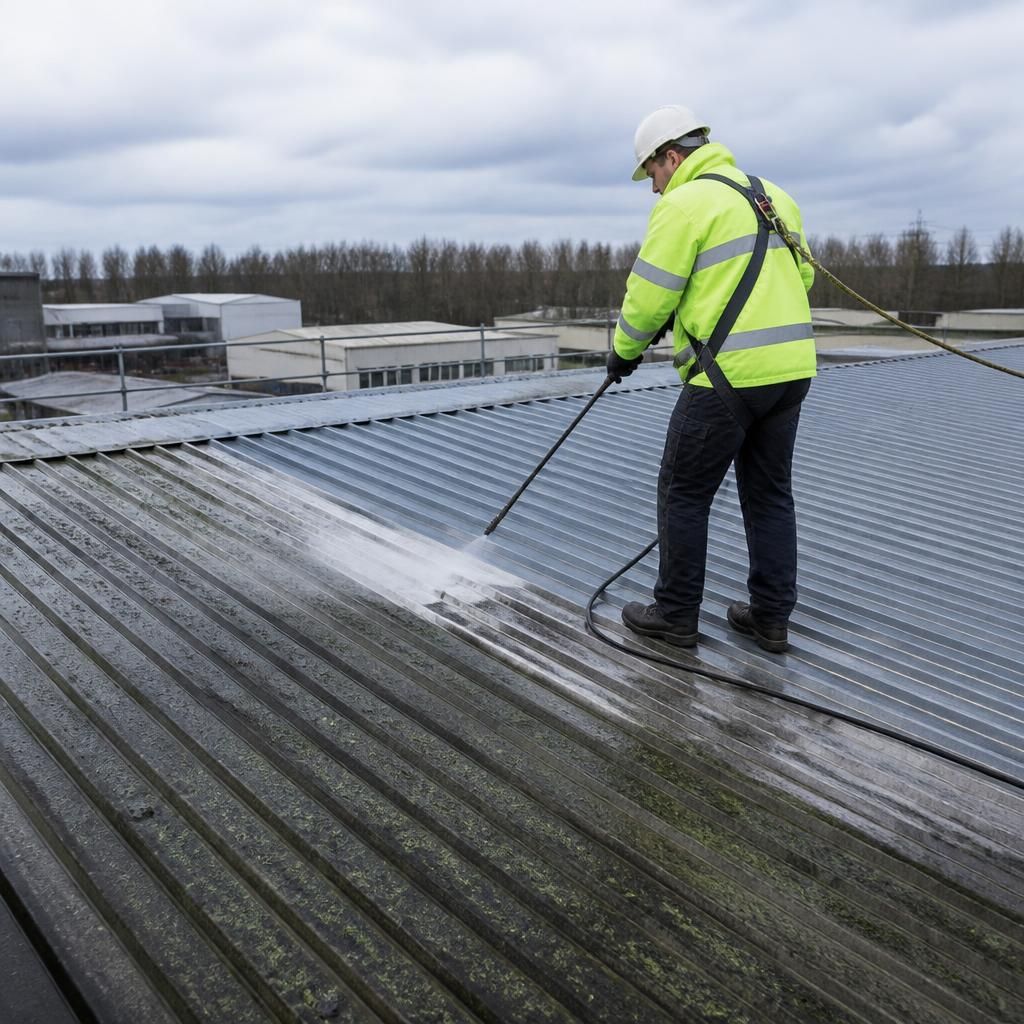
Soft washing is generally the safer roof-cleaning method because it uses low-pressure water and a compatible treatment solution rather than relying on force to remove contamination. This reduces the risk of dislodging tiles, stripping protective coatings, removing surface granules or forcing water beneath the roof covering.
Pressure washing may still be suitable for robust, sound roof materials, but only after checking the covering, its condition and the surrounding details. Moss, algae and lichen are usually better managed with a treatment-led process, as removing the visible growth without addressing remaining spores can encourage regrowth. Whichever method is selected, controlled runoff and protection of gutters, façades, vegetation and nearby surfaces are essential.
Book a Roof Cleaning Assessment
Arrange a roof cleaning assessment so we can inspect the covering, identify the safest method and plan appropriate runoff controls for your premises.
For a free quote & consultation
Contact usAccreditations