
What types of surfaces are most compatible with exterior steam cleaning?
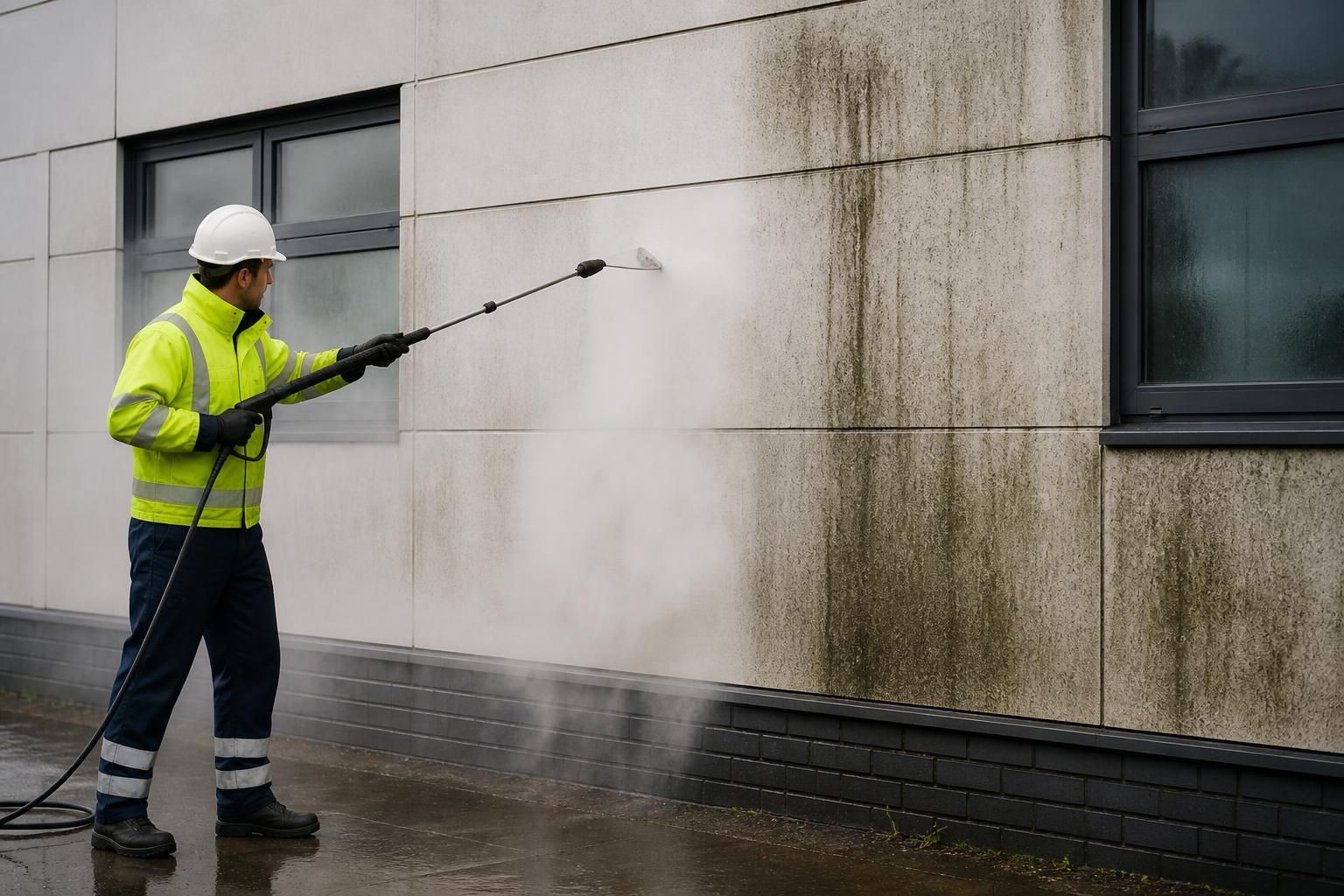
Exterior steam cleaning is most compatible with durable, heat-tolerant surfaces such as brickwork, masonry, concrete, block paving, façades, cladding and some roofing materials. Its low-pressure application can remove dirt, algae, oil and graffiti while reducing the risk of abrasion, although sensitive coatings, sealants and materials should be assessed before cleaning.
Exterior steam cleaning is most compatible with durable, heat-tolerant surfaces that can withstand controlled moisture and low-pressure agitation. In commercial and industrial settings, this commonly includes brickwork, masonry, concrete, block paving, many façade finishes, coated metal cladding and selected roofing materials. Steam can loosen ingrained dirt, algae, oil residues and some graffiti without relying on the high mechanical force associated with conventional pressure washing.
Compatibility is not determined by the material alone. The condition of the surface, its age, coatings, joints, sealants, previous repairs and exposure to heat all affect the cleaning method. A suitable surface can still be damaged if steam is applied at the wrong temperature, too closely, or for too long. Assessment and a small test area should therefore be completed before full-scale cleaning.
Surfaces that generally respond well to steam cleaning include:
- Brickwork and masonry: Steam can remove atmospheric soiling, organic growth, carbon deposits and some surface staining from sound brick and stone. It is particularly useful where aggressive pressure could erode soft faces, open joints or drive water into the wall.
- Concrete: Concrete façades, slabs, steps, loading areas and other robust surfaces can often be steam cleaned to remove dirt, algae, chewing gum residue, light oil contamination and general traffic soiling. Existing cracks, weak edges and exposed aggregate require careful treatment.
- Block paving and paving slabs: Steam is suitable for many concrete and clay paving surfaces, including pedestrian areas, courtyards and access routes. It can clean the paving while reducing the risk of displacing jointing material, although loose or poorly bonded joints may still require remedial work afterwards.
- Metal cladding and coated panels: Powder-coated, painted and other robust metal panels may be compatible with low-pressure steam when the coating is sound. The operator must avoid lifting damaged edges, forcing water behind laps and affecting aged finishes or applied graphics.
- Render and façade systems: Mineral render, some modern render systems and sound façade finishes can benefit from gentle steam cleaning. These surfaces need closer assessment because render may be thin, friable, painted or bonded to insulation, and localised damage may not be obvious before cleaning.
- Roofing materials: Selected concrete tiles, clay tiles, slate and other durable roofing materials may be cleaned with controlled steam. Roof condition, tile type, weatherproofing details and safe access must be checked first; steam cleaning is not automatically suitable for every roof.
- Painted and coated surfaces: Sound, well-bonded coatings can sometimes be cleaned effectively with steam. A test patch is essential because heat and moisture may soften, blister, lift or discolour coatings that are already failing.
Why steam is useful on these surfaces
Steam cleaning combines heat with relatively low water volume and limited pressure. Heat helps soften greasy residues, biological growth and some bonded dirt, while the operator controls the lance and working distance to reduce abrasion. This can be advantageous on façades, masonry and paving where aggressive pressure washing may roughen the surface, damage mortar, strip coatings or spread contamination.
Steam is also useful where the appearance of a surface must be improved without introducing large amounts of water. However, low water use does not mean that surfaces remain completely dry. Run-off, loosened contaminants and moisture entering joints or cavities still need to be managed, particularly around entrances, electrical equipment, occupied premises and sensitive internal finishes.
Surfaces requiring additional caution
Some materials may be cleanable only with modified equipment, lower temperatures, greater working distance or an alternative method. These include soft or friable stone, historic masonry, weathered timber, aged or unstable render, delicate decorative finishes, unsealed porous materials and surfaces with failing paint or powder coating. Natural stone is not a single category: hard, sound stone may tolerate steam, whereas softer stone can lose its surface texture or suffer from thermal and moisture-related stress.
Care is also needed around silicone joints, mastic, membrane details, resin-bound finishes, waterproofing treatments, joint sealants and plastic components. Heat can soften or deform some polymers, while steam directed at gaps may force moisture behind panels, under coatings or into building fabric. Painted signage, vinyl graphics and applied films should be assessed separately rather than treated as part of the underlying surface.
Materials that should not be assumed to be compatible
- Unstable or heavily weathered masonry with loose faces or open joints.
- Surfaces with blistering, peeling, powdering or poorly bonded coatings.
- Untreated or deteriorated timber, particularly where moisture may be absorbed into joints.
- Delicate historic finishes, carved details and vulnerable decorative surfaces.
- Roof coverings with cracked, loose or fragile units, exposed underlays or failing waterproofing details.
- Materials containing sensitive sealants, plastics or resin systems that may soften with heat.
This does not necessarily mean that cleaning is impossible. It means the surface should not be treated using a standard setting without investigation. A lower-temperature approach, soft brushing, nebulous water cleaning, specialist chemical treatment or another controlled method may be more appropriate.
How compatibility is assessed
Before work begins, the surface should be inspected for porosity, friability, existing coatings, staining type, biological growth, cracks, open joints, repairs and areas where water could enter the building. The surrounding details also matter, including windows, doors, vents, electrical fittings, drainage routes, landscaping and pedestrian access.
A small test area allows the cleaning team to check whether the chosen steam setting removes the contamination without causing colour change, surface erosion, coating failure or excessive moisture penetration. The test should be reviewed once the area has dried, as some defects and changes in appearance are not apparent while the surface is wet.
The final method may vary across one building. For example, robust concrete at ground level may accept a more productive cleaning process, while painted cladding, upper-level render and older masonry may need lower heat, reduced dwell time and more careful access. Keeping the lance moving and maintaining an appropriate distance helps prevent concentrated heat or moisture from affecting the substrate.
Practical conclusion
Sound brickwork, masonry, concrete, block paving, many façade finishes, suitable cladding and selected roofing materials are usually the best candidates for exterior steam cleaning. The method is particularly valuable where contamination is bonded to the surface but high pressure or abrasive cleaning could cause unnecessary damage. Compatibility must nevertheless be confirmed through condition assessment and testing, especially for coated, historic, porous, fragile or repaired surfaces. A controlled specification based on the actual material and its condition provides a safer and more predictable result than applying the same steam settings across every exterior surface.
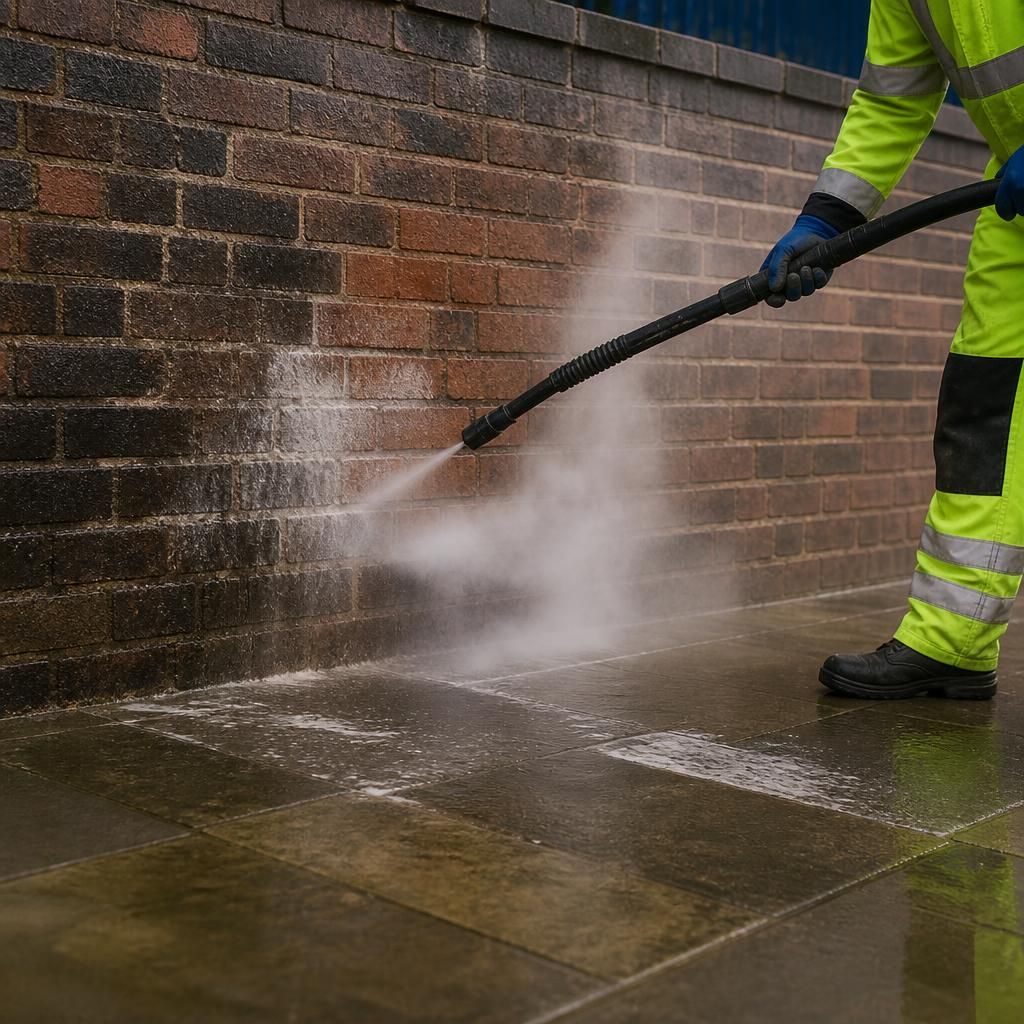
Exterior steam cleaning is most compatible with sound, heat-tolerant surfaces that can withstand controlled moisture and low-pressure cleaning. Brickwork, masonry, concrete, block paving, robust cladding and selected roofing materials often respond well because steam loosens ingrained dirt, algae, oil residues and some graffiti without the abrasion associated with high-pressure washing.
Material alone does not determine suitability. Coatings, joints, sealants, repairs, porosity and the surface’s condition must be assessed first. A small test area should be cleaned and checked after drying, particularly on painted render, coated metal, historic masonry, natural stone and roof coverings. This confirms that the chosen temperature and working distance remove contamination without causing erosion, colour change, coating failure or moisture penetration.
Surfaces with peeling coatings, loose masonry, deteriorated timber, fragile roof units or sensitive plastic and resin components may need modified settings or an alternative cleaning method. A site-specific assessment is therefore essential before steam cleaning, especially where moisture could enter joints, cavities, electrical fittings or vulnerable building details.
Arrange a Surface Compatibility Assessment
Arrange a surface compatibility assessment before cleaning to confirm whether exterior steam cleaning is suitable for the material, coatings and surrounding details. We will recommend appropriate settings or an alternative method where the surface requires additional care.