
What types of exterior surfaces can benefit most from steam cleaning?
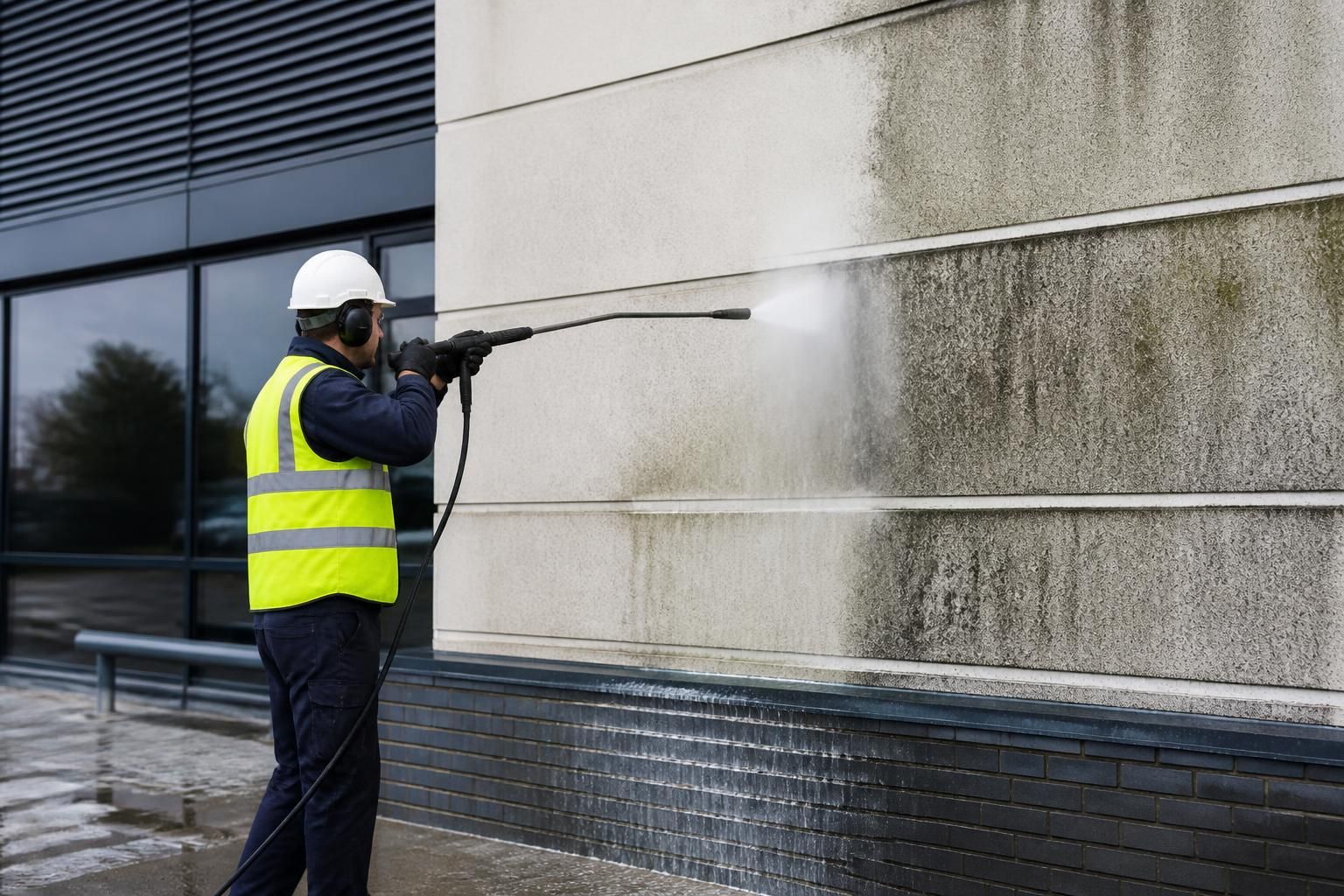
Steam cleaning is particularly effective on exterior surfaces that need thorough removal of dirt, algae, oil, grease, biological growth, and graffiti without the aggressive force of high-pressure washing. Façades, brickwork, masonry, cladding, render, concrete, block paving, car parks, roofs, and some painted or sensitive surfaces can all benefit when the method is matched to the material and its condition.
The exterior surfaces that benefit most from steam cleaning are those affected by embedded dirt, algae, moss, oil, grease, biological growth or graffiti, particularly where high-pressure washing could damage the substrate or force water into joints. Common applications include façades, brickwork, masonry, cladding, render, concrete, block paving, car parks, roofs and selected painted or sensitive surfaces. The method must always be matched to the material, its condition and the type of contamination present.
Exterior steam cleaning uses heated water, usually applied at a controlled pressure, to soften and lift contamination from the surface. This can provide effective cleaning with less mechanical force than conventional pressure washing. It is not automatically suitable for every material, however. A competent assessment should consider surface porosity, age, previous coatings, joint condition, drainage, electrical equipment and the risk of water ingress before work begins.
Façades, brickwork and masonry
Brick façades, stonework and other masonry can benefit considerably from steam cleaning where the main problem is surface soiling, atmospheric pollution, algae, organic growth or accumulated grime. Heat helps loosen deposits from uneven and porous surfaces, including older brickwork with a textured face. Controlled application is particularly important on weathered masonry, soft brick, friable stone and deteriorated mortar joints, as excessive pressure or aggressive abrasion can remove the surface or widen existing defects.
Steam cleaning is often appropriate for commercial buildings, listed or heritage properties, boundary walls and entrance areas where retaining the character of the substrate matters. It should not be used to conceal structural defects. Cracked bricks, open joints, spalled masonry and unstable pointing may need repair before cleaning, and a small test area should be assessed to confirm the chosen method will not alter the appearance of the material.
Cladding and rendered surfaces
Metal, composite and other external cladding can collect traffic film, airborne pollution, algae and staining around joints, edges and sheltered elevations. Steam cleaning can remove this contamination while reducing the need for highly aggressive pressure. It is useful for industrial units, offices, retail premises, warehouses and other large elevations where appearance and safe access are ongoing maintenance concerns.
Rendered walls can also respond well to controlled steam cleaning, especially where discolouration is caused by algae, mould or general atmospheric dirt. The operator must first establish whether the render is sound and whether it has a paint or protective coating. Loose render, failed coatings and open cracks may be worsened by water or heat, so damaged areas should be identified in advance. Cleaning should be even and carefully controlled to avoid creating visible variations between treated and untreated sections.
Concrete, block paving and car parks
Concrete hardstandings, loading areas, forecourts, walkways and car parks are among the most practical applications for steam cleaning. These surfaces commonly carry oil, grease, tyre marks, food residues, chewing gum, algae and general traffic dirt. Heat can soften oily or sticky contamination so that it can be removed with less reliance on harsh mechanical force.
Block paving benefits where dirt and organic growth have collected in the joints or on the face of the blocks. Care is needed because excessive pressure can displace jointing material or spread contamination into adjacent areas. After cleaning, the condition of the joints should be checked, and remedial jointing or other maintenance may be appropriate. Drainage and wastewater controls are also essential when cleaning car parks, service yards and areas close to surface-water drains.
Roofs and roof coverings
Some roofs benefit from steam cleaning where moss, algae, lichen, bird fouling or atmospheric deposits are affecting the appearance and maintenance of the covering. The low-impact nature of a controlled system can be preferable to forceful pressure on older or more delicate roof materials. Cleaning may also help reveal cracked tiles, failed fixings, blocked details or other defects that require attention.
Roof cleaning is not suitable for every covering or condition. Slate, clay tiles, concrete tiles, coated metal, membrane systems and fibre-cement products each have different limitations. The roof pitch, access arrangements, age, weatherproofing and risk of water entering laps or joints must be assessed. Steam cleaning should never be treated as a substitute for roof repairs, and fragile or deteriorated coverings may require a different method or no cleaning at all.
Painted, coated and sensitive surfaces
Steam can be useful on painted render, coated metal, signage surrounds, doors and other sensitive areas where abrasive cleaning could scratch or strip the finish. It may remove surface grime, organic growth and some deposits while preserving an intact coating. However, heat can soften certain paints, sealants, plastics and protective finishes. A test clean is therefore necessary, particularly where the coating is old, chalking, poorly bonded or of unknown composition.
Timber, plastic, rubber seals, glazed finishes and composite materials need individual consideration. Steam may be suitable for limited cleaning in some situations but can cause swelling, distortion, delamination or damage to joints if applied incorrectly. The safest approach is to identify the material and coating, inspect vulnerable details and agree the cleaning parameters before treating the full area.
Graffiti and localised contamination
Graffiti removal is another strong application for steam cleaning, especially on brick, stone, concrete and other hard external surfaces. Heat can soften some paints, marker residues, adhesive materials and posters, allowing them to be removed with controlled pressure and, where necessary, a compatible cleaning agent. This is often preferable to aggressive abrasion, which can leave a visible shadow or permanently alter the surface texture.
Not every marking responds to steam alone. The age and type of paint, porosity of the substrate and presence of previous coatings all affect the result. Prompt treatment generally reduces the risk of deep penetration, but the method should still be tested to avoid spreading pigment or damaging the underlying surface.
Surfaces requiring additional caution
Steam cleaning requires extra care on fragile, highly porous, cracked, poorly bonded or previously damaged surfaces. It may be unsuitable where water could enter the building, affect insulation, reach electrical systems or undermine a coating. Historic materials, soft stone, failing mortar, delicate roof coverings and composite panels should be assessed by an experienced contractor before work is scheduled.
For any surface, the most reliable process is a condition survey followed by a controlled test area. This confirms the likely appearance, identifies vulnerable details and helps establish the appropriate pressure, heat, distance, dwell time and cleaning solution. It also allows the cleaning plan to include access, protection of adjacent areas, wastewater management and any repairs or re-sealing needed afterwards.
In practice, steam cleaning delivers the greatest benefit on hard external surfaces with bonded or heat-responsive contamination, particularly where preserving the substrate is as important as removing the dirt. It is most effective when used as part of a planned maintenance programme rather than as a universal treatment applied without assessing the building materials first.
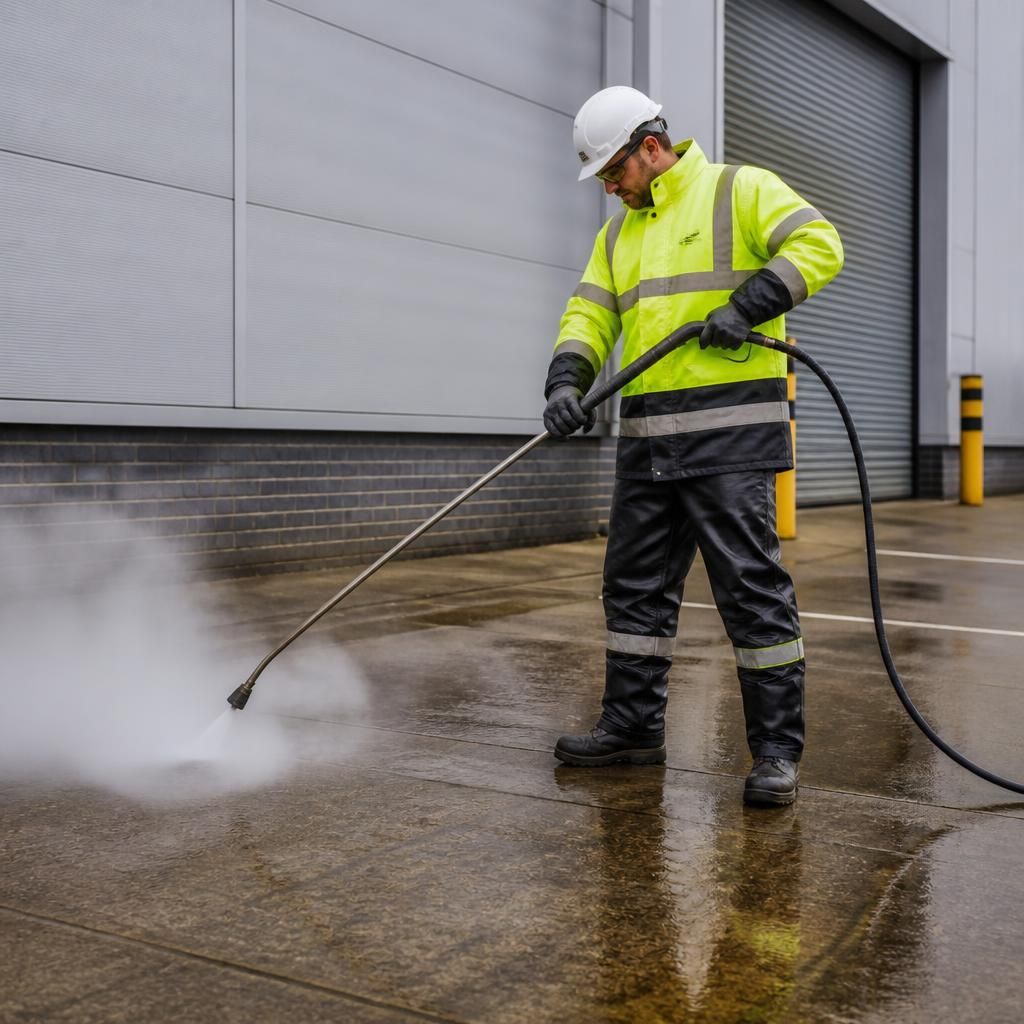
Steam cleaning is particularly effective on hard exterior surfaces carrying bonded dirt, algae, oil, grease or graffiti, because heat helps soften the contamination before it is rinsed away. This is useful on concrete, block paving, car parks, brickwork and masonry where aggressive pressure could displace jointing material, erode a weathered surface or drive water into defects.
It can also be suitable for cladding, render and coated surfaces when the finish is intact. The cleaning pressure, temperature and working distance must be adjusted to the material, with a small test area completed first. Cracked masonry, loose coatings, failing mortar and deteriorated roof coverings require additional assessment before steam cleaning is approved.