
What materials are safe for exterior steam cleaning?
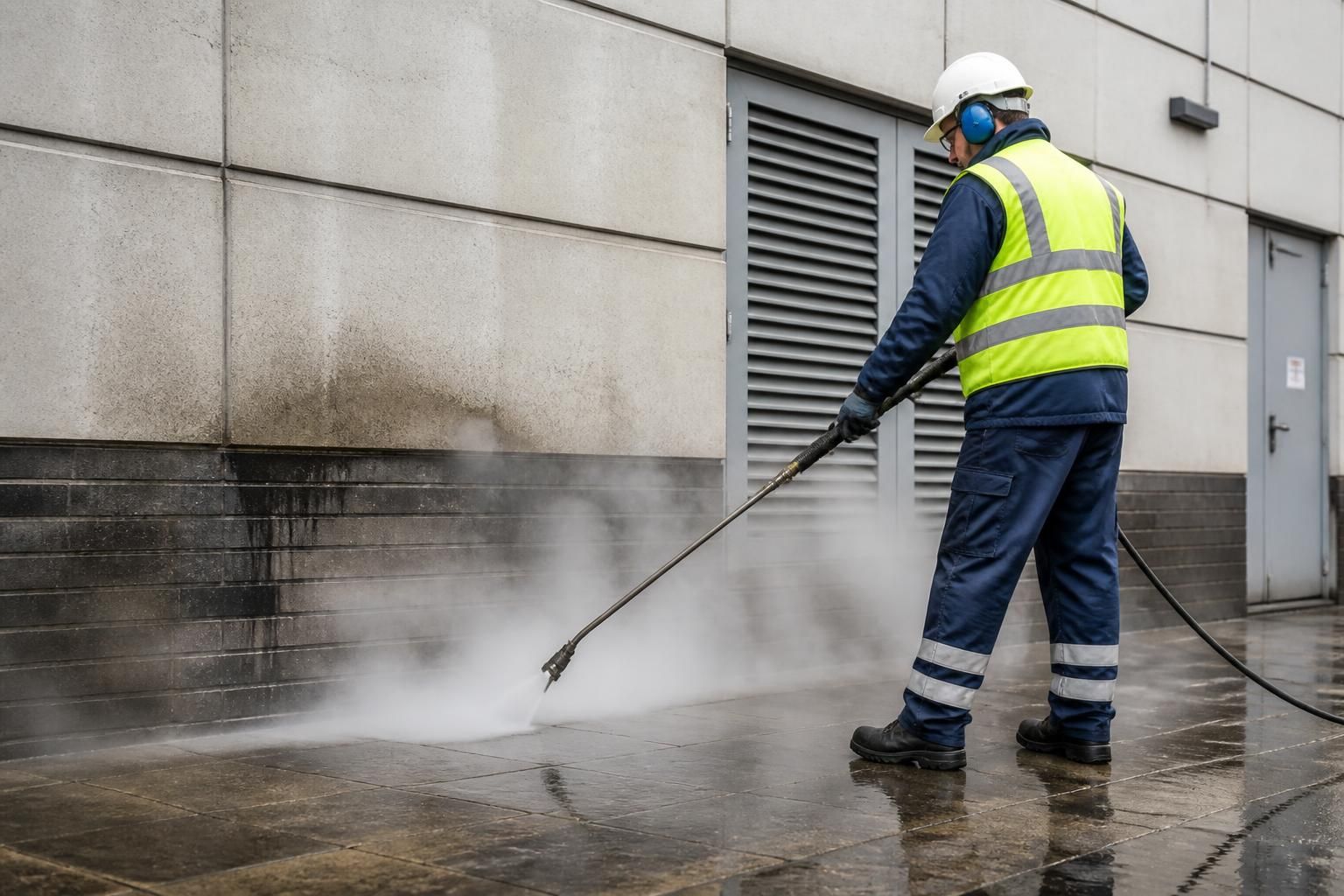
Exterior steam cleaning is generally safe for sound brickwork, masonry, concrete, natural stone, ceramic tiles, some rendered surfaces and compatible metal cladding when the temperature, pressure and technique are matched to the material. Delicate, loose, cracked, unsealed or heat-sensitive surfaces require an assessment and controlled testing first, as steam can damage weak coatings, joints, sealants and certain roofing materials.
Exterior steam cleaning is generally safe for sound, non-porous or mineral-based materials such as brick, concrete, natural stone, ceramic tiles and some metal cladding, provided the temperature, pressure, distance and dwell time are controlled. Safety depends on the condition of the surface as well as its material. Cracks, loose joints, failed coatings, open pores, damaged sealants and heat-sensitive finishes must be assessed before cleaning, with a small test area used to confirm that the method will not cause damage.
Steam cleaning uses heated water, usually with considerably less water volume and lower pressure than conventional power washing. This can help remove biological growth, traffic film, oil residues, atmospheric soiling, chewing gum and some graffiti without relying solely on aggressive mechanical force. However, the heat can soften coatings, disturb weak pointing, affect sealants or drive moisture into defective construction. It should therefore be treated as a controlled cleaning process rather than a universally risk-free option.
Materials that are commonly suitable include:
- Sound brickwork: Well-maintained, fired brick is usually compatible with steam cleaning. The operator should avoid prolonged heating of damaged faces and take care around eroded mortar joints, spalled bricks and soft or historic brickwork.
- Concrete: Sound concrete walls, slabs, kerbs, loading areas and other hard surfaces can normally be steam cleaned. Particular care is needed where the concrete is cracked, delaminated, friable or covered with a weak surface treatment.
- Natural stone: Granite, sandstone, limestone and similar materials may be cleaned successfully, but their porosity and mineral composition vary considerably. Soft or highly porous stone can absorb moisture, shed particles or suffer from staining if the process is too aggressive.
- Ceramic and quarry tiles: Exterior tiles are often suitable when they are firmly bonded and their grout, sealant and underlying substrate are in good condition. Loose tiles and deteriorated joints should be repaired before cleaning.
- Some rendered surfaces: Cementitious render and certain robust mineral renders may tolerate a carefully adjusted steam-cleaning system. Thin-coat, textured, painted or resin-based renders need a separate assessment because heat and moisture can affect their finish or adhesion.
- Compatible metal cladding: Coated steel, aluminium and other metal panels can often be cleaned with steam at an appropriate setting. The condition and type of coating are critical, particularly where paint is chalking, peeling or already poorly bonded.
- Block paving and hard landscaping: Concrete block paving and many hard paving products can benefit from steam cleaning, especially where weeds, organic growth or surface contamination are present. Jointing sand may be displaced, so reinstatement or joint management may be required afterwards.
Brick and masonry require condition-led cleaning. Steam can be preferable to high-pressure washing for removing surface deposits from masonry because it reduces the risk of forcing water into joints or abrading the face. It is not suitable for every building, however. Older handmade bricks, soft historic stone, lime mortar, friable pointing and previously damaged façades can be vulnerable. Cleaning may also reveal differences in colour where areas have weathered unevenly. A competent assessment should identify the masonry type, joint condition, previous coatings and any areas requiring repair before work begins.
Concrete and paving are usually robust, but defects still matter. Steam cleaning can remove grime and organic contamination from car parks, service yards, paths and loading areas. It will not correct structural cracking, surface scaling, oil penetration or failed concrete. Where contamination has entered a porous surface, additional treatment or repeat cleaning may be necessary. Drainage should be checked in advance, and wastewater must be managed in accordance with the site’s environmental and drainage requirements.
Façade panels and cladding need coating checks. The base metal may be resistant to heat, while its factory-applied paint, powder coating, laminate, joint sealant or protective film may not be. Steam should be tested on an inconspicuous section to check for colour change, softening, gloss variation, blistering or loss of adhesion. Joints, vents, louvres and interfaces with windows also need careful treatment so that water is not driven behind the cladding system.
Roofing materials are not automatically safe. Some robust roof tiles and hard roofing surfaces can be cleaned with a suitable low-impact steam method, but the condition of the roof and the manufacturer’s guidance should be considered first. Slate, aged tiles, coated metal roofing, membranes, bituminous products, leadwork, sealants and roof insulation can all respond differently to heat and moisture. Steam must not be used to conceal defective flashing, loose coverings or failed waterproofing. Roof access, run-off, fragile areas and the risk of water entering the building also require a specific method statement.
Materials that commonly need additional caution, specialist approval or an alternative method include:
- Unsealed timber, timber cladding and weathered wood, which may absorb moisture, raise fibres or lose an existing finish.
- Painted, varnished or powder-coated surfaces where the coating is loose, brittle, chalking or heat-sensitive.
- Plastic, PVC, acrylic and composite panels that may soften, distort or change appearance when exposed to excessive heat.
- Glass and glazed units, particularly where seals are damaged or there is a sharp temperature difference between the glass and the cleaning system.
- Lead, zinc, copper and other decorative or specialist metals where heat, oxidation, staining or run-off could affect the finish.
- Historic façades, ornamental details and conservation materials that require a gentler, documented approach.
- Cracked, delaminated, hollow, loose or structurally unsound surfaces of any material.
A pre-cleaning inspection should record the surface type, condition, coatings, joints, access constraints and nearby vulnerable materials. The cleaning team should then carry out a controlled trial, normally in a discreet area, using the least aggressive effective setting. The trial should be checked after drying because some problems, such as staining, coating change or moisture movement, are not immediately visible. Results should be agreed before larger areas are cleaned.
Safe steam cleaning also depends on the surrounding building elements. Windows, door thresholds, electrical equipment, ventilation openings, signage, sensors, expansion joints and sealants may require masking or hand cleaning. Occupied commercial premises need controls for pedestrian and vehicle movement, hot-water exposure, slips, run-off and access equipment. Where contaminants such as bird fouling, biological growth, oil or graffiti are present, the waste should be contained and disposed of through an appropriate route rather than allowed to enter surface-water drainage.
The practical rule is that steam cleaning is most suitable for sound, compatible surfaces where the cleaning objective can be achieved with controlled heat and low mechanical force. It should not be selected solely because a material appears hard or durable. Confirming the substrate, testing the proposed method and adjusting the equipment to the surface are the key steps in achieving effective cleaning without damaging the building fabric or its protective finishes.
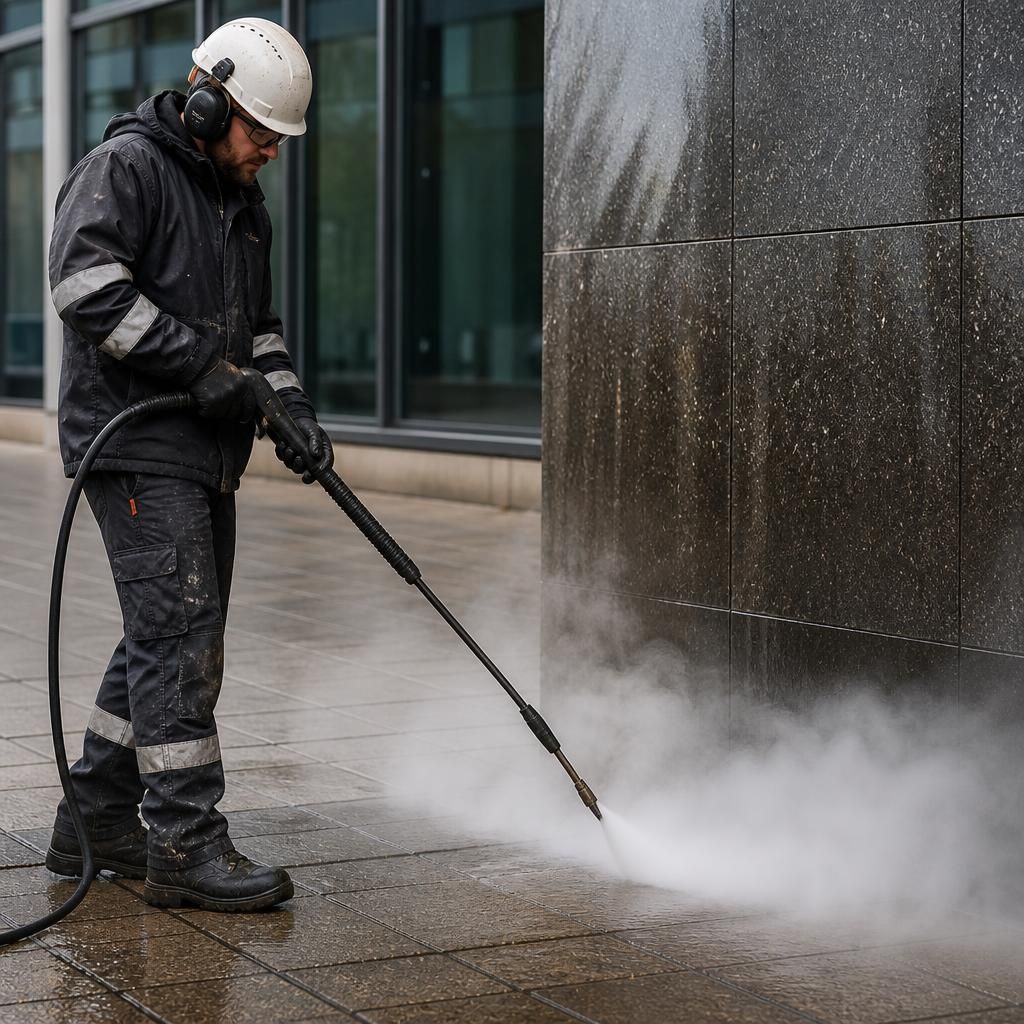
Exterior steam cleaning is safest when the material and its condition are assessed before the main work begins. Sound brick, concrete, natural stone, ceramic tiles and compatible metal cladding may tolerate controlled steam, but cracked surfaces, loose joints, failed coatings and damaged sealants can be affected by heat and moisture.
A discreet test area should be cleaned using the least aggressive effective setting, with the temperature, pressure, distance and dwell time adjusted to the substrate. The area should then be checked after drying for changes in colour, gloss, adhesion, staining, surface friability or moisture movement. This is particularly important for porous stone, painted or rendered finishes, historic masonry and coated panels.
Steam cleaning should only proceed when the trial confirms that the surface and surrounding details can tolerate the method. Windows, vents, electrical fittings, joints and drainage points may need protection, while defective materials should be repaired or treated by an alternative method rather than cleaned with additional heat or pressure.
Arrange an exterior steam cleaning assessment
Arrange an exterior steam cleaning assessment so we can confirm which materials, coatings and surrounding details are suitable for the proposed cleaning method. We can recommend controlled testing or an alternative approach where the surface is delicate, damaged or heat-sensitive.