
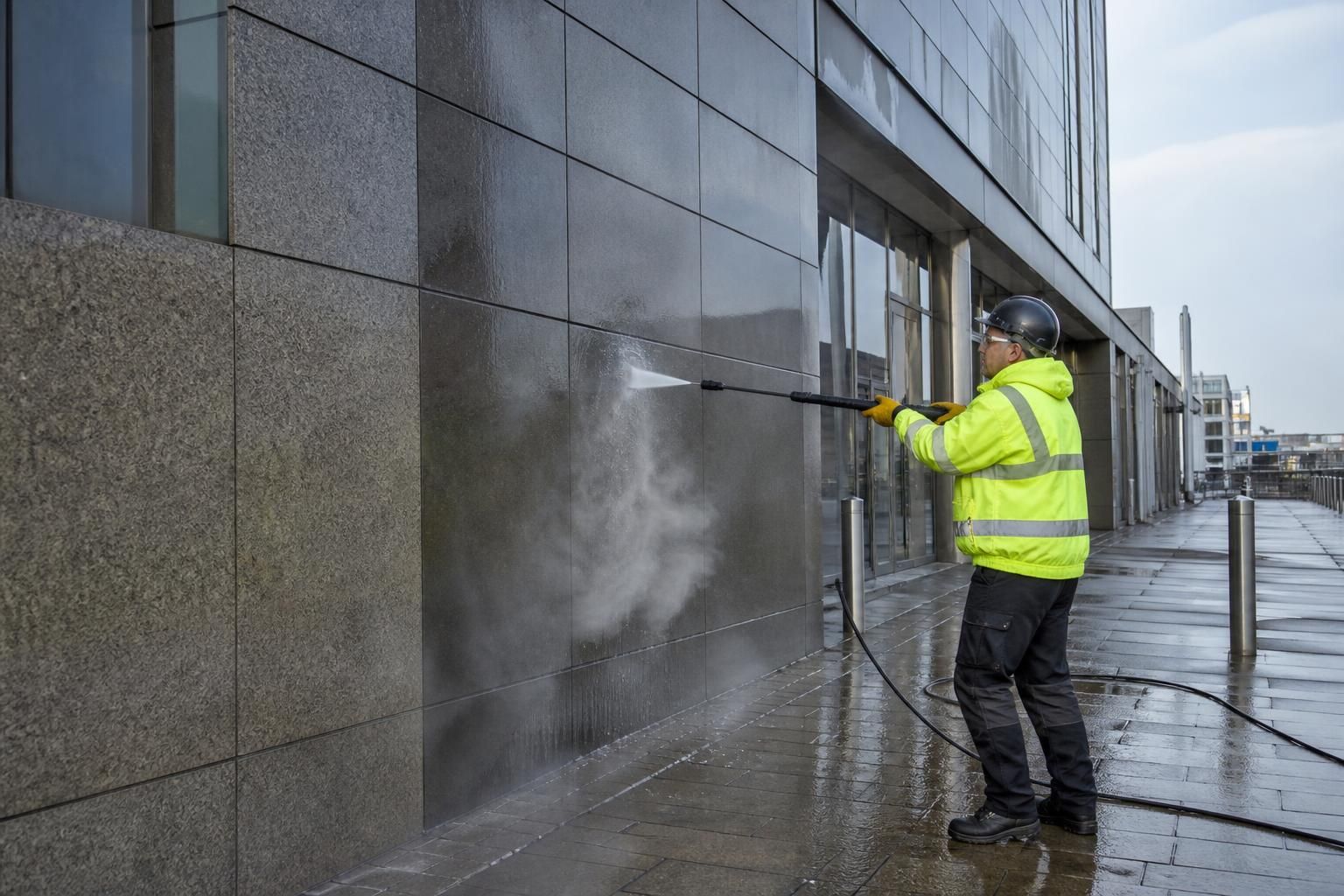
What are the cost implications and potential return on investment when opting for exterior steam cleaning services for large commercial properties?
The cost of exterior steam cleaning for a large commercial property depends on the surface area, material, level of soiling, access requirements, water management and the need for specialist equipment or preparation. The potential return on investment comes from protecting façades and other assets, reducing repair and maintenance costs, preserving property value and presenting a safer, more professional premises to occupiers, visitors and customers.
For a large commercial property, exterior steam cleaning is priced according to the area and type of surface being cleaned, the level of contamination, access requirements, water and wastewater controls, and the equipment or preparation needed. The potential return on investment is measured less by the cleaning itself and more by the costs it helps prevent, including premature repairs, surface replacement, redecoration, tenant complaints, safety issues and deterioration in the property’s appearance and value.
What determines the cost?
A professional quotation should be based on a site assessment rather than a simple rate per square metre. Two buildings with similar dimensions can have very different costs if one has accessible cladding and the other has heavily soiled masonry, restricted access or sensitive architectural details.
- Surface area and configuration: Façades, roofs, service yards, car parks and other external areas all require different cleaning methods. A complex elevation with recesses, ledges, balconies and multiple materials takes longer to survey, protect and clean than a broad, unobstructed surface.
- Material and condition: Brickwork, render, concrete, cladding and coated surfaces respond differently to heat, moisture and pressure. Delicate finishes may require controlled steam cleaning, test patches and slower working methods. Existing damage, failed coatings, open joints or friable masonry may also require additional care.
- Type and severity of soiling: Atmospheric dirt, algae, moss, oil, food residue, carbon deposits, bird fouling, chewing gum and graffiti can require different treatments. Long-established contamination may need pre-treatment, repeated passes or spot cleaning rather than one uniform process.
- Access equipment: The cost may include mobile elevated work platforms, towers, scaffolding, rope access or specialist reach equipment. The choice depends on height, ground conditions, traffic routes, overhead obstructions and the need to protect members of the public.
- Site logistics: Mobilisation, parking restrictions, delivery arrangements, security procedures, out-of-hours working and coordination with occupiers can affect the duration and labour requirement. Busy retail, industrial and mixed-use sites often need phased working to maintain access.
- Water and wastewater management: Commercial projects may require controlled water use, collection of run-off, drain protection, filtration or lawful disposal of recovered wastewater. Contaminants removed from the building must not be allowed to enter surface water systems without appropriate controls.
- Protection and preparation: Windows, vents, electrical equipment, signage, landscaping, vehicles and vulnerable finishes may need to be masked or protected. Pre-cleaning repairs, removal of loose material and temporary relocation of obstructions can also form part of the project cost.
- Compliance and supervision: Risk assessments, method statements, site inductions, traffic management and specialist supervision are important on large or occupied premises. These measures add to the planned cost but reduce the likelihood of damage, disruption or unsafe working.
Why steam cleaning can affect the overall value of the work
Steam cleaning uses heated water, usually at controlled pressure, to loosen and remove contamination. In suitable applications, this can reduce reliance on aggressive chemicals and avoid the higher pressures that may damage joints, coatings or softer materials. It is not automatically the cheapest cleaning method, because controlled heat, specialist equipment and slower work on sensitive surfaces can increase the initial charge. Its financial value comes from selecting an appropriate method for the substrate and reducing the risk of avoidable damage.
For example, cleaning a façade without unnecessarily stripping a coating or eroding masonry may extend the useful life of the existing finish. Avoiding damage can remove the need for remedial pointing, patch repairs, repainting or early replacement. The saving is not guaranteed and depends on the condition of the surface, but it is a key reason to assess the material before work begins rather than choosing a method solely on headline price.
Where the return on investment may arise
- Lower repair and replacement costs: Regular removal of damaging deposits can help limit staining, biological growth, corrosion risks and the accumulation of substances that hold moisture against the surface. Cleaning cannot correct defective construction or existing deterioration, but it can form part of a preventative maintenance plan.
- Protection of capital value: A well-maintained exterior provides evidence that the building is being managed responsibly. This can support condition assessments, lease negotiations, refinancing discussions and future sale preparation, although cleaning alone does not determine a property’s market value.
- Reduced reactive maintenance: Planned cleaning allows defects such as cracked render, failed sealant, blocked drainage details and loose masonry to be identified earlier. Early reporting gives the property manager an opportunity to programme repairs before they become urgent and more disruptive.
- Improved occupier and visitor experience: Clean entrances, façades, walkways and car parks help maintain a professional environment for employees, customers, residents and visitors. The commercial benefit may be particularly relevant to retail, hospitality, office, healthcare and managed residential properties.
- Reduced disruption: A planned programme can be scheduled around trading hours, deliveries and tenant activity. This may prevent the larger operational disruption associated with emergency cleaning, unplanned access equipment or extensive remedial works.
- Health, safety and compliance support: Removing slippery organic growth, heavy contamination or unsafe deposits can contribute to safer external areas. The cleaning contractor should still identify underlying drainage, surface or maintenance problems, as cleaning does not replace statutory inspections or repairs.
How to assess the investment properly
The most useful comparison is between the full project cost and the costs that the planned work is intended to control. A property manager can review previous cleaning, repair and replacement invoices, records of complaints or access problems, planned refurbishment dates and the expected service life of the relevant surfaces. The assessment should also consider whether cleaning is required before an inspection, handover, letting campaign or planned redecoration.
It is important to separate measurable savings from broader operational benefits. Avoided remedial work, fewer emergency call-outs and reduced redecoration requirements can be recorded directly. Improved presentation, easier tenant retention and stronger first impressions are commercially relevant but more difficult to attribute solely to steam cleaning. A realistic business case should acknowledge this distinction rather than promise a guaranteed financial return.
For larger sites, the work can often be divided into priorities. Entrances, public-facing elevations, loading areas and high-risk walkways may be addressed first, followed by less visible elevations and periodic maintenance areas. This approach helps manage expenditure while creating a consistent long-term cleaning plan. It may also reveal whether a recurring programme is more economical than allowing contamination to build up until a major restoration clean is required.
What a reliable quotation should include
Before approving the work, the quotation should clearly describe the areas and surfaces included, the proposed cleaning method, access arrangements, preparation and protection, wastewater controls, working hours, exclusions and any required follow-on repairs. It should also state whether test cleaning is included and explain how unexpected conditions, such as unstable coatings or concealed damage, will be handled.
A low initial price may not represent the lowest overall cost if it excludes access, traffic management, water recovery, stain treatment or protection of sensitive areas. Conversely, the most extensive specification is not always necessary. The appropriate option is one that matches the surface condition, operational requirements and required finish without applying more pressure, heat, chemicals or access equipment than the building needs.
Planning for long-term value
Steam cleaning should be considered as part of planned exterior asset maintenance rather than an isolated cosmetic service. Keeping records of cleaned areas, methods used, observed defects and recommended review dates allows future work to be specified more accurately. Scheduling should reflect the building’s exposure, material, use and rate of soiling; a high-traffic site or property near industrial activity may require a different interval from a lightly used office building.
The strongest return generally comes when the cleaning is coordinated with inspections, minor repairs, repainting, roof maintenance and occupancy requirements. A site survey can identify whether steam cleaning is suitable, where another method is safer or more effective, and which defects should be repaired before cleaning. This considered approach controls the immediate cost while protecting the condition, appearance and operational value of the wider property.
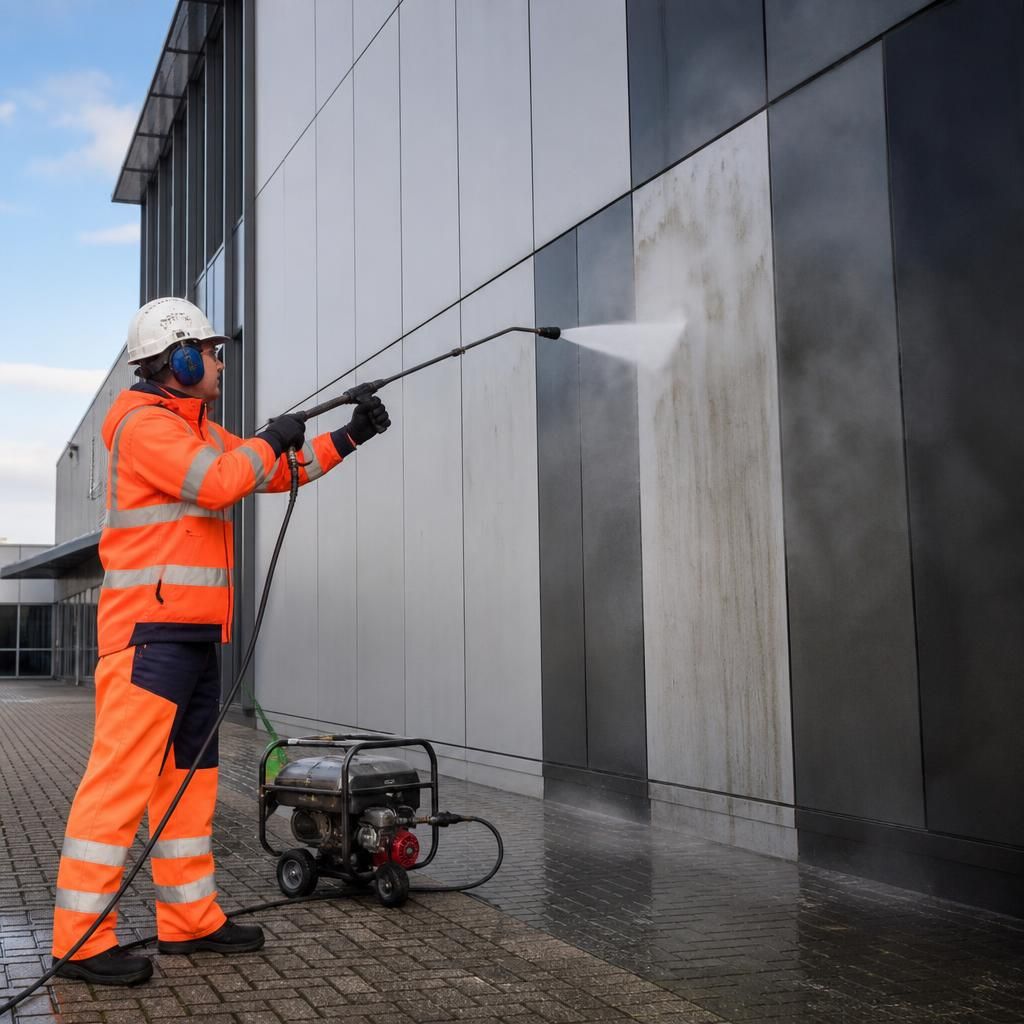
The return on investment from commercial exterior steam cleaning is assessed by comparing the project cost with the maintenance, repair and operational costs it may help prevent. Cleaning can remove contamination before it contributes to staining, moisture retention, surface deterioration or unsafe conditions, helping property managers plan remedial work rather than respond to avoidable damage.
For a meaningful assessment, review previous repair invoices, reactive cleaning costs, tenant or visitor complaints, planned refurbishment work and the condition of the relevant surfaces. Also consider less easily quantified benefits, such as maintaining a professional appearance, reducing disruption and supporting the building’s condition during lease, handover or sale discussions. Steam cleaning is not a guaranteed source of financial savings, but selecting a controlled method suited to the substrate can reduce the risk of damage associated with unnecessarily aggressive cleaning.
Request a Commercial Steam Cleaning Cost Assessment
Request a site-specific commercial steam cleaning cost assessment to review access, surface condition, wastewater controls and the likely maintenance value of the work. We can provide a clear quotation based on your property’s requirements and operating arrangements.