
What are the benefits and limitations of using steam cleaning for exterior surfaces?
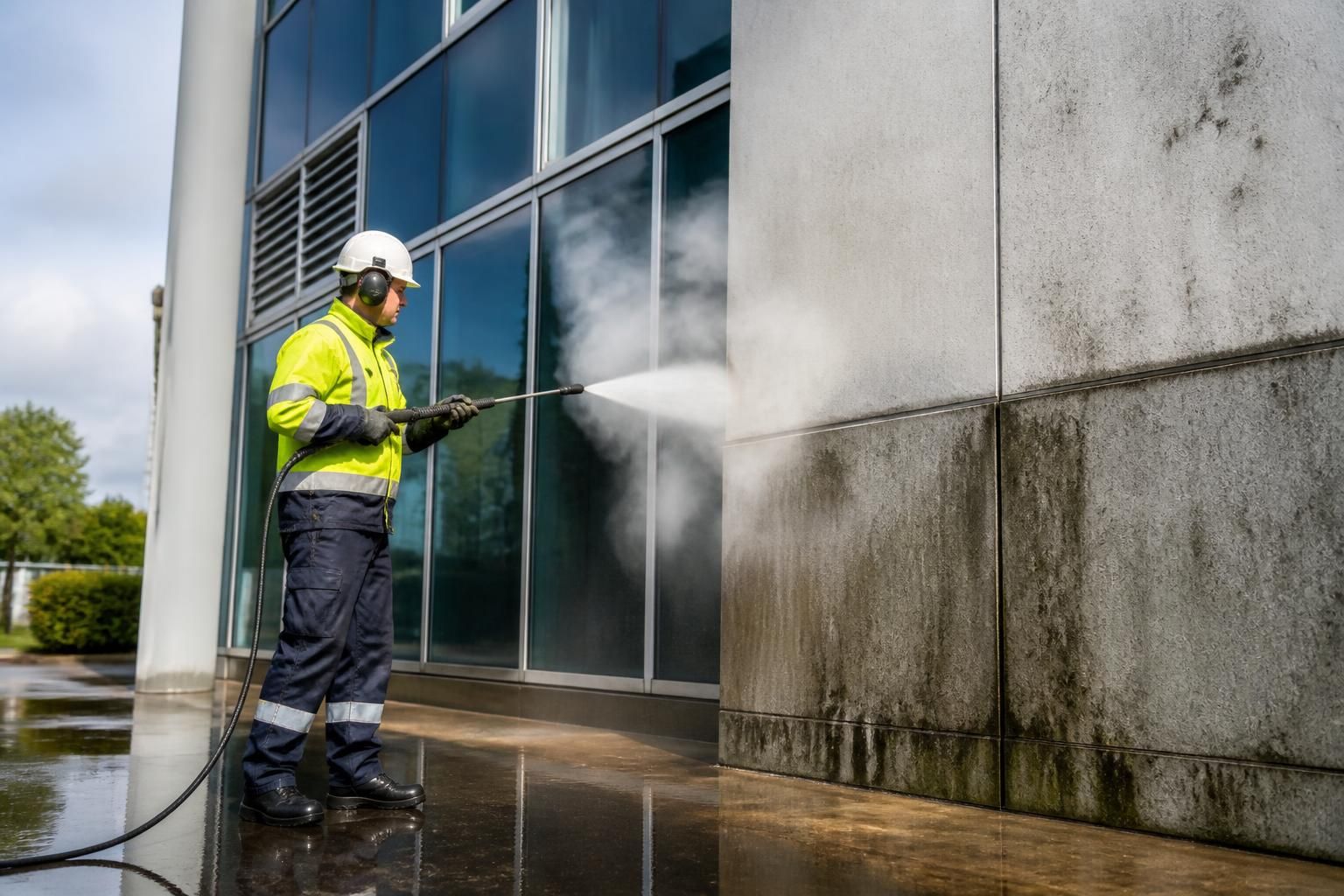
Steam cleaning uses heated water vapour to loosen dirt, grease, biological growth and some stains from exterior surfaces while using less water than conventional pressure washing. It can provide controlled, effective cleaning with reduced risk of surface erosion, but it is not suitable for every material or contaminant and requires careful assessment, temperature control and safe access.
Steam cleaning is an exterior cleaning method that uses heated water, often delivered as low-pressure steam or hot water vapour, to soften and lift dirt, grease, biological growth, traffic film and some staining. Its main benefits are controlled cleaning, reduced water use compared with many pressure-washing applications and a lower risk of mechanical erosion on suitable surfaces. Its limitations are that heat can damage sensitive materials, some contaminants require additional treatment, and safe results depend on correct temperature, pressure, access and wastewater control.
Benefits of steam cleaning exterior surfaces
- Effective removal of organic contamination: Heat helps break down algae, moss, lichen, mould, bird fouling and general biological deposits. This can be particularly useful on masonry, façades, paving and other areas where surface growth has become established.
- Good performance against grease and traffic film: Heated water softens oily deposits and ingrained grime more effectively than cold water alone. Steam cleaning can therefore be suitable for loading areas, service yards, car parks, forecourts, bin stores and other commercial surfaces affected by vehicle or operational residues.
- Reduced mechanical impact: Steam cleaning can achieve useful results at relatively low pressure. This reduces the risk of dislodging pointing, eroding softer masonry or forcing water into joints compared with an unnecessarily aggressive pressure-washing treatment. It does not remove the need for care: heat and pressure must still be matched to the material.
- More controlled cleaning of detailed surfaces: The method can be useful around architectural features, textured façades, signage, narrow joints and areas where a high-pressure water jet could cause damage. Experienced operatives can adjust the equipment and work progressively rather than applying the same setting across an entire elevation.
- Less water used in many applications: Steam systems generally use less water than conventional high-flow pressure washing. This can reduce the volume of runoff and make containment, collection and disposal more manageable. It does not mean that runoff can be ignored, particularly where detergents, oils, heavy metals or contaminated deposits are present.
- Useful for sensitive or occupied sites: Lower water volumes can help limit splashback, overspray and disruption around entrances, pedestrian routes and operational premises. Noise, access requirements and working times still need to be assessed, but steam may be preferable where uncontrolled water discharge would be difficult to manage.
- Can support more hygienic cleaning: The combination of heat and cleaning action can help remove contamination from hard, non-porous surfaces. Steam cleaning is not a substitute for a specified disinfection process where a site has particular hygiene, healthcare or food-handling requirements, so the intended standard should be agreed in advance.
Limitations and potential risks
- Not suitable for every material: Prolonged heat or hot water can affect timber, certain plastics, sealants, membranes, painted finishes, some render systems and delicate coatings. It may soften, blister, distort or discolour a surface if the temperature is too high or the equipment is held too close for too long. A material assessment and inconspicuous test area are important before full cleaning.
- Surface condition remains critical: Loose pointing, friable brick, cracked render, failed coatings and defective joints may be worsened by cleaning, even at modest pressure. Steam cleaning cannot repair structural defects or replace repointing, render repairs, coating renewal or roof maintenance.
- It will not remove every stain: Steam is effective against many soft, organic and greasy deposits, but deeply absorbed oil, rust, mineral staining, paint, tar, adhesive residues and some chemical discolouration may need a compatible detergent, poultice, specialist stain treatment or controlled abrasive process. Applying more heat is not always the correct solution.
- It can affect existing coatings and finishes: Paint, protective coatings, sealants and anti-graffiti treatments may be degraded or removed. The cleaning specification should identify whether the objective is to preserve the finish, prepare it for re-coating or remove it entirely.
- Heat does not eliminate the need for chemical or biological controls: Removing visible moss or algae does not necessarily prevent regrowth. Where appropriate, a separately specified biocidal treatment and improvements to drainage, shading or maintenance may be needed. Any treatment must be compatible with the surface and managed in accordance with its product instructions.
- Runoff still requires management: Heated water can mobilise oils, dirt, paint particles and biological residues. Drainage points should be identified before work starts, and contaminated water may need to be contained, filtered, collected or disposed of through an approved route. Environmental compliance depends on the complete process, not simply on using less water.
- Access and weather can restrict the work: High-level façades, roofs, canopies and complex structures require suitable access equipment, exclusion zones and controls for falling water or debris. Cold, windy or wet conditions can affect visibility, operator safety and the quality of the result. Steam cleaning should not be treated as a substitute for a properly planned access system.
- It may require more time or specialist control: Low-pressure cleaning is often carried out progressively to protect the substrate. Where deposits are heavy or the surface is highly textured, this can take longer than a straightforward high-pressure wash. Equipment selection, operator experience and preparation have a direct effect on the final outcome.
Which surfaces are usually suitable?
Steam cleaning is commonly considered for robust masonry, brickwork, concrete, block paving, some stone, metal cladding and selected render or façade systems, subject to condition and manufacturer guidance. It can be especially useful where the surface has organic growth, greasy deposits or ingrained atmospheric dirt and where high-pressure cleaning could be unnecessarily aggressive.
Roofing materials require particular caution. Some tiles, slate, roof coatings, membranes and proprietary systems may be damaged by heat, water penetration or foot traffic. The roof construction, age, condition, laps, flashings and drainage arrangements should be assessed before a method is chosen. Timber, painted surfaces, fragile stone, soft coatings and unknown composite materials should not be assumed to be steam-safe without testing.
How to decide whether steam cleaning is appropriate
- Identify the substrate, surface finish and condition, including previous coatings, repairs, cracks and open joints.
- Determine the type of contamination and whether the priority is appearance, preparation for redecoration, hygiene or removal of a hazardous deposit.
- Check manufacturer or conservation requirements where the building has a specialist façade, coating, roof system or heritage status.
- Carry out a controlled test clean in a representative, less visible area. Inspect the result after drying, as colour and staining can change once moisture has evaporated.
- Agree temperature, pressure, cleaning agents, access arrangements, protection of nearby areas and wastewater controls before the main work begins.
- Use planned maintenance afterwards to address causes of recurring soiling, such as defective drainage, leaks, vegetation contact, standing water or heavy traffic contamination.
In practice, steam cleaning is most valuable when a controlled, low-water approach is needed and the substrate can tolerate heat. It is less appropriate where the material is heat-sensitive, structurally unsound or affected by stains that require a different treatment. A professional site assessment, test patch and clear method statement provide the best basis for deciding whether steam cleaning will deliver a safe and durable result.
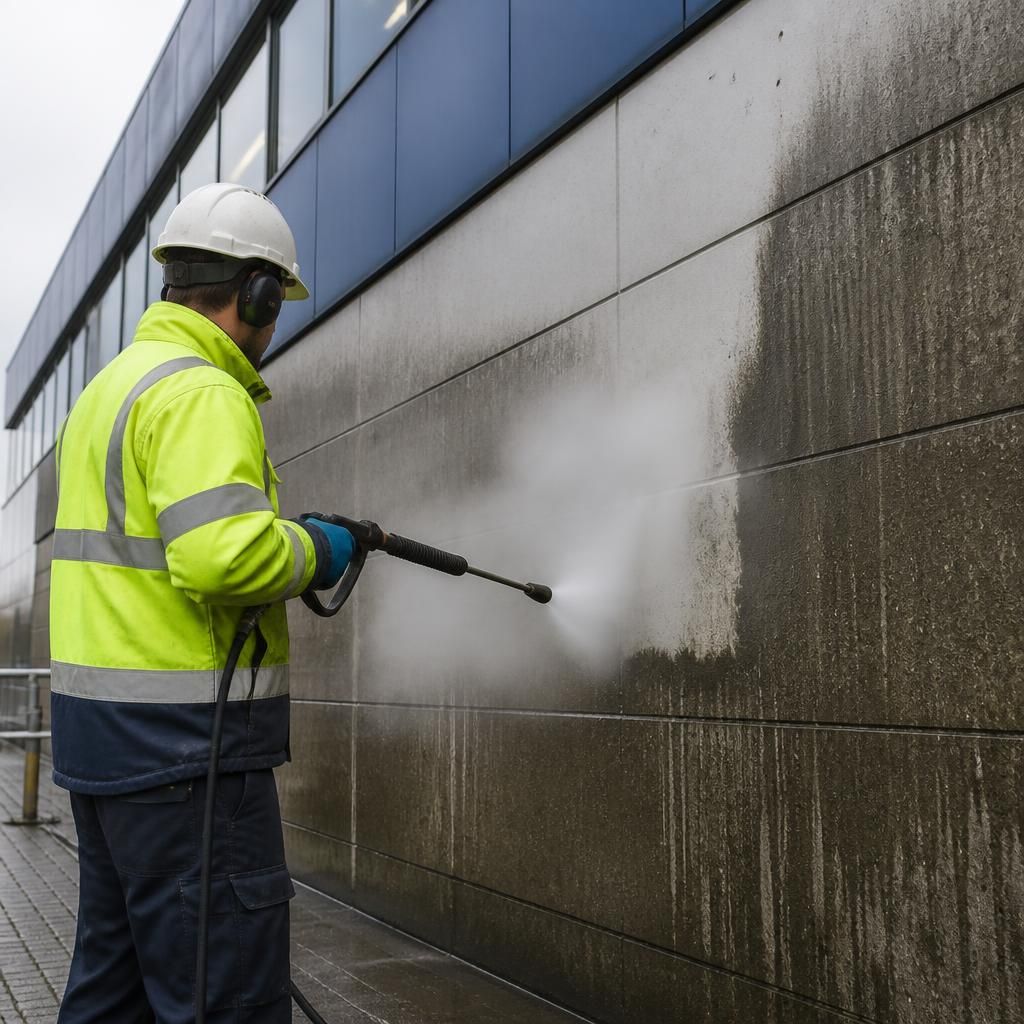
Steam cleaning uses controlled heat and low-pressure water vapour to loosen exterior dirt, grease and biological growth while reducing the mechanical impact associated with high-pressure washing. It is often suitable for robust masonry, concrete, paving and selected cladding, but the substrate, finish and condition must be assessed before work begins.
Heat can damage timber, delicate coatings, sealants, membranes, some render systems and fragile stone. A test clean in an inconspicuous area helps confirm that the temperature, pressure and working distance are appropriate. It also shows whether existing paint, protective coatings or pointing will be affected before the full surface is treated.