
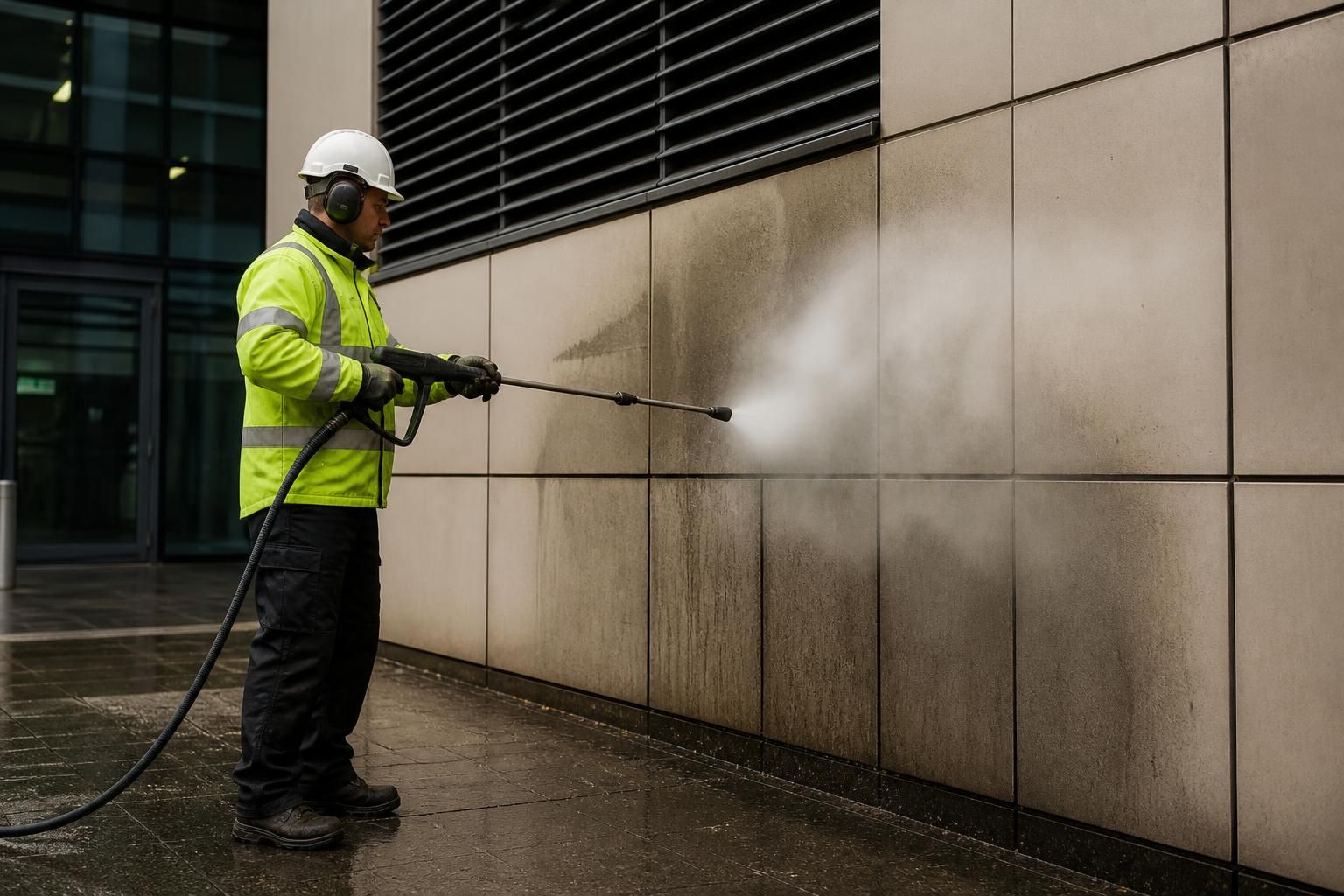
What types of surfaces are best suited for steam cleaning in commercial and industrial buildings?
Steam cleaning is best suited to robust, moisture-resistant surfaces such as brickwork, concrete, stone, glazed tiles, some render systems, metal cladding and hard-wearing paving. It uses high-temperature water vapour to loosen dirt, grease, organic growth and some surface coatings with less water and pressure than conventional pressure washing, but the material, finish and condition should be assessed first.
Steam cleaning is best suited to hard, moisture-resistant commercial surfaces that can tolerate controlled heat, including sound brickwork, concrete, suitable natural stone, glazed tiles, some render systems, metal cladding and hard-wearing paving. It uses high-temperature water vapour to soften dirt, grease, biological growth and some surface residues while using considerably less water and pressure than conventional pressure washing. Suitability still depends on the material, its finish, age, condition and previous treatments.
Brickwork and masonry
Sound brickwork is generally well suited to steam cleaning, particularly where façades have accumulated atmospheric grime, algae, moss, bird deposits or light organic staining. The low-pressure approach can be useful on older or more delicate elevations where aggressive water pressure could erode joints, damage the brick face or drive water into the wall.
Brickwork should be inspected before cleaning. Loose bricks, friable faces, open joints, failed pointing and areas affected by frost damage may require repair first. Steam cleaning is not a substitute for repointing or structural maintenance, and vulnerable mortar may need a gentler method or local hand cleaning.
Concrete and precast concrete
Concrete columns, retaining structures, car park surfaces, loading areas and precast façade panels can usually tolerate steam cleaning when the concrete is sound. Heat helps release traffic film, grease, tyre marks, algae and embedded surface dirt without relying solely on high water pressure.
Particular care is needed where concrete has a decorative coating, exposed aggregate finish, polished surface, sealant or repaired section. Differences in porosity can produce variations in appearance after cleaning. Cracks, delamination and areas with exposed reinforcement should be recorded and assessed rather than treated as ordinary staining.
Natural stone
Many robust natural stone façades and hard surfaces respond well to carefully controlled steam cleaning. It can be effective on granite, some sandstone, slate and other dense stone types where the objective is to remove organic growth, atmospheric soiling or surface deposits without abrasive action.
Natural stone is not a single material category. Porosity, mineral composition, previous sealing, weathering and the condition of joints all affect the appropriate method. Softer, friable or highly absorbent stone may be damaged by excessive heat, repeated passes or trapped moisture. A small test area should be assessed for colour change, surface breakdown, salt movement and drying behaviour before wider cleaning begins.
Glazed ceramic tiles and hard paving
Glazed tiles, ceramic wall finishes and dense porcelain paving are commonly suitable because their surfaces are relatively non-absorbent and resistant to routine heat exposure. Steam can help remove grease, grime, algae and residue from entrances, service areas, pedestrian routes and other high-traffic locations.
Joints may be more vulnerable than the tiles themselves. Cementitious grout, movement joints and failed sealants can absorb moisture or loosen if exposed to unsuitable heat and pressure. Cleaning should therefore account for the condition of the entire tiled system, not just the visible tile face.
Metal cladding
Sound aluminium, steel and other metal cladding can often be steam cleaned effectively, especially where the surface has traffic film, airborne pollution, bird fouling or light organic contamination. Reduced water use can also be helpful around entrances, loading bays and sensitive operational areas where runoff needs to be controlled.
Coated and painted cladding requires more careful assessment. Heat and cleaning action may affect aged powder coating, failing paint, exposed edges, joint sealants, protective films or repairs that have weathered differently from the main panels. Steam should not be used to conceal coating failure; loose finishes and corrosion need to be identified and managed separately.
Render and insulated façade systems
Some sound render systems can be cleaned with low-pressure steam, particularly when the surface has light organic growth or atmospheric soiling. Mineral render, cement-based render and certain robust textured finishes may respond well when the operator controls temperature, dwell time and nozzle distance.
Render must be treated cautiously because it can be porous, textured, cracked or bonded to an underlying insulation system. Excessive heat or moisture may worsen existing defects, affect weak coatings or enter cracks and exposed edges. Acrylic, silicone, elastomeric and other proprietary finishes should be checked against the manufacturer’s guidance. A test clean is important before committing to a full elevation.
Hard-wearing paving and external service areas
Steam cleaning can be appropriate for concrete yards, dense paving, steps, kerbs, loading areas and other hard external surfaces. It is particularly useful where grease, chewing gum, algae, moss, food residue or traffic film needs to be loosened with controlled water use.
Surface drainage, falls, nearby door thresholds and the destination of contaminated runoff must be considered. Steam may loosen oils and other pollutants without removing the need for suitable collection, treatment or disposal. Surfaces with loose jointing sand, failing sealant or unstable slabs may need repairs before cleaning.
Surfaces that need additional caution
- Painted, powder-coated or sealed surfaces: heat and cleaning action can soften, discolour or lift a failing finish, particularly at edges and damaged areas.
- Timber: steam can force moisture into the grain, raise fibres, affect coatings and contribute to distortion. It is not normally the first-choice method for external timber façades or doors.
- Asphalt and bituminous materials: heat may soften the binder or alter the surface, especially in warm conditions or where the material is aged. A method specifically suited to the asphalt should be considered.
- Plastic, composite and vinyl panels: some products can distort, mark or lose their finish when exposed to excessive heat. Product information and a test area are essential.
- Glass and sealed façade elements: steam may be suitable in controlled circumstances, but seals, gaskets, films, laminated sections and thermal differences require particular care.
- Damaged or hollow surfaces: delaminated concrete, loose render, spalled masonry and unstable coatings should be repaired or isolated before cleaning.
How suitability is assessed
A professional assessment should identify the substrate, coating and finish; the type and severity of contamination; existing cracks, open joints and repairs; drainage and runoff requirements; nearby electrical or mechanical equipment; and any manufacturer or warranty restrictions. The cleaning team should then select an appropriate temperature, pressure, nozzle, working distance and dwell time rather than applying the same settings to every surface.
A discreet test area is normally the most reliable way to confirm compatibility. The area should be checked during cleaning and after drying for colour change, etching, coating loss, raised fibres, surface erosion, staining migration and moisture-related effects. Results should be agreed before the full building elevation or external area is treated.
Steam cleaning is not always the strongest option
Steam is often selected for controlled cleaning and surface preservation, but it may not remove heavy cementitious deposits, thick paint, deep oil contamination or established staining in every situation. Some surfaces may require soft washing, a conventional low-pressure rinse, specialist chemical treatment, abrasive-free mechanical cleaning or a combination of methods. The right choice is the method that removes the contamination without causing greater damage to the substrate or its finish.
For commercial and industrial buildings, the most suitable steam-cleaning candidates are therefore sound, hard, moisture-resistant surfaces with stable finishes. Brick, concrete, compatible stone, glazed tile, selected render, metal cladding and dense paving often fall into this category. A material-specific inspection and test clean remain essential, particularly on older façades, coated panels and surfaces with visible defects.
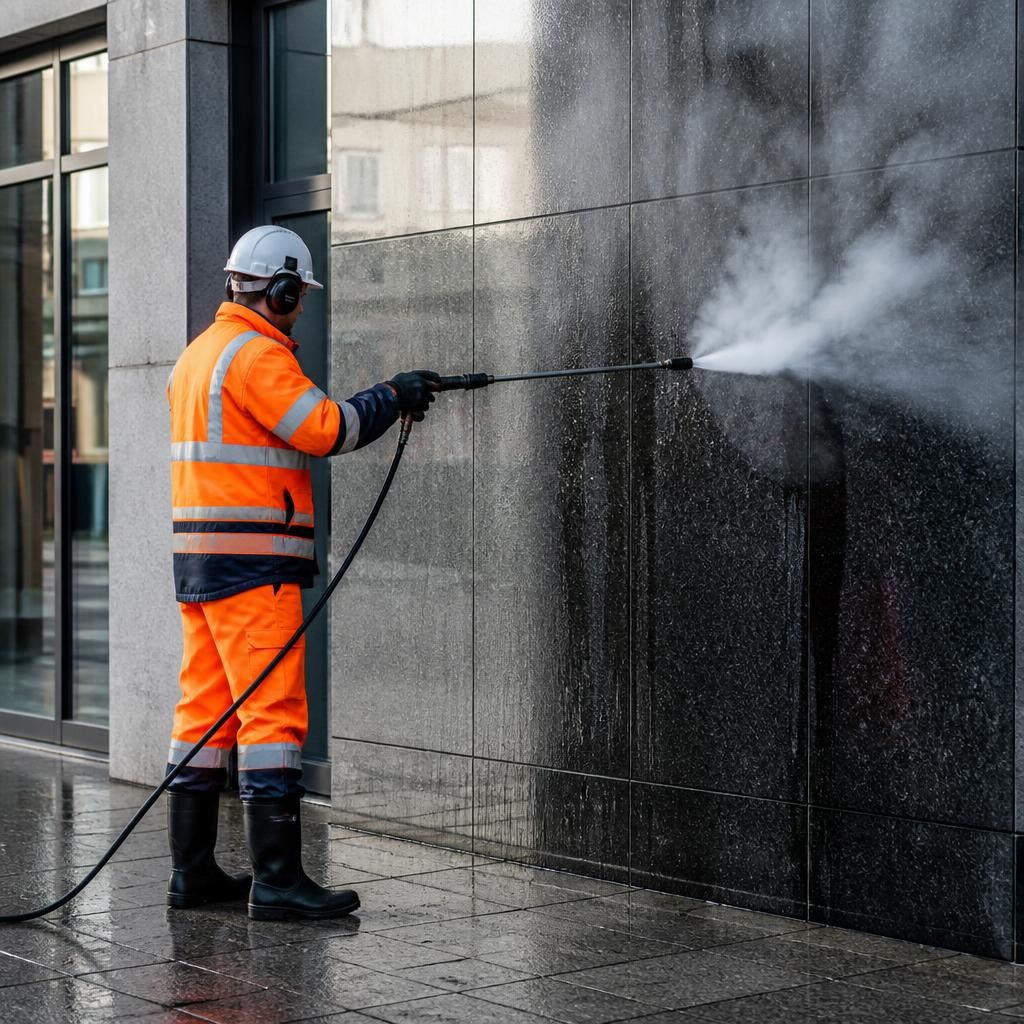
Steam cleaning is best suited to sound, hard and moisture-resistant surfaces with stable finishes, such as brickwork, concrete, dense natural stone, glazed tiles, selected render, metal cladding and durable paving. Before work begins, the substrate, coating, joints and existing defects should be assessed because heat and moisture can affect porous, damaged or failing surfaces.
A discreet test area helps confirm compatibility before the full elevation or external area is cleaned. The result should be checked during cleaning and after drying for colour change, coating loss, surface erosion, staining movement or moisture-related effects. Settings can then be adjusted to suit the material, including temperature, pressure, nozzle distance and dwell time.