
What safety precautions should be considered when using steam cleaning on building exteriors?
Steam cleaning building exteriors requires controlled heat and pressure, secure access, suitable personal protective equipment (PPE), and precautions to protect people, nearby property and the surface being cleaned. Before work begins, the area should be assessed, access equipment checked, electrical hazards and fragile materials identified, and runoff managed safely.
Steam cleaning building exteriors must be planned and controlled to manage heat, pressure, water, access, electrical risks and public safety. The main precautions are a documented site assessment, suitable access equipment, trained operators, appropriate PPE, controlled cleaning settings, protection of vulnerable materials and effective management of runoff and work areas.
Complete a site assessment before work starts. The building, surrounding ground and planned cleaning method should be inspected before equipment is brought into operation. The assessment should identify fragile façades, loose masonry, damaged render, open joints, failing coatings, exposed services, glazing, roof edges, overhead cables, vehicle routes and areas used by pedestrians. The condition of the surface is important because steam can loosen poorly bonded paint, coatings, sealants or contaminants that may then fall from height.
Commercial work should be supported by suitable risk assessments and method statements. These should explain the equipment to be used, access arrangements, exclusion zones, emergency procedures, weather limitations, waste and runoff controls, and how the cleaning settings will be selected. Where the building or its materials are unusual, a small test area should be assessed before wider cleaning begins.
Use safe access and work-at-height controls. Operators should use access equipment that is appropriate for the height, reach, ground conditions and building layout. Scaffolding, mobile elevated work platforms, towers or other systems must be inspected, set up on suitable ground and used by people with the required training. Ladders should not be treated as a general work platform where prolonged or forceful cleaning is required.
Access equipment must be positioned so that the operator does not overreach while holding a steam lance or hose. Hoses should be routed to avoid creating trip hazards, snagging on platforms or placing strain on connections. Work at roof level requires particular care around unprotected edges, rooflights, fragile surfaces and parapets. Steam cleaning should not proceed from a surface that has not been confirmed as capable of supporting the equipment and operator.
Establish an exclusion zone. Hot water, steam, loosened debris and cleaning residues can injure people below or affect adjacent property. The work area should be segregated with suitable barriers and warning signs, with access restricted to authorised personnel. Where the building borders a pavement, road, car park or occupied premises, the plan may need pedestrian diversions, banksmen, traffic management or timed working arrangements.
Windows, entrances, air intakes, vehicles, lighting, signage, plant and neighbouring surfaces should be protected from heat, moisture and dislodged material. Doors and windows may need to remain closed during cleaning, while ventilation or air-handling systems near the work area may need to be isolated in agreement with the building manager.
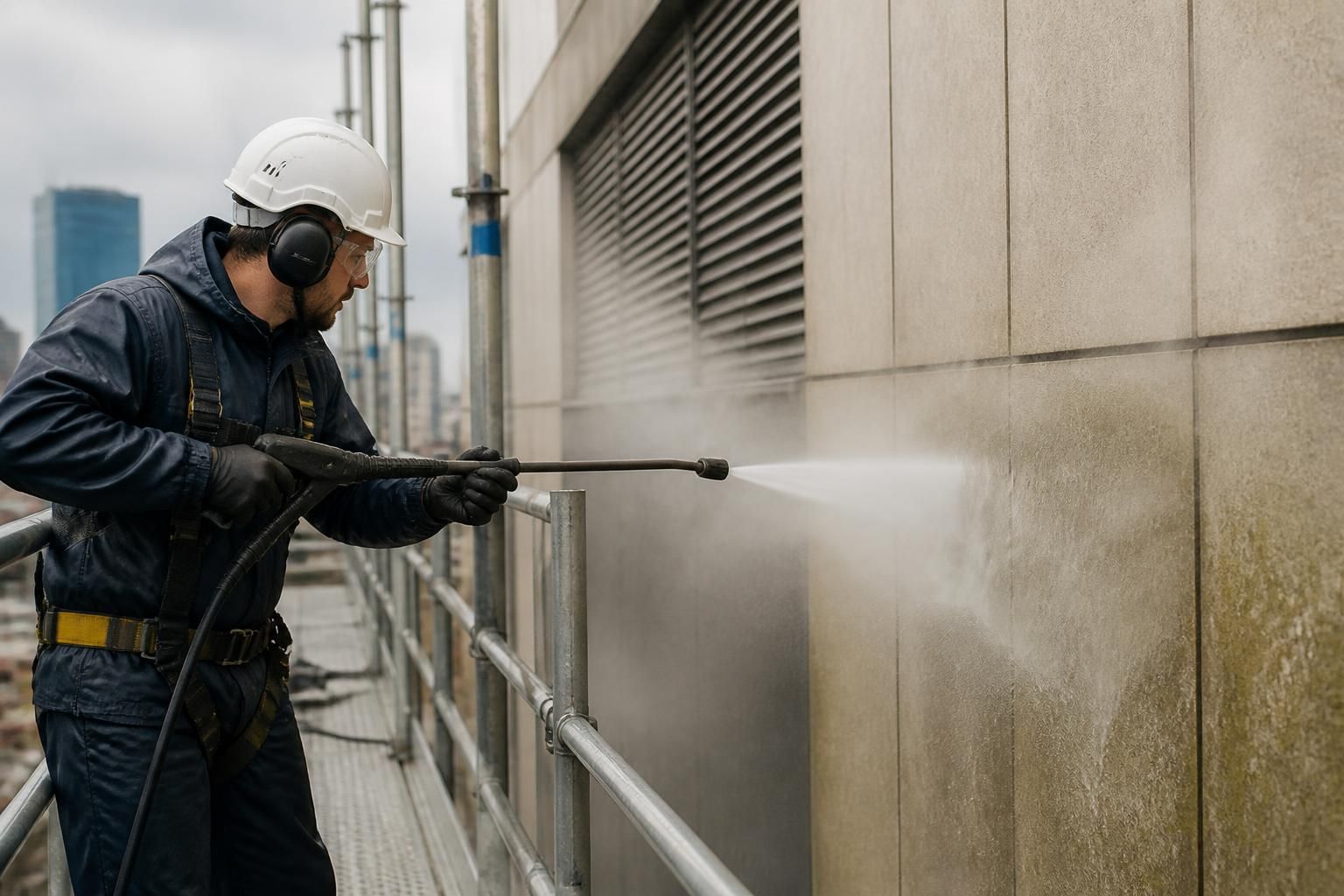
Wear task-appropriate PPE. PPE does not replace safe planning, but it provides important protection from heat, spray, debris and cleaning products. Depending on the equipment and environment, this can include protective gloves suitable for hot water, eye or face protection, safety footwear with slip-resistant soles, protective clothing and head protection. Hearing protection may be required where pumps, generators or other equipment create sustained noise.
Respiratory protection should not be selected routinely without considering the substance being released. Removing bird fouling, mould, old coatings or other contamination may create additional exposure risks. The required controls should be determined from the risk assessment and, where chemicals are used, the relevant COSHH assessment and product safety information.
Control heat, pressure and hose movement. Steam equipment should be operated only by trained personnel who understand its controls, limitations and emergency shut-off procedure. The lance must never be directed towards people, animals, live electrical equipment, unprotected glazing or other vulnerable items. Operators should maintain stable footing and control the lance with both hands where necessary, as hose movement and reaction forces can affect balance.
Hoses, couplings, guns and safety devices should be checked before use and throughout the work. Damaged or leaking components should be taken out of service rather than temporarily held in place. The equipment should not be left pressurised when unattended, and the steam supply should be isolated before connections are adjusted, blockages are cleared or maintenance is carried out.
The lowest effective pressure, temperature and cleaning duration should be used for the material and contamination. More heat or pressure is not automatically safer or more effective. Excessive heat can damage sealants, plastics, coatings, timber, insulation, historic materials and some types of glazing, while forceful cleaning can drive moisture into joints or dislodge defective surfaces.
Protect the façade and identify hazardous materials. A test patch should check for colour change, surface softening, coating failure, staining, moisture penetration and damage to joints or details. Particular caution is required around painted surfaces, rendered systems, insulated cladding, natural stone, terracotta, architectural metalwork, timber, historic masonry and areas with previous repairs.
Suspected asbestos-containing materials, contaminated coatings or other hazardous substances must not be disturbed until they have been properly identified and suitable controls have been confirmed. If the condition or composition of a surface is uncertain, cleaning should stop while appropriate specialist advice or a survey is obtained. Loose masonry and unstable features should be repaired or made safe before cleaning rather than relying on steam to remove them.
Manage electrical and fire-related risks. Steam and water must be kept away from live electrical installations, sockets, lighting, distribution equipment and temporary power supplies. Electrical systems within the cleaning zone should be identified and isolated where required by a competent person. Cables, generators and extension leads should be suitable for the site conditions and positioned to prevent water contact, damage and trips.
Fuel-powered equipment must be operated with adequate ventilation and positioned so that exhaust gases cannot enter the building. Combustible materials should be kept away from hot equipment, and the operator should follow the equipment manufacturer’s requirements for fuel storage, cooling and shutdown.
Control water, runoff and slip hazards. Even low-water steam cleaning can leave hot moisture and loosened contamination on floors, ledges and access routes. Drainage points should be identified before work starts, and runoff should be contained, filtered or redirected where necessary. Dirty water, chemical residues, paint fragments and biological contamination must not be allowed to enter surface-water drains or neighbouring land without appropriate controls.
Ground-level areas should be monitored throughout the work for slippery deposits, pooled water and falling debris. Any spill or blocked drain should be dealt with promptly, and the work area should be left clean and safe for building users, vehicles and pedestrians.
Consider weather and occupancy. Wind can carry hot spray, vapour and debris beyond the planned work area and can make high-level access unsafe. Rain, ice, poor visibility and extreme temperatures may affect footing, equipment performance and surface drying. Work should be paused when conditions exceed the limits set by the risk assessment, access-equipment guidance or manufacturer’s instructions.
Building occupants should be told when work will take place and what restrictions apply. Areas containing sensitive equipment, food preparation, vulnerable people or valuable contents may require additional isolation and protection. A clear communication process should be agreed for reporting defects, leaks, alarms, injuries or unexpected changes in the surface.
Use competent contractors and review the work. Safe steam cleaning depends on operators who understand façade materials, access equipment, hot-water systems and site controls. Before starting, the team should confirm the method, emergency arrangements and stop-work conditions with the client or site representative. During the work, settings and surface condition should be checked continuously rather than assumed to remain suitable.
After cleaning, the area should be inspected for damaged materials, residual moisture, blocked drainage, loose debris and hazards to occupants. Equipment should be depressurised and stored safely, barriers should remain until surfaces and access routes are safe, and any defects or incidents should be recorded and reported. These precautions help ensure that steam cleaning improves the appearance and condition of an exterior without creating avoidable risks to people, property or the building fabric.
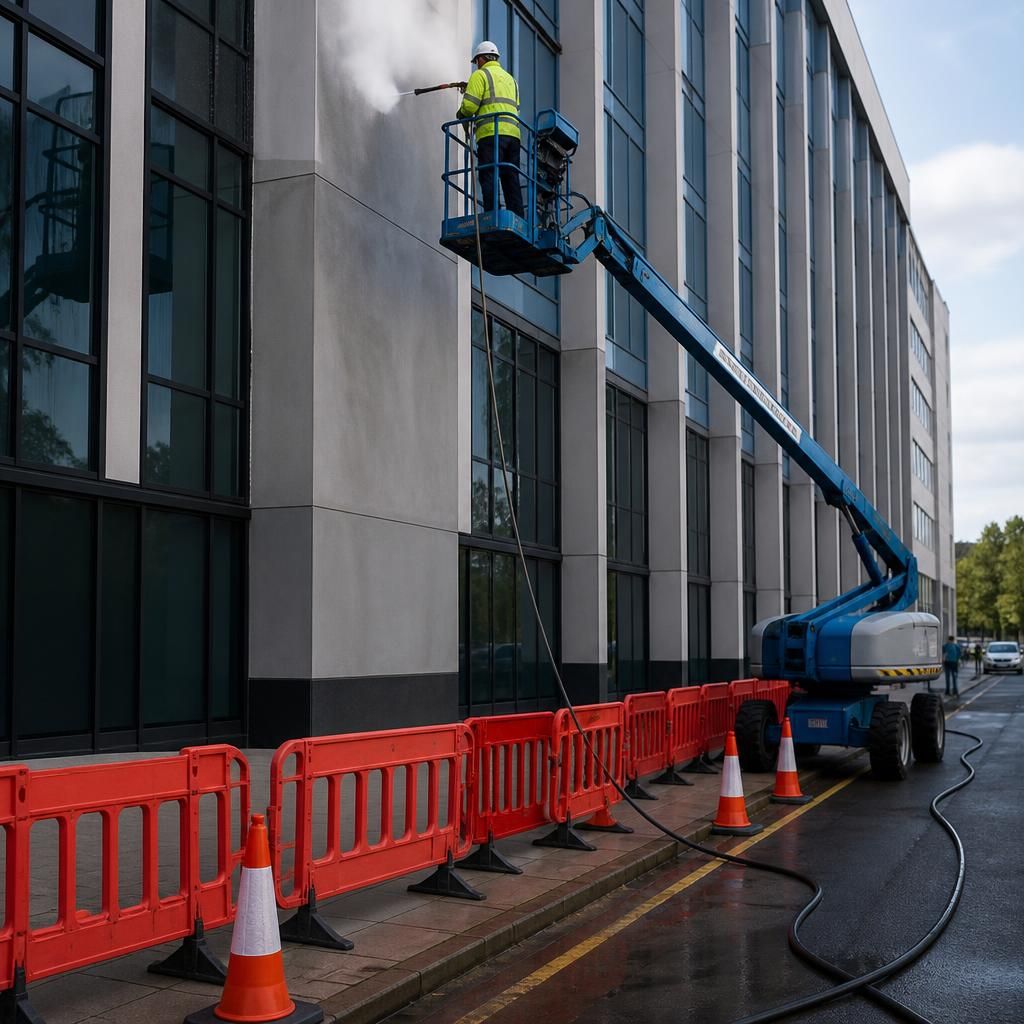
Safe access and a controlled exclusion zone are essential when steam cleaning building exteriors. Operators must use suitable, inspected access equipment on stable ground, with hoses routed to prevent trips, snagging and strain on connections. They should not overreach while handling the steam lance, and roof-level work must account for edges, rooflights and fragile surfaces.
The area below should be segregated with barriers and clear warning signs to protect pedestrians, occupants, vehicles and nearby property from hot moisture, loosened debris and contaminated runoff. Where cleaning takes place beside a pavement, road or occupied building, additional controls such as pedestrian diversions, traffic management or a banksman may be necessary.