
What safety measures should be considered when using steam cleaning for façades and cladding?
Safe steam cleaning of façades and cladding requires a documented risk assessment, suitable PPE, controlled access equipment, exclusion zones and protection for nearby people, property and electrical systems. Operators should also verify the surface is suitable, control hot-water discharge and follow equipment and site-specific safety procedures.
Safe steam cleaning of façades and cladding depends on controlling heat, pressure, access, water, electrical risks and the surrounding work area. Before work starts, the contractor should complete a site-specific risk assessment and method statement, confirm that the surface is suitable for steam, and establish controls that protect operatives, building occupants, members of the public and adjacent property.
Key safety measures include:
- Assess the façade and cladding first. The cleaning method should be selected only after checking the material, coating, age, condition, joints, fixings and any previous repairs. Loose panels, failed sealant, cracked render, damaged coatings and corroded fixings may deteriorate when exposed to heat, moisture or cleaning pressure. A small test area should be inspected and approved before full-scale cleaning begins.
- Prepare a documented risk assessment and method statement. This should cover the building, equipment, access arrangements, public interface, weather conditions, water supply, drainage, electrical systems, chemical use and emergency procedures. It should identify who is responsible for isolating services, controlling access and stopping work if conditions become unsafe.
- Use trained and competent operatives. Steam equipment combines hot water, pressure, hoses, fuel or electrical power and, often, work at height. Operators should understand the specific machine, its controls and its limitations. They should also know how to recognise surface damage, manage hose routes, respond to leaks or equipment faults and provide first aid for burns or other foreseeable injuries.
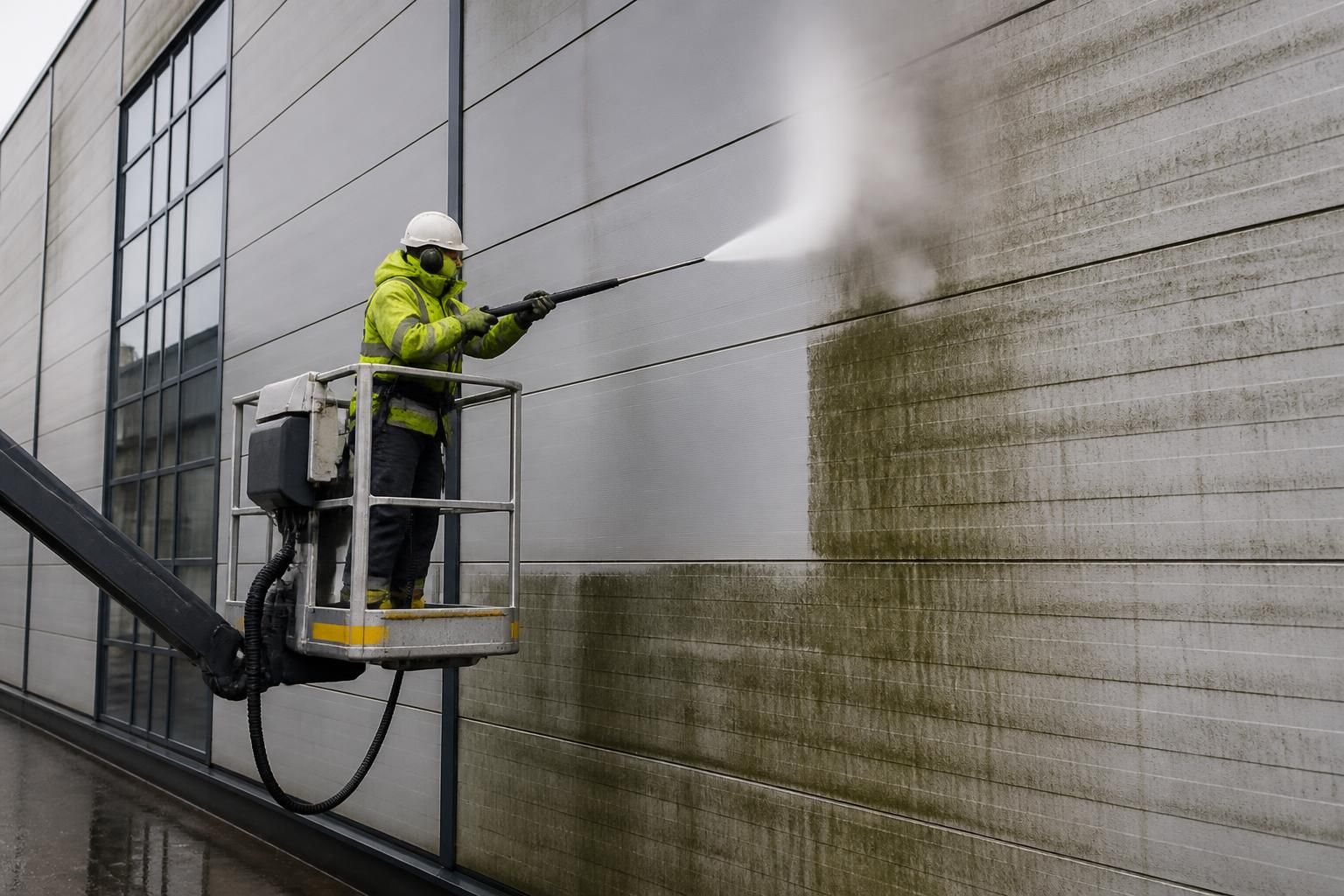
- Wear suitable personal protective equipment. Depending on the equipment and task, this can include waterproof protective clothing, heat-resistant gloves, safety footwear with slip-resistant soles, eye protection or a face shield, and suitable head protection. Hearing protection may be required where equipment creates elevated noise. PPE must be compatible with the task and maintained in usable condition; it should not replace safer work methods or physical controls.
- Control work at height. MEWPs, scaffolding, towers, ladders and rope-access systems should be selected according to the façade, duration, reach and site conditions. Access equipment must be suitable, inspected and used by trained personnel. Operatives should maintain secure positioning while handling hoses and lances, and equipment should not be overloaded with hoses, tanks or other materials. Wind, rain, unstable ground and overhead obstructions must be considered before and during the work.
- Create a clearly marked exclusion zone. Steam, hot water, loosened deposits, falling fragments and trailing hoses can present risks below and around the work area. Barriers, signs and a banksman or other traffic-control arrangement may be needed to keep pedestrians, vehicles and unauthorised personnel away. The exclusion zone should be reviewed as the work face, access equipment or wind direction changes.
- Prevent burns and uncontrolled discharge. Steam and the discharged water can cause serious burns, even where the visible vapour appears limited. The lance should be pointed away from people, glazing, vulnerable finishes and unprotected equipment. Hoses and couplings should be secured and checked for damage, and the machine should be depressurised before maintenance, nozzle changes or disconnection. Operatives should never leave pressurised equipment unattended.
- Protect glazing, openings and building services. Windows, doors, vents, air-intake grilles, lighting, sensors, alarms and other openings should be identified before cleaning. Sensitive areas may need temporary covers or isolation. Steam and moisture must not be directed into cavities, seals, electrical enclosures or ventilation systems. Any temporary protection should be secure, non-combustible where appropriate and arranged so that water cannot become trapped against the building.
- Manage electrical risks. Electrical supplies, external lighting, signage, cables and building-mounted equipment should be located and protected before work begins. Electrical equipment and connections must be kept away from water and checked for suitability in the working environment. Where necessary, relevant systems should be isolated by an authorised person. The principles of the Electricity at Work Regulations and appropriate site electrical procedures should be followed.
- Manage fuel, heat and fire risks. Steam generators and associated equipment may use fuel or high electrical loads. They should be positioned on stable ground with adequate ventilation and away from combustible materials, access routes and building openings. Fuel storage, refuelling and hot surfaces require appropriate controls, and equipment should be shut down if it develops an abnormal smell, leak, overheating or other fault.
- Control water, run-off and slip hazards. Even low-volume steam cleaning can produce hot run-off containing dirt, coatings, oils, biological growth or cleaning residues. Drainage points should be identified before work starts, and run-off should be contained or diverted where it could enter surface-water systems, affect neighbours or create a slip hazard. Hoses should be routed to avoid trip risks, and wet areas should remain controlled until safe.
- Use chemicals only when necessary and in accordance with COSHH controls. Steam may remove deposits without detergents, but some contamination may require a pre-treatment or post-treatment product. The product must be suitable for the façade, correctly diluted and accompanied by the relevant safety data and COSHH assessment. Chemical containers should be labelled, stored securely and prevented from entering drains or contacting incompatible materials.
- Consider weather and site conditions. Strong wind can carry steam, hot spray or loosened debris towards people and adjacent properties. Cold conditions can create ice from run-off, while rain can reduce visibility and make access equipment or surfaces slippery. Work should be paused when weather or visibility prevents safe control of the equipment or exclusion zone.
- Carry out pre-use checks and planned maintenance. The machine, boiler or generator, hoses, couplings, trigger controls, lances, nozzles, guards and safety devices should be inspected before use. Defective equipment must be removed from service rather than repaired informally on site. Inspection, maintenance and access-equipment records should be retained where required by the equipment and site procedures.
- Agree emergency arrangements. The site team should know how to stop the equipment quickly, isolate power or fuel, summon assistance and deal with burns, eye contamination, falls, electric shock, hose failure or a spill. First-aid arrangements, site access for emergency services and the location of nearby water for cooling a burn should be confirmed before work starts. A burn should be cooled with clean, cool running water and assessed medically; contaminated clothing should not be pulled away if it is stuck to the skin.
For commercial and industrial premises, these controls should be coordinated with the building’s facilities team and any principal contractor. Cleaning may need to be scheduled outside busy periods, with occupants notified about access restrictions, noise, hot surfaces, temporary water isolation or ventilation requirements.
UK work should be planned in line with applicable health and safety requirements, including controls for work at height, work equipment, personal protective equipment, hazardous substances and electrical safety. The exact requirements depend on the site and equipment, so a generic procedure should not replace a competent, site-specific assessment.
After cleaning, the façade should be inspected for coating changes, exposed defects, trapped moisture, damaged seals and remaining run-off. Access equipment and barriers should be removed only when the area is safe, surfaces are no longer hazardous and any temporary service isolations have been formally reversed. This final check is an important part of safe steam cleaning, particularly on occupied buildings and high-traffic commercial sites.
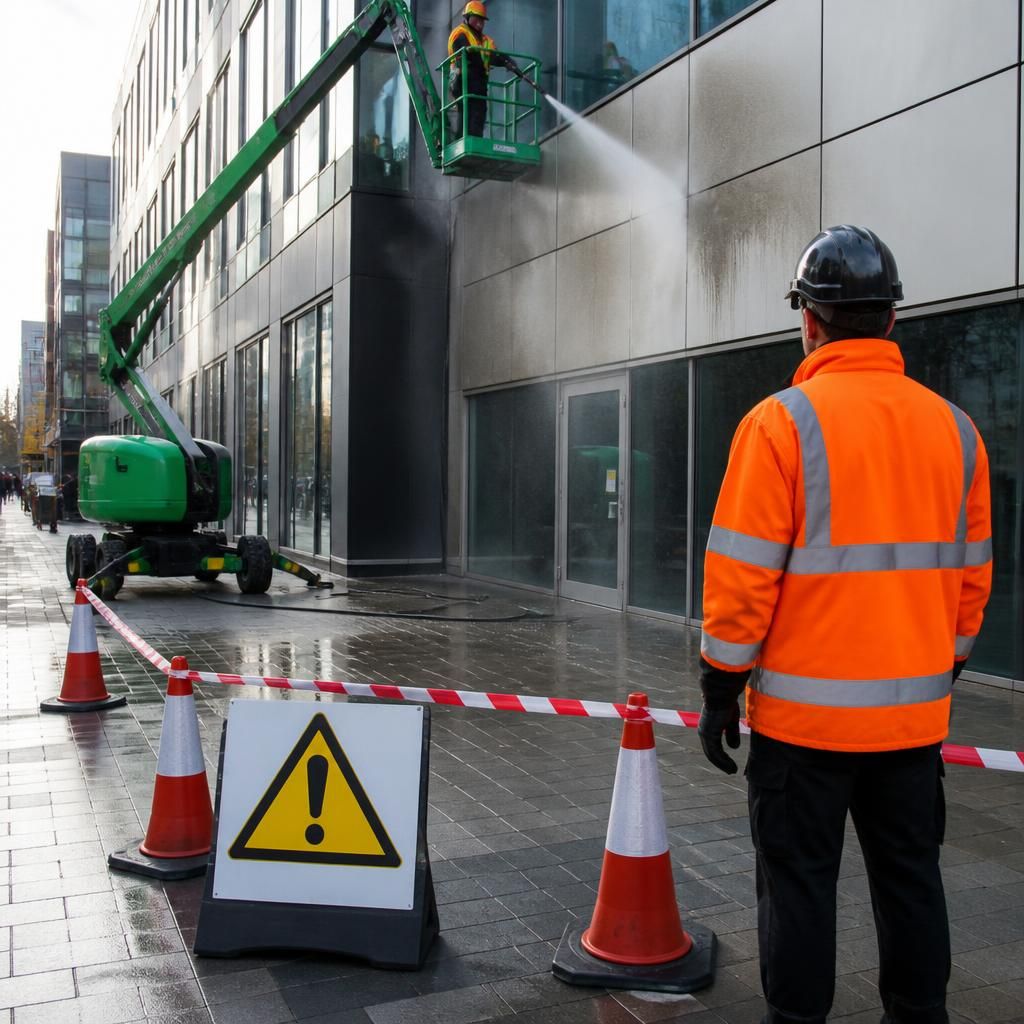
A clearly marked exclusion zone is essential when steam cleaning façades and cladding because hot water, loosened debris, falling fragments and trailing hoses can affect people below or nearby. Barriers and warning signs should prevent unauthorised access, while a trained banksman may be needed to manage pedestrians, vehicles and deliveries on busy commercial sites.
The controlled area must move with the work face and be adjusted for wind direction, access equipment and falling-debris risk. Operatives should also secure hoses, maintain safe positioning on scaffolds or MEWPs, and keep building occupants informed about temporary restrictions. The zone should remain in place until the façade, ground and access routes are dry and free from hazards.