
What factors should be considered to determine the suitability of steam cleaning for different façade and cladding materials?
Steam cleaning suitability depends on the façade or cladding material, its condition, surface finish, coatings, joints and the type of soiling present. A professional assessment should also consider the required steam temperature and pressure, water sensitivity, access constraints and the risk of damaging seals, paint, render or underlying substrates before cleaning begins.
Steam cleaning is suitable when the façade or cladding can tolerate controlled heat, moisture and low mechanical pressure without affecting its substrate, finish, joints or protective coatings. The decision should be based on a site assessment rather than the material name alone, because the condition of the surface, the type of contamination and the cleaning system settings can materially change the risk.
Material and substrate
The underlying material is the first consideration. Brickwork, many types of natural stone, concrete and some robust coated metal cladding can often respond well to carefully controlled steam cleaning, particularly where surface deposits, traffic film, algae, carbon staining or ingrained dirt need to be softened without aggressive abrasion. However, materials that are porous, laminated, heat-sensitive or easily affected by moisture require more caution.
Render systems need particular assessment. Cementitious render may tolerate steam in suitable condition, while thin-coat renders, insulated render systems and textured finishes can be more vulnerable to heat, water penetration or loss of surface texture. The construction of composite panels must also be understood, as the outer skin, insulation, adhesive layers and backing materials may react differently to heat and moisture.
For metal cladding, the relevant issues include the metal type, painted or powder-coated finish, corrosion, exposed edges and the condition of any factory-applied coating. Steam may assist with removing dirt from a sound coating, but a deteriorated finish can lift, blister or reveal corrosion during cleaning. Glass and glazed surfaces can generally be cleaned with low mechanical force, but surrounding sealants, films, gaskets and frames still need protection and assessment.
Condition of the façade or cladding
A sound surface is more suitable than one with existing defects. Before work starts, the façade should be checked for cracking, spalling, friable render, loose pointing, failed sealant, open joints, delamination, corrosion, blistered paint and areas where panels or fixings are not secure. Steam can expose or worsen weaknesses that are already present, particularly where water can enter behind a finish or through a failed joint.
Previous repairs and localised patches may also behave differently from the original material. A façade can therefore require different cleaning methods or settings in separate areas. Defective sections should be repaired or isolated before cleaning rather than relying on steam to resolve an underlying maintenance problem.
Surface finish, coatings and treatments
Paint, powder coating, factory finishes, waterproofing treatments, anti-graffiti coatings and protective sealers all affect suitability. Heat can soften some coatings, alter their appearance or reduce adhesion, while moisture can enter through pinholes, damaged edges or poorly bonded areas. A coating that appears intact at ground level may be weaker on exposed elevations or around windows and service penetrations.
The proposed method should be checked against the coating manufacturer’s guidance where it is available. If the coating is unidentified, aged or visibly deteriorated, a discreet test area is important. The test should assess not only whether dirt is removed, but also whether colour, gloss, texture, adhesion and water behaviour remain unchanged after cleaning.
Type and strength of the soiling
Steam is particularly useful where heat helps soften organic deposits, atmospheric film, grease, oil residues, algae, moss, bird fouling or some forms of graffiti. It can reduce the need for high pressure and may allow contaminants to be removed with less surface abrasion.
It is not automatically the best method for every stain. Rust, corrosion, deep mineral staining, paint residues, cement contamination and chemical discolouration may need a separately selected treatment. Some deposits can be driven into porous materials or spread across adjacent areas if the cleaning process is not controlled. Identifying the contaminant before work begins helps determine whether steam alone is appropriate or whether a compatible pre-treatment and rinsing process is required.
Heat, pressure and moisture tolerance
Steam cleaning equipment can operate with relatively low mechanical pressure, but the heat and moisture remain significant. The correct balance depends on the material and finish. Excessive temperature, prolonged dwell time or repeatedly concentrating the lance on one point can cause thermal stress, soften coatings or drive moisture into joints and porous substrates.
Equipment should be operated at the lowest effective setting, with the lance kept moving and the cleaning pattern controlled. Settings should not be selected solely to maximise cleaning speed. The operator also needs to consider how quickly the surface can dry and whether trapped moisture could affect insulation, internal finishes, electrical components or occupied areas.
Joints, seals, openings and concealed details
Façades are not flat, continuous surfaces. Expansion joints, panel laps, gaskets, mastic, vents, louvres, window interfaces, flashings and service penetrations can provide routes for water ingress. A cladding panel may tolerate steam on its face while its joints or backing system do not.
These details should be identified before cleaning and protected where necessary. Steam should not be directed into open joints, damaged seals, ventilation openings or unprotected electrical and mechanical equipment. Drainage paths should remain clear, and any water run-off should be managed so that loosened contaminants are not redeposited on lower elevations.
Previous cleaning and maintenance history
The results and risks can be affected by earlier cleaning, painting, sealing or repair work. Strong chemicals may have weakened a coating, abrasive cleaning may have opened the surface, and repeated pressure washing may have damaged pointing or joints. Records of previous treatments are useful, but where records are unavailable, inspection and testing become more important.
A professional assessment should also consider whether the building has heritage requirements, specified façade products or maintenance warranties. Listed or historically significant façades may require additional approvals and a method that preserves original fabric rather than pursuing uniform cosmetic results.
Test cleaning and evaluation
A representative test area should be selected before full-scale work. It should include typical material, visible soiling, joints and any coating or repair that may react differently. The test should be reviewed after the surface has dried, because changes in shade, staining, coating appearance or moisture movement may not be obvious while the façade is wet.
The assessment should confirm that the cleaning result is acceptable without surface erosion, colour change, texture loss, coating damage, water ingress or unacceptable run-off. If the outcome is inconsistent, the method should be adjusted or an alternative cleaning approach considered. Testing should not be carried out only on the least exposed or cleanest part of the building.
Access, surroundings and operational constraints
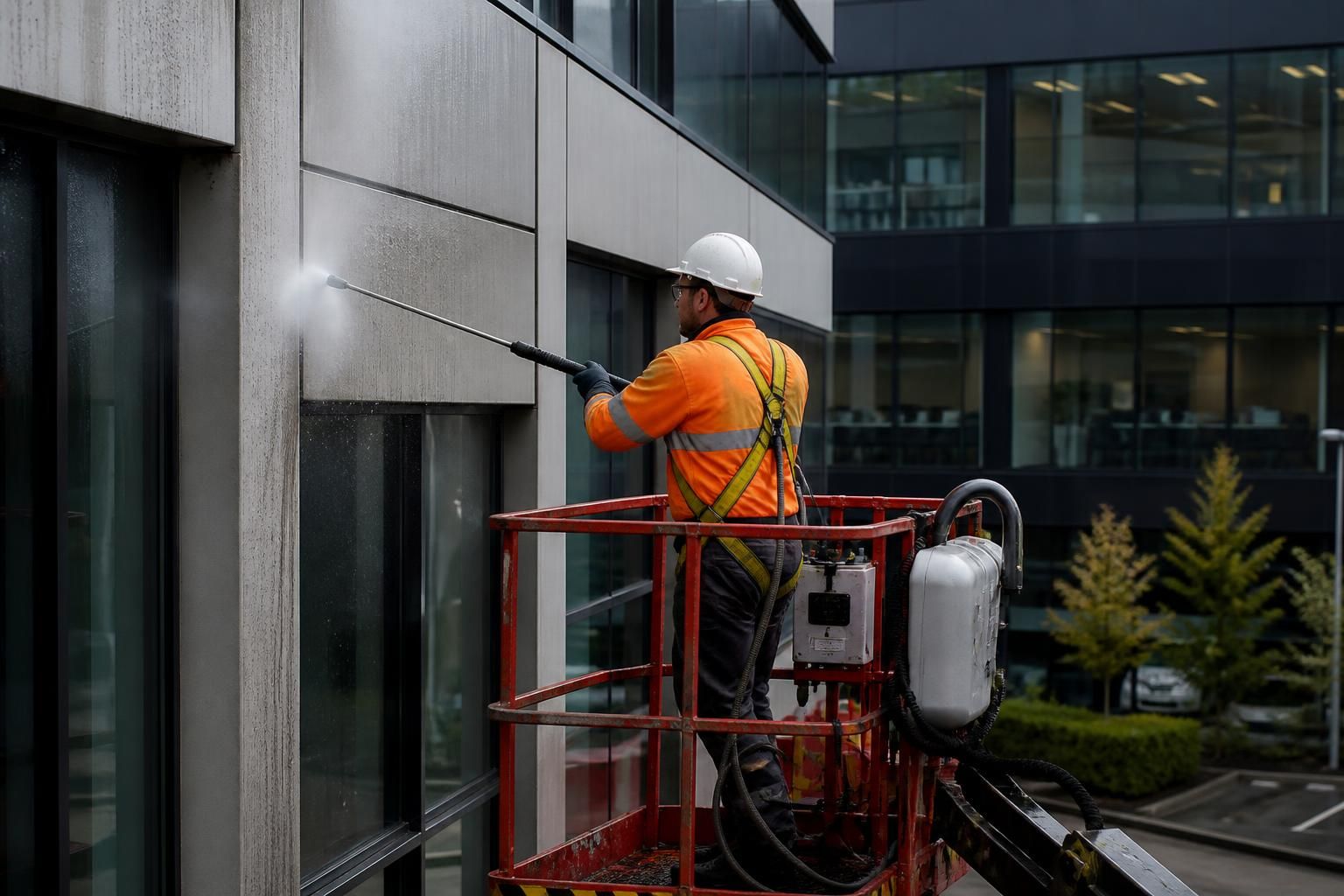
Access equipment, working height, wind exposure, pedestrian areas and nearby buildings affect how safely and accurately steam can be applied. Restricted access can make it difficult to maintain a consistent distance from the surface, while wind can carry heat, moisture and loosened contaminants beyond the work area.
Windows, doors, signage, lighting, sensors, cameras, air-intake systems and external plant may need masking or temporary isolation. Occupied commercial premises also require planning around entrances, deliveries and public routes. These considerations do not determine material compatibility on their own, but they can make an otherwise suitable method impractical without additional controls.
Cleaning objective and acceptable finish
Suitability depends partly on the required result. Removing loose atmospheric film from a sound cladding panel is a different task from restoring heavily stained porous stone or preparing a painted surface for recoating. The cleaning specification should define whether the aim is general maintenance, stain reduction, graffiti removal, coating preparation or removal of biological growth.
Some historic or weathered materials will retain permanent staining or natural variation after safe cleaning. Attempting to achieve a uniform new appearance by increasing heat or working time can cause more damage than the original soiling. The method should therefore be judged against the condition and function of the façade, not appearance alone.
Professional suitability assessment
A suitable assessment brings these factors together: substrate, condition, finish, contamination, joints, heat and moisture tolerance, access, drainage and the desired outcome. Where the material or coating is uncertain, information from the building owner, manufacturer or façade specialist can help. The final method statement should record the equipment settings, test results, protection measures, run-off controls and areas requiring a different treatment.
Steam cleaning should be avoided or modified where the surface is unstable, the coating is failing, joints are open, water could enter sensitive construction, or testing shows a risk of damage. In those circumstances, a lower-moisture, lower-temperature or otherwise more appropriate cleaning method may provide better protection. This measured approach helps maintain the façade or cladding while achieving the required standard of cleanliness.
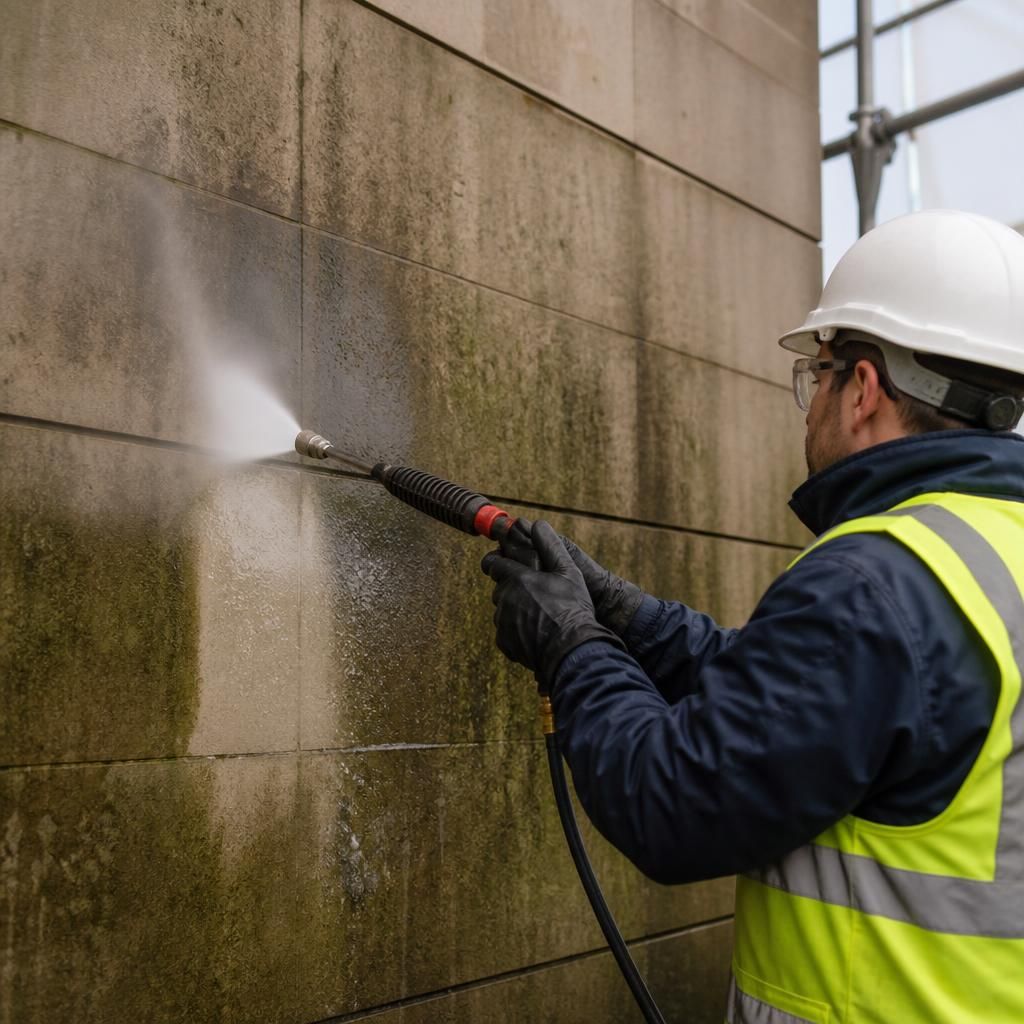
A representative test clean is the most reliable way to determine whether steam cleaning is suitable for a façade or cladding material. The test should include typical soiling, the existing finish, joints and any repaired or weathered areas, rather than being limited to the cleanest or most robust section.
After cleaning, the area should be inspected once fully dry for changes in colour, gloss, texture, coating adhesion, staining and moisture movement. If the surface shows damage or the result is inconsistent, the steam settings should be adjusted or a different cleaning method selected before work proceeds across the façade.
Arrange a façade and cladding suitability assessment
Arrange a façade and cladding suitability assessment with Encanto Exterior Cleaning to confirm whether controlled steam cleaning is appropriate for your materials, coatings and site conditions.
We can carry out representative test cleaning and recommend suitable settings or an alternative method where required.