
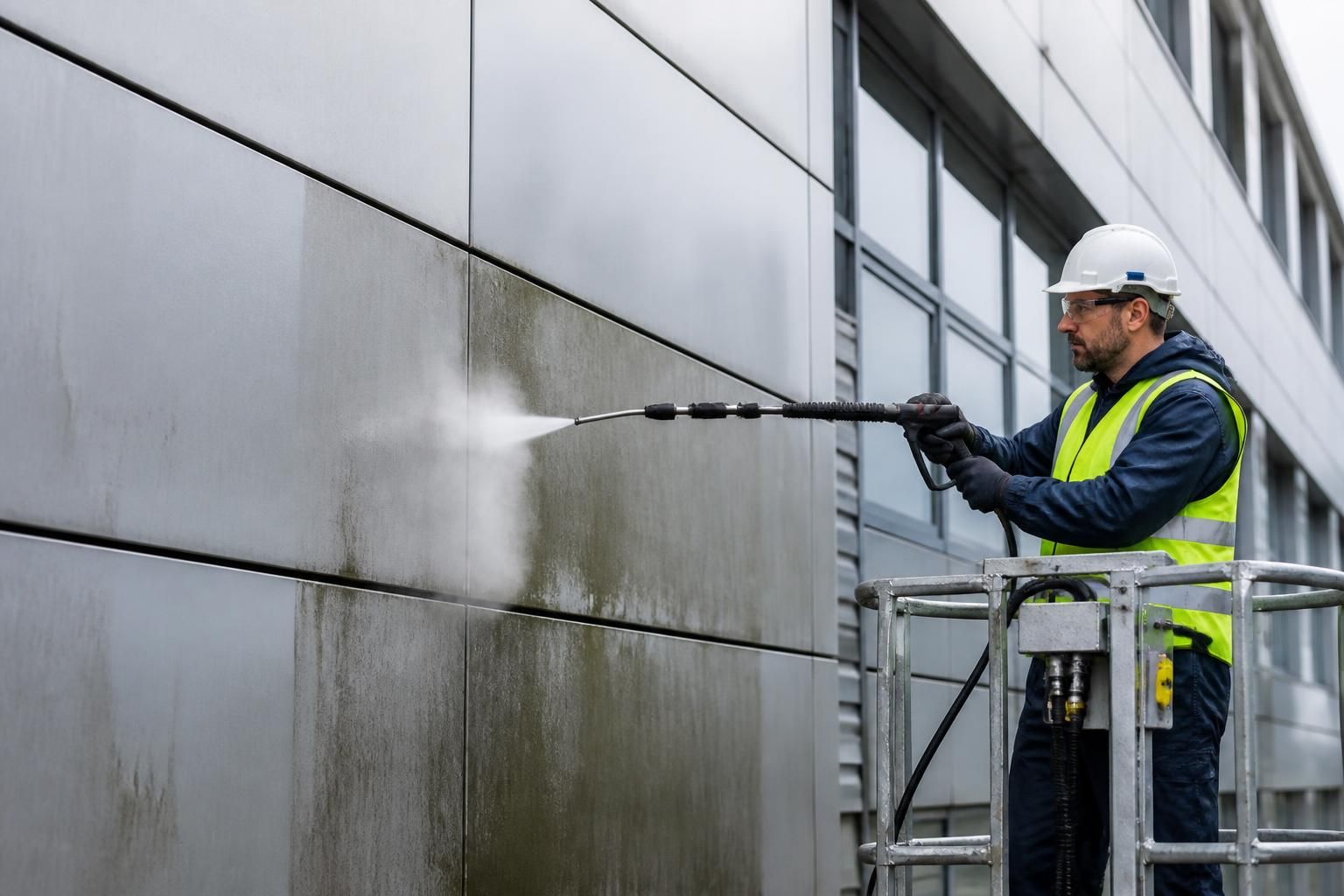
What environmental benefits does steam cleaning offer compared to traditional exterior cleaning methods?
Steam cleaning can reduce water consumption, chemical use and contaminated run-off compared with many traditional exterior cleaning methods, while still removing dirt, algae, stains and some biological growth. Because it uses heated water at controlled pressure, it can also reduce the risk of surface damage and minimise the environmental impact of cleaning commercial façades, cladding and other exteriors.
Steam cleaning can offer a lower-impact approach to exterior maintenance because it typically uses less water, requires fewer cleaning chemicals and produces less contaminated run-off than conventional high-volume pressure washing. The environmental benefit depends on the surface, the level of soiling, the equipment used and how wastewater is contained and disposed of, so the method should be selected following a site assessment.
Reduced water consumption
Steam cleaning uses heated water delivered in a controlled flow rather than relying on large volumes of cold water to provide cleaning force. This can significantly reduce the amount of water required to remove dirt, atmospheric staining, algae, oil residues and other deposits from façades, cladding, render and hard landscaping. Lower consumption is particularly useful on large commercial sites, where cleaning extensive elevations or paved areas with conventional pressure washing can generate substantial wastewater.
Using less water also reduces the volume that must be collected, filtered or directed to an approved drainage point. This can simplify wastewater controls and reduce the risk of wash water entering surface drains, watercourses or surrounding ground without suitable treatment.
Fewer cleaning chemicals
The heat of steam helps loosen oils, grease, organic growth and ingrained deposits, meaning that strong detergents, biocides or degreasers may not be needed for every cleaning task. Where a chemical treatment is necessary, steam can often reduce the quantity required or support a shorter application process. This lowers the amount of chemical product brought onto the site and reduces the possibility of residues remaining on the building or being carried away in run-off.
Chemicals are not always avoidable. Certain biological growth, oil contamination, staining or sensitive materials may require a specified treatment. Responsible cleaning involves identifying the deposit first, using the least aggressive effective product, following the manufacturer’s instructions and preventing untreated run-off from reaching drains or soil.
Lower risk of contaminated run-off
Run-off from exterior cleaning can contain suspended dirt, oils, biological material, detergents, paint particles and other contaminants. Because steam cleaning generally uses less water and can reduce reliance on chemicals, it may produce a smaller volume of contaminated wastewater. This makes it easier to apply appropriate containment measures, such as drain covers, collection systems, filtration or controlled discharge.
Steam cleaning does not remove the need for environmental controls. On commercial and industrial sites, the cleaning plan should identify nearby drains, watercourses, planted areas and vulnerable surfaces before work begins. Wastewater should be managed in accordance with the site’s drainage arrangements and applicable local requirements rather than being allowed to flow uncontrolled from the cleaning area.
Less surface damage and reduced replacement waste
Steam cleaning can remove deposits at controlled pressure, reducing the need to use highly abrasive blasting or excessive water pressure. When the correct temperature, pressure and nozzle are selected, this can help preserve façade coatings, pointing, render, sealants and cladding finishes. Avoiding unnecessary damage has an environmental benefit because it reduces the need for replacement materials, repainting, remedial work and the transport and disposal of construction waste.
Surface preservation is not automatic. Excessive heat can affect some coatings, plastics, sealants and delicate finishes, while poorly controlled cleaning can mark or discolour certain materials. A competent contractor should assess the substrate, test an inconspicuous area and adjust the equipment before completing the wider elevation.
Energy use should also be considered
Steam equipment heats water, so it uses energy that may not be required by an unheated pressure-washing system. The overall environmental outcome therefore depends on the equipment’s efficiency, the fuel or electricity source, the duration of the work and the amount of water and chemicals avoided. A lower-water method is not automatically the lowest-impact option in every situation.
The most appropriate comparison considers the complete cleaning process, including water supply, chemical manufacture and transport, equipment operation, wastewater treatment, access requirements and any repairs caused by aggressive cleaning. On many façade and cladding projects, the reduction in water, chemicals and surface damage can outweigh the additional energy required for heating, but this should be assessed rather than assumed.
Practical measures for a lower-impact clean
- Assess the material and type of soiling before selecting steam, pressure washing or a combined method.
- Use the lowest effective pressure, temperature and flow rate for the surface.
- Test the proposed process to confirm that it cleans effectively without damaging coatings or joints.
- Avoid chemical treatments where heat and controlled agitation achieve the required result.
- Protect drains and watercourses, and collect or treat contaminated run-off where necessary.
- Use equipment efficiently and avoid leaving heating systems running when cleaning is paused.
- Plan access, water supply and waste handling so that unnecessary vehicle movements and repeat visits are minimised.
For commercial and industrial premises, steam cleaning is therefore best viewed as one part of an environmentally responsible maintenance plan. It can reduce water and chemical demand while helping to protect building materials, but the strongest results come from matching the method to the surface, controlling run-off and documenting the process as part of the site’s wider environmental and maintenance procedures.
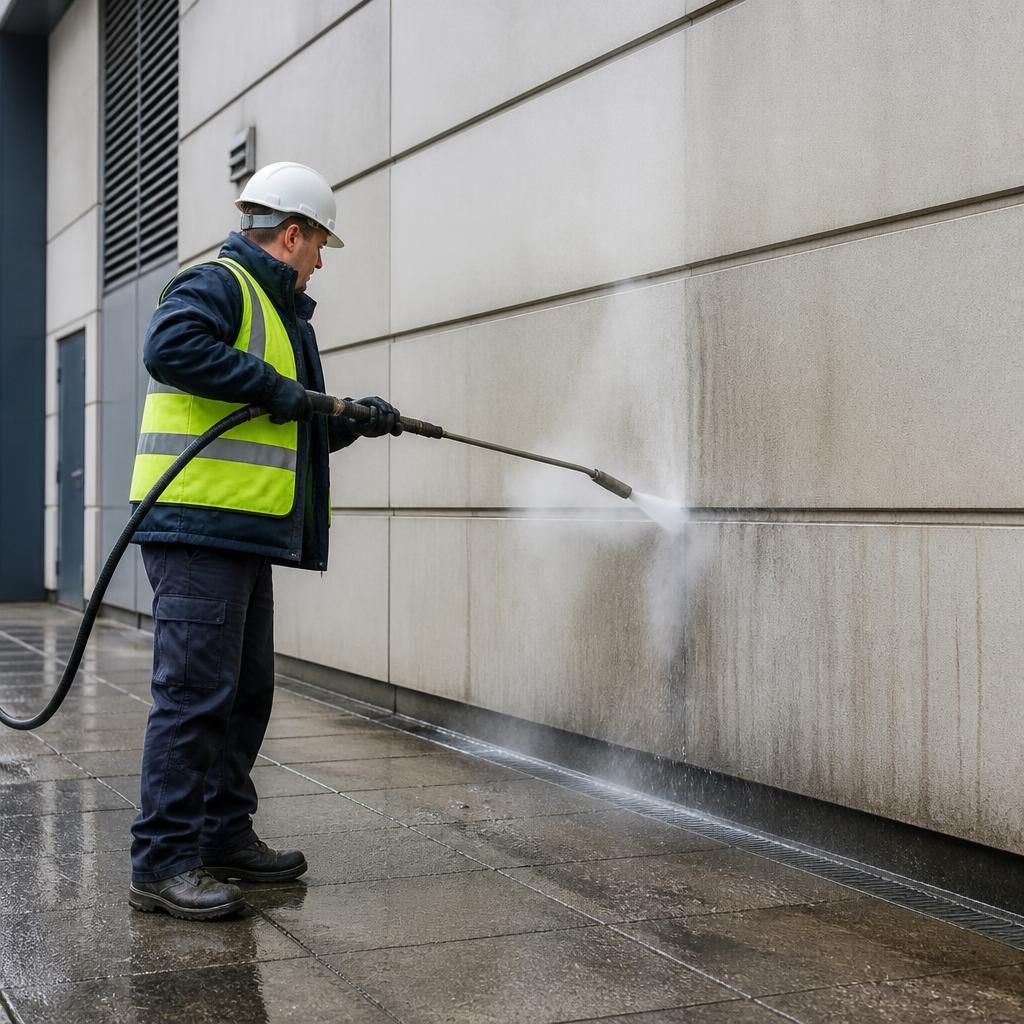
Steam cleaning can reduce the environmental impact of exterior maintenance by using a controlled flow of heated water rather than the high volumes often associated with conventional pressure washing. The heat helps loosen dirt, organic growth, grease and atmospheric deposits, which can reduce the need for strong detergents and limit the volume of contaminated wastewater produced.
Lower water and chemical use can make run-off easier to contain and manage, but it does not remove the need for responsible drainage controls. Drains, planted areas and watercourses should be protected, while any chemical residues or contaminated water should be handled in line with the site’s environmental procedures. The equipment’s energy use should also be considered, so the most sustainable approach is to select the lowest-impact method that cleans the particular surface effectively without causing damage.