
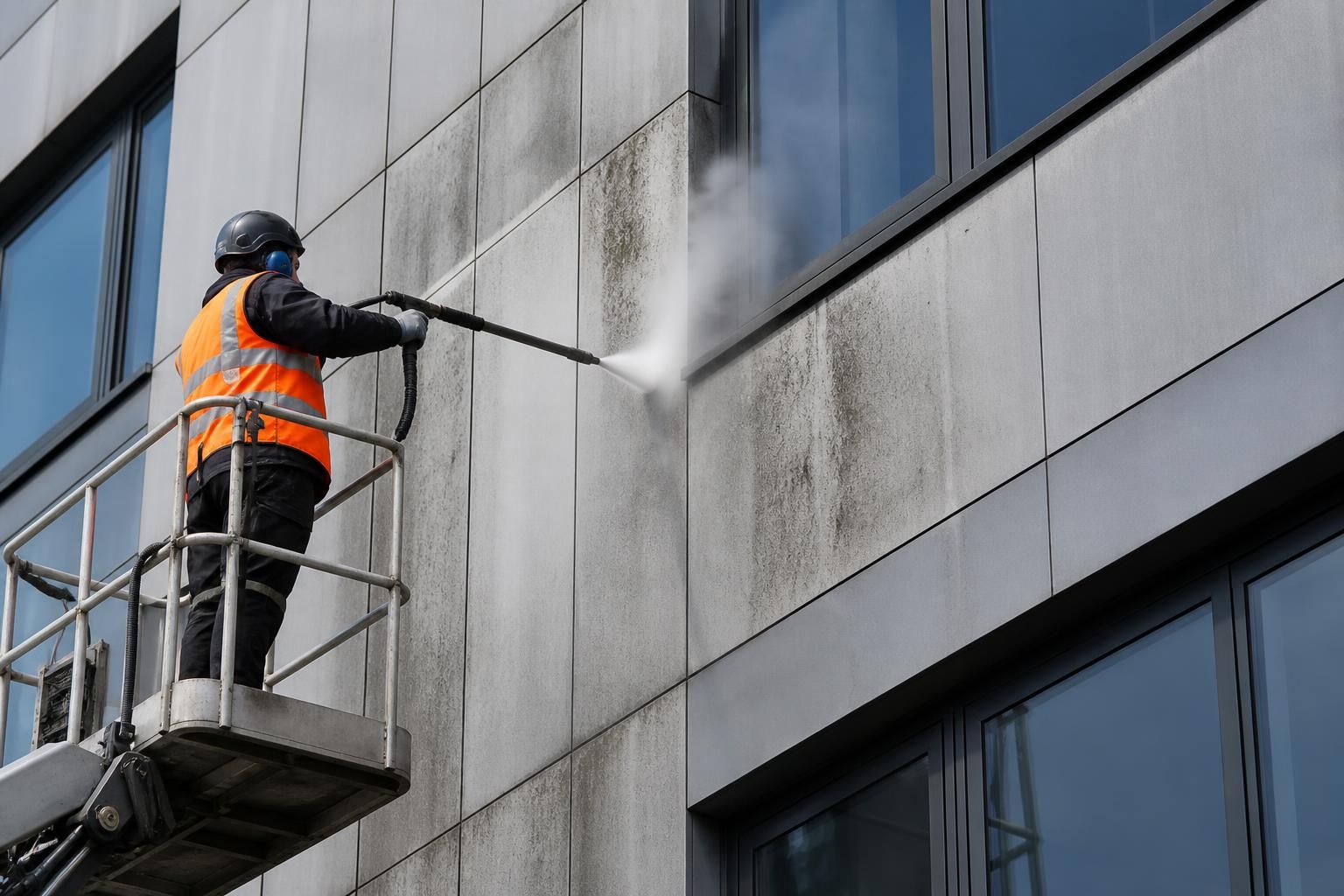
What are the environmental benefits of steam cleaning façades and cladding?
Steam cleaning façades and cladding can reduce environmental impact by using significantly less water than conventional pressure washing and often requiring fewer chemical cleaning agents. Lower water consumption, reduced chemical runoff and gentler surface treatment can support more sustainable commercial building maintenance when wastewater is managed responsibly.
Steam cleaning façades and cladding can reduce the environmental impact of commercial exterior maintenance by using less water, limiting the need for chemical agents and reducing the risk of aggressive surface treatment. The overall benefit depends on the building material, the condition of the surface, the cleaning equipment and how wastewater and removed contaminants are collected and disposed of.
Lower water consumption: Steam cleaning uses heated water vapour to soften and lift dirt, algae, grease, traffic film and other deposits. Because the process relies on heat and controlled application rather than high volumes of flowing water, it can use considerably less water than conventional pressure washing for suitable cleaning tasks. This is particularly useful on large façades, cladding systems and areas where drainage capacity is limited.
Using less water reduces demand on the mains supply and can also reduce the volume of wastewater produced on site. Lower wastewater volumes may make containment, collection and compliant disposal more manageable, although they do not remove the need for proper environmental controls.
Reduced chemical use: Heat can break down organic growth, oily deposits and ingrained surface dirt without relying solely on strong detergents, biocides or degreasers. In some situations, this allows a façade or cladding system to be cleaned with little or no chemical additive. Avoiding unnecessary chemicals reduces the risk of residues entering surface water drainage, soil or surrounding planting.
Chemicals may still be appropriate for particular contaminants or materials, and their use must be determined during the site assessment. A responsible cleaning method uses the least aggressive product that will achieve the required result, applies it in a controlled manner and prevents contaminated wash water from reaching drains or watercourses.
Less contaminated runoff: The combination of lower water use and reduced chemical dependency can decrease the amount of contaminated runoff generated during cleaning. This can be beneficial where façades are close to public areas, landscaped grounds, storm drains or water-sensitive locations. However, steam cleaning does not make removed dirt harmless. Deposits such as oils, heavy metals, biological growth and construction residues still need to be contained and handled appropriately.
Before work begins, the cleaning team should identify drainage routes, protect vulnerable areas and establish how wastewater, sludge and collected debris will be managed. Where required, drains should be isolated or protected, and wastewater should be collected for suitable disposal rather than allowed to discharge uncontrolled.
Gentler treatment of building materials: Steam cleaning can provide effective cleaning at lower mechanical force than high-pressure washing. This may reduce the likelihood of surface erosion, damage to coatings, water penetration through joints and disturbance of fragile finishes. Preserving façades and cladding helps extend the useful life of building materials and can reduce the environmental impact associated with premature repair, recoating or replacement.
This benefit is not universal. Excessive heat, unsuitable pressure, prolonged application or incorrect technique can damage paint systems, sealants, render, laminates and sensitive composite materials. The method should therefore be selected after checking the substrate, coating condition, joints, seals and manufacturer requirements. A small test area is an important part of confirming that the cleaning process is both effective and safe.
Potentially lower maintenance impact: Regular, correctly specified cleaning can prevent deposits from becoming more difficult to remove. Removing pollutants, organic growth and staining before they cause deterioration may help protect coatings, joints and surface finishes. Maintaining existing materials is generally preferable to replacing them, because replacement involves additional raw materials, manufacturing, transport and waste.
Steam cleaning can also be useful where a building needs a controlled cleaning process with minimal disruption to surrounding areas. Reduced overspray and more targeted application can help protect nearby vehicles, planting, pedestrian routes and adjacent properties, provided suitable exclusion and containment measures are still used.
Energy use must also be considered: Steam equipment heats water, so it consumes fuel or electricity. This means steam cleaning is not automatically environmentally preferable in every situation. The environmental outcome depends on the energy source, equipment efficiency, travel requirements, cleaning duration and the amount of water and chemicals avoided. Efficient equipment, appropriate operating temperatures and well-planned work schedules can help reduce unnecessary energy use.
The most sustainable approach is to match the cleaning method to the actual contamination and substrate rather than selecting steam solely because it is described as a greener option. For light deposits, a lower-energy method may be sufficient. For oily, biological or deeply ingrained contamination, the heat of steam may reduce the need for stronger chemicals or repeated cleaning.
Good environmental practice during commercial cleaning includes:
- Surveying the façade or cladding and identifying the material, coating and likely contaminants before selecting the method.
- Testing the cleaning process on an inconspicuous area and adjusting heat, pressure, nozzle distance and dwell time.
- Using only the amount of detergent, biocide or degreaser necessary for the specified result.
- Protecting drains, planting, nearby watercourses, entrances and sensitive equipment from runoff or overspray.
- Collecting and disposing of contaminated wastewater and solid residues in accordance with site requirements and applicable regulations.
- Using efficient equipment and planning access, water supply and transport to avoid unnecessary operating time and repeat visits.
- Recording the cleaning method and any materials used so that future maintenance can be planned consistently.
For commercial and industrial premises, the environmental benefits should therefore be assessed as part of the whole cleaning process. Steam cleaning can provide a lower-water, lower-chemical and lower-impact alternative to more aggressive methods, particularly when it is applied to suitable façades and cladding by trained operatives. Its benefits are greatest when material compatibility, energy use, runoff control and waste management are considered together rather than treated as separate issues.
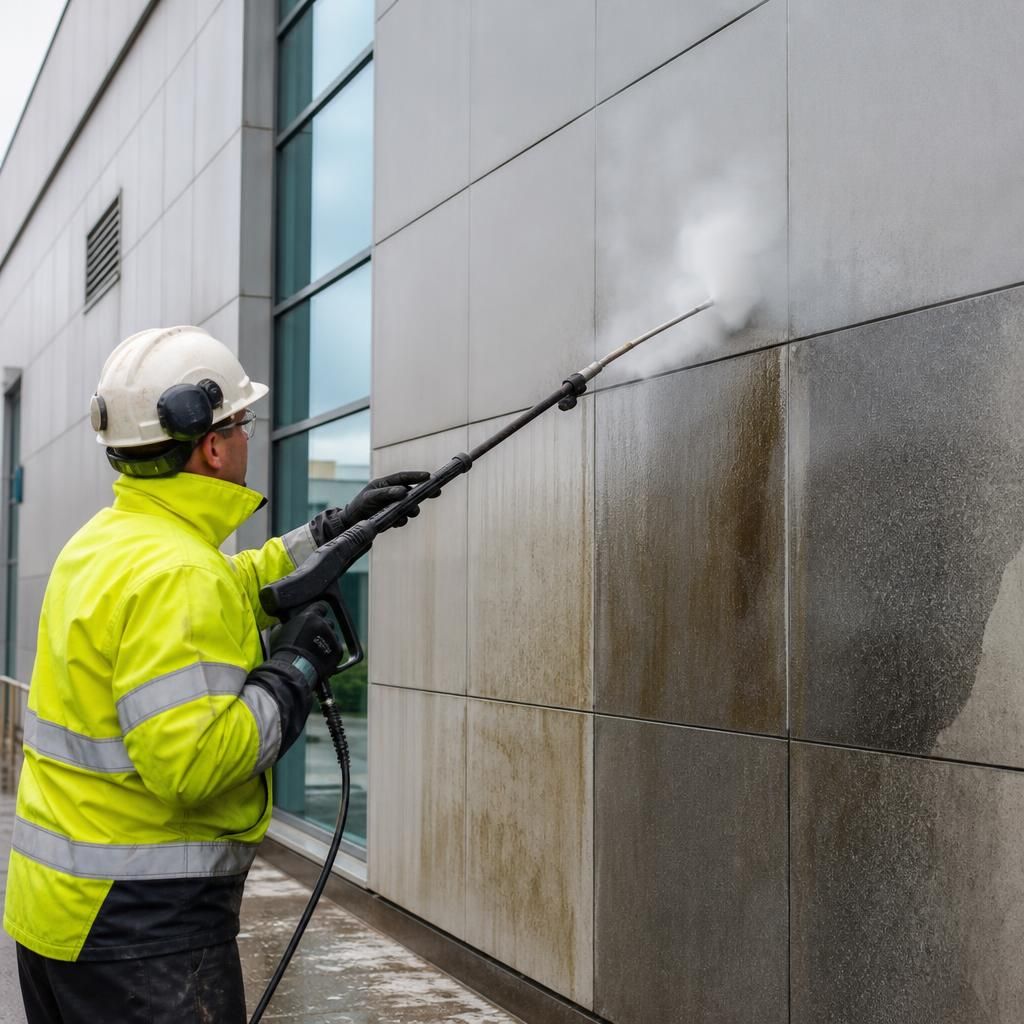
Steam cleaning can reduce the environmental impact of façade and cladding maintenance by using controlled heat to loosen dirt, organic growth, grease and traffic film, rather than relying on high volumes of water or strong chemical products.
Using less water can reduce wastewater volumes, while limiting detergents, biocides and degreasers can lower the risk of chemical residues reaching drains, soil or planting. However, removed contaminants still need to be contained and disposed of responsibly. Drainage routes should be assessed before work, vulnerable areas protected and any contaminated wastewater or debris managed in accordance with site requirements.
Arrange an environmentally responsible façade and cladding assessment
Arrange an environmentally responsible façade and cladding assessment to review the substrate, contamination, water use, chemical requirements and wastewater controls before cleaning begins. Encanto Exterior Cleaning can recommend a suitable, carefully managed approach for your commercial or industrial premises.