
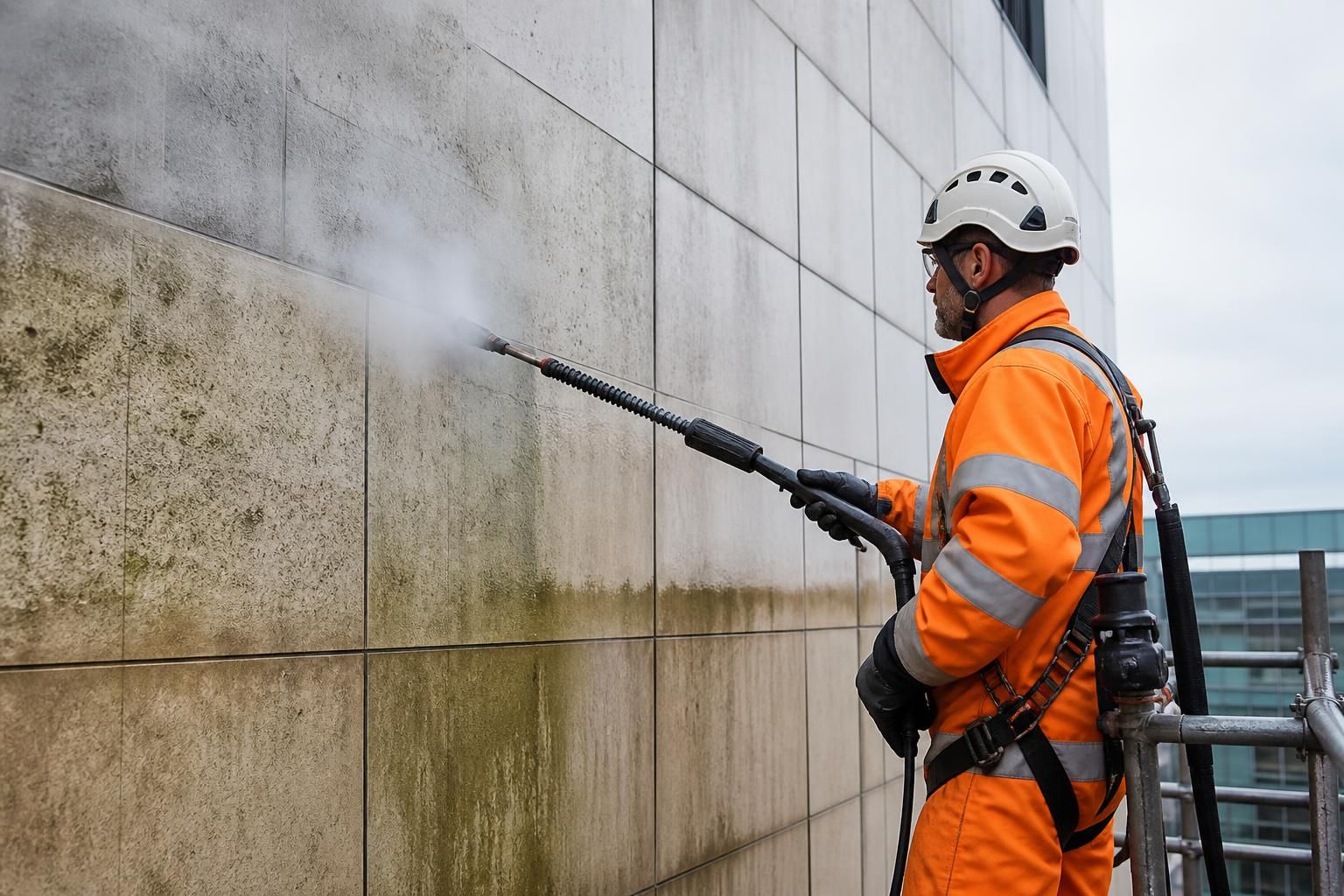
Is steam cleaning suitable for all types of façade materials?
Steam cleaning is suitable for many façade materials, including brick, stone, render and some metal cladding, but it is not appropriate for every surface or condition. The material’s age, finish, defects and sensitivity to heat or moisture should be assessed first, with a small test area completed before full cleaning.
Steam cleaning is suitable for many façade materials, including sound brickwork, some natural stone, render and selected metal cladding, but it is not appropriate for every surface or condition. Suitability depends on the material, its finish, age, existing defects and sensitivity to heat or moisture. A professional assessment and a small test area should be completed before the full façade is cleaned.
Steam cleaning uses heated water, usually applied at relatively low pressure, to soften and remove deposits such as atmospheric soiling, algae, moss, oil residues and some surface coatings. The lower mechanical force can help reduce the risk of abrasion compared with high-pressure washing. However, heat and moisture can still cause damage where a façade is poorly bonded, porous, deteriorated or already allowing water into the building.
Brickwork
Sound, well-fired brick is often suitable for steam cleaning, particularly where the main issue is carbon staining, organic growth or general urban soiling. The method can clean the face of the brick while placing less stress on the surrounding surface than aggressive pressure washing.
Older or softer bricks require greater care. Historic brickwork may have a friable face, open joints or previous repairs using a hard cement mortar. Excessive heat, prolonged wetting or unsuitable pressure may cause face loss, mortar erosion or movement of salts to the surface. Repointed areas, damaged bricks and recessed joints should be assessed separately, and the operator should avoid directing steam into open cracks or defective joints.
Natural stone
Many natural stone façades can be steam cleaned, but stone is not a single uniform material. Granite and some other hard, dense stones generally tolerate controlled steam cleaning well. Limestone, sandstone, slate and historic stone can be more absorbent or layered and may be vulnerable to surface loss, staining or rapid changes in moisture and temperature.
The stone’s mineral composition, porosity, existing weathering and any protective treatment all influence the cleaning method. Delicate carved details, polished finishes and areas with flaking or delaminating surfaces may need a lower-impact approach instead. Cleaning should not remove the natural patina of a historic building unnecessarily, and any conservation requirements should be established before work begins.
Render and textured coatings
Sound cement render and some mineral renders are often suitable for controlled steam cleaning. Steam can be useful for removing biological growth and surface dirt without the same level of direct impact as high-pressure water. It may also be appropriate for certain textured façades where the profile makes mechanical cleaning difficult.
Render should not be treated as suitable simply because it appears intact. Cracks, hollow sections, blown areas, exposed reinforcement, failed repairs and loose textured coatings can allow water behind the finish. Heat and moisture may worsen delamination or cause sections to detach. External wall insulation systems, acrylic renders and other proprietary finishes must be checked against the manufacturer’s cleaning guidance before steam is used.
Metal cladding
Painted, powder-coated and coated metal cladding may be steam cleaned when the coating is sound and the cleaning temperature and pressure are controlled. This can help remove atmospheric grime, algae and deposits around joints without using abrasive action.
Particular caution is needed around exposed edges, damaged coatings, fixings, sealants and panel joints. Steam or water entering behind panels may affect insulation, backing materials or internal areas. Strong heat can also soften or disturb certain finishes and mastics. Aluminium, coated steel and composite panels should therefore be tested individually rather than treated as interchangeable materials.
Glass, ceramics and glazed surfaces
Glass and glazed ceramic tiles can generally tolerate steam, but the surrounding seals, gaskets, films and frame materials may not. Sudden temperature changes can create a risk of thermal stress, particularly where glass is damaged or exposed to uneven heating. Steam should not be directed at failed sealant, open joints or electrical components, and any existing chips or cracks should be recorded before cleaning.
Glazed tiles may also have unglazed edges or porous grout that absorb moisture. A test area should confirm that the cleaning process does not leave staining, affect the glaze or loosen jointing material.
Concrete and precast façades
Sound concrete and precast panels can often be steam cleaned, especially when removing organic deposits and general surface soiling. The condition of the concrete remains critical. Cracking, spalling, exposed reinforcement, failed coatings and open construction joints may allow water to penetrate or may be worsened by cleaning.
Some precast panels have decorative coatings or factory-applied finishes that can be marked by excessive heat or pressure. The cleaning method should be selected according to the panel manufacturer’s requirements where they are available.
Timber and composite materials
Steam cleaning is usually unsuitable for unsealed timber façades unless a specialist assessment confirms that the particular timber and finish can tolerate it. Timber can absorb moisture, swell, split, distort or develop coating failure. Heat can also affect stains, paints, oils and sealants. Light cleaning with a method designed specifically for timber is generally more appropriate.
Composite panels, high-pressure laminate, fibre cement and other engineered materials vary significantly between products. Their surface may tolerate steam while the core, edges or adhesive system does not. Product information and a controlled test are essential before cleaning these materials.
Surfaces that need particular caution
- Historic or listed façades with fragile finishes, decorative details or conservation restrictions.
- Surfaces with flaking paint, delamination, spalling, open cracks or loose render.
- Porous materials with active damp, salt contamination or freeze-thaw damage.
- Coated panels where the finish is chalking, peeling or already poorly bonded.
- Façades containing failed sealants, open joints, vulnerable vents or unprotected electrical equipment.
- Materials with unknown proprietary finishes or no available maintenance guidance.
How suitability should be assessed
- Identify the façade materials and distinguish between different finishes, repairs and panel types across the elevation.
- Inspect for cracks, loose sections, staining, biological growth, corrosion, failed joints and signs of water ingress.
- Check manufacturer, conservation or building-management requirements where relevant.
- Carry out a discreet test patch using the proposed temperature, pressure, distance and dwell time.
- Inspect the cleaned area after drying to check for colour change, surface loss, staining, coating failure or moisture movement.
- Agree suitable controls for runoff, drainage, adjacent finishes, windows, entrances and occupied areas before proceeding.
A test patch should not only demonstrate whether the dirt can be removed. It should also confirm that the surface is not being etched, softened, discoloured or stripped of a protective finish. The operator may need to vary the temperature, pressure, nozzle distance and cleaning speed for different materials on the same building.
Steam cleaning can be an effective façade maintenance method, but it is a controlled cleaning process rather than a universal solution. Sound brick, suitable stone, stable render and compatible cladding are often good candidates; fragile, coated, porous or defective surfaces may require a different technique or remedial work first. Where the material or its condition is uncertain, a site assessment and documented test area provide the safest basis for deciding whether steam cleaning is appropriate.
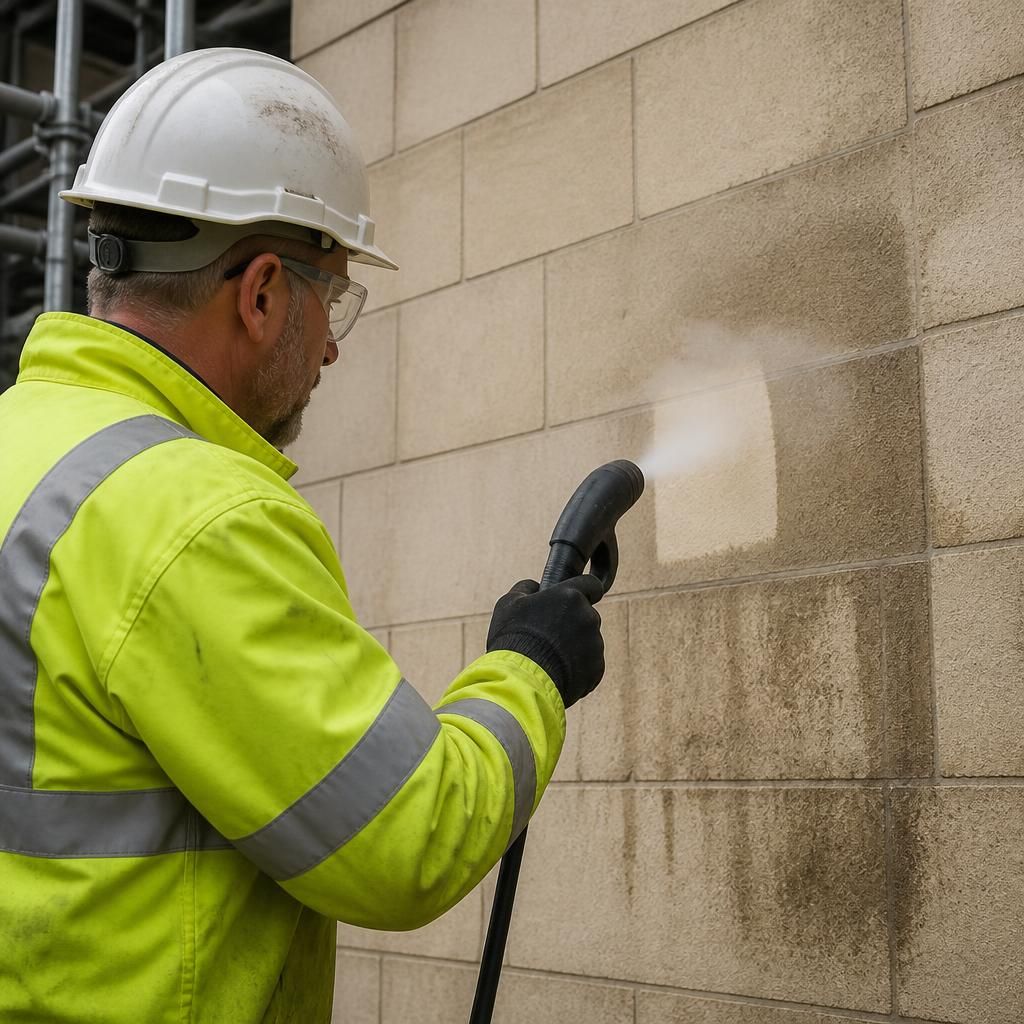
Steam cleaning is not suitable for every façade material or condition. Before work begins, the surface should be identified and checked for defects such as cracking, loose coatings, open joints, spalling, failed sealants and signs of water ingress. A discreet test patch using the proposed temperature, pressure and nozzle distance can confirm whether the material and finish tolerate the process without staining, etching, coating failure or moisture penetration.
Arrange a façade suitability assessment
If you are unsure whether steam cleaning is suitable for your façade, arrange a professional suitability assessment before work begins. Encanto Exterior Cleaning can inspect the materials and condition, advise on the safest method and complete a controlled test area where appropriate.