
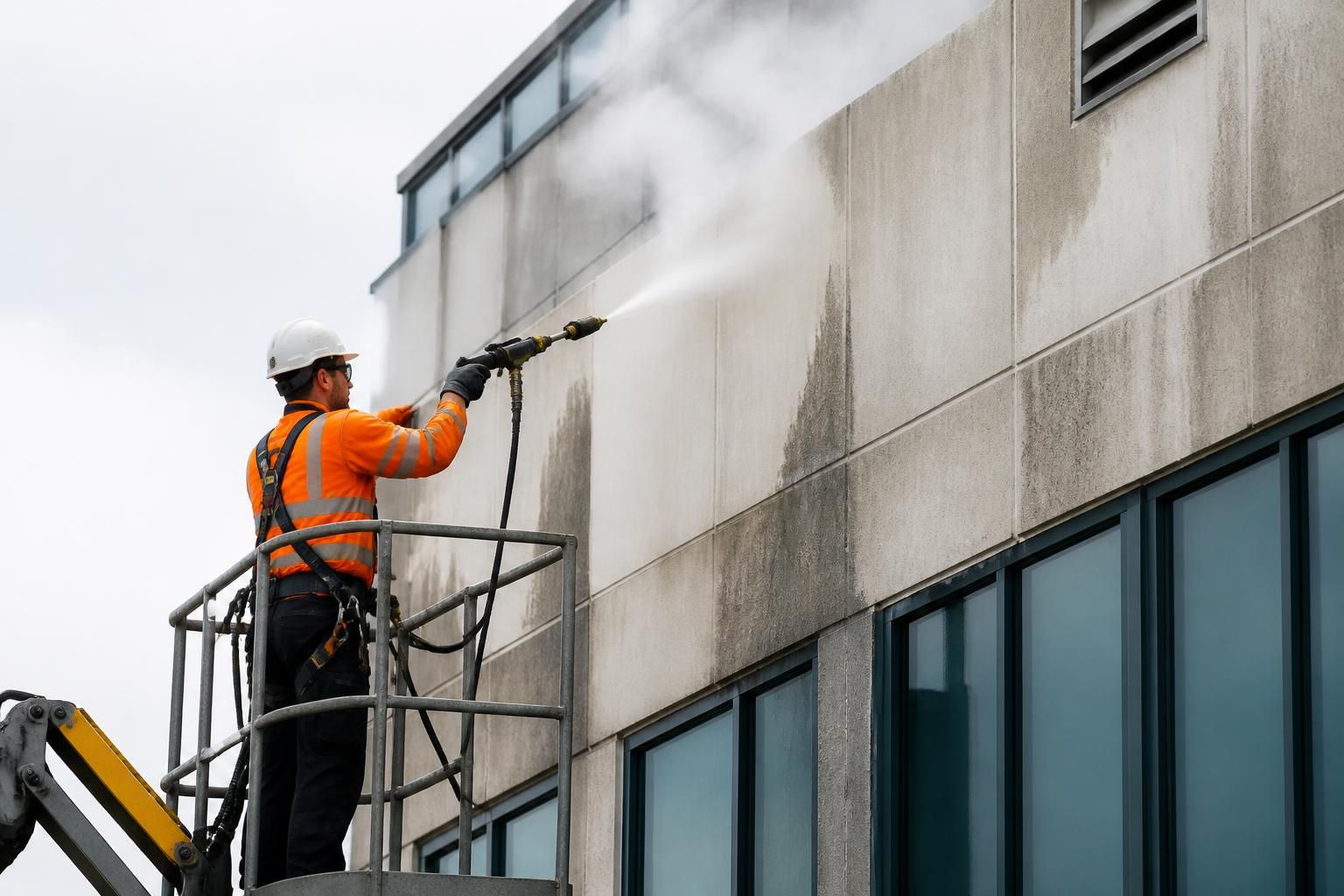
How often should façades and cladding be steam cleaned for optimal maintenance?
Façades and cladding should typically be steam cleaned every 12–24 months, with more frequent cleaning where buildings are exposed to heavy traffic, industrial emissions, coastal conditions, algae or persistent staining. A site assessment and regular visual inspections should determine the most suitable interval, helping maintain appearance and prevent contaminants becoming established.
For most commercial façades and cladding, steam cleaning every 12–24 months provides a practical maintenance interval. Buildings exposed to heavy traffic, industrial emissions, coastal air, shade, persistent dampness, algae or graffiti may need cleaning more frequently, while sheltered sites with limited soiling may require less frequent treatment. The correct schedule should be confirmed through a site assessment and regular visual inspections rather than applied as a fixed rule.
Steam cleaning is most effective when it forms part of a planned maintenance programme. Removing deposits before they become firmly established helps preserve the appearance of the building, reduces the need for more aggressive cleaning, and makes future maintenance easier to manage. It can also help prevent organic growth and pollutants from remaining on surfaces for extended periods.
Factors that affect the cleaning interval
- Traffic and pollution: Façades beside busy roads can accumulate soot, dust, oil-based residues and airborne particulates more quickly than buildings in quieter locations.
- Industrial exposure: Emissions, process dust and other airborne contaminants may create persistent staining and require more frequent inspections and cleaning.
- Moisture and shade: North-facing elevations, covered areas and façades close to vegetation may stay damp for longer, increasing the likelihood of algae, moss or other biological growth.
- Coastal conditions: Salt deposits and windborne contaminants can build up on cladding and other exposed surfaces, particularly where façades are not regularly rinsed by rainfall.
- Material and coating: Render, brick, stone, metal cladding and coated panels respond differently to heat, moisture and pressure. The surface type, age, finish and condition should all be considered before setting an interval.
- Building use and presentation standards: Retail, office, hospitality, healthcare and public-facing premises may need more frequent cleaning because appearance and hygiene are central to their operation.
- Previous maintenance: Surfaces that have been neglected, repeatedly stained or affected by failed coatings may initially need remedial cleaning before a routine programme can be established.
Use inspections to refine the schedule
Visual inspections should take place at regular intervals and after periods of severe weather, nearby construction or changes in site use. Inspect the most exposed elevations, entrances, loading areas, parapets, window surrounds, ledges and sheltered sections where dirt and moisture commonly collect. Early indicators include dulling of the finish, dark run marks, green or black biological growth, traffic film, staining around drainage points and graffiti.
Photographic records can help compare changes over time and identify which elevations become soiled first. This information allows the cleaning interval to be adjusted by area rather than treating every elevation on the same cycle. For example, a heavily exposed entrance may need more frequent attention than a protected rear elevation.
Seasonal considerations
Many façade and cladding cleaning programmes are scheduled for spring or early summer, when surfaces are more likely to dry reliably after treatment. Cleaning before a busy trading period, an inspection, a property handover or planned refurbishment can also be sensible. However, the timing should account for weather conditions, the surface material, access requirements and any manufacturer’s guidance. Excessively cold, wet or windy conditions can affect the cleaning process and the safe use of access equipment.
Autumn inspections are useful for identifying deposits that have developed during wetter months and for checking whether gutters, downpipes and drainage details are causing staining. Cleaning alone will not resolve recurring marks where water is overflowing, leaking or discharging directly onto the façade. Those defects should be investigated and corrected as part of the maintenance plan.
When more frequent cleaning may be necessary
A shorter interval may be appropriate where contamination is visibly returning soon after cleaning, where organic growth is spreading, or where deposits could affect the surface finish. Graffiti should generally be removed promptly to reduce the risk of penetration and permanent marking. Construction dust, cement residue and other site contaminants should also be dealt with as soon as practical, using a method suited to the affected material.
More frequent cleaning does not necessarily mean using greater pressure or more intensive treatment. The objective is to remove contamination with the least aggressive effective method. Controlled steam cleaning can often deal with surface dirt and biological deposits while reducing the mechanical stress associated with high-pressure washing, but the temperature, pressure, distance and dwell time still need to be controlled for the specific façade.
When a longer interval may be suitable
A building in a relatively clean, open setting with sound coatings, good drainage and limited shading may remain presentable beyond the typical 12–24-month period. Extending the interval should only follow an inspection confirming that deposits are not becoming established and that the surface is not deteriorating. A longer cycle is less appropriate where staining is damaging the appearance, obscuring defects or increasing the risk of biological growth.
Allow for a condition assessment before each planned clean
Before steam cleaning, the façade should be assessed for failed sealants, damaged panels, loose coatings, open joints, cracked render, corrosion, defective fixings and areas where water could enter the building. These issues may require repair or additional protection before cleaning begins. A small test area should normally be used to confirm that the proposed temperature, pressure and cleaning approach are suitable and that the finish will not be marked or altered.
The cleaning plan should also cover access, run-off control, protection of doors, windows and sensitive equipment, and any requirements relating to occupants or members of the public. For large or multi-elevation buildings, a phased programme can reduce disruption while maintaining consistent standards across the site.
In practice, a 12–24-month starting interval, supported by routine inspections, is suitable for many commercial and industrial properties. The interval should then be shortened or extended according to exposure, material condition, rate of re-soiling and the building’s presentation requirements. This inspection-led approach maintains the façade effectively without cleaning more often or using stronger methods than the surface requires.
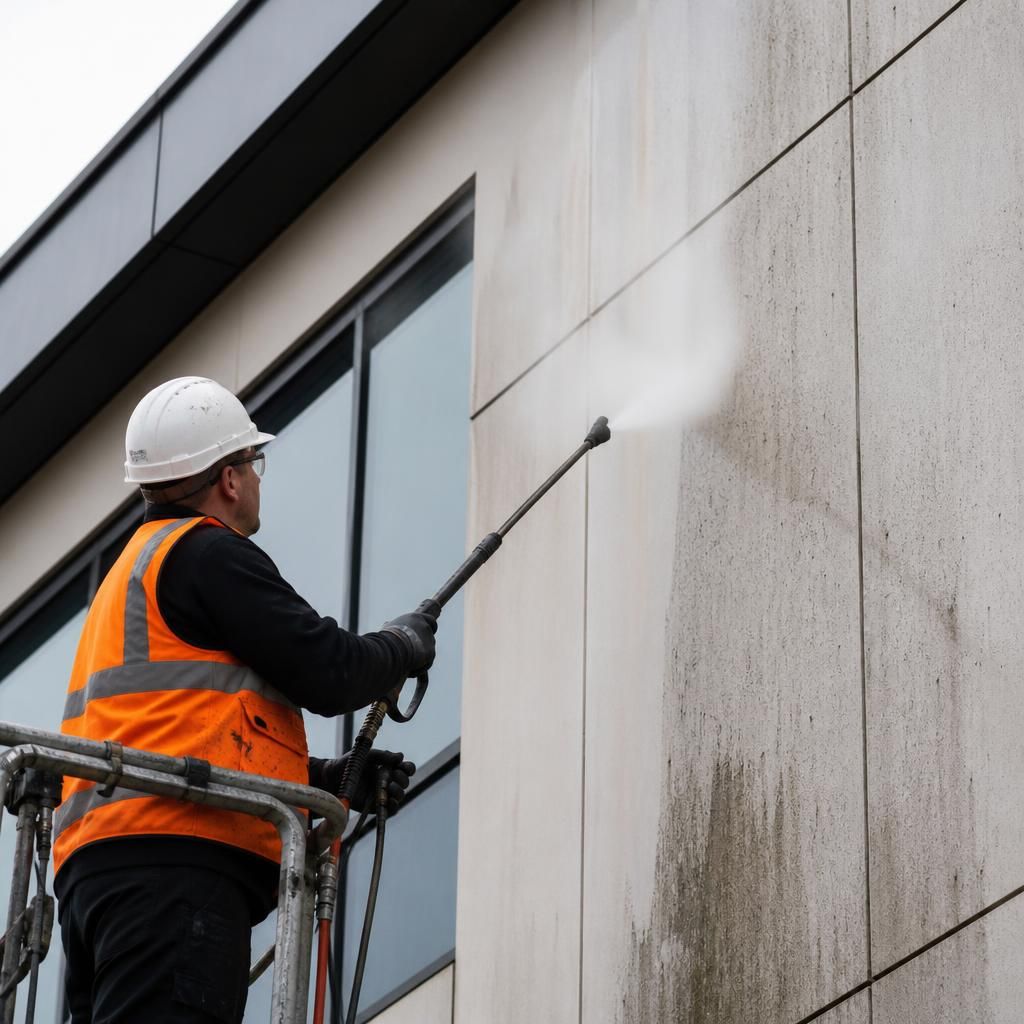
Façades and cladding should usually be steam cleaned every 12–24 months, but the correct interval depends on how quickly the surface becomes soiled. Buildings beside busy roads, industrial sites or damp, shaded areas may need more frequent cleaning, while well-protected elevations may remain suitable for longer.
Regular visual inspections help refine the schedule. Check entrances, ledges, drainage points and shaded elevations for traffic film, dark run marks, algae, moss or recurring staining. Cleaning should be brought forward when deposits are becoming established, while the method and temperature should always be selected according to the material, coating and condition of the surface.