
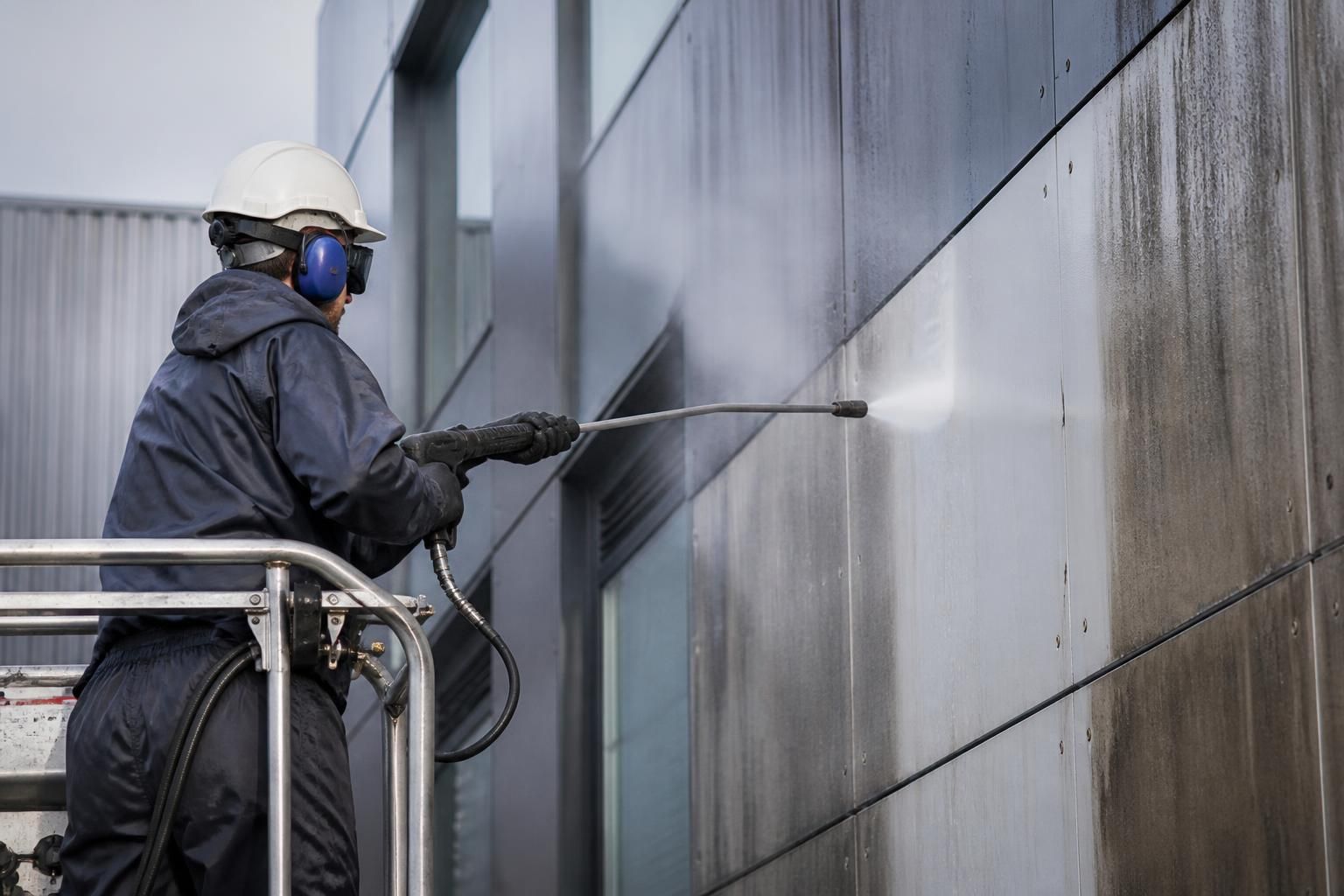
How does steam cleaning compare to traditional pressure washing for façades and cladding in terms of effectiveness and surface preservation?
Steam cleaning uses high-temperature vapour at comparatively low pressure to remove organic staining, grease, algae and dirt effectively while reducing the risk of etching, water ingress or damage to façades and cladding. Traditional pressure washing can be faster for robust surfaces and heavy deposits, but its higher force requires careful control to avoid surface erosion, coating damage and water penetration.
Steam cleaning is generally the better option for removing organic staining, grease, algae, moss and ingrained dirt from façades and cladding where surface preservation is a priority. It combines high-temperature vapour with comparatively low pressure, allowing contaminants to be softened and lifted without relying on the same mechanical force as traditional pressure washing. Pressure washing can be highly effective and quicker on robust, stable surfaces, but it requires more careful pressure selection to prevent coating damage, erosion and water ingress.
How the two cleaning methods work
Traditional pressure washing uses a high-volume jet of water to dislodge contamination from the surface. Its effectiveness depends mainly on water pressure, flow rate, nozzle choice, distance from the surface and the condition of the substrate. On suitable masonry, concrete and other durable materials, this mechanical action can remove heavy dirt efficiently.
Steam cleaning uses heated water delivered as low-pressure vapour or a controlled hot-water system. Heat helps break down oils, biological growth and bonded deposits, while the reduced pressure limits the force applied to the façade. Cleaning agents may be used where appropriate, but the method often reduces the need for aggressive chemicals, particularly when organic contamination is the main problem.
Effectiveness on common façade and cladding contamination
Both methods can produce good results when the equipment and technique are matched to the material. The more suitable approach depends on the type of contamination, the age and condition of the surface, and whether the façade has a coating or protective finish.
- Algae, moss and organic staining: Steam is effective because heat helps weaken biological growth and loosen the material from the surface. Pressure washing can remove the visible growth, but excessive force may spread contaminated water or disturb joints, coatings and aged finishes.
- Grease, oil and traffic film: Heat is particularly useful for softening oily deposits, making steam cleaning suitable for façades near roads, loading areas, plant rooms and industrial operations. Pressure washing may require detergents or greater force to achieve a similar result.
- Dust, loose dirt and surface deposits: Pressure washing can be efficient where contamination is loosely bonded and the substrate is robust. Steam remains useful where water control, low splash and reduced impact are important.
- Paint, adhesives and graffiti residues: Steam can soften some coatings, residues and markings, but the correct approach depends on the paint type and the underlying surface. Pressure washing alone may not remove bonded graffiti cleanly and can drive water into vulnerable materials.
- Carbon deposits and weathering: Heated cleaning can help loosen deposits without aggressive abrasion. However, deeply weathered or chemically altered surfaces may need a carefully tested specialist treatment rather than simply more pressure.
Surface preservation and the risk of damage
Surface preservation is the main distinction between the methods. High pressure can erode soft masonry, remove friable mortar, expose aggregate, strip coatings and damage painted or powder-coated finishes. It can also force water behind cladding panels, into joints, through cracks or beneath defective sealants. These issues are particularly relevant to older buildings and façades with existing defects.
Steam cleaning reduces the likelihood of mechanical damage because less pressure is needed to release many contaminants. It can therefore be preferable for delicate brickwork, render, painted surfaces, coated cladding and areas where joints or seals must be protected. It is not completely risk-free: excessive heat, prolonged application or unsuitable detergents can affect certain coatings, plastics, sealants and composite materials. The temperature and dwell time must be controlled for the specific substrate.
Pressure washing is not automatically unsuitable for façades. It can be appropriate for sound concrete, stable masonry, certain metal cladding systems and other hard-wearing surfaces, provided the operator uses a controlled pressure rather than the highest available setting. A professional assessment should identify vulnerable areas, open joints, damaged coatings and locations where water could enter the building.
Water use, run-off and access requirements
Steam systems generally use less water than conventional high-volume pressure washing, although actual consumption depends on the equipment, cleaning duration and level of soiling. Lower water use can make containment and recovery of run-off more manageable, which is useful on busy commercial sites, near entrances and around drainage-sensitive areas.
Both methods require proper control of dirty water. Run-off may contain detergents, oils, biological material, paint particles or other contaminants and must not be allowed to enter surface-water drains without suitable consideration. Access equipment, exclusion zones and protection for nearby vehicles, glazing, electrical equipment and building occupants may also be needed regardless of the cleaning method.
Which method is more suitable?
Steam cleaning is usually favoured where the façade is delicate, coated, painted or difficult to replace, or where the main contamination is organic, oily or bonded. It is also useful when reducing water use, splash and the risk of water penetration is important.
Traditional pressure washing may be more practical where the surface is hard, stable and heavily covered with loose deposits, and where rapid removal of large amounts of dirt is required. It should be avoided or tightly controlled on weak render, deteriorated brickwork, defective cladding joints and surfaces with uncertain coating adhesion.
In some projects, the most effective solution is a controlled combination of methods. For example, low-pressure steam may be used for sensitive elevations and detailed areas, while a carefully regulated wash is used on robust sections. The process should be based on the least aggressive method capable of achieving the required standard, rather than applying one setting across the whole building.
How the cleaning method should be selected
- Inspect the façade or cladding to identify the material, finish, age, defects and areas of previous repair.
- Determine whether the contamination is biological, oily, atmospheric, cement-based, paint-related or simply loose surface dirt.
- Check for vulnerable joints, seals, vents, glazing, electrical fittings, insulation interfaces and points where water could enter.
- Carry out a small test clean in an inconspicuous area using controlled temperature, pressure, nozzle distance and any proposed detergent.
- Compare the cleaned area with the surrounding surface to confirm that the finish, colour and coating have not been adversely affected.
- Agree run-off controls, access arrangements, protection measures and any necessary follow-up treatment before full-scale cleaning begins.
For most commercial façades and cladding systems, steam cleaning offers a strong balance between cleaning performance and protection of the substrate. Pressure washing remains a useful method for appropriate robust surfaces, but its success depends on disciplined control and a sound understanding of the building envelope. A site-specific assessment and test panel provide the most reliable basis for choosing between the two.
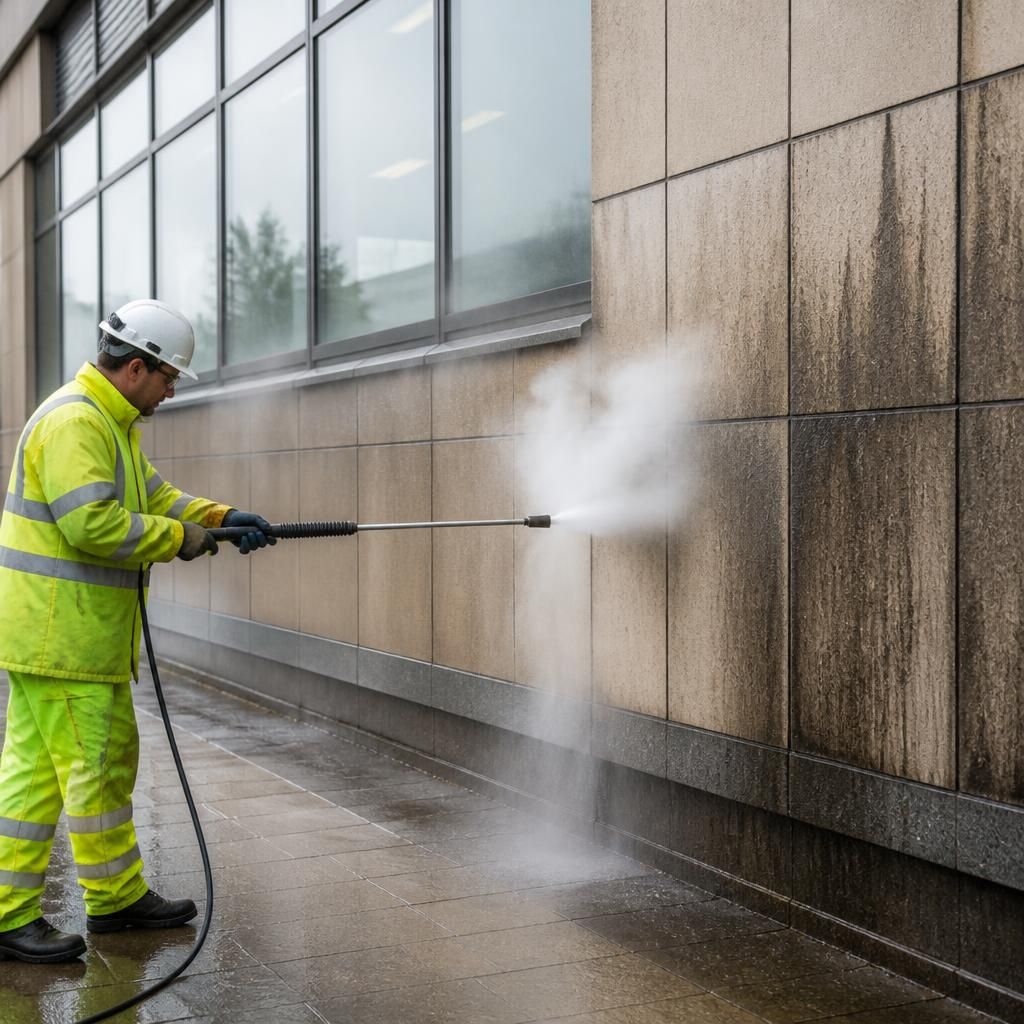
Surface preservation is the main advantage of steam cleaning for façades and cladding because heat loosens many contaminants without relying on high mechanical pressure. This reduces the risk of etching, coating loss, mortar erosion and water being forced behind panels or through defective joints.
Pressure washing can still be effective on sound concrete, robust masonry and stable cladding, but the pressure, nozzle distance and water flow must be matched to the substrate. On painted, powder-coated, rendered or weathered surfaces, excessive force may remove the finish or expose underlying damage. Steam cleaning also requires control: excessive heat or prolonged application can affect some coatings, sealants and plastics.
A small test clean in an inconspicuous area should therefore be completed before full-scale work. This confirms that the chosen temperature, pressure and cleaning agent remove the contamination without changing the colour, texture or protective finish. The result provides a practical basis for selecting the least aggressive method that achieves the required standard.