
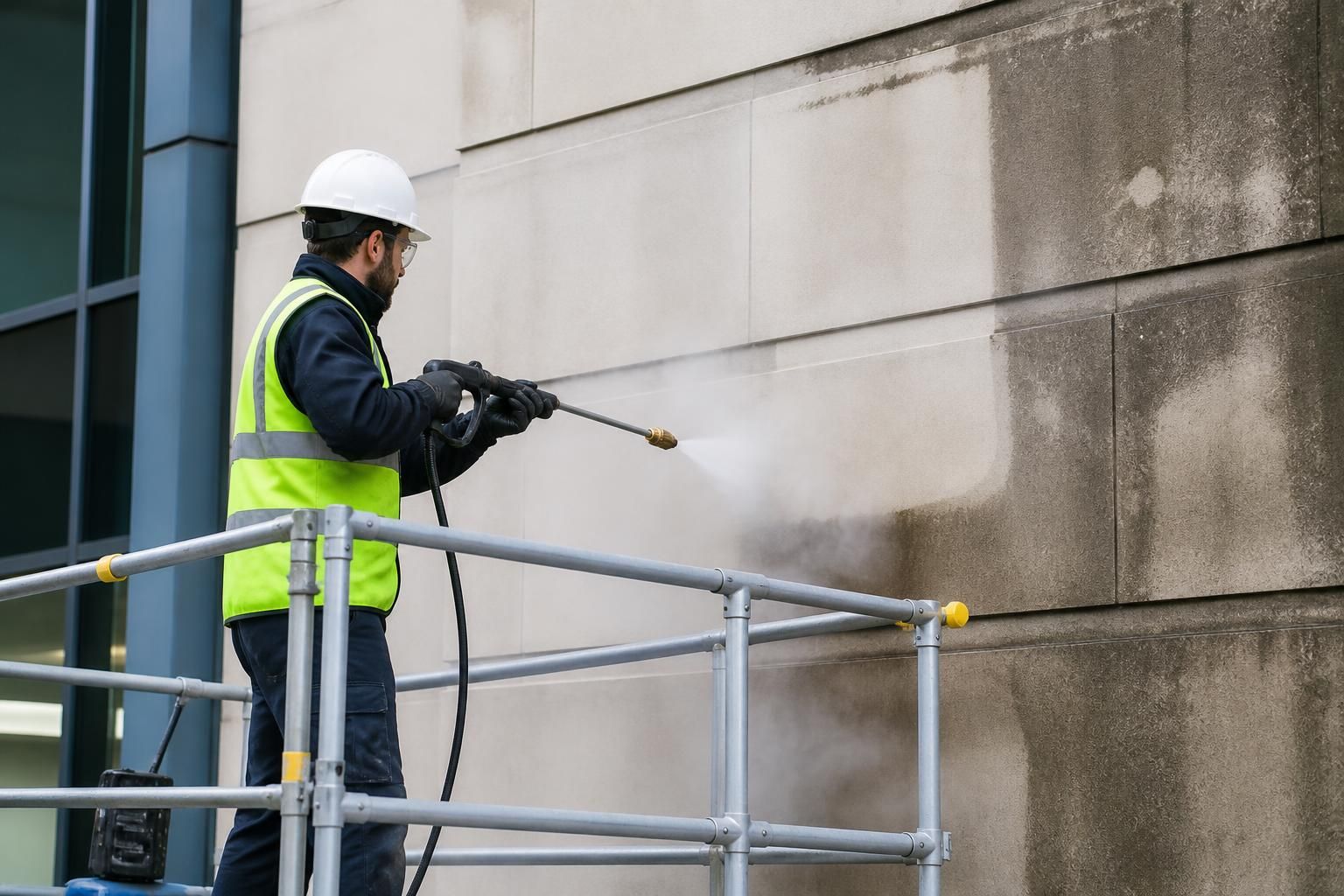
How does steam cleaning compare to pressure washing for façade maintenance?
Steam cleaning uses high-temperature water vapour at comparatively low pressure, making it gentler on many façades while still removing organic staining, grease, algae and surface grime. Pressure washing uses a stronger water jet and can be faster for robust surfaces, but steam cleaning is often preferable where surface preservation, reduced water use and controlled cleaning are priorities.
Steam cleaning is generally the better option for façade maintenance where surface preservation, controlled cleaning and reduced water use are priorities. It combines high-temperature steam with comparatively low water pressure, allowing organic staining, algae, grease and general grime to be removed without the aggressive impact that can result from conventional pressure washing. Pressure washing remains effective and efficient on robust, water-resistant surfaces, particularly where heavy deposits need to be removed quickly, but it requires careful control to avoid damaging the façade or forcing water into the building fabric.
How the two methods work
Steam cleaning uses heated water delivered as steam or very hot water through a controlled nozzle. The heat helps soften and break down biological growth, oily residues, traffic film and ingrained dirt, while the lower mechanical force limits the risk of surface abrasion. The operator can adjust the temperature, flow and distance from the façade to suit the material and the type of contamination.
Pressure washing relies primarily on the mechanical force of a concentrated water jet. It can remove loose dirt, moss, mud and some coatings rapidly, especially from hard, non-porous surfaces. However, the result depends heavily on the pressure selected, the nozzle used, the operator’s technique and the condition of the substrate. A setting that is suitable for concrete may be inappropriate for brick, render, stone or painted cladding.
Cleaning effectiveness
Both methods can produce good results when the equipment and technique are matched to the façade. Steam is particularly effective against organic contamination and residues that respond to heat, including algae, lichen, bird fouling, grease and some atmospheric deposits. It can also clean detailed façades, joints and textured surfaces with less risk of driving contamination further into the substrate.
Pressure washing can be the faster choice for removing loose surface dirt from durable materials such as sound concrete, some paving and suitably robust masonry. It may be less effective against oily or biological residues without an appropriate detergent or pre-treatment. On porous surfaces, a high-pressure jet can spread contamination, leave uneven cleaning patterns or remove only the surface layer while staining remains within the material.
Surface preservation
The principal difference for façade maintenance is the balance between heat and mechanical force. Steam cleaning uses heat to do more of the cleaning work, so it does not need the same water impact as pressure washing. This makes it suitable for many delicate or weathered surfaces, including older brickwork, natural stone, render and certain painted or coated façades, subject to an inspection and test clean.
Uncontrolled pressure washing can cause several forms of damage. It may erode soft brick faces, loosen mortar joints, strip paint, mark render, dislodge fragile pointing or expose the underlying material. Water can also enter cracks, failed joints, cavity vents and other openings. This may contribute to damp-related problems, staining or deterioration where the façade is already defective.
Steam is not automatically risk-free. Excessive heat can affect some coatings, sealants, plastics and synthetic materials, while prolonged treatment may damage vulnerable surfaces. The correct method must therefore be selected after assessing the substrate, its age, existing defects, previous coatings and the type of contamination present.
Water use and run-off
Steam cleaning normally uses less water than conventional pressure washing because the cleaning action relies more on temperature than on a high-volume water flow. This can reduce run-off and make containment, collection and disposal more manageable on commercial sites. It does not remove the need to control wastewater: loosened dirt, biological material, oils, paint residues and cleaning products must still be prevented from entering surface-water drains or surrounding ground.
Pressure washing can generate substantial run-off, particularly on large façades and hardstanding areas. Site planning may therefore require drain protection, bunding, wet vacuum recovery, temporary storage or approved disposal arrangements. The appropriate controls depend on the contamination, the drainage system and the requirements of the site operator or local authority.
Speed, access and operating conditions
Pressure washing may offer a productivity advantage on large, open and robust surfaces with straightforward access. It can quickly clear loose deposits from elevations, retaining walls and other areas designed to withstand regular water exposure.
Steam cleaning can take longer where deposits are heavily bonded or where the operator must work slowly around fragile features, windows, joints, signage and architectural details. Its lower water output can be beneficial in occupied premises, confined areas and locations where overspray must be limited. Access equipment, exclusion zones and protection for windows, doors, vents and nearby assets may still be required for either method.
Cost considerations
The lowest initial cleaning cost is not necessarily the lowest maintenance cost. Pressure washing may be economical on suitable hard surfaces, but damage to coatings, pointing or porous materials can create additional repair and redecoration work. Excessive water use and wastewater controls may also affect the overall project requirements.
Steam cleaning can involve a higher operative skill requirement and slower treatment on some surfaces. Its value is often shown through reduced risk of substrate damage, less water handling and a lower likelihood of needing repeat work caused by incomplete removal or aggressive cleaning. A reliable comparison should consider the condition of the façade, the required finish, access, run-off management and the potential cost of repairs, rather than comparing equipment time alone.
Which method is appropriate?
- Steam cleaning is often preferable for weathered masonry, natural stone, render, painted surfaces, detailed façades and areas affected by algae, lichen, grease or persistent atmospheric grime.
- Pressure washing can be suitable for sound concrete, robust paving and other non-porous surfaces where the material is confirmed to tolerate the selected pressure and water exposure.
- Neither method should be selected without assessment where the façade has failed pointing, open cracks, defective sealants, loose coatings, spalling, suspected asbestos-containing materials or signs of water ingress.
For some buildings, the most effective approach is a controlled combination of methods. Steam may be used for sensitive elevations and detailed areas, while lower-pressure washing is reserved for suitable hardstanding or robust sections. Pre-treatment, gentle agitation and a final rinse may also be used, provided each stage is compatible with the substrate and the site’s environmental controls.
How the method should be chosen
- Inspect the façade to identify the material, coatings, joints, defects and areas vulnerable to water penetration.
- Identify the contamination, distinguishing between loose dirt, biological growth, grease, paint, efflorescence and staining within the substrate.
- Consider access, nearby occupants, glazing, electrical equipment, landscaping, drainage and the need to control overspray or run-off.
- Carry out a small test clean in an inconspicuous area to confirm the proposed temperature, pressure, nozzle, dwell time and cleaning sequence.
- Review the test area for colour change, surface marking, coating adhesion, mortar stability and the consistency of the finished appearance before proceeding.
In practical terms, pressure washing is a force-led process, whereas steam cleaning is a heat-led and more controlled process. The correct choice depends on the façade rather than on the equipment alone. For commercial and industrial buildings where maintaining the substrate, controlling water and achieving a consistent appearance are important, a surveyed and carefully specified steam-cleaning programme will often provide the safer maintenance solution. Where the surface is genuinely robust and the contamination is loose, pressure washing can remain an appropriate part of the cleaning plan.
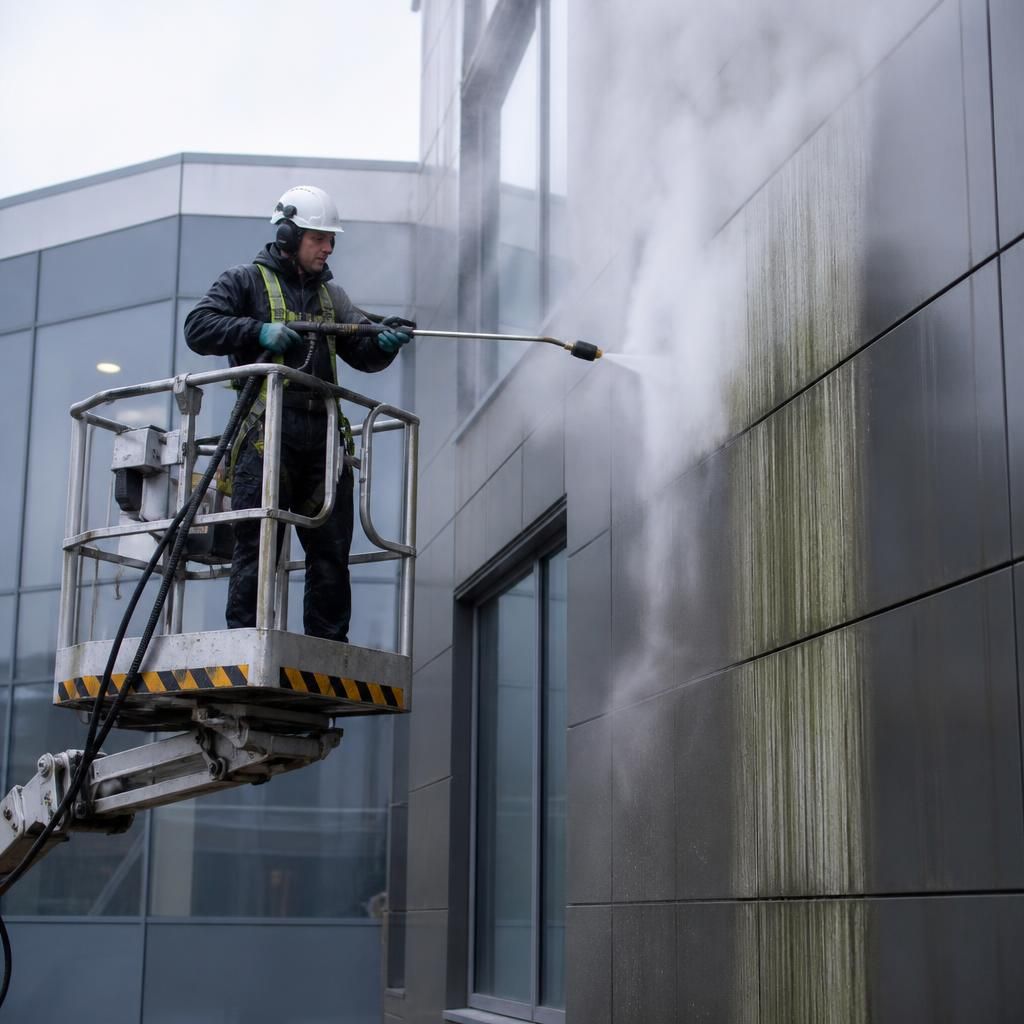
Steam cleaning is usually gentler on façades than pressure washing because it relies more on heat and less on mechanical water force. This helps remove algae, grease, bird fouling and ingrained grime while reducing the risk of eroding soft brick, damaging mortar joints or stripping coatings.
Pressure washing can still be effective on sound, robust surfaces such as concrete and suitable paving, particularly where loose dirt needs to be removed quickly. However, the pressure, nozzle and distance must be matched to the material. A test clean is recommended before work begins, especially on older masonry, render, natural stone or painted façades.
Arrange a façade cleaning assessment
Arrange a façade cleaning assessment with Encanto Exterior Cleaning to compare steam cleaning and pressure washing for your building’s materials, defects and contamination. We will recommend a suitable, carefully controlled method for the required finish and site conditions.