
What types of stains and contaminants are best addressed by steam cleaning compared to other methods?
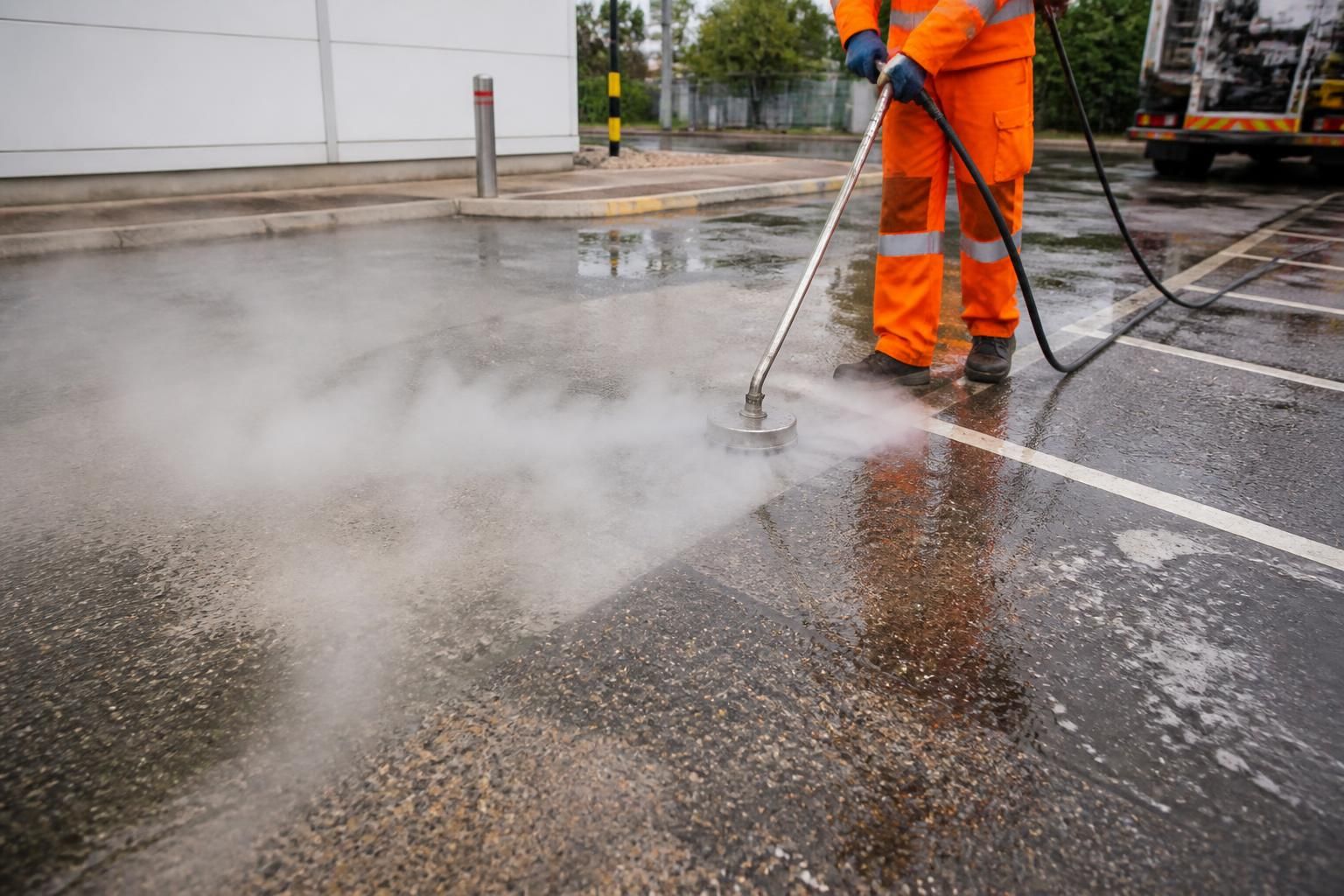
Steam cleaning is particularly effective for oil, grease, chewing gum, ingrained grime, algae, moss and other organic contaminants on concrete, block paving and car park surfaces. Its combination of high temperature and controlled pressure can loosen stubborn or sensitive deposits with less risk of surface damage and reduced water use than conventional pressure washing, while specialist treatments may still be preferable for deep staining or heavily contaminated areas.
Steam cleaning is best suited to contaminants that soften, melt or detach when exposed to high-temperature water vapour, including oil, grease, chewing gum, traffic film, ingrained dirt, algae, moss and other organic growth. Compared with conventional pressure washing, it combines heat with controlled pressure, allowing many deposits to be removed effectively while using less water and reducing the risk of damaging sound concrete, block paving and other hard surfaces.
Oil, grease and fuel-related residues
Steam is particularly useful for breaking down oily deposits on car parks, loading areas, service yards and concrete around plant or vehicles. Heat reduces the viscosity of oil and grease, helping lift residues from the surface so they can be recovered rather than simply spread across adjacent paving. It is also effective against the traffic film that builds up when exhaust deposits, road dirt and small amounts of lubricant combine.
Steam cleaning does not guarantee complete removal where oil has penetrated deeply into porous concrete. In these cases, a suitable degreasing treatment, dwell time, agitation and controlled rinsing may be needed alongside steam. The cleaning method should also include appropriate containment and collection measures so contaminated wash water does not enter surface-water drainage.
Chewing gum, adhesives and tacky deposits
Chewing gum is one of the clearest examples of a contaminant that responds well to steam. Heat softens the gum, making it easier to lift mechanically without using aggressive scraping that could mark the paving. Similar treatment can help with some adhesive residues, food deposits and sticky substances around pedestrian routes, entrances and external seating areas.
The result depends on the age and composition of the deposit. Hardened or chemically resistant adhesives may require a compatible specialist product after the steam treatment. Any chemical used should be tested first, particularly on coloured block paving, sealed concrete or surfaces close to planted areas.
Algae, moss and other organic growth
Steam can loosen algae, moss, lichen and other organic matter from concrete and block paving, particularly where growth is concentrated in joints, textured finishes or shaded areas. The heat helps disrupt the growth and makes surface residues easier to remove with controlled agitation or rinsing. This can be preferable to very high-pressure cleaning, which may damage jointing sand, open the surface or dislodge paving units.
Removing visible growth is only part of the work. Persistent dampness, poor drainage, shade and organic debris can allow it to return. A complete maintenance approach may therefore include joint inspection, removal of settled debris, drainage checks and an appropriate post-treatment where required. The treatment selected must be suitable for the surface and the surrounding environment.
Ingrained dirt and traffic film
Hard-standing areas often accumulate a mixture of dust, soil, atmospheric pollution, rubber residue and decomposed organic matter. This contamination can become bonded to textured concrete and block paving through repeated vehicle movements and weathering. Steam helps soften the combined film before it is rinsed or agitated away, making it useful for car parks, service yards, pedestrian routes and external forecourts.
For routine dirt on robust, sound concrete, conventional pressure washing may be quicker and entirely appropriate. Steam becomes more advantageous where the dirt is tightly bonded, where lower water consumption is important, or where excessive pressure could affect joints, edges, coatings or nearby fixtures.
Rubber marks and tyre deposits
Tyre marks and rubber transfer can be difficult to remove with cold water alone, especially on smooth concrete floors and heavily trafficked turning areas. Heat can soften the residue and improve the performance of controlled agitation. Steam may also reduce the need for harsh mechanical abrasion, which can leave a visibly different finish on the cleaned area.
Some marks are not surface deposits but changes within a coating, sealer or the concrete itself. Where this has occurred, cleaning can improve the appearance but may not restore the original finish. A small test area is important before treating a large car park or a surface with a decorative coating.
Contaminants for which another treatment may be more suitable
Steam is not a universal replacement for pressure washing, chemical treatment or abrasive cleaning. Other methods may be more appropriate for:
- Mineral deposits and efflorescence: white salt deposits and hard-water scale may need a carefully selected acidic or specialist treatment, used only after checking the surface and drainage arrangements.
- Rust staining: iron deposits often require a rust remover formulated for the affected material. Steam alone may loosen surface dirt but will not usually dissolve established rust staining.
- Paint, line-marking and heavy coatings: removal may require specialist chemical softening, abrasive techniques or mechanical equipment, depending on the substrate and the required finish.
- Deeply embedded oil: porous concrete may require a staged degreasing process rather than a single steam-cleaning pass.
- Loose or damaged surfaces: cleaning cannot correct spalling concrete, failing sealers, open joints or unstable block paving. These defects should be assessed before work begins.
How the cleaning method is selected
The appropriate approach depends on the contaminant, the condition and porosity of the surface, the presence of coatings or jointing material, the size of the area and the drainage arrangements. A professional assessment normally identifies the deposit, checks for vulnerable edges and fixtures, and establishes whether a test clean is needed. Steam temperature, pressure, nozzle selection, working distance and the amount of agitation are then adjusted to achieve removal without unnecessary surface wear.
On a commercial or industrial site, the process should also account for pedestrian and vehicle management, electrical equipment, nearby buildings, drainage protection and the collection of contaminated residues. This is particularly important when removing oil, fuel, chemical deposits or concentrated organic matter.
In practical terms, steam cleaning offers its greatest advantage where heat can change the contaminant’s condition: melting gum, loosening grease, softening traffic film or disrupting organic growth. Pressure washing remains useful for loose soil and general surface dirt, while specialist chemical or mechanical treatments may be needed for staining that has chemically bonded with, or penetrated deeply into, the substrate. Choosing the method according to the contaminant and surface condition produces a more consistent result and helps preserve concrete, block paving and car park areas over repeated maintenance cycles.
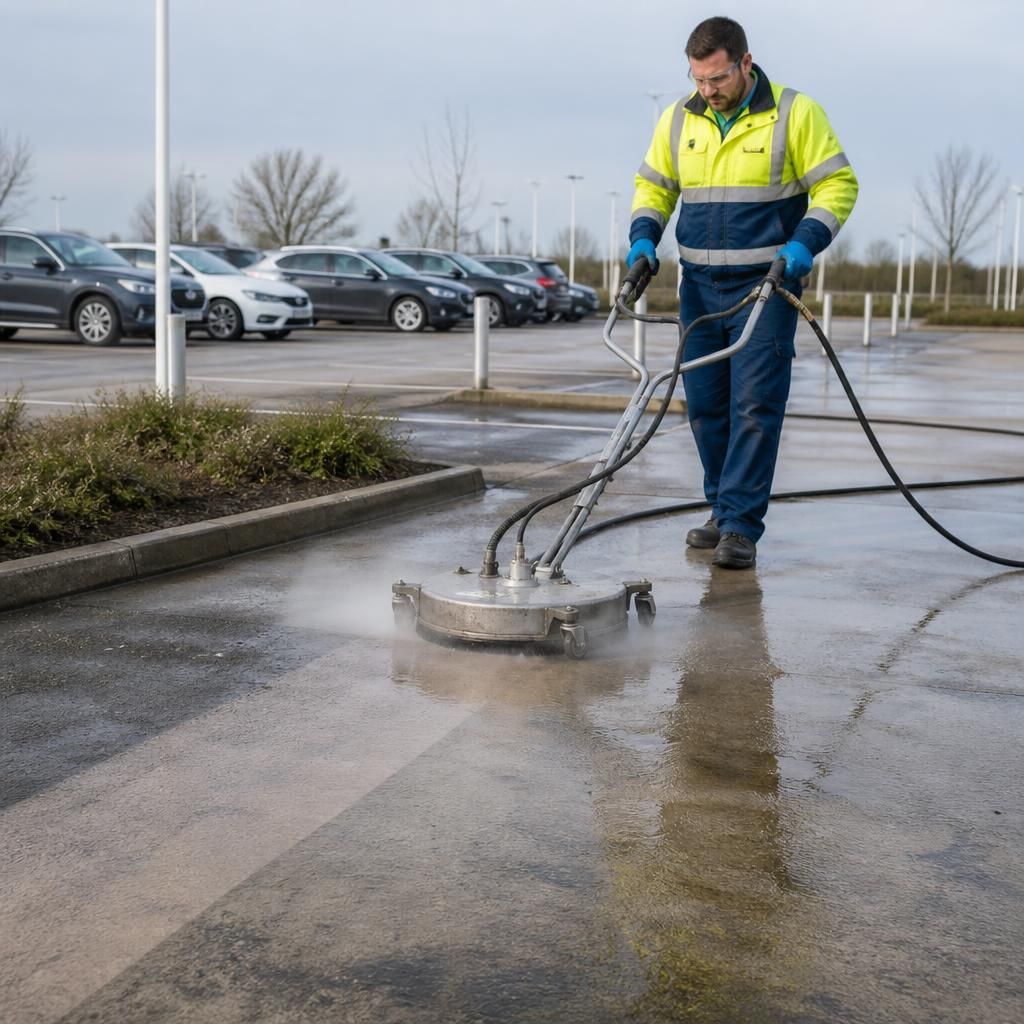
Steam cleaning is most effective for contaminants that soften or break down with heat. Oil, grease, chewing gum, traffic film, rubber deposits, algae and moss can often be loosened with heated water and removed using controlled pressure, reducing the need for aggressive scraping or high-pressure rinsing. This makes steam particularly useful on commercial car parks, concrete walkways, loading areas and block paving where surface joints, coatings or nearby fixtures need to be protected.
It is not a universal solution. Deeply absorbed oil, rust, mineral deposits, paint and failing surfaces may require compatible degreasers, specialist stain treatments or separate repair work. A test clean helps confirm whether the contaminant is sitting on the surface or has penetrated the substrate, allowing the cleaning method and pressure to be selected without unnecessary wear or water use.