
What safety measures are in place during the steam cleaning of car parks and block paving areas?
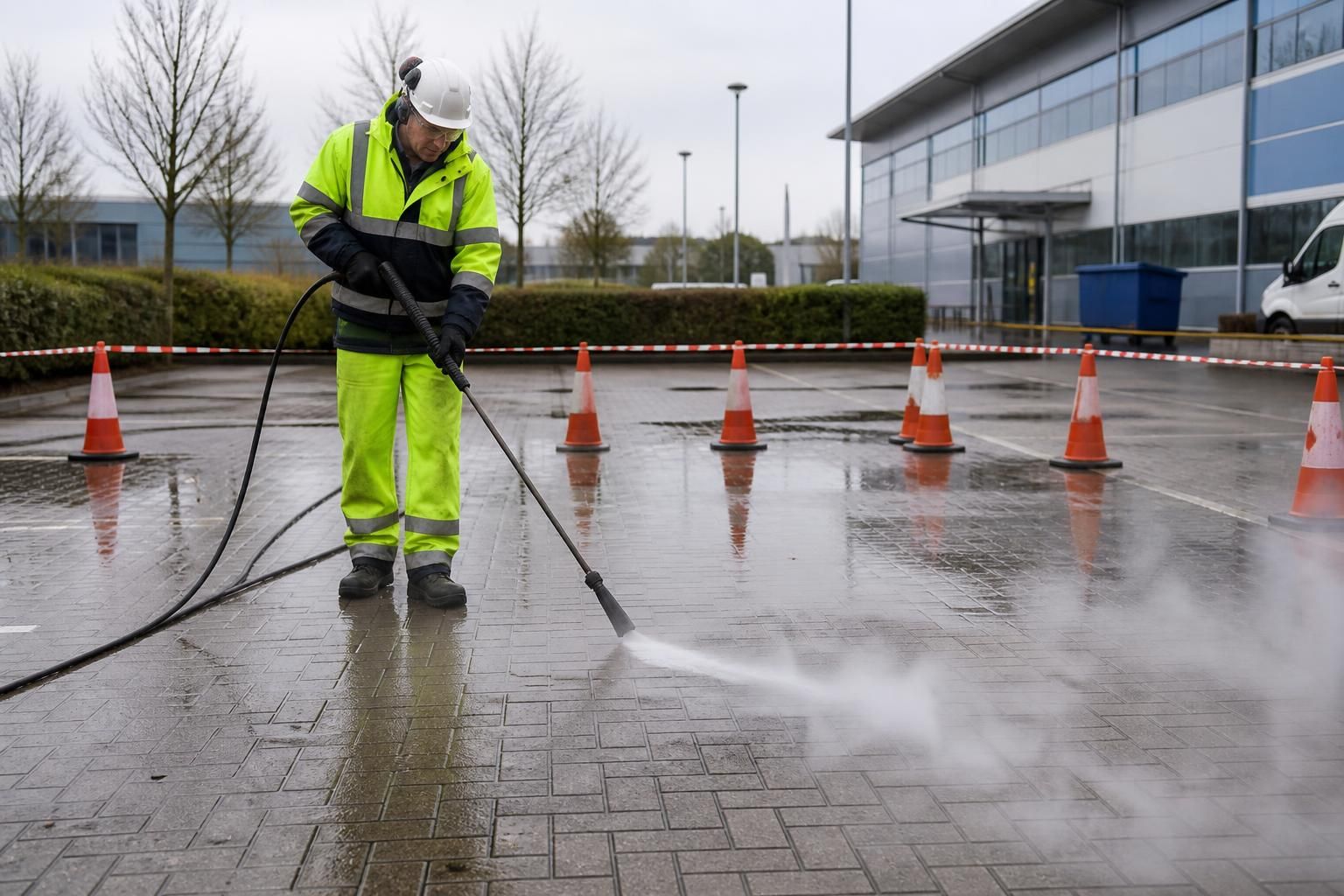
Steam cleaning of car parks and block paving is carried out under a site-specific risk assessment, with trained operatives using controlled temperature and pressure settings suited to the surface. Work areas are segregated from vehicles and pedestrians, while appropriate PPE, equipment checks, slip-risk controls and responsible management of wastewater help protect people, property and drainage systems.
Steam cleaning of car parks and block paving is managed through a site-specific risk assessment, a clear method statement and trained operatives using equipment settings appropriate to the surface. The work area is controlled to separate the cleaning operation from vehicles, pedestrians and other contractors, while personal protective equipment, equipment inspections, slip controls and responsible wastewater management reduce risks to people, property and drainage systems.
Site assessment and planning
Before work begins, the team assesses the car park or paved area and identifies hazards that could affect the cleaning process. This includes vehicle and pedestrian movements, access points, trip hazards, damaged paving, loose blocks, surface contamination, nearby buildings, drainage arrangements, electrical installations and areas where steam or water could affect occupants or equipment.
The findings are recorded in the relevant risk assessment and method statement. These documents set out the cleaning method, the equipment required, the areas to be isolated, the controls for wastewater and the action to take if conditions change. Where a site is occupied or remains in use, the work is coordinated with the responsible property manager or site contact.
Segregation from vehicles and pedestrians
Car parks require particular attention because moving vehicles can create a significant risk to operatives and members of the public. Suitable barriers, cones, signage or other agreed controls are used to define the working area. Sections may be cleaned in stages so that safe access can be maintained without allowing people to walk through wet or active work zones.
Vehicle routes, pedestrian entrances, loading areas and emergency access routes are considered before the equipment is positioned. Operatives remain alert to changing site conditions and pause the work if a vehicle, pedestrian or unauthorised person enters the controlled area. On larger sites, additional traffic management may be needed to maintain separation throughout the job.
Trained operatives and personal protective equipment
Steam cleaning equipment is used by operatives who understand the hazards associated with hot water, pressurised flow, electrical connections, cleaning products and contaminated run-off. They are expected to follow the agreed method statement, inspect the work area continuously and adjust the process when the surface or surrounding conditions require it.
Personal protective equipment is selected for the task and may include protective footwear with suitable slip resistance, gloves, eye or face protection, protective clothing and hearing protection where equipment noise requires it. PPE is an additional control rather than a substitute for barriers, safe working practices and properly maintained machinery.
Equipment checks and controlled settings
Steam cleaning equipment, hoses, lances, connections and power supplies are checked before use. Operatives look for leaks, damaged components, insecure couplings and other defects that could lead to burns, uncontrolled discharge or loss of pressure control. Defective equipment is removed from service until it has been assessed and repaired appropriately.
Temperature and pressure are controlled rather than applied at maximum levels by default. The selected settings depend on the material, its condition and the type of contamination. Block paving, jointing sand, aged concrete and repaired areas can respond differently to heat and pressure, so the cleaning method is adjusted to reduce the risk of surface damage, joint erosion, spalling or movement of loose blocks. A discreet test area can be used where the surface condition or previous treatments are uncertain.
Operatives also maintain a safe stance and keep the lance directed away from people, vehicles, glazing, vulnerable finishes and unprotected electrical equipment. Hoses are routed as safely as possible and managed to minimise trip hazards and the risk of vehicle damage.
Controls for hot water, steam and cleaning products
Steam and heated water can cause burns, particularly where spray rebounds from hard surfaces or becomes trapped around edges and drainage channels. The team maintains a controlled working distance, uses the correct protective equipment and avoids directing hot water towards people or areas where it could enter occupied premises.
Where a cleaning product is needed for a particular contaminant, its use is assessed separately. Product instructions, relevant safety information and the site’s drainage arrangements are considered before application. Chemicals are not mixed unless the procedure specifically allows it, and unnecessary chemical use is avoided. This is especially important where run-off could reach planted areas, watercourses or surface-water drains.
Slip, trip and fall prevention
Cleaning temporarily leaves concrete and block paving wet, and removed algae or other organic growth can make the surface slippery while it is being disturbed. Wet areas are therefore kept within the controlled zone, with suitable signage and access restrictions maintained until the surface is acceptably safe to use.
Operatives keep hoses and tools organised, avoid creating unnecessary obstructions and take care around changes in level, kerbs, ramps and drainage channels. If a car park includes steps, slopes or pedestrian routes, these are incorporated into the work plan rather than treated as separate from the main cleaning activity. The area is checked after cleaning for residual sludge, loose debris and any condition that could present a slipping or tripping hazard.
Protection of buildings, vehicles and surrounding surfaces
Before cleaning, vulnerable features such as doors, vents, signage, shopfronts, sealants and painted surfaces are identified. Where necessary, they are protected or kept outside the spray area. Vehicles are moved or kept away from the work zone, and nearby property is considered when positioning hoses and equipment.
Block paving is checked for loose or damaged blocks, open joints and failed repairs. Concrete is assessed for cracks, scaling and weak edges. These conditions may require a lower-impact approach, additional precautions or a recommendation to repair the surface before cleaning. Steam cleaning cannot correct structural defects, and attempting to clean unstable paving without controls could worsen existing damage.
Wastewater and drainage controls
Run-off can contain loosened soil, algae, oil residues, silt and cleaning products. It is managed so that contaminated water does not spread uncontrolled across pedestrian routes or enter unsuitable drainage systems. The likely flow path is considered before work starts, and drains may be protected, isolated or used only where the discharge is appropriate and permitted.
Where recovery or collection of wastewater is required, suitable wet-vacuum or containment arrangements are used. Sludge and collected debris are handled responsibly rather than being washed into surface-water systems. The exact controls depend on the contamination present, the site drainage layout and any requirements set by the property owner or relevant authorities.
Weather, visibility and electrical safety
Weather conditions can affect visibility, surface drying, slip risk and the safe operation of equipment. Work may need to be paused during conditions that make the area unsafe, including poor visibility, extreme wind, flooding or weather that prevents effective control of water and steam.
Power supplies, leads and connections are positioned to minimise contact with water and damage from vehicles or equipment. Electrical equipment is used in accordance with its instructions and is kept away from areas where water could create an avoidable hazard. Where access equipment or elevated areas are involved, the relevant additional controls are included in the site assessment.
Checks during and after the work
Safety controls are reviewed throughout the cleaning operation rather than being treated as a one-off pre-start exercise. Operatives monitor changes in traffic, access, surface condition, drainage and weather, and stop to reassess if the agreed method is no longer suitable.
On completion, the team checks the cleaned area for remaining contamination, pooled water, displaced jointing material, loose debris, exposed defects and safe pedestrian access. Barriers and signs are removed only when the area is ready to reopen. Any defects or limitations identified during cleaning are reported to the site contact so that they can be addressed separately.
These measures allow steam cleaning to be carried out in a controlled way while protecting people, hard surfaces, surrounding property and the drainage environment. For an occupied car park or a large block-paved area, the most effective controls are agreed in advance with the site manager and adapted to the layout and risks present on the day.
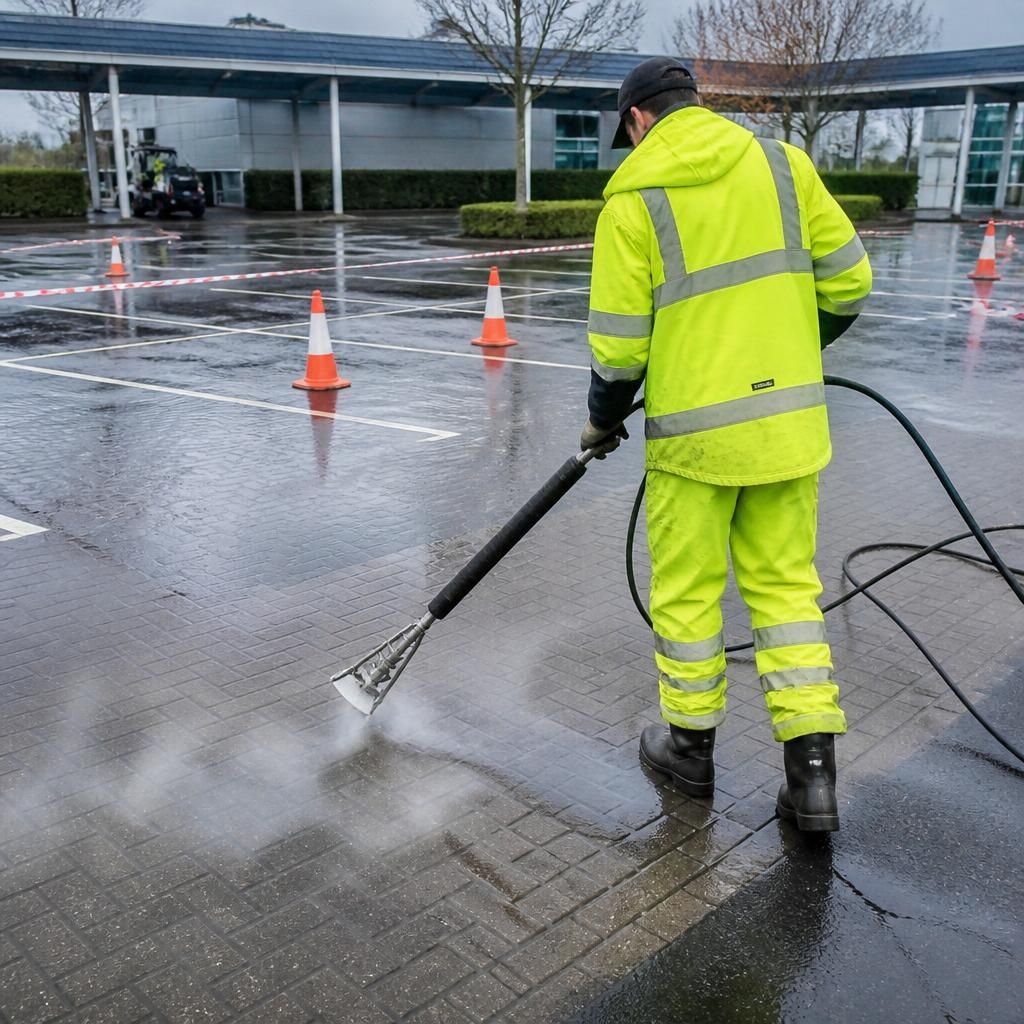
Safety during steam cleaning starts with controlling the work area before hot water and pressurised equipment are brought into use. Barriers, cones and clear signage separate operatives from vehicles, pedestrians and other contractors, while cleaning is completed in manageable sections where the car park remains operational.
The surface remains wet during and immediately after cleaning, and disturbed algae, oil residue or sludge can increase slip risk. Access restrictions stay in place until the area has been checked, excess water is controlled and loose debris has been removed. Hoses and equipment are also positioned to minimise trip hazards and prevent contact with vehicles, doors, electrical installations and drainage channels.