
What are the safety and environmental considerations when choosing steam cleaning for external surfaces?
Steam cleaning external surfaces uses high-temperature water vapour, so it should be carried out by trained operatives using suitable PPE, exclusion zones and controls for hot surfaces, hoses and equipment. Environmentally responsible work includes minimising water and chemical use, protecting drains and sensitive areas, and containing or disposing of contaminated runoff in line with site requirements and relevant regulations.
Choosing steam cleaning for external surfaces requires both operational safety controls and environmental management. The process uses high-temperature water, often under pressure, to loosen algae, oil, chewing gum, traffic film and other contaminants. A responsible contractor must therefore control the risks from heat, pressure, hoses, access equipment, traffic, contaminated runoff and energy use rather than treating steam cleaning as a risk-free alternative to conventional pressure washing.
Safety starts with a site-specific assessment. Before work begins, the contractor should inspect the surface, surrounding structures, drainage, access routes, pedestrian movements and vehicle movements. The method should reflect the condition and construction of the area. Concrete, block paving, joints, coatings, membranes and repaired sections can respond differently to heat and pressure. The assessment should identify fragile surfaces, trip hazards, overhead obstructions, restricted access, electrical equipment and any substances that could become hazardous when disturbed.
A suitable method statement should explain the equipment, operating controls, work sequence, access arrangements, emergency procedures and waste-water arrangements. For commercial sites, this information should be coordinated with the client’s own health and safety requirements, permit systems and traffic management plan. Work should be paused if conditions change, such as unexpected pedestrian access, damaged paving, inadequate drainage or the discovery of a hazardous substance.
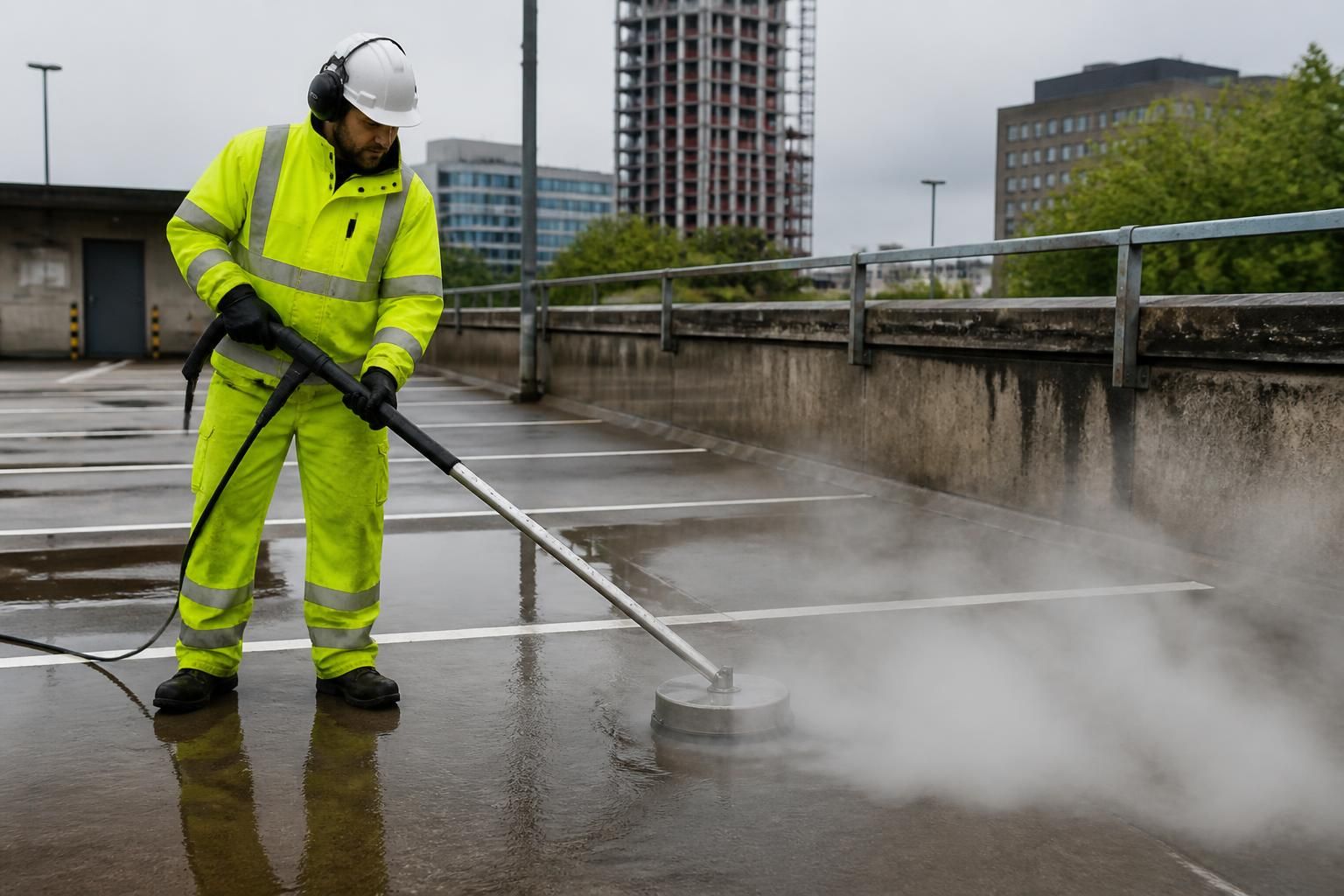
Heat and pressure need to be controlled by trained operatives. Steam and heated water can cause serious burns, particularly where the lance is directed towards a person, where hot water collects in joints or low points, or where equipment is handled immediately after use. Operatives should be trained in the equipment being used and should understand how temperature, flow and pressure affect different materials. They should never rely on pressure alone to remove contamination when a lower-pressure, controlled treatment will achieve the same result.
Appropriate personal protective equipment may include protective footwear with suitable slip resistance, gloves, eye or face protection, waterproof protective clothing and hearing protection where noise levels require it. PPE is an important final control, but it does not replace safe distances, guarding, supervision and good work planning. Hoses and power cables should be routed to reduce trip risks and protected from vehicle movements. Equipment should be checked before use, with defects dealt with before the machine is operated.
People and vehicles must be separated from the work area. Car parks, loading areas, pavements and shared access routes should be managed with clear exclusion zones, signs and barriers appropriate to the site. A banksman or other agreed control may be needed where vehicles are moving near hoses, plant or operatives. Cleaning should be scheduled to reduce conflict with deliveries, staff movements and public access, but timing alone is not a substitute for physical segregation. The area may remain wet or slippery after cleaning, so barriers and warning signs should stay in place until the surface is safe to use.
Particular care is needed around entrances, ramps, steps and changes in level. Steam cleaning can expose loose paving, failed joints or damaged concrete that was previously hidden by dirt and organic growth. These defects should be reported rather than assumed to have been caused by the cleaning. Any temporary coverings, hose ramps or barriers should themselves be stable and suitable for the expected pedestrian or vehicle traffic.
Drainage and electrical risks require early attention. Water should not be allowed to enter electrical equipment, sockets, plant controls, building openings or areas where it could create a shock risk. The contractor should identify where water will travel before cleaning starts and should avoid directing water towards occupied buildings or vulnerable installations. Temporary isolation or protection may be necessary where external electrical systems, lighting, charging points or other services are close to the work area.
Steam cleaning can reduce water and chemical demand compared with some pressure-washing methods, but it does not remove the need to manage wastewater. The cleaning process mobilises oil, fuel residues, metals, algae, silt, detergents and other contaminants. Allowing this material to flow untreated into a surface-water drain, watercourse, planted area or neighbouring property can cause pollution and may breach site rules or environmental requirements.
Runoff should be planned, contained and disposed of correctly. A competent contractor should confirm whether drains connect to foul, surface-water or combined systems and should use the site’s drainage information where available. Depending on the contamination and the site layout, controls may include drain covers, bunding, wet vacuums, silt control, temporary collection points, an interceptor or controlled discharge arrangements. Oil-contaminated water and collected sludge should not be treated as ordinary rainwater. It may need to be removed by an appropriately authorised waste carrier and handled in accordance with the applicable waste and environmental requirements.
Clients should ask how the contractor will deal with visible oil, chemical residues, heavy silt and other substances before work is authorised. If the source of contamination is still active, cleaning alone will not provide a lasting solution. Leaking vehicles, plant, storage areas or defective drainage may need to be addressed at the same time.
Environmental performance includes more than avoiding chemicals. Steam cleaning can be a lower-impact option where its heat loosens contamination without aggressive detergents or excessive mechanical pressure. It may also reduce the risk of surface damage and limit the amount of chemical residue left on paving. However, the environmental outcome depends on the full method: water volume, fuel or electricity used to generate heat, transport, noise, runoff controls, waste handling and any treatment chemicals.
A responsible method should use the lowest effective temperature, pressure, flow and chemical application for the surface and contamination. Chemicals should not be added routinely where steam and mechanical action are sufficient. If a treatment agent is necessary, the contractor should select a product suitable for the surface and drainage arrangements, follow its safety data and handling instructions, and prevent it from reaching plants, soil and watercourses. This includes considering detergents, biocides, degreasers and sealers used before or after cleaning.
Energy use should also be considered. Heated cleaning equipment requires fuel or electricity, and poorly maintained machines can waste energy, produce excess emissions or operate unreliably. Equipment should be maintained, used for an appropriate duty and not left running unnecessarily. Where the site has restrictions on fumes, noise or operating hours, these should be agreed in advance, particularly in enclosed car parks, covered loading areas and locations next to offices, housing, schools or healthcare premises.
Environmental protection extends to wildlife, planted areas and building fabric. Runoff, hot water and cleaning products should be kept away from ponds, watercourses, planted beds, tree pits and sensitive habitats. Hot water should not be discharged directly onto vegetation. Operatives should also avoid disturbing nesting areas or protected features and should report unexpected contamination, damaged drainage or suspected hazardous materials before proceeding.
When appointing a steam-cleaning contractor, check that they can provide:
- a site-specific risk assessment and method statement;
- evidence of suitable training, supervision and equipment maintenance;
- a clear plan for pedestrian, vehicle and public protection;
- details of temperature, pressure, water use and any chemicals proposed;
- a drainage, runoff containment and wastewater disposal procedure;
- appropriate insurance and arrangements for reporting incidents or damage;
- waste transfer or disposal records where contaminated water, sludge or other waste is removed; and
- confirmation that the work will comply with the site’s environmental, access and permit requirements.
For most commercial car parks, concrete areas and block-paved surfaces, the safest and most responsible approach is a controlled, low-chemical process supported by effective segregation and runoff management. Steam cleaning should be selected because it is suitable for the contamination and surface, not simply because it uses less visible pressure or water. A contractor that assesses the site properly, protects people and drainage, and documents the handling of contaminated waste will provide a safer service with a more defensible environmental outcome.
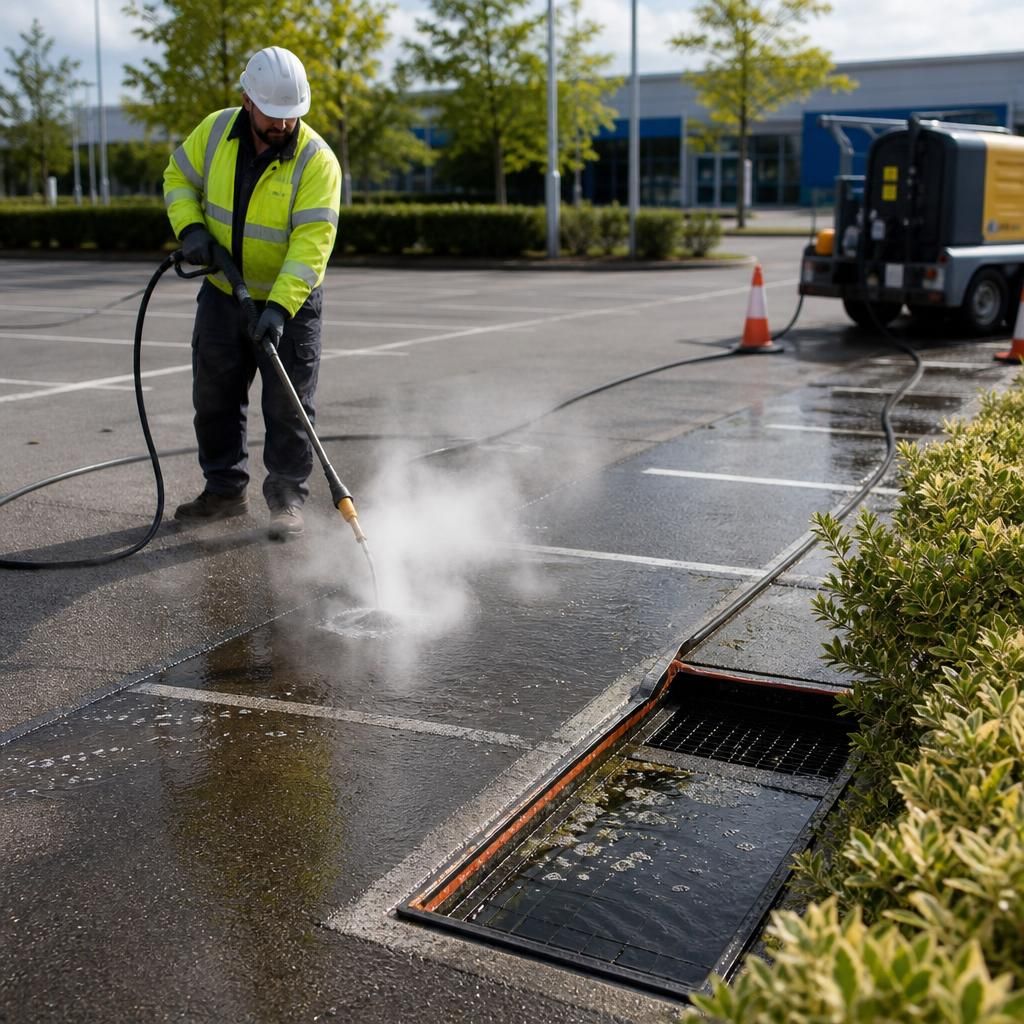
Runoff control is a central environmental consideration when steam cleaning external surfaces. Heat loosens oil, fuel residues, silt, algae and other contaminants, so the resulting wastewater must not be allowed to enter surface-water drains, planted areas or watercourses untreated.
Before work starts, the contractor should identify the drainage layout and agree how wastewater will be contained, collected and disposed of. Controls may include drain covers, bunding, wet vacuums and silt collection. Where contaminated water or sludge is removed from site, it should be handled through appropriate waste arrangements and supported by the relevant records.
Discuss Safe, Responsible Steam Cleaning for Your Site
Discuss your site’s safety, drainage and environmental requirements with Encanto Exterior Cleaning before steam cleaning begins. We can assess the area and recommend a controlled, compliant cleaning method for your car park, concrete or block paving.