
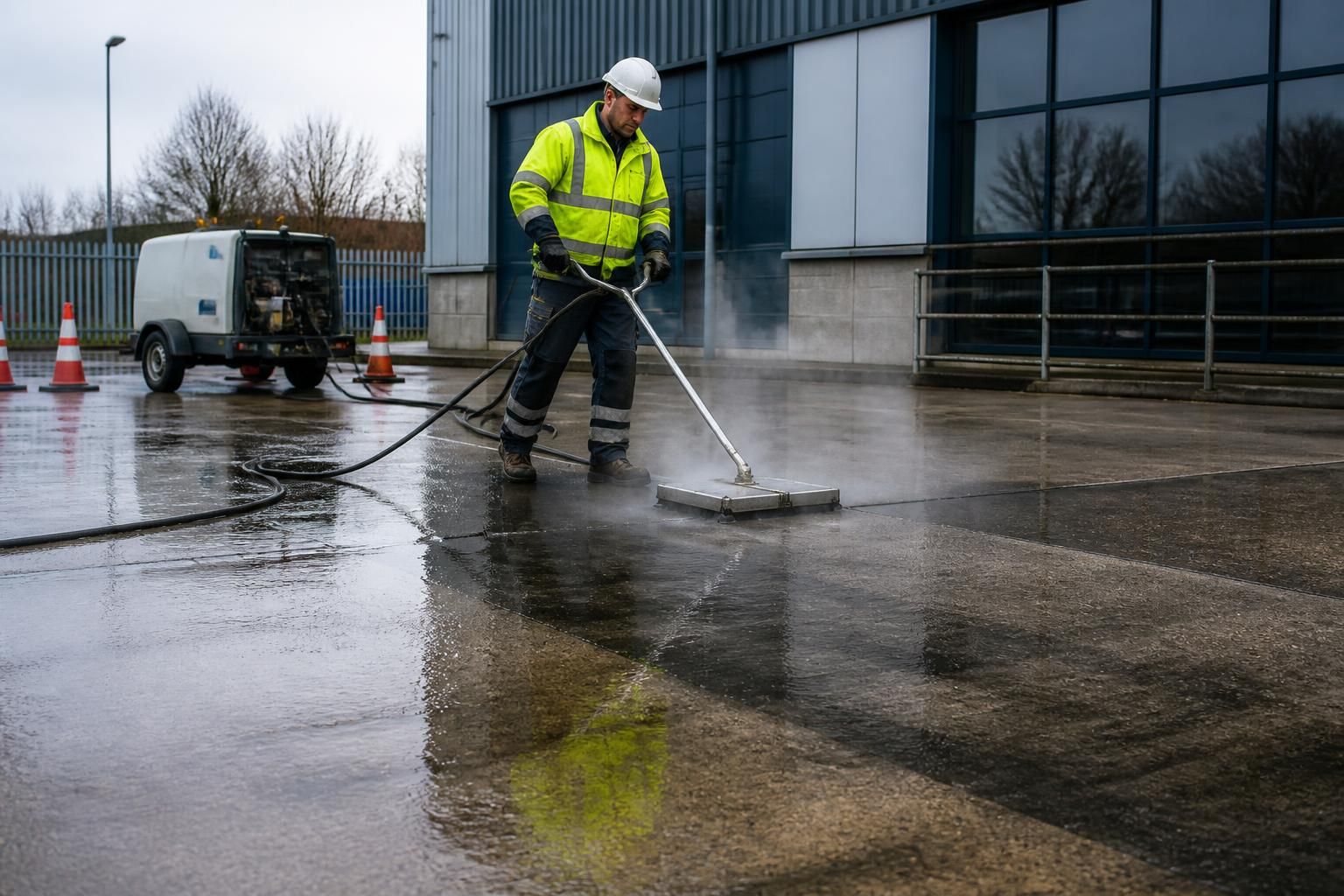
What are the cost implications and potential return on investment when opting for steam cleaning services for large exterior surfaces?
Steam cleaning costs for large exterior surfaces depend on the area, contamination, access requirements, surface condition and the treatment method used. The potential return on investment comes from extending surface life, reducing repair and replacement needs, improving site presentation and safety, and minimising disruption through planned maintenance.
The cost of steam cleaning large exterior surfaces is determined mainly by the total area, level and type of contamination, surface condition, access requirements, water and waste-handling arrangements, and the frequency of maintenance. The potential return on investment (ROI) is achieved when cleaning protects the surface, delays repairs or replacement, reduces safety risks, improves presentation and helps the site operate with less disruption.
Steam cleaning is therefore best assessed as a whole-life maintenance cost rather than as a standalone cleaning price. A low initial price may not represent good value if it leaves oil, organic growth or embedded contamination untreated. Conversely, a carefully specified steam cleaning programme can reduce the need for more extensive remedial work later.
What is included in the cost?
- Surface area and layout: Larger car parks, service yards, pedestrian areas and paved estates require more labour, water, fuel and equipment time. A complex layout with bays, kerbs, drainage channels, ramps and restricted sections generally takes longer than an open, unobstructed surface.
- Contamination: Light dirt and surface dust are usually more straightforward to remove than oil, grease, tyre marks, algae, moss, chewing gum, construction residue or long-established staining. Some contaminants require slower treatment, repeated passes or an appropriate cleaning agent alongside steam.
- Surface type and condition: Concrete, block paving, stone, tarmac and coated surfaces respond differently to heat and pressure. Loose blocks, failed jointing, cracked concrete and damaged coatings may need additional care or remedial work before cleaning can be completed safely.
- Access and site logistics: Costs can be affected by vehicle access, water availability, power requirements, working height, restricted operating hours, pedestrian management and the need to protect buildings, vehicles or nearby landscaping. Access equipment may be required where façades, walls or elevated sections form part of the project.
- Water recovery and waste controls: Run-off containing oil, silt or cleaning residues may need to be contained, recovered and disposed of responsibly rather than allowed to enter surface-water drainage. This can add preparation and equipment costs but is an important part of compliant commercial work.
- Preparation and reinstatement: Moving vehicles, isolating work areas, placing signage, protecting sensitive features, clearing debris and checking drainage can all form part of the project. If jointing sand has been displaced from block paving, replenishment may also be required.
- Programme and frequency: A planned maintenance visit may be more efficient than an emergency clean after contamination has become heavily embedded. Regular cleaning can also allow a contractor to work in smaller, manageable sections and coordinate with the site’s normal operating schedule.
How steam cleaning can create a return on investment
The most direct financial benefit is the protection of existing surfaces. Organic growth, oil, grime and other contaminants can retain moisture, contribute to slippery conditions and conceal defects. Removing them makes it easier to inspect the surface and identify cracked concrete, failed joints, damaged coatings, blocked drainage points or areas of settlement before these issues become more expensive.
On block paving, effective cleaning can help maintain the appearance and usability of the paved area while providing an opportunity to assess jointing and individual damaged blocks. On concrete, removing oil and organic contamination can support safer use and reduce the visual deterioration associated with neglected hardstanding. On car parks and service yards, this can contribute to a more professional environment for staff, visitors, tenants and deliveries.
Steam cleaning may also help delay resurfacing or replacement where the underlying surface remains sound. It cannot reverse structural failure, widespread cracking, subsidence or a failed coating, but it can remove contamination that would otherwise make a surface appear beyond economical maintenance. The resulting value comes from preserving serviceable assets for longer, not from treating cleaning as a substitute for repairs.
There can be operational savings as well. A planned clean can be scheduled around occupancy, deliveries and traffic flows, reducing the likelihood of an unplanned closure. Targeted steam cleaning may also avoid more disruptive methods where heat and controlled pressure can deal with the contamination without aggressive abrasion. The appropriate method depends on the material and condition of the surface, so the specification should be based on a site assessment rather than on the cleaning equipment alone.
Presentation, safety and occupier value
Clean external areas affect how a commercial property is perceived and maintained. Clear markings, cleaner paving, presentable entrances and reduced staining can support the appearance of managed estates, retail areas, offices, industrial premises and public facilities. For property managers, this may help meet landlord, tenant or facilities-management standards. For construction and development sites, cleaning can form part of the preparation required before handover or occupation.
Safety-related value should be considered separately from visual improvement. Algae, moss, grease and oil can increase slip risk, particularly in shaded or wet areas. Steam cleaning can remove these contaminants, but it does not correct poor falls, standing water, damaged paving or inadequate drainage. A responsible cleaning programme should therefore include observations about defects that require attention outside the cleaning scope.
How to compare the cost with the likely return
- Define the asset being protected. Record the surface type, approximate area, age, condition and intended use. Consider whether the area supports vehicle movements, pedestrian traffic, deliveries, tenant access or public use.
- Identify the current problem. Separate routine dirt from oil, organic growth, staining, construction residue and defects. The more accurately the contamination is described, the more reliable the proposed method and budget will be.
- Consider the cost of delay. Review the likely consequences of leaving the surface untreated, including increased slip risk, complaints, poor presentation, blocked drainage, contamination spread or the need for more extensive cleaning and repairs later.
- Compare cleaning with the alternatives. Consider whether conventional pressure washing, chemical treatment, mechanical cleaning, spot treatment or a combined approach is suitable. The best-value method is the one that achieves the required result while protecting the substrate and meeting environmental controls.
- Include the full project cost. Allow for access, traffic management, preparation, water, waste recovery, out-of-hours working, repairs to joints and any follow-up treatment. Comparing headline cleaning rates alone can give a misleading result.
- Set a maintenance interval. Use the site’s exposure, footfall, vehicle use, shade, drainage and contamination sources to determine when cleaning should be repeated. Intervals should be reviewed after the first planned service rather than fixed without considering actual site conditions.
A simple business assessment can compare the cost of planned steam cleaning with the expected cost of postponed maintenance, additional remedial cleaning, surface repairs, operational disruption and potential complaints or incidents. Exact savings cannot be guaranteed because they depend on the condition and use of each site. A contractor should avoid promising a fixed payback period without inspecting the surfaces and understanding the client’s maintenance records.
What should be requested in a quotation?
For large exterior surfaces, a useful quotation should identify the areas to be cleaned, the proposed steam or combined treatment, the expected preparation, access arrangements, water and waste controls, exclusions, working hours and any recommendations for repairs or follow-up maintenance. It should also make clear whether the price covers only cleaning or includes jointing, stain treatment, re-sanding, traffic management and reinstatement.
Where contamination is extensive or the surface is particularly sensitive, a test area can help confirm the expected result and identify any risk of colour variation, joint loss, coating damage or staining that cannot be fully removed. Photographs, site plans and maintenance records can support accurate planning, but an on-site assessment is preferable for large or complex projects.
For Birmingham, the wider West Midlands and national commercial sites, the most defensible investment decision is to combine a clear cleaning specification with a condition assessment and a practical maintenance plan. Steam cleaning is likely to provide the strongest return where it protects a substantial, heavily used or client-facing surface, where contamination is affecting safety or presentation, and where early treatment can prevent a more disruptive intervention. It provides less value when the underlying surface has reached the end of its serviceable life or when structural defects are mistaken for a cleaning problem.
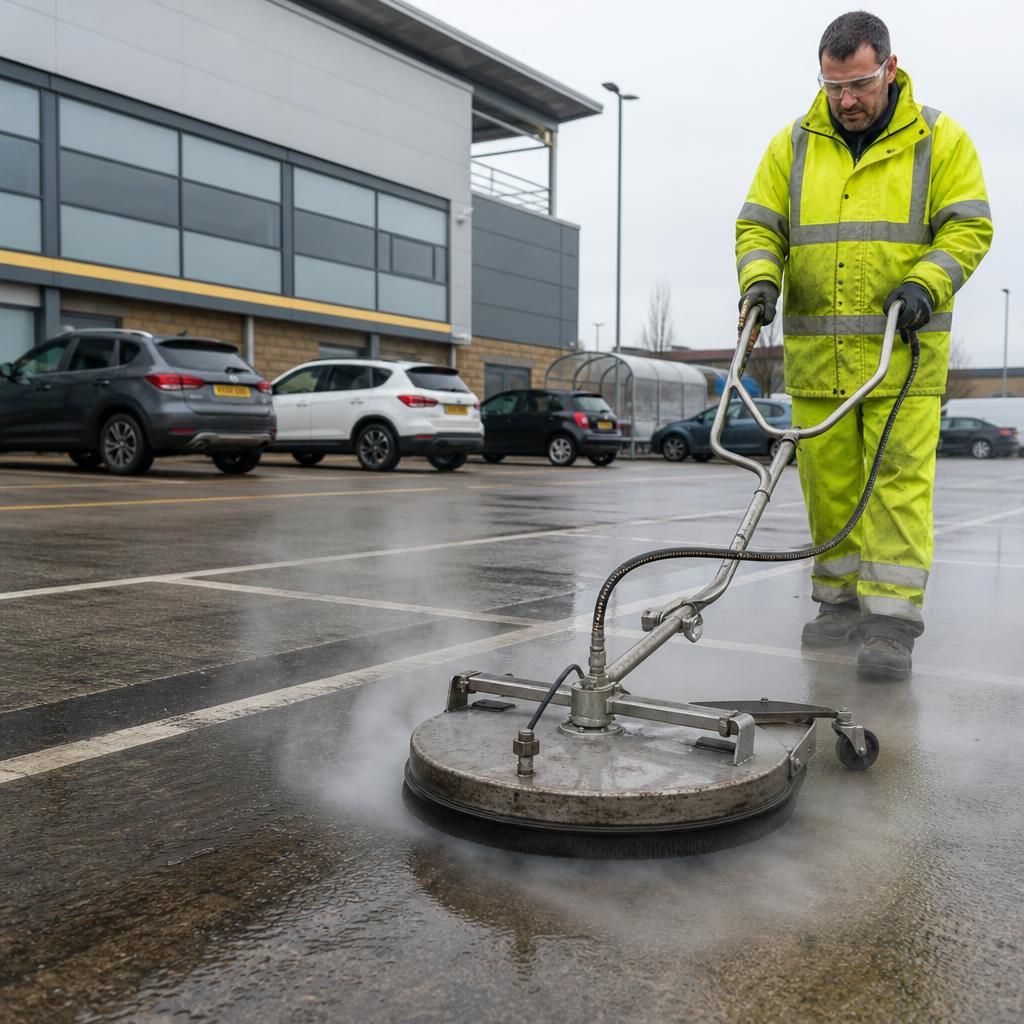
The return on investment from steam cleaning large exterior surfaces comes from protecting usable assets and reducing the likelihood of more disruptive maintenance. Removing oil, algae, moss and embedded grime can help preserve concrete, block paving and other hard surfaces while making defects easier to identify.
When assessing value, compare the cleaning cost with the potential cost of leaving contamination untreated. This should include additional remedial cleaning, joint or surface repairs, restricted access, complaints, safety concerns and premature resurfacing. Steam cleaning is not a substitute for repairing cracking, subsidence, failed drainage or damaged coatings, but planned treatment can help prevent a sound surface from deteriorating unnecessarily.
A reliable assessment should include access, preparation, water recovery, waste handling and any reinstatement in the quotation. For busy car parks, service yards and managed estates, scheduling the work around normal operations can also reduce disruption and make planned maintenance more predictable.
Discuss Your Steam Cleaning Costs and ROI
Discuss your steam cleaning requirements with our team to review the likely costs, access arrangements and potential return on investment for your site. We can help you plan a suitable cleaning specification and maintenance schedule for large car parks, concrete areas and block paving.