
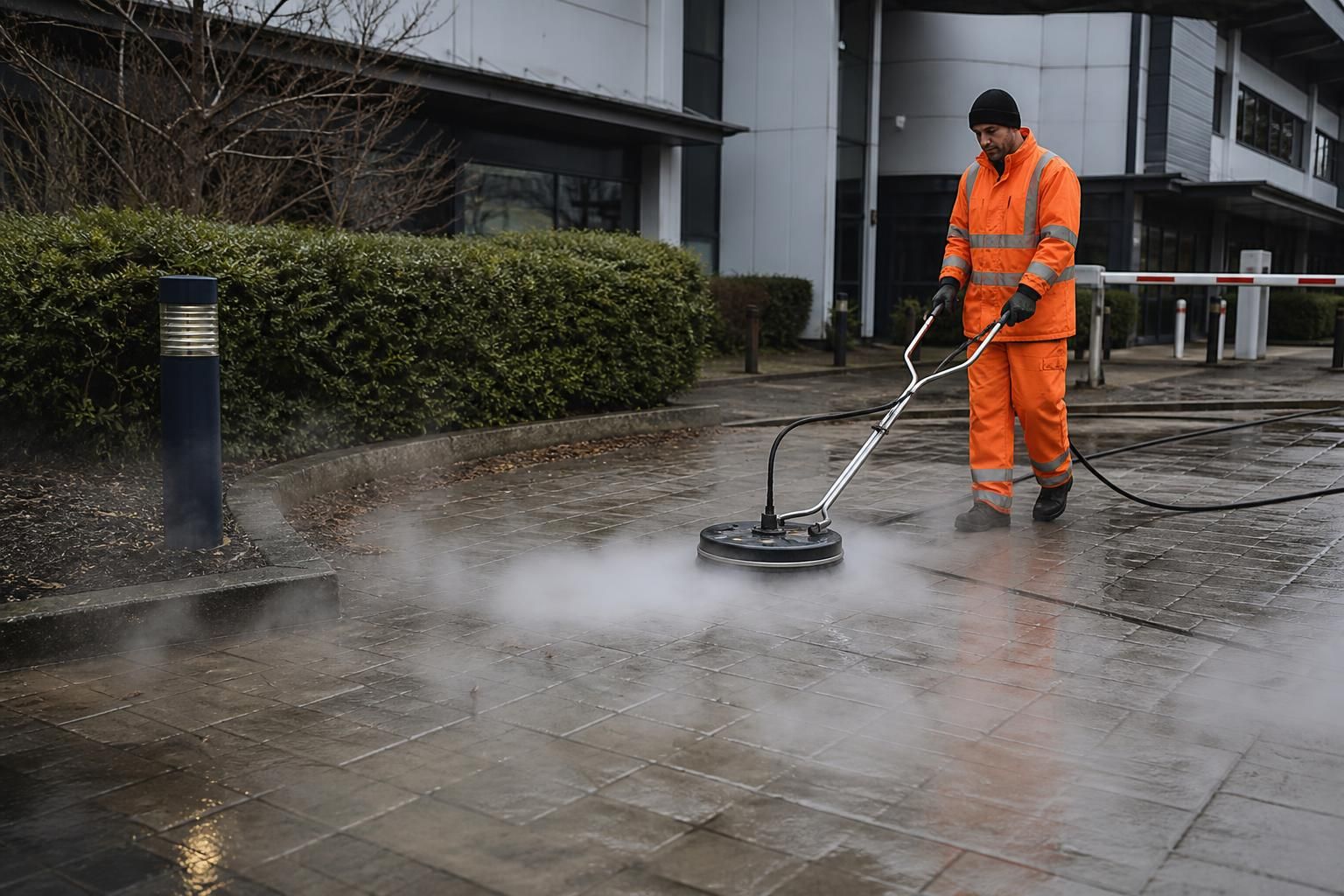
What are the benefits of using steam cleaning over traditional pressure washing?
Steam cleaning uses high-temperature steam with controlled pressure to loosen algae, oil, dirt and other contaminants while placing less mechanical force on concrete, block paving and other hard surfaces. Compared with traditional pressure washing, it can provide a deeper clean with less water, reduced risk of surface damage and better control around joints, coatings and vulnerable areas.
Steam cleaning can offer a safer, more controlled and more water-efficient alternative to traditional pressure washing for car parks, concrete, block paving and other hard external surfaces. It uses high-temperature steam to soften and break down contaminants, while applying less mechanical force than high-pressure water alone. This can produce a thorough clean while reducing the risk of eroding the surface, disturbing joints or forcing water into vulnerable areas.
Traditional pressure washing relies primarily on the impact of a concentrated water jet. This is effective for removing loose dirt, mud and surface debris, but excessive pressure or an unsuitable nozzle can damage the substrate. Steam cleaning combines heat with controlled pressure, so the cleaning process is less dependent on force. The appropriate method still depends on the material, its condition and the type of contamination present.
Key benefits of steam cleaning include:
- Reduced risk of surface damage: Lower mechanical impact can help protect aged concrete, block paving, surface coatings and vulnerable edges. It also reduces the likelihood of stripping away the surface layer of concrete or displacing jointing material.
- More effective treatment of organic growth: Heat helps loosen algae, moss, lichen and other organic deposits. It can clean into textured areas and paving profiles where cold water pressure may remove only the visible surface contamination.
- Improved removal of oily contamination: Heat softens grease, oil and similar residues, making them easier to lift from porous concrete and paving. This is particularly useful in car parks, service yards, loading areas and places where vehicle fluids have accumulated.
- Lower water use in many applications: Steam systems generally use a lower flow of water than conventional high-volume pressure washing. This can reduce run-off and the amount of water requiring collection, although actual consumption depends on the equipment, surface area and level of soiling.
- Better control around joints and edges: A controlled steam application can be used more carefully around paving joints, drainage channels, kerbs, wall bases and other details. This helps reduce the chance of washing out jointing sand or driving contamination into adjacent areas.
- Less splash and overspray: Steam can create less aggressive spray than a high-pressure water jet. This is useful around entrances, parked vehicles, pedestrian routes, signage and nearby façades, although suitable protection and exclusion zones are still required.
- Reduced need for aggressive chemical treatment: Heat can help loosen deposits without relying solely on strong cleaning chemicals. Chemical use may still be appropriate for specific stains, but reducing unnecessary treatment can benefit the surface, surrounding landscaping and waste-management process.
Steam is especially useful where the surface is dirty but must be preserved. Older concrete and block paving can have weakened edges, open joints, previous repairs or existing wear that would be made worse by excessive pressure. Steam cleaning allows the operator to adjust temperature, pressure, nozzle distance and working speed to suit the condition of the area rather than applying the same force everywhere.
The difference is also important when cleaning contaminated surfaces. Pressure washing may spread softened oil, algae or dirty water across a wider area if the run-off is not controlled. With steam cleaning, the operator can work progressively, lift the loosened residue and manage the resulting wastewater appropriately. On commercial sites, this helps maintain cleaner working conditions and supports responsible control of contaminated run-off. Drainage arrangements, local site rules and the nature of the waste must always be considered before work begins.
Steam cleaning can support longer-term surface maintenance because it removes contamination with less unnecessary abrasion. Algae, moss, oil and embedded dirt can retain moisture and contribute to staining, slippery conditions or accelerated deterioration. Removing these deposits helps the surface remain easier to inspect and maintain. It does not repair cracked concrete, failed drainage, subsidence or damaged paving, so any underlying defects should be addressed separately.
There are limits to the method. Steam is not automatically suitable for every material or every stain. Excessive heat may affect some sealants, coatings, painted markings, plastics or sensitive finishes. Very heavy deposits may require preliminary scraping, suction, an appropriate detergent or a carefully selected pressure-washing stage. Efflorescence, rust staining, deep oil penetration and damaged surfaces may also need a more specific treatment plan. A test area should be completed where the material, coating or condition is uncertain.
Although steam cleaning uses less force, it is not risk-free. The equipment produces very hot water and vapour, so trained operatives need to control access, protect people and vehicles, assess slip hazards and use suitable personal protective equipment. Work should be planned around pedestrians, traffic, electrical equipment, drainage and neighbouring surfaces. Any loosened contamination must be managed rather than simply allowed to enter surface-water drainage.
For car parks, concrete and block paving, the most suitable approach is often determined by a site survey rather than by choosing steam or pressure washing in isolation. The assessment should consider the substrate, surface age, jointing, coatings, drainage, type of contamination, access requirements and the expected finish. In some cases, steam cleaning is used as the primary method; in others, it is combined with controlled pressure, mechanical agitation or spot treatment for stubborn areas.
Overall, steam cleaning is preferable to traditional pressure washing when the priority is to remove difficult contamination while limiting water use and mechanical stress. It provides greater control over heat and pressure, can improve the treatment of organic growth and oil, and is well suited to maintaining high-use commercial surfaces where appearance, safety and surface preservation all matter.
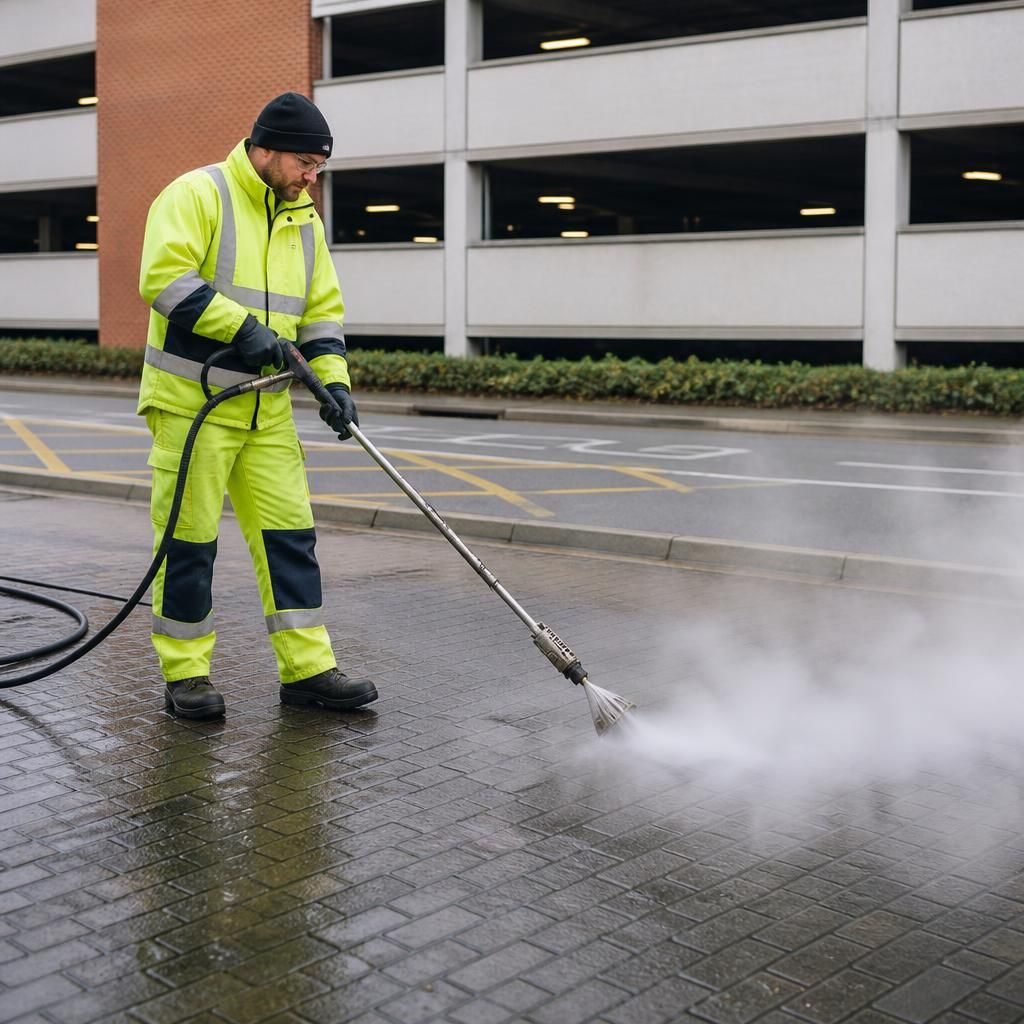
Steam cleaning uses high-temperature vapour and controlled pressure to loosen contamination with less mechanical force than traditional pressure washing. This can help protect older concrete, block paving, surface coatings and jointing material from unnecessary erosion or displacement.
Heat is particularly useful for softening oil, grease, algae, moss and embedded dirt, allowing these deposits to be lifted more effectively while using less water in many applications. The operator can also work more carefully around kerbs, drainage channels, paving joints, entrances and other vulnerable details, helping to reduce splash, overspray and contaminated run-off. The equipment settings should always be selected according to the surface condition, coating and type of soiling.
Arrange a Steam Cleaning Assessment for Your Site
Arrange a steam cleaning assessment for your car park, concrete or block paving to identify the most suitable cleaning method for the surface and contamination present. Contact Encanto Exterior Cleaning to discuss site access, drainage and any areas requiring particular care.