
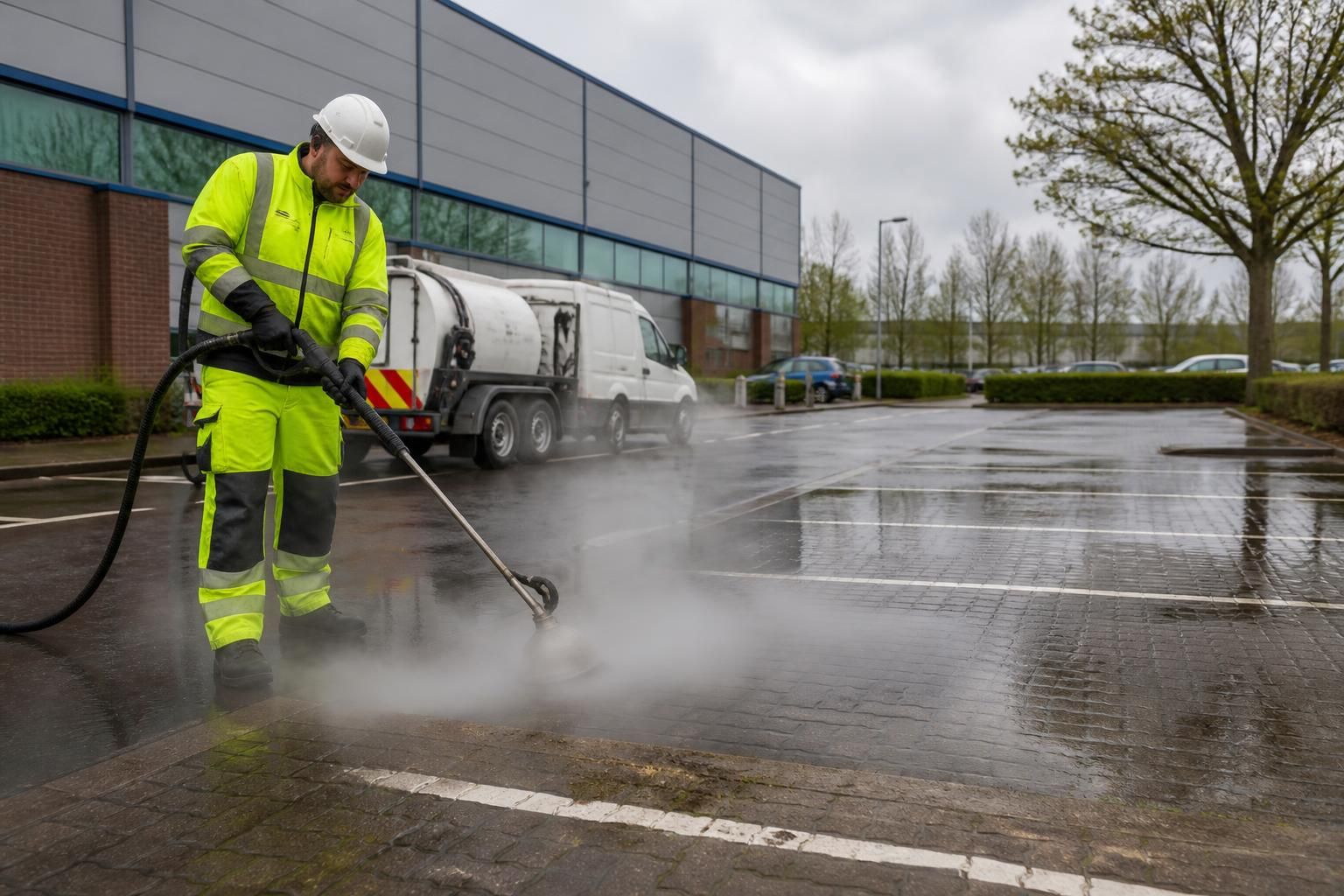
How often should steam cleaning be performed on car parks, concrete, and block paving to maintain their condition?
Steam cleaning is typically scheduled annually for car parks, concrete and block paving, with more frequent treatment where surfaces experience heavy traffic, oil contamination, algae or persistent organic growth. The right interval depends on surface condition, usage, drainage and appearance, so inspections can be used to plan cleaning before staining and growth become established.
For most car parks, concrete areas and block paving, professional steam cleaning is appropriate as part of an annual maintenance programme. Surfaces exposed to heavy vehicle use, oil contamination, poor drainage, shaded conditions, algae or persistent organic growth may need cleaning more frequently, while lightly used and well-maintained areas may only require treatment when inspections identify a clear need.
The correct interval is determined by the condition and use of the surface rather than by a fixed timetable. A site inspection should consider traffic levels, the types of vehicles using the area, staining, surface porosity, drainage, surrounding vegetation and the standard of appearance required. Cleaning can then be scheduled before contamination becomes established and more difficult to remove.
Typical maintenance considerations include:
- Car parks with regular vehicle movements: annual steam cleaning can help control road film, tyre deposits, oil residues and general grime. Areas used by delivery vehicles, plant or commercial fleets may need additional spot treatment or a shorter interval between full cleans.
- Concrete service yards and loading areas: these often require closer monitoring because oil, hydraulic fluid, food waste, mud and construction residue can become embedded in the surface. Targeted cleaning may be needed between planned site-wide treatments.
- Block paving: joints and textured surfaces can retain soil, leaf debris and organic growth. Annual cleaning is often suitable, but shaded or damp paving may need more regular attention to prevent algae and moss from spreading.
- Low-use or sheltered areas: these may remain presentable for longer, particularly where drainage is effective and routine sweeping removes loose contamination. They should still be inspected because limited traffic does not prevent organic growth or staining.
Steam cleaning is most effective when used as preventative maintenance rather than only after a surface has become heavily stained. Regular treatment removes contamination before it penetrates further, reduces the build-up of algae and organic matter, and helps maintain a consistent appearance across a larger site. It can also make subsequent cleaning more straightforward, although it will not correct physical defects such as cracked concrete, failed joints, settlement or damaged paving blocks.
Weather and seasonal conditions should be included in the schedule. Organic growth is more likely to develop where surfaces remain damp, shaded or poorly ventilated. Leaf fall can add staining and blocked drainage can leave deposits in low areas. Cleaning during a suitable period, with enough time for the surface to dry and the area to be safely returned to use, generally produces a more reliable result than waiting until contamination is severe.
Signs that cleaning is due include:
- visible darkening, traffic film or ingrained dirt across driving and pedestrian routes;
- oil or fuel marks around parking bays, loading points and plant access areas;
- green algae, moss or other organic growth on paving, kerbs and shaded concrete;
- slippery deposits, especially where water collects or drainage is restricted;
- uneven appearance between heavily used and lightly used sections; and
- staining that remains after routine sweeping or basic maintenance.
Where safety is a concern, the cleaning interval should be brought forward. Oil deposits, algae and wet organic growth can affect traction for pedestrians and vehicles. A planned programme allows contaminated areas to be identified and treated before they become a more significant slip or surface-maintenance issue. Steam cleaning should be carried out with appropriate controls for vehicle movements, pedestrians, drainage and the collection or management of contaminated run-off.
It is also useful to separate routine cleaning from reactive cleaning. Routine cleaning covers the agreed maintenance cycle for the whole area. Reactive work addresses isolated oil spills, graffiti, construction dirt or newly identified organic growth without waiting for the next scheduled visit. This approach can prevent a localised problem from becoming widespread and may avoid the need for more intensive restoration.
After each service, the surface should be assessed for remaining stains, damaged joints, standing water and areas where contamination is returning quickly. If the same locations repeatedly become dirty, the underlying cause may be inadequate drainage, leaking vehicles, overhanging vegetation or a maintenance defect rather than an insufficient cleaning method. Resolving that cause can extend the effective interval between steam cleaning visits.
For commercial and industrial sites, the most practical arrangement is usually an initial condition assessment followed by an annual planned clean and periodic inspections. The programme can then be adjusted according to actual surface performance, usage and risk. This provides better control than applying the same frequency to every car park, concrete area and block-paved section on the site.
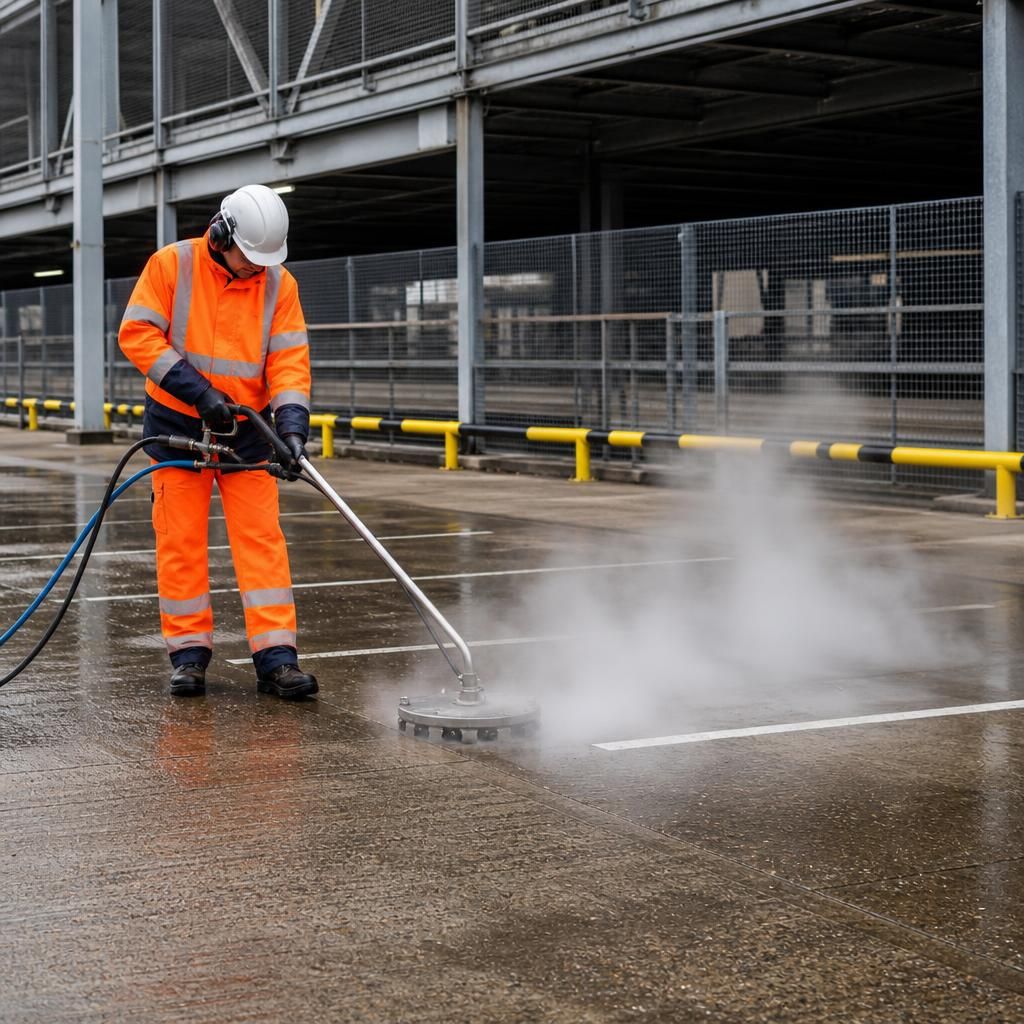
For most commercial car parks, concrete areas and block paving, an annual steam clean is a practical maintenance interval. Surfaces exposed to heavy traffic, oil, poor drainage, shade or persistent algae may need more frequent inspections and targeted treatment, while lightly used areas can often be cleaned less often.
The schedule should be adjusted according to surface condition rather than a fixed date. Treating oil deposits, slippery organic growth and ingrained dirt before they become established helps preserve appearance, reduce maintenance risks and prevent isolated contamination from spreading across the site.
Plan Your Car Park and Paving Steam Cleaning Schedule
Arrange a site assessment with Encanto Exterior Cleaning to establish the right steam cleaning interval for your car park, concrete and block paving. We can identify contamination, drainage and surface risks, then recommend a practical planned maintenance schedule.