
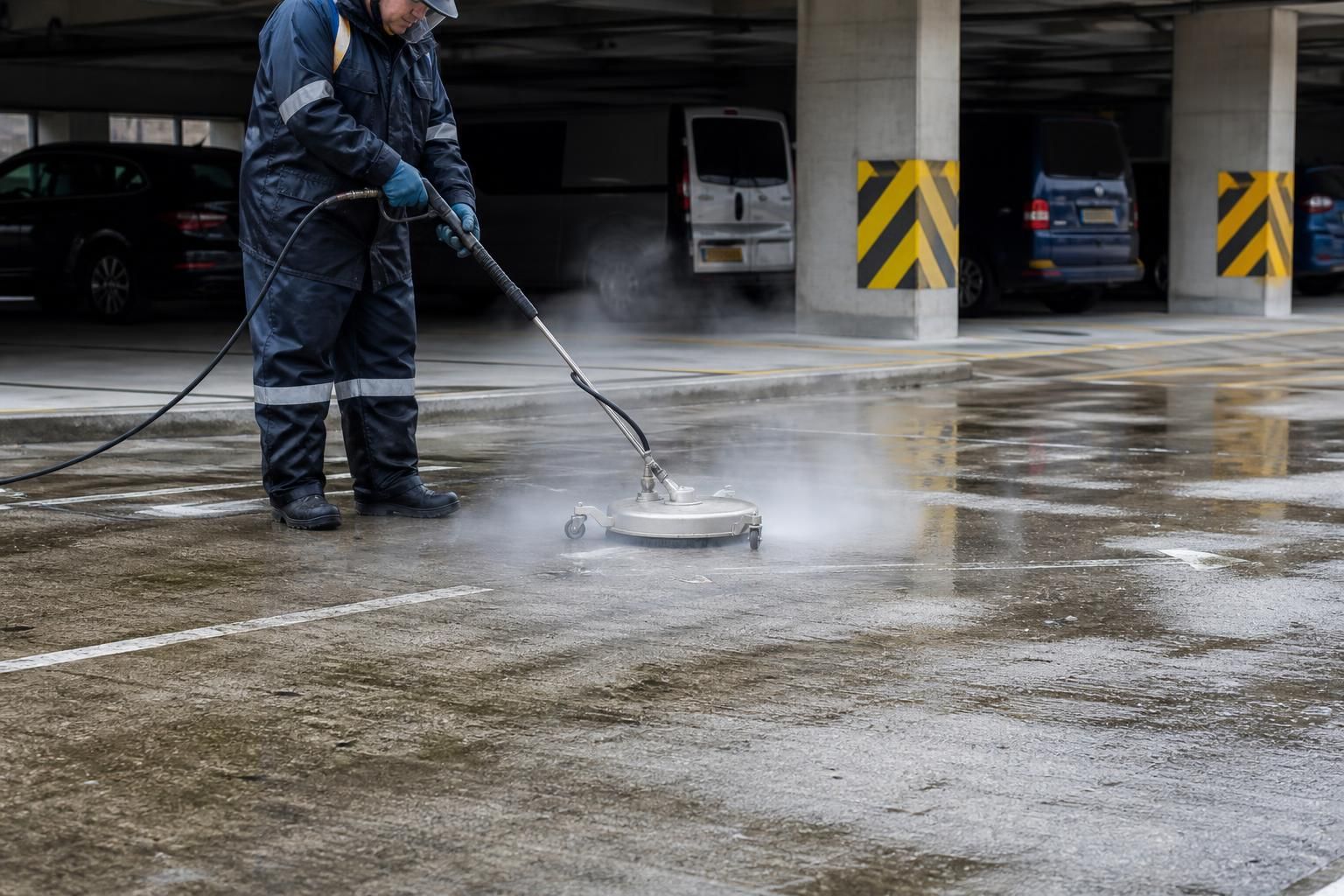
How does the temperature and pressure of steam cleaning influence its effectiveness on different hard surfaces?
Steam cleaning effectiveness depends on balancing high temperature with controlled pressure: heat softens oils, grime, algae and biological residues, while pressure lifts the loosened contamination from the surface. Concrete and block paving generally tolerate more pressure than delicate brickwork, painted surfaces, cladding or jointed paving, which require lower pressure and carefully controlled steam to prevent etching, damage or displaced jointing material.
Steam cleaning is most effective when temperature and pressure are balanced for the material being cleaned. Heat softens oils, traffic film, algae, moss, chewing gum and other residues, while controlled pressure separates the loosened contamination from the surface. Higher pressure is not automatically better: concrete and some block paving can usually withstand more mechanical action, whereas brickwork, jointed paving, painted coatings and cladding need lower pressure and more careful temperature control to avoid etching, surface erosion, coating damage or displaced jointing material.
How temperature affects cleaning performance
Temperature determines how quickly a contaminant softens and how effectively it can be removed. Heat is particularly useful for oily deposits, diesel residue, grease, chewing gum and organic films that may remain bonded when treated with cold water. It also helps break down the protective films produced by algae, moss and other biological growth, allowing the residue to be lifted rather than simply spread across the surface.
Steam or very hot water can also reduce the need for chemical treatment. This is valuable on car parks, pedestrian areas and commercial premises where chemical use, runoff and residue must be carefully controlled. However, temperature alone does not remove every contaminant. Mineral deposits, rust staining, cement residues and some deeply absorbed marks may require a separate treatment selected for the specific surface and contaminant.
Excessive heat can be harmful. Sudden temperature changes may stress some stone, coatings or older materials, particularly where there are existing cracks, delamination, weak repairs or trapped moisture. The operator therefore assesses the condition of the surface and introduces heat progressively rather than applying maximum heat indiscriminately.
How pressure affects cleaning performance
Pressure supplies the mechanical force needed to lift softened contamination. Its effect depends not only on the machine setting but also on the nozzle type, spray pattern, distance from the surface, angle of application and the operator’s speed. A narrow jet concentrates force over a small area, while a wider fan distributes it more gently. Holding a nozzle too close or moving too slowly can cause damage even when the machine pressure appears suitable.
Controlled pressure is generally preferable to aggressive pressure on hard surfaces. Excessive force can remove the surface layer of concrete, expose aggregate, erode soft brick faces, mark natural stone, strip protective coatings and wash jointing sand from block paving. It can also drive water into cracks, joints and façade details, increasing the risk of damp-related problems or dislodged materials.
Concrete and car park surfaces
Sound, well-cured concrete is comparatively robust and can normally receive a more forceful cleaning approach than delicate masonry. Heat helps loosen oil, rubber marks, food residues, algae and general traffic film, while pressure removes the softened contamination from the textured surface. Even on concrete, the setting must be adjusted for age, surface finish and condition.
Older or weathered concrete may have a weakened surface layer known as laitance or may already be suffering from scaling, spalling or exposed aggregate. High pressure can worsen those defects and leave visible cleaning lines. A consistent nozzle movement, suitable stand-off distance and overlapping passes help produce an even finish. Oil that has penetrated deeply may lighten rather than disappear completely, especially where it has been present for a long period.
Car park cleaning also requires attention to drainage. Hot contaminated water should be controlled, collected or directed in accordance with the site’s drainage arrangements. Cleaning around expansion joints, painted bay markings, inspection covers and damaged areas requires reduced force and additional care.
Block paving and jointed surfaces
Block paving usually responds well to heat because it can loosen algae, moss, soil, oil and general vehicle deposits without relying solely on aggressive pressure. The main risk is not normally damage to the individual block but disturbance of the joints. Excessive pressure can remove jointing sand, widen gaps or undermine edge restraints, allowing blocks to move and encouraging further weed growth.
The cleaning approach should therefore reflect the block type, joint condition and laying pattern. Weaker or already open joints need lower pressure and a wider spray pattern. After cleaning, the surface may require suitable jointing material to be reinstated once the paving is sufficiently clean and dry. This is a maintenance requirement rather than an optional cosmetic treatment, because stable joints help preserve the paved area.
Brickwork, façades and masonry
Brick and masonry vary considerably in hardness, porosity and condition. Hard engineering brick may tolerate more pressure than soft, handmade or weathered brick, but a high-pressure jet can still erode the face, remove mortar and force water into the wall. Heat is useful for organic growth and greasy deposits, but it should be paired with a gentle spray and a methodical test area.
Mortar joints are often more vulnerable than the bricks themselves. Cleaning directly into joints, cracks or open defects can remove friable material and increase water penetration. The operator works at an appropriate angle and avoids concentrating the jet on vulnerable details. Painted masonry, render and façade coatings require even more conservative settings because the coating may lift or become visibly marked before the underlying substrate appears damaged.
Natural stone and decorative paving
Natural stone cannot be treated as a single material. Granite, sandstone, limestone, slate and manufactured stone have different levels of hardness, porosity and sensitivity to heat, pressure and chemicals. Heat can be effective against organic growth and surface grime, but pressure must be selected according to the stone’s condition and finish.
Soft or porous stone may suffer from surface loss, pitting or a change in appearance if cleaned too aggressively. Polished or honed finishes can be dulled by unsuitable equipment or technique. A small test area helps establish whether the chosen temperature, pressure and cleaning pattern are appropriate before treating the full area.
Cladding, painted metal and coated surfaces
Metal cladding and painted or powder-coated surfaces generally need lower pressure than concrete. Heat can loosen atmospheric grime, bird fouling, grease and biological residue, but excessive temperature may soften, blister or discolour a coating, particularly where it is already degraded. Pressure can force water behind laps, seals and joints or damage fragile finishes.
These surfaces are normally cleaned with a wider spray pattern, greater stand-off distance and careful control around seals, vents, signage and service penetrations. The objective is to remove contamination without breaking the coating or driving water into the building envelope. Any existing chalking, flaking or corrosion should be identified before cleaning, as washing cannot correct an underlying coating failure.
Finding the correct balance on site
A professional steam-cleaning assessment considers the substrate, contamination, age, previous repairs, drainage, nearby occupants and the consequences of surface disturbance. The operator then adjusts several variables rather than relying on one machine setting:
- Temperature: increased where heat will soften grease, chewing gum or biological films, and reduced where the finish or substrate may be heat-sensitive.
- Pressure: set high enough to remove loosened contamination but low enough to protect the surface, joints and coatings.
- Nozzle and spray pattern: selected to spread or concentrate the cleaning action appropriately.
- Distance and movement: maintained consistently to prevent streaking, gouging or localised over-cleaning.
- Dwell time: controlled so the heat can work without leaving the material saturated or exposing it to unnecessary thermal stress.
- Test cleaning: carried out in an inconspicuous area to confirm the finish, runoff and cleaning result before the main work begins.
Steam cleaning therefore works best as a controlled process rather than a maximum-power treatment. On robust concrete, a combination of higher heat and carefully managed pressure may remove heavy traffic and oil-related contamination efficiently. On brick, stone, coated surfaces and jointed paving, the same result is usually achieved through greater reliance on heat, slower working, wider spray patterns and reduced mechanical force.
Where a surface has pre-existing damage, deep staining, loose coatings or unstable joints, cleaning should be planned around those limitations. This protects the substrate and produces a more consistent, maintainable result than increasing pressure to compensate for an unsuitable method.
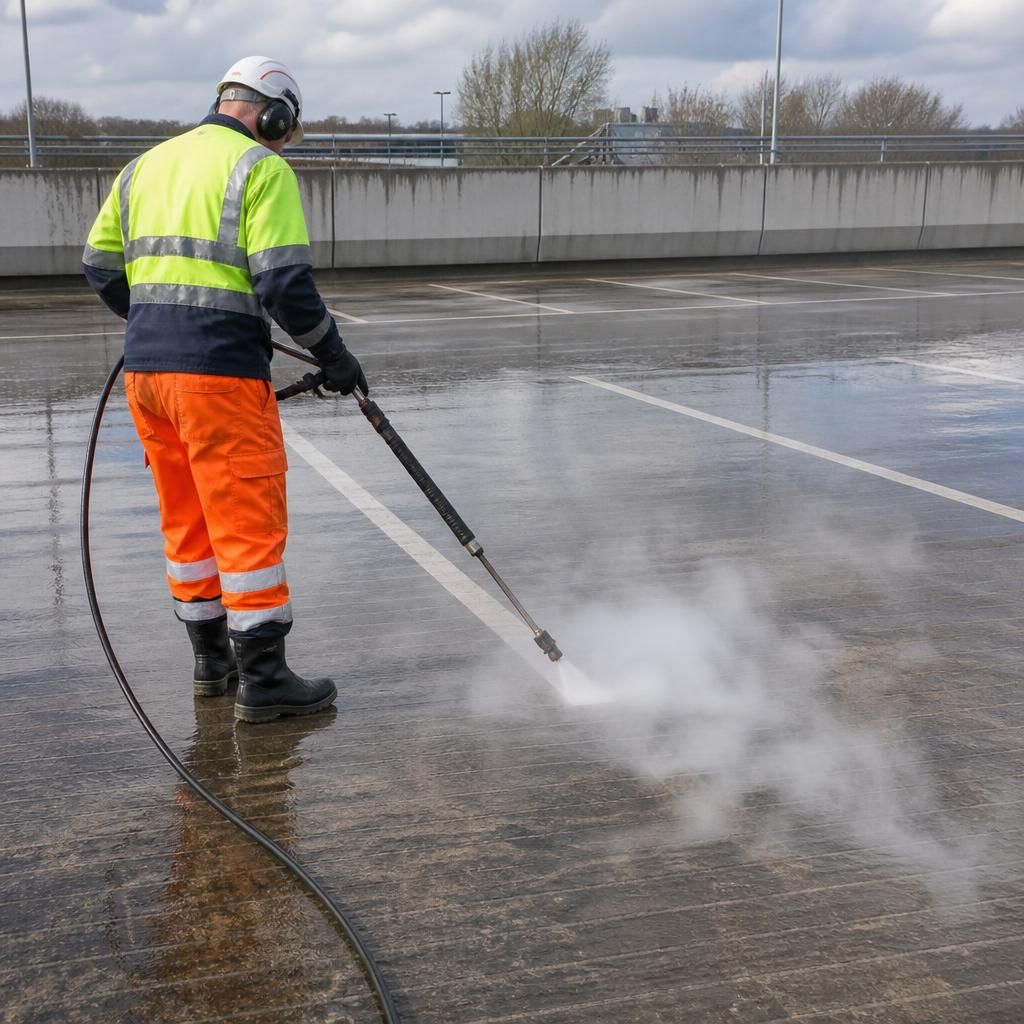
Steam cleaning is most effective when temperature and pressure are adjusted to suit the surface rather than applied at maximum power. Heat softens grease, oil, algae and traffic film, while controlled pressure lifts the loosened residue without unnecessarily eroding concrete, disturbing block-paving joints or damaging coatings.
Before cleaning the full area, a small test section helps confirm the correct settings. Concrete may tolerate more pressure, whereas brickwork, natural stone, painted cladding and weathered surfaces usually require a wider spray pattern, greater working distance and gentler application. This approach also identifies loose jointing, weak coatings and existing defects before they are affected by the cleaning process.
Arrange a Steam Cleaning Assessment for Your Hard Surface
Arrange a steam cleaning assessment with Encanto Exterior Cleaning to confirm the right temperature, pressure and cleaning method for your concrete, block paving, masonry, cladding or other hard surface. We will assess the material, contamination, condition and drainage requirements before work begins.