
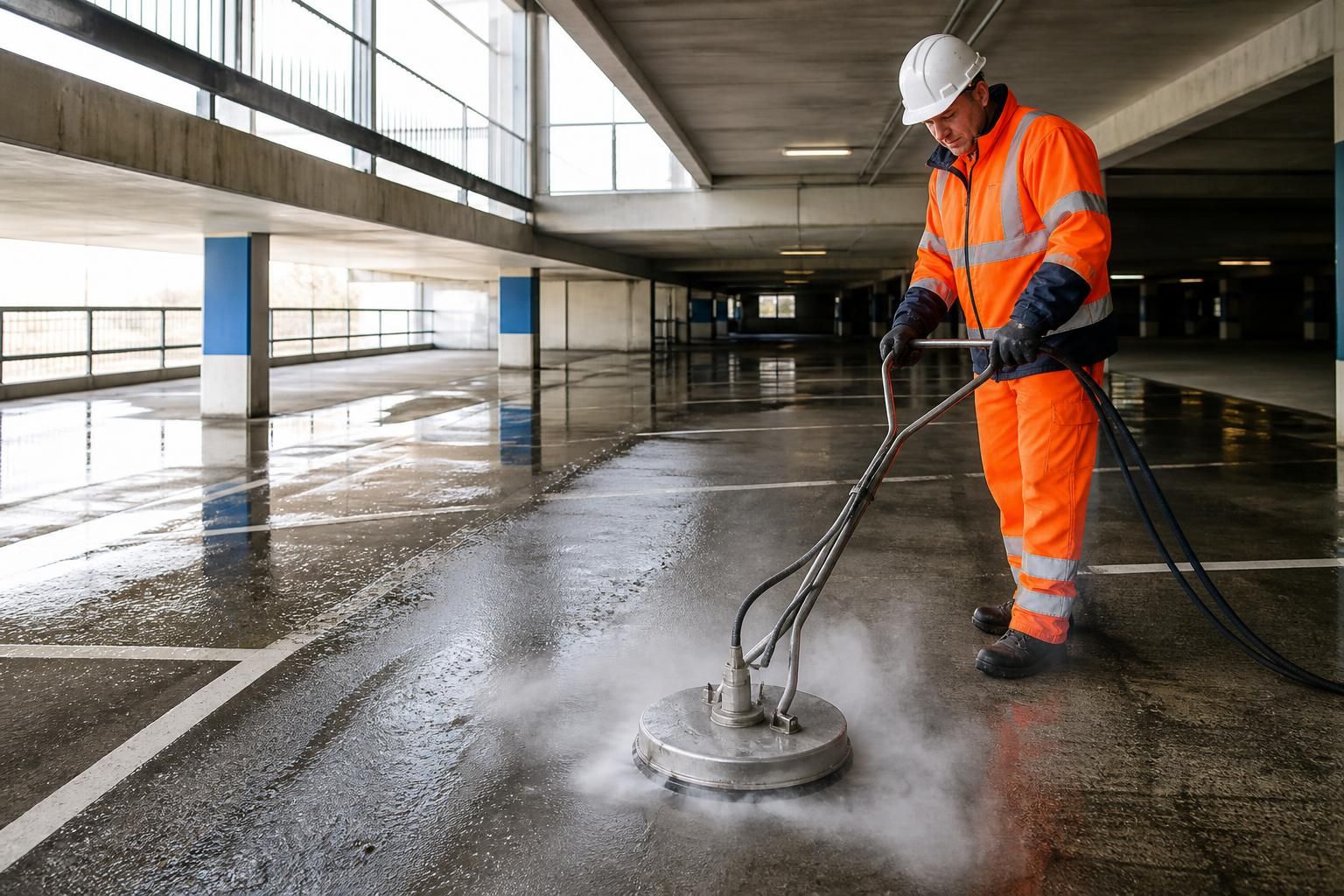
How does steam cleaning improve the lifespan of car park surfaces?
Steam cleaning helps extend the lifespan of car park surfaces by removing oil, grime, algae, moss and weeds before they contribute to staining, surface deterioration or blocked drainage. Its combination of high-temperature steam and controlled pressure cleans effectively while reducing the risk of damage associated with aggressive pressure washing, helping preserve concrete, block paving and jointing.
Steam cleaning can extend the serviceable life of car park surfaces by removing contaminants that hold moisture, encourage biological growth, obstruct drainage and accelerate surface deterioration. High-temperature steam loosens oil, traffic film, algae, moss, weeds and embedded grime, while controlled pressure reduces the risk of scouring concrete, dislodging block paving or eroding jointing. This helps preserve the surface and delays avoidable repairs, although steam cleaning cannot correct structural cracking, failed drainage or underlying movement.
Removing contaminants before they cause damage
Car parks are exposed to oil, fuel residues, brake dust, tyre deposits, grit, organic debris and de-icing materials. If these remain on the surface, they can penetrate porous concrete or collect in the joints between paving blocks. Oil and similar contaminants may soften or stain some surfaces, while grit can become abrasive under vehicle traffic. Steam cleaning breaks down and lifts this contamination so it can be collected and removed rather than being left to work further into the surface.
Steam is particularly useful where ordinary cold-water cleaning would require excessive pressure or repeated passes. The heat helps soften greasy deposits and traffic film, allowing the operator to use a more controlled pressure setting. This is important on older concrete, textured paving and areas where the jointing material is already weakened.
Reducing algae, moss and weed growth
Organic growth retains moisture against the surface and can make car parks slippery, particularly in shaded areas or locations with poor drainage. Moss and weeds can also establish in paving joints. As roots develop, they may disturb the jointing material and create gaps where more water and debris can collect. Steam treatment removes visible growth and helps loosen the organic matter in and around the joints.
Steam cleaning should form part of a wider maintenance plan rather than being treated as a permanent weed-control solution. Regrowth depends on shade, moisture, nearby vegetation, drainage and the condition of the joints. Reinstating missing jointing material and correcting standing-water problems may be necessary to protect the cleaned area for longer.
Protecting concrete and block paving from unnecessary wear
Aggressive pressure washing can contribute to surface wear if the pressure, nozzle, distance or cleaning angle is unsuitable. It may expose soft aggregate, roughen the surface or remove jointing sand from block paving. Steam cleaning uses heat to assist the cleaning action, so the required pressure can often be kept more controlled. The correct setting still depends on the material, its age, its condition and the type of contamination present.
On block paving, the cleaning process should be managed to avoid excessive loss of jointing material. Where joints have already been eroded, they may need to be refilled after cleaning. On concrete, the operator should identify flaking, scaling, exposed aggregate and existing cracks before work begins, as cleaning cannot restore weakened concrete and unsuitable pressure could worsen it.
Helping drainage and limiting moisture-related deterioration
Leaves, silt, moss and dirt can block gullies, channels and the gaps between paving blocks. Blocked drainage leaves water standing on the surface, increasing the risk of staining, algae growth and deterioration during repeated wetting and drying or periods of freezing weather. Cleaning the surface and accessible drainage points helps water move away as intended.
Drainage cleaning is not automatically included in every surface-cleaning operation, so the scope should be agreed in advance. A blocked or damaged drainage system may require separate clearance or repair. Steam cleaning can remove deposits around the problem area, but it cannot resolve collapsed pipes, inadequate falls or damaged drainage infrastructure.
Preserving appearance and reducing repair requirements
Regular removal of oil stains, organic growth and general soiling helps prevent contaminants becoming deeply embedded and more difficult to treat. It also makes defects such as cracking, potholes, failed joints and damaged edges easier to identify during inspections. Finding these issues early allows planned maintenance instead of leaving defects to expand under vehicle movements and water ingress.
The condition of the surface should be assessed before choosing the cleaning method. Concrete and block paving generally respond well to carefully controlled steam cleaning, while asphalt, painted markings, sealants and resin-bound finishes require particular care. Heat and pressure must be adjusted to avoid softening, lifting or marking sensitive materials. A small test area is useful where the surface composition, previous coatings or existing damage is uncertain.
What a suitable maintenance process involves
- Inspecting the car park to identify the surface type, damaged areas, oil contamination, biological growth and drainage issues.
- Choosing temperature, pressure, nozzle type and cleaning method according to the surface condition rather than using one setting throughout the site.
- Pre-treating heavy oil or heavily soiled areas where steam alone may not remove the full deposit.
- Working systematically so loosened contaminants are not redistributed across already cleaned sections.
- Recovering wastewater and debris where required, particularly near drains, watercourses or sensitive areas.
- Checking joints, markings, gullies and vulnerable edges after cleaning and reporting defects that require separate repair.
- Reinstating jointing material or applying an appropriate treatment only where the surface is clean, sufficiently dry and suitable for it.
Steam cleaning therefore improves longevity mainly through prevention. It removes substances that can trap moisture, increase slip risk, encourage growth and accelerate wear, while its controlled cleaning action can be gentler than unnecessarily high-pressure washing. The best results come from combining appropriate steam cleaning with prompt spill response, effective drainage, joint maintenance, defect repairs and inspections scheduled according to the car park’s use and exposure.
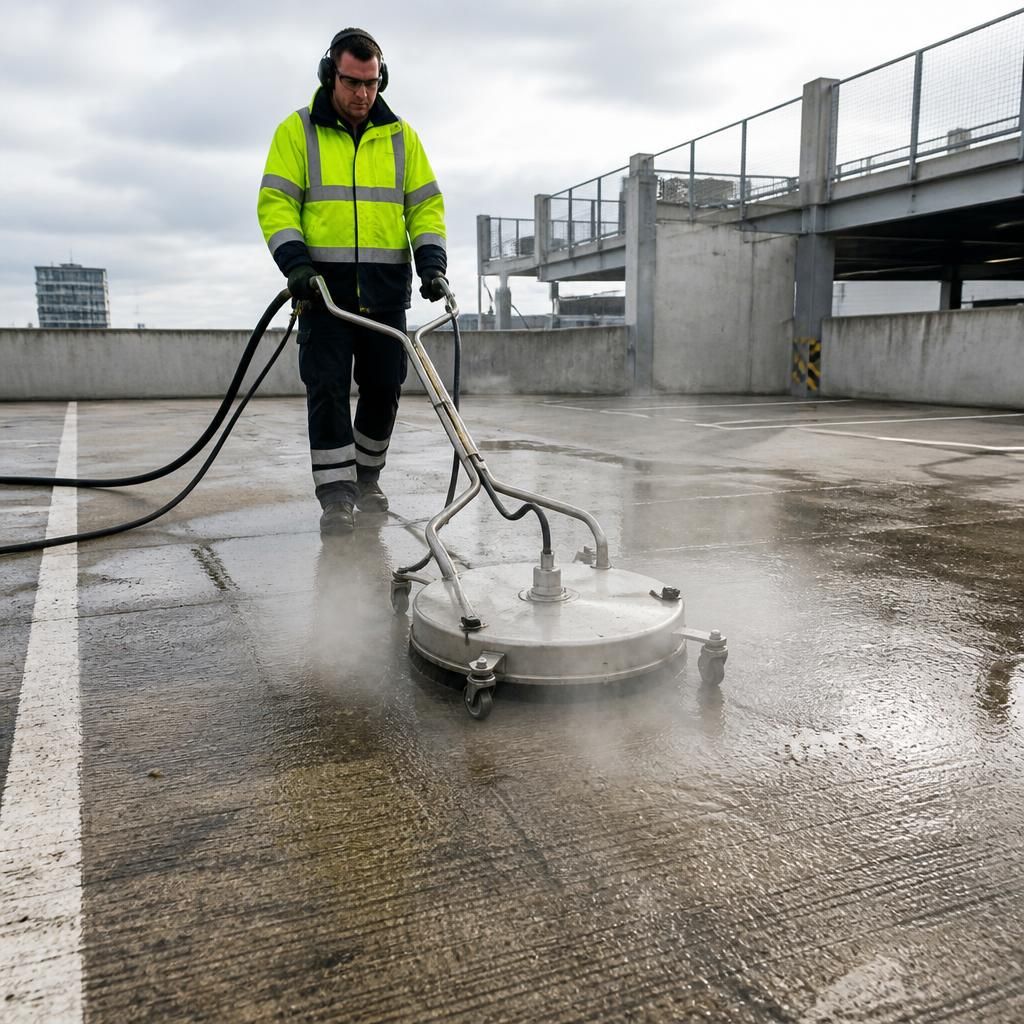
Steam cleaning can help extend car park surface life by using heat to loosen oil, traffic film, algae and embedded grime without relying on unnecessarily high water pressure. This controlled cleaning action reduces the risk of scouring concrete, exposing aggregate or removing jointing material from block paving.
The correct temperature, pressure and nozzle distance still depend on the surface type, age and condition. Older concrete, weakened joints, damaged edges, painted markings and existing coatings should be assessed before cleaning. Where jointing has already eroded or concrete is cracking, cleaning should be followed by the appropriate repair or reinstatement rather than treated as a substitute for maintenance.