
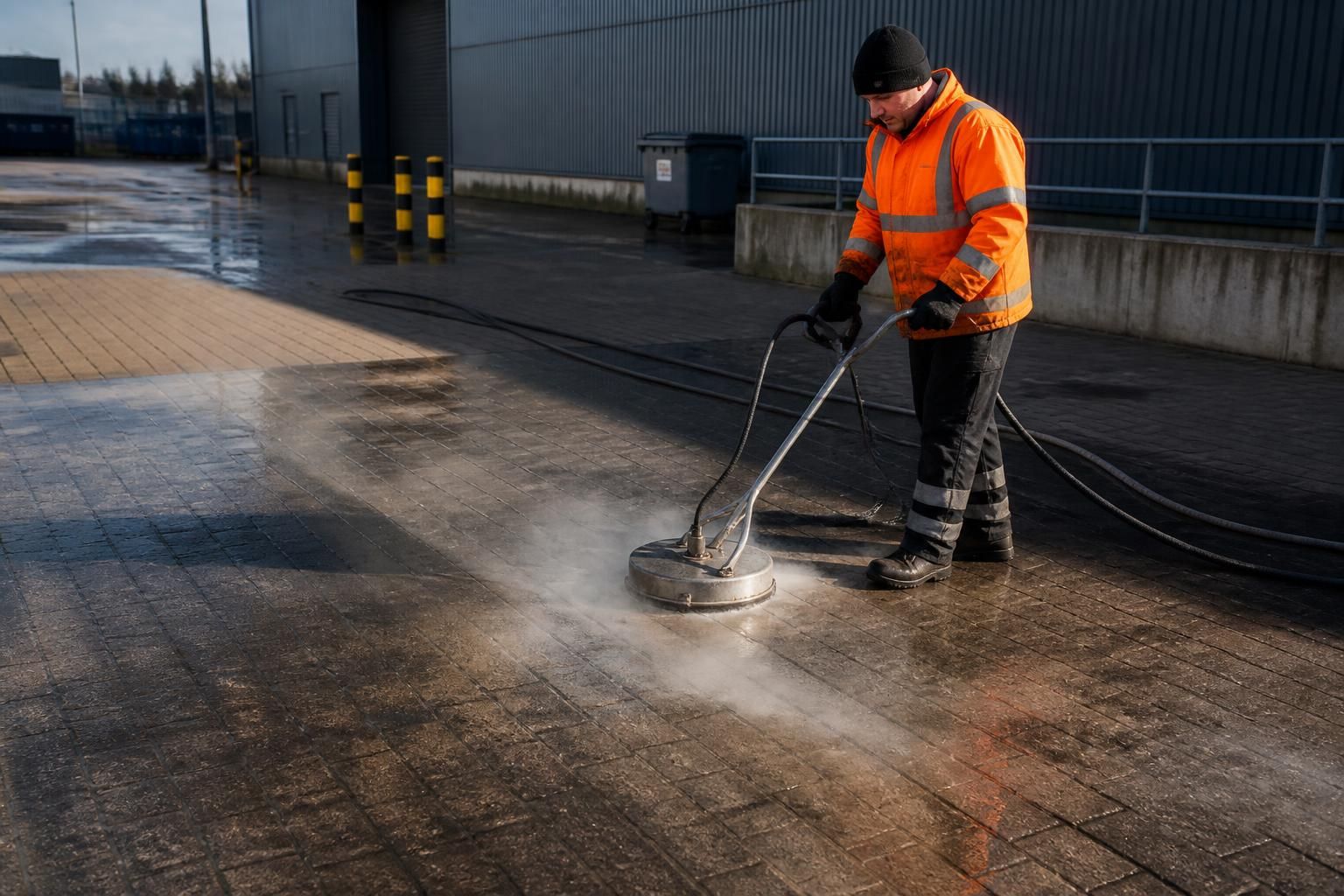
How does steam cleaning help in removing oil stains from concrete and block paving?
Steam cleaning uses controlled high-temperature vapour to soften and emulsify oil, allowing the residue to be lifted from the pores and textured surface of concrete and block paving. Combined with suitable pressure and, where necessary, targeted treatment, it removes stubborn staining while using fewer harsh chemicals than many conventional cleaning methods.
Steam cleaning removes oil stains from concrete and block paving by using controlled heat to soften, loosen and emulsify oil, allowing it to be lifted from the surface and its pores. The process is particularly useful on car parks, loading areas and service yards where lubricants, diesel, hydraulic fluid and other petroleum-based residues have penetrated textured or porous hard surfaces.
Oil does not simply sit on top of concrete or paving. It can migrate into pores, surface voids and the joints between blocks, where ordinary rinsing may leave a dark mark or cause the contamination to spread. Heated steam reduces the oil’s viscosity, making it less resistant to removal. Carefully controlled pressure then helps dislodge the softened residue without relying solely on aggressive mechanical force or large quantities of chemical degreaser.
The usual cleaning process includes:
- Site assessment: The surface is inspected to identify the type, age and extent of the oil contamination. The condition of the concrete, paving blocks, joints, sealant, drainage points and surrounding materials is also considered.
- Preparation: Loose debris is removed and vulnerable areas, entrances, walls and nearby equipment are protected. Drainage and runoff controls are planned so contaminated water can be collected or managed appropriately.
- Targeted treatment: Where the oil has deeply penetrated, a suitable, surface-compatible pre-treatment may be applied. This helps break down the residue before steam is introduced and can reduce the need for excessive pressure.
- Steam cleaning: Hot vapour is worked across the affected area in a controlled manner. The operator adjusts the temperature, flow and pressure to suit the surface, working methodically rather than forcing water into joints or damaging the concrete face.
- Recovery and inspection: Loosened oil, dirty water and suspended residue are removed where required. The area is then inspected, and particularly persistent marks may receive a further targeted treatment.
Heat is valuable because it reaches contamination that may remain embedded after cold-water cleaning. It also helps separate oily residues from the mineral surface, while the relatively low water volume associated with steam cleaning can make the process more controlled around entrances, kerbs and drainage channels. Fewer harsh chemicals may be needed, although the correct treatment depends on the contaminant and the surface condition.
Results depend on several factors. Fresh spills are generally easier to remove than stains that have weathered, oxidised or been driven deeper by vehicle traffic. The oil type, the porosity of the concrete, the texture of the paving, the presence of previous sealants and the length of time the contamination has been present all affect the outcome. A heavily stained area may become substantially cleaner without returning to a completely uniform colour, particularly where the oil has altered the surface itself.
Concrete requires careful control. Excessive heat or pressure can mark a weak, aged or previously damaged surface, expose aggregate or worsen existing defects. Sound concrete can usually be treated effectively, but cracked, delaminated or friable areas should be assessed before cleaning. Cleaning a small test area is useful where the surface is delicate or the likely result is uncertain.
Block paving needs additional attention to joints. Oil can collect in sand-filled joints and beneath the edges of individual blocks. Steam cleaning can remove contamination from these areas, but it may also disturb jointing material if the pressure and technique are unsuitable. After cleaning, joints may need to be checked and, where necessary, re-filled with an appropriate material. Any failed blocks, sinking or poor drainage should be addressed separately, as cleaning alone will not correct those defects.
Steam cleaning is often preferred where the appearance of the car park or paved area matters, where chemical use must be limited, or where contamination is localised and needs precise treatment. It is not a universal solution for every oil mark. Deeply saturated concrete, widespread historic contamination or oil that has chemically damaged the surface may require repeated treatment, absorbent methods, specialist degreasers or surface repair in addition to steam cleaning.
Safety and environmental controls are important during oil-stain removal. Oily runoff should not be allowed to enter surface-water drains untreated. The cleaning method should account for pedestrians, vehicles, electrical equipment, nearby doors and the risk of a temporarily wet or slippery surface. The area may need to be isolated until it is clean, rinsed where appropriate and sufficiently dry for normal use.
For ongoing maintenance, prompt reporting of spills is one of the most effective ways to protect concrete and block paving. Absorbent materials can be used to contain a fresh spill before professional cleaning, but oil-soaked materials must be handled and disposed of responsibly. Regular inspection of vehicle bays, loading points, bin stores and plant areas also helps identify contamination before it becomes established.
When steam cleaning is carried out by an experienced operator, it provides a controlled way to soften and remove oil while protecting the underlying hard surface as far as its condition allows. A proper assessment is essential: it determines the appropriate heat, pressure, treatment and runoff controls for the particular concrete or block paving, rather than applying the same cleaning approach to every stain.
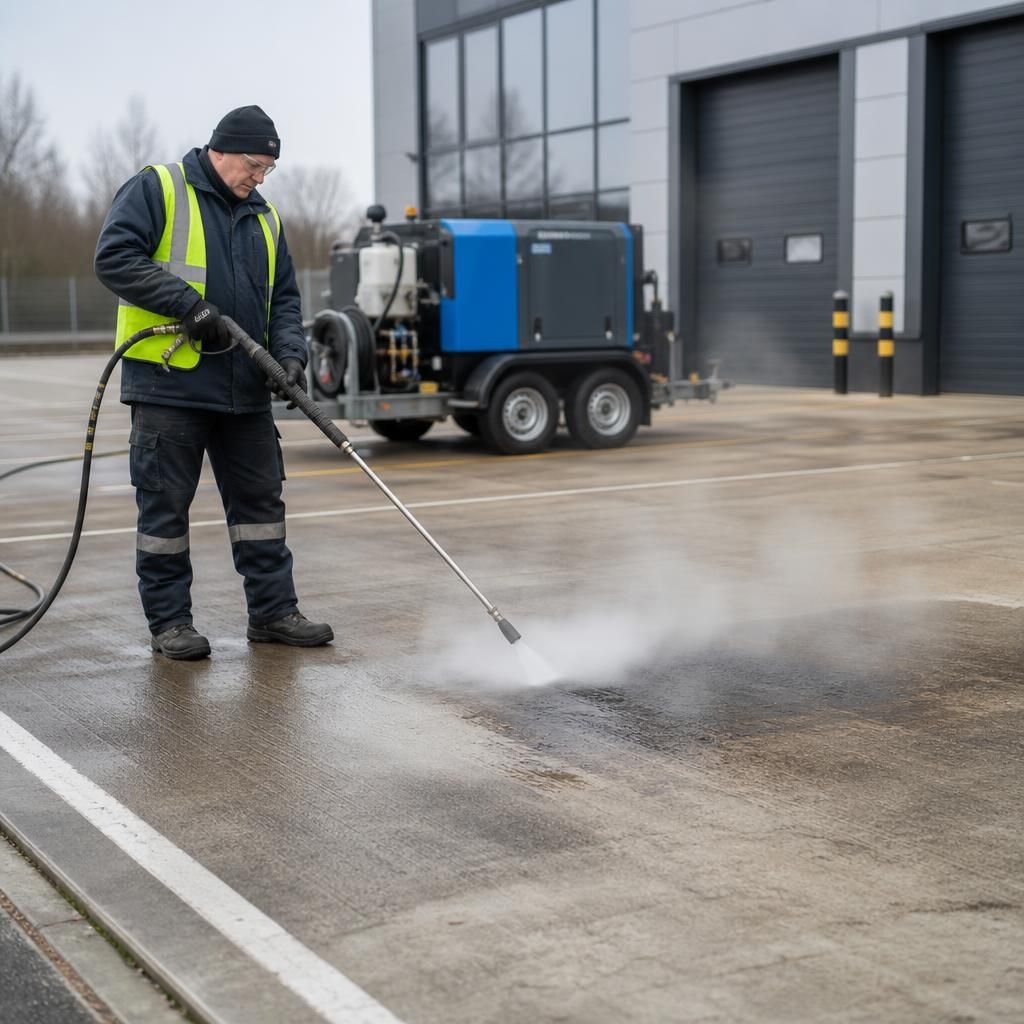
Steam cleaning removes oil stains by using controlled heat to soften and emulsify the oil trapped in concrete pores, paving textures and block joints. The loosened residue can then be lifted with carefully controlled pressure, rather than relying on force alone or large quantities of harsh degreaser.
This approach is particularly useful for vehicle bays, loading areas and service yards. Fresh spills usually respond more readily than old, deeply embedded staining, so prompt reporting and treatment can help prevent oil from being driven further into the surface. Runoff must also be controlled and recovered appropriately to prevent oily water entering surface-water drains.