
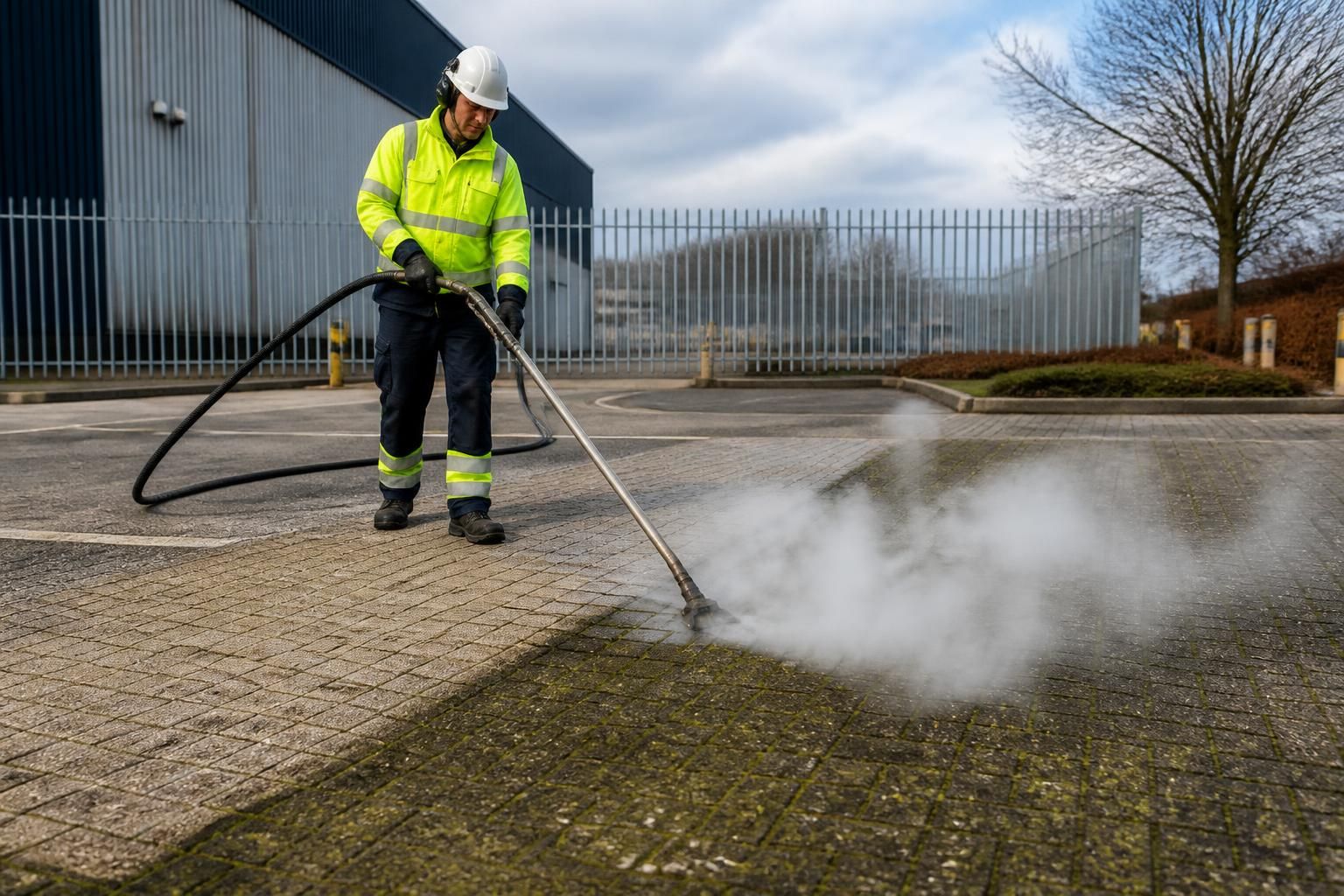
How does steam cleaning effectively remove algae and organic growth from concrete and block paving?
Steam cleaning uses high-temperature steam to break down and loosen algae, moss, lichen and other organic growth on concrete and block paving, while controlled pressure removes the residue from the surface and joints. The heat also helps reduce regrowth without relying on harsh chemicals, although drainage, surface condition and follow-up maintenance remain important.
Steam cleaning removes algae and organic growth by combining high-temperature steam with controlled pressure. The heat breaks down the biological structure and loosens the bond between algae, moss, lichen, soil and the surface, while the pressure lifts the residue from concrete, paving blocks and their joints. This provides a thorough clean with little or no reliance on harsh chemical treatment.
Algae and similar growth often form a thin biofilm on damp, shaded or poorly drained surfaces. This film can make concrete and block paving slippery, trap dirt and encourage further growth. Steam penetrates the surface contamination and disrupts the cell structure of the organic material. As the growth softens, it can be rinsed away more effectively than with cold water alone.
The process is particularly useful on textured concrete and block paving, where algae can settle into pores, surface profiles and joint lines. Moss may also develop shallow roots between paving blocks, while lichen can adhere firmly to exposed faces. The combination of heat and controlled water pressure helps remove these contaminants from areas that may be difficult to clean with a standard surface wash.
A typical treatment involves several stages:
- Inspection and preparation: The surface is checked for damaged concrete, loose blocks, failed joints, drainage issues, sealers and sensitive adjacent materials. Loose debris and heavier deposits are removed where necessary.
- Controlled steam application: Steam is applied progressively, with the pressure and distance adjusted to suit the condition and type of surface. This allows the operator to target organic growth without unnecessarily stressing sound concrete or displacing paving blocks.
- Removal of loosened material: The softened algae, moss, lichen and soil are rinsed away. Particular attention is given to edges, joints, corners and shaded areas where growth commonly remains.
- Runoff and drainage management: Removed organic matter and dirty water are directed towards suitable drainage points or collected where required. This helps prevent debris from being redistributed across the cleaned area or entering inappropriate drainage systems.
- Final assessment: The surface is checked for remaining deposits, damaged joints or areas requiring additional attention. Block paving may need jointing material replaced if existing sand has been eroded or removed during previous cleaning.
Steam can also help reduce the conditions that support regrowth. Heat removes much of the organic residue and surface biofilm, so algae has less material on which to establish. However, steam cleaning is not a permanent preventative treatment. New growth can return where surfaces remain shaded, damp or contaminated by soil and leaf debris. Blocked drainage, leaking downpipes and persistent standing water should therefore be addressed alongside cleaning.
For car parks and frequently used paved areas, removing algae is also a safety measure. Organic growth can reduce traction, particularly when wet, and may conceal surface defects or make markings harder to see. Cleaning should be planned around pedestrian and vehicle movements, with the area kept out of use until excess water has drained and the surface is safe.
Although steam cleaning is suitable for many concrete and block paving surfaces, the equipment must be operated with care. Excessive pressure or prolonged heat in one position can damage weak concrete, remove loose surface material, disturb jointing sand or affect some coatings and sealers. A competent operator will test a discreet area, adjust the equipment to the surface condition and avoid directing steam at vulnerable pointing, expansion joints, drainage fittings or adjoining finishes.
Steam is most effective when the objective is to remove organic contamination without introducing unnecessary chemicals. It may still be appropriate to use a carefully selected treatment in specific circumstances, such as persistent biological staining or areas where regrowth needs additional control. Any chemical use should be proportionate, compatible with the surface and managed to protect people, planting, drainage systems and the wider environment.
Once the work is complete, routine maintenance helps preserve the result. Keeping drains clear, removing leaf litter, improving water run-off and dealing with shaded moisture sources can all slow the return of algae and moss. Planned cleaning is generally more effective than allowing heavy growth to develop into a thick, established layer that can penetrate joints and retain moisture.
In summary, steam cleaning works through heat-assisted loosening rather than pressure alone. It breaks down algae and other organic growth, releases contamination from porous and textured surfaces, and allows the residue to be removed with controlled rinsing. The best results come from matching the steam process to the surface condition and combining the treatment with sensible drainage, inspection and ongoing maintenance.
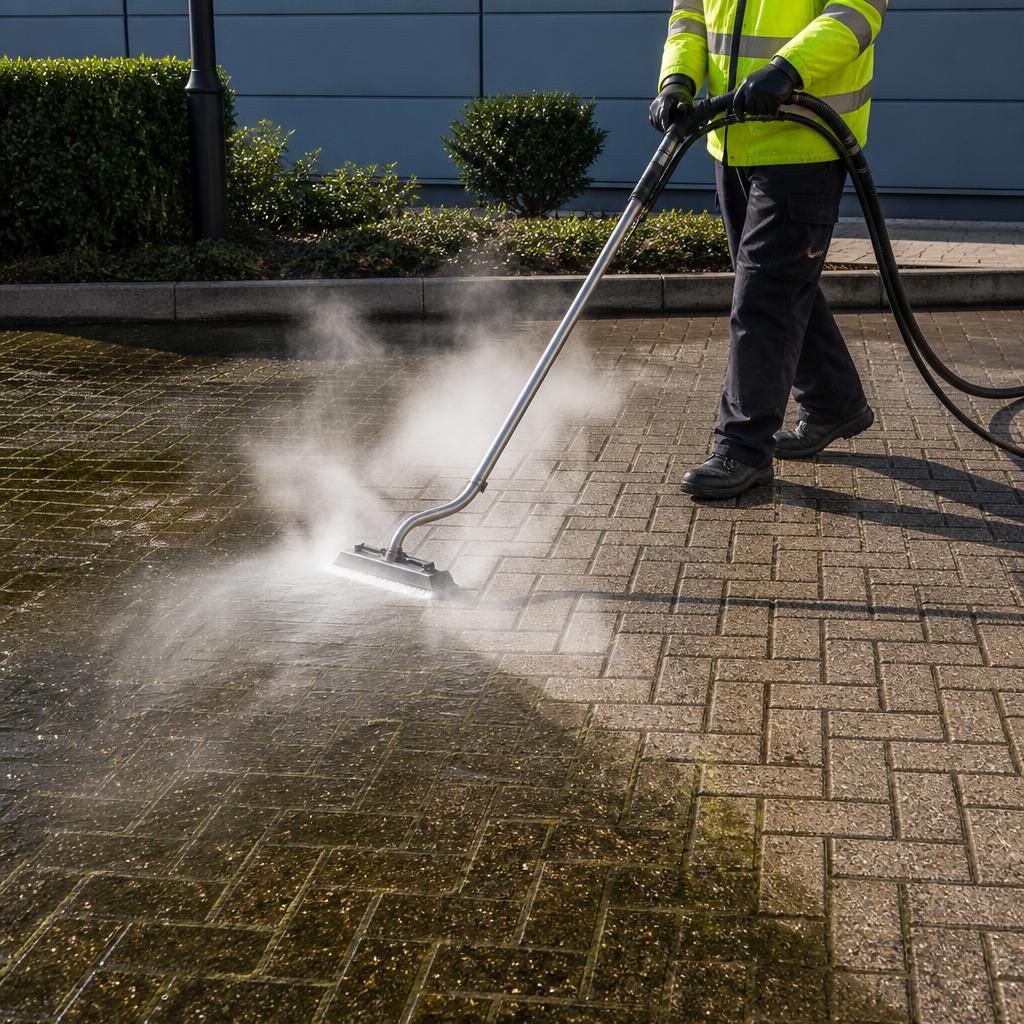
Steam cleaning removes algae and organic growth by using heat to soften and disrupt the surface biofilm that binds it to concrete, paving blocks and joints. Once loosened, the contamination can be rinsed away with controlled pressure rather than relying on aggressive pressure alone.
This approach is effective on textured and porous surfaces where algae, moss, lichen and trapped soil can remain after a standard wash. Careful application around joints, edges and drainage points helps remove established growth while reducing the risk of displacing sound paving or jointing material.