
What safety precautions should be taken when steam cleaning brickwork and masonry?
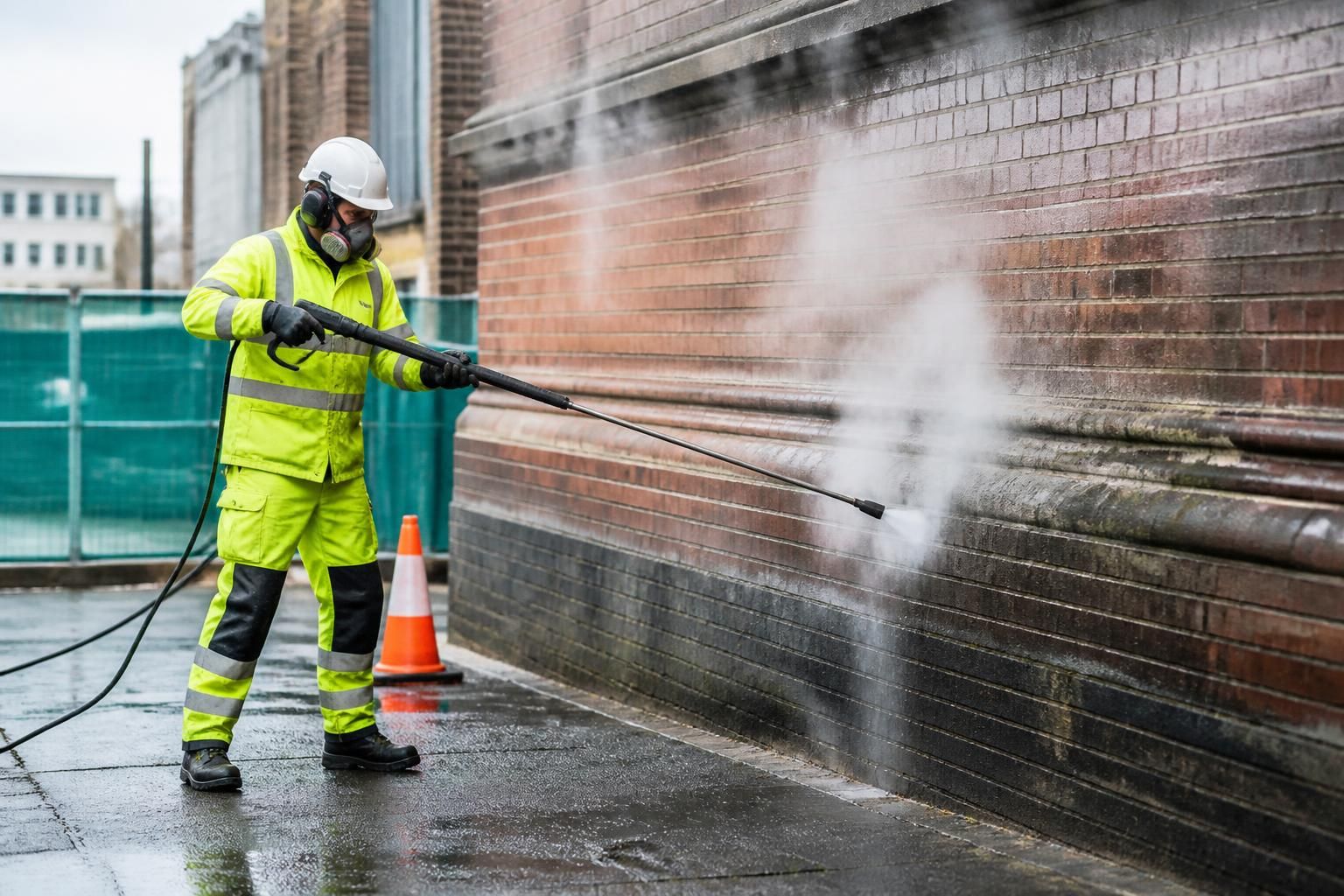
Safety precautions for steam cleaning brickwork and masonry include assessing the surface first, isolating the work area, wearing suitable protective equipment and controlling steam pressure, temperature and runoff. Operatives should also protect nearby people, glazing, electrical equipment and vulnerable materials, while using safe access equipment and following a documented method statement and risk assessment.
Safe steam cleaning of brickwork and masonry requires a documented risk assessment, a pre-cleaning survey, controlled steam pressure and temperature, suitable personal protective equipment, secure access and effective protection for people, property and runoff. Steam can cause serious scalding, loosen debris, damage vulnerable surfaces and create slip or visibility hazards if the work is not properly planned.
Survey the building and surrounding area first. Before work begins, inspect the masonry for cracks, open joints, spalled faces, frost damage, unstable units, previous repairs and areas of biological growth. Identify rendered sections, painted surfaces, soft or historic brick, natural stone, friable mortar and materials that may react poorly to heat or moisture. The survey should also locate windows, vents, signage, lighting, cameras, cables, alarms, drainage points and other items requiring protection.
Where the building is listed, in a conservation area or of historic significance, the proposed method should be checked with the relevant responsible person before cleaning. Specialist advice may be necessary for delicate stonework, lime mortar, archaeological fabric or surfaces with unknown coatings. Do not proceed if the substrate appears unstable or if the nature of a coating or contaminant creates an unmanaged risk.
Use a written risk assessment and method statement. The documentation should cover the cleaning system, access arrangements, equipment checks, surface testing, water and steam hazards, work at height, public protection, electrical risks, runoff, waste, weather conditions and emergency procedures. It should identify who is responsible for operating the equipment, controlling the exclusion zone and stopping the work when conditions become unsafe. Operatives must be trained and competent to use the specific steam-cleaning equipment and any access equipment required.
Control temperature, pressure and water flow. Steam equipment should be set to the lowest effective combination of heat, pressure and dwell time for the substrate and soiling. A suitable test patch should be carried out in an inconspicuous area, then assessed for colour change, surface erosion, mortar loss, staining, moisture movement and damage to coatings. The operator should keep the lance moving rather than concentrating heat in one place, and should avoid forcing steam into open joints, cracks, cavities, vents or behind cladding and render.
Cleaning settings should be monitored throughout the project because a surface may respond differently as deposits are removed or as the equipment warms up. If brick faces begin to soften, flake or discolour, or if joints are being washed out, stop immediately and reassess the method. Steam cleaning should never be treated as a substitute for repairing defective masonry.
Wear appropriate personal protective equipment. This normally includes protective footwear with slip-resistant soles, gloves suitable for heat and wet work, eye protection or a visor, protective clothing and head protection where there is a risk of falling debris. Hearing protection may be required around certain equipment or in enclosed areas. Respiratory protection should be selected through the risk assessment where cleaning may disturb hazardous dust, coatings, biological contamination or other airborne contaminants; it should not be assumed that ordinary dust masks are adequate.
Protective equipment must be compatible with the task. Gloves, for example, should provide heat and wet protection without reducing the operator’s ability to control the lance. PPE should be inspected, kept clean and replaced when damaged. It does not remove the need for guarding, safe working distances and proper equipment controls.
Establish a secure exclusion zone. Keep clients, members of the public, pedestrians and unauthorised workers away from the steam jet, hoses, wet surfaces and falling debris. Use suitable barriers, warning signs and, where necessary, a banksman or dedicated traffic marshal. Do not direct steam towards people, animals or occupied openings. Consider how pedestrians, vehicles and deliveries will move around the work area, particularly at entrances, on pavements and in car parks.
Hoses and cables should be routed to minimise trip hazards and protected where they cross walkways. Wet ground, overspray and loose deposits can make surfaces slippery, so access routes should be maintained or temporarily closed. Good ventilation is important in enclosed courtyards, basements and other restricted spaces, where heat, vapour and displaced contaminants can accumulate.
Protect glazing, electrical equipment and vulnerable property. Cover or shield windows, doors, vents, external sockets, lighting, cameras, alarm components, signage, vehicles and nearby finishes before cleaning. Steam and hot water can enter seals, housings and joints, causing immediate or delayed damage. Electrical equipment should be isolated where appropriate, kept dry and protected in accordance with the site’s electrical safety arrangements. Never direct steam at live electrical installations or use equipment with damaged plugs, cables, hoses or safety controls.
Check that protective sheeting does not trap moisture against the wall or create an additional trip or wind hazard. Remove or secure coverings as soon as they are no longer needed, and inspect protected items after cleaning.
Plan safe access and work at height. Choose access equipment that is suitable for the building, ground conditions, reach and force generated by the cleaning lance. Platforms, towers, mobile elevating work platforms and scaffolds must be correctly selected, inspected and used by trained operatives. Ladders should not be used as a primary work position where the task requires sustained force, awkward reaching or the handling of heavy hoses.
Work-at-height controls should address falling objects, edge protection, equipment movement, overhead obstructions, wind and rescue arrangements. Do not work from an unstable surface or stretch beyond the safe working position to reach an area. Hoses should be supported or managed so they cannot pull an operator off balance or damage access equipment.
Manage runoff, drainage and contaminants. Before cleaning, confirm where water and removed deposits will go. Prevent dirty water from entering surface-water drains, watercourses, neighbouring property or areas where it could create a slip hazard. Use drain covers, collection methods, temporary bunding or controlled drainage where appropriate, while ensuring that any protection does not cause flooding.
The correct disposal method depends on the material removed. Paint residues, oils, heavy deposits, bird fouling and other contaminants may require separate containment and disposal. Do not assume that steam makes contaminated runoff harmless. The risk assessment should consider COSHH requirements, site-specific environmental controls and any instructions from the client or local authority.
Check weather and site conditions. High winds can affect steam, overspray, access equipment, barriers and protective sheeting. Cold conditions can cause rapid cooling, ice formation and slippery surfaces, while rain can reduce visibility and increase electrical and access risks. Suspend work when weather or visibility prevents safe control of the equipment or exclusion zone.
Operators should take regular opportunities to manage heat stress, wet clothing and fatigue, especially during prolonged external work. Clear communication between the operator, supervisor and any banksman is essential, including an agreed stop signal if visibility, access or public safety deteriorates.
Inspect equipment before and during use. Check the machine, lance, trigger, hoses, couplings, seals, guards and emergency shut-off controls before starting. Use only compatible components and follow the manufacturer’s operating and maintenance instructions. Depressurise the system before disconnecting hoses or carrying out adjustments, and never attempt to clear a blockage while the equipment is pressurised or hot.
At the end of the work, isolate and cool the equipment safely, release residual pressure in accordance with the operating procedure, inspect the area for damage and remove barriers only when surfaces and access routes are safe. Record defects, incidents, near misses and any changes made to the cleaning method so they can be addressed before the next visit.
These precautions should be applied alongside the site’s health and safety procedures and relevant UK requirements for work at height, personal protective equipment, electrical safety, hazardous substances and public protection. If the survey identifies unstable masonry, suspected hazardous coatings, difficult access, contaminated deposits or sensitive historic fabric, the safest option is to pause the work and obtain appropriate specialist advice before steam cleaning continues.
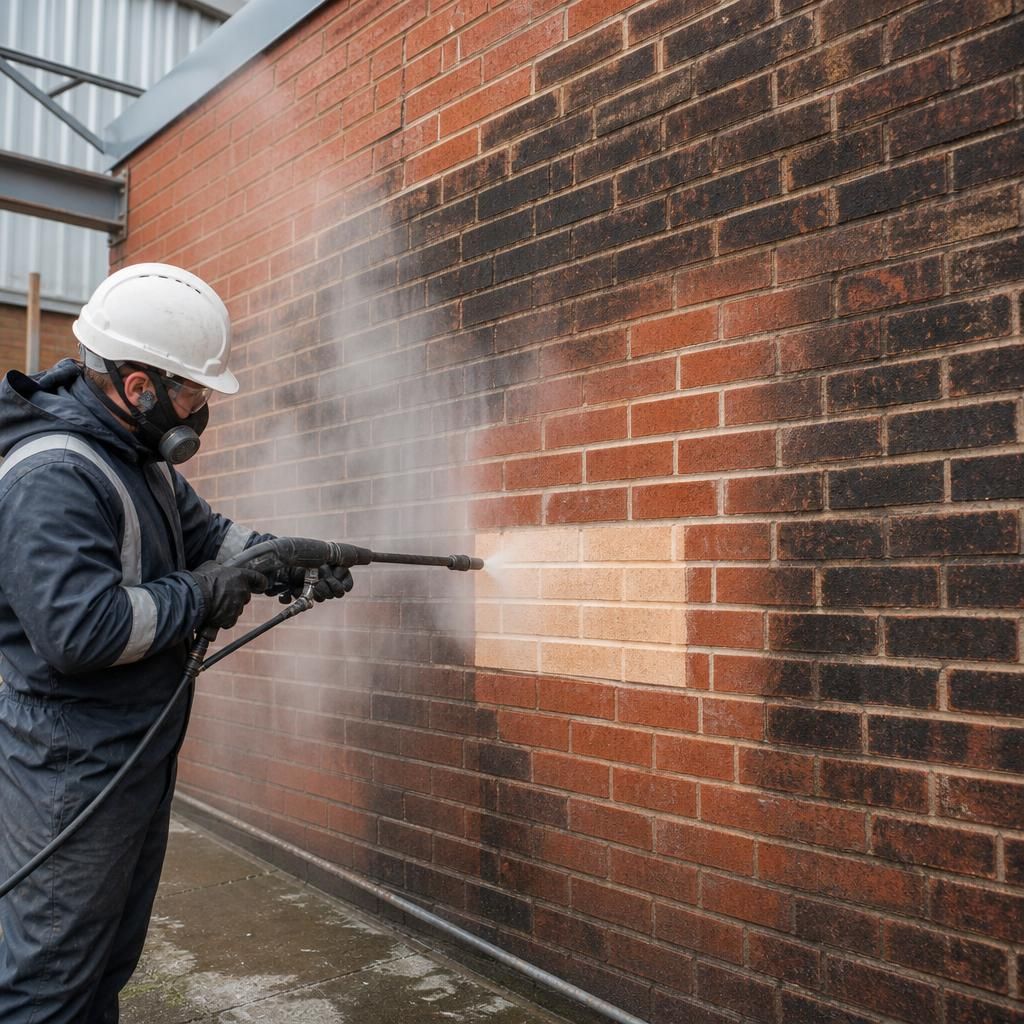
A test patch is an essential safety precaution before steam cleaning brickwork or masonry. It confirms that the selected temperature, pressure and dwell time will remove the soiling without causing colour change, mortar loss, surface erosion, staining or damage to coatings.
The test should be carried out in an inconspicuous area and inspected after the surface has dried. If the brick, stone, joints or previous repairs show any adverse reaction, cleaning should stop while the method is reassessed. This is particularly important for soft brick, historic masonry, lime mortar, painted surfaces and areas with existing cracks or spalling.