
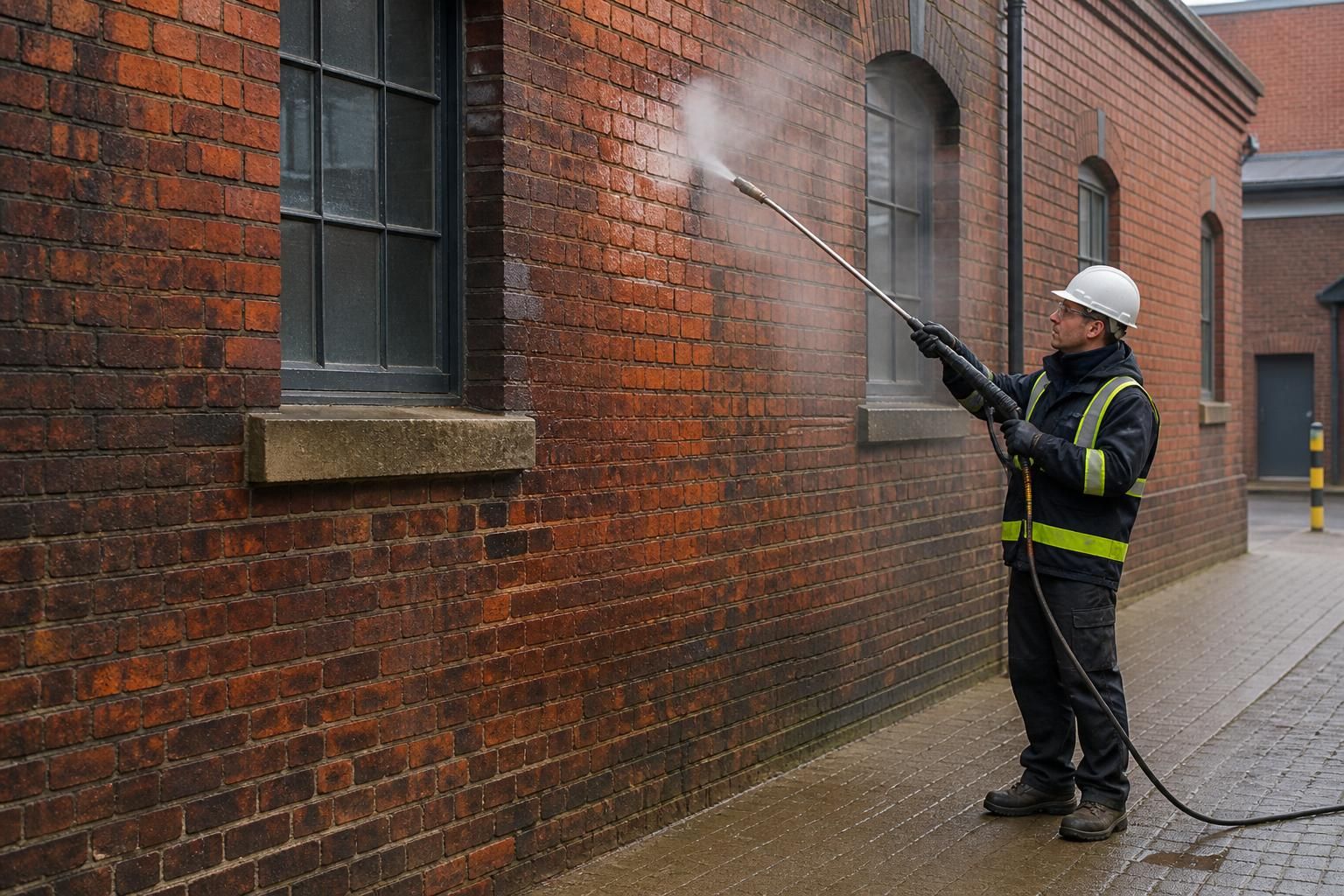
What maintenance is required after steam cleaning brickwork and masonry?
After steam cleaning brickwork and masonry, allow the surface to dry fully before inspecting for loose mortar, damaged bricks, failed joints or areas requiring repair. Ongoing maintenance should include gentle routine cleaning, prompt removal of staining and vegetation, checks for moisture ingress and weathering, and the use of only suitable breathable treatments where specified.
After steam cleaning, brickwork and masonry should be allowed to dry fully, inspected for defects and maintained with gentle, compatible cleaning methods. The key tasks are to identify repairs exposed by the cleaning process, keep joints and drainage in good condition, remove new staining or biological growth promptly, and avoid treatments that trap moisture within the wall.
Allow the surface to dry before assessing its condition. Masonry can remain damp after steam cleaning, particularly where the wall is sheltered, heavily soiled or constructed with thick brickwork. Do not apply paint, sealers, water repellents or other finishes until the substrate and mortar joints are sufficiently dry for the proposed product. Drying time varies with the weather, exposure, porosity and construction of the building.
Once dry, carry out a visual inspection for:
- loose, cracked or spalled bricks and stone;
- open, recessed or powdery mortar joints;
- failed seals around windows, doors, vents and service penetrations;
- remaining staining, salts or areas of uneven soiling;
- blocked gutters, downpipes, outlets or drainage channels; and
- moisture marks, damp patches or water tracking on the wall or adjacent surfaces.
Steam cleaning does not repair defective masonry. It can, however, make pre-existing deterioration easier to see by removing dirt, algae, carbon deposits and previous surface coatings. Arrange suitable brick, stone or mortar repairs where defects are found, using materials compatible with the original construction. In older or traditionally built walls, hard cement-rich pointing or impermeable repairs may restrict evaporation and cause additional damage, so repair specifications should be considered carefully.
Keep joints, flashings and drainage sound. Water management is one of the most important parts of post-cleaning maintenance. Check that gutters and downpipes discharge correctly and do not overflow onto the façade. Inspect flashings, copings, sills, parapets and roof junctions for failed joints or damaged weathering details. Repairing these defects helps prevent recurring staining, frost damage and moisture penetration.
Routine cleaning should be gentle and proportionate to the surface. Remove isolated bird fouling, plant growth, traffic film or new organic staining before it becomes established, using a method approved for the particular brick, stone and mortar. Avoid abrasive blasting, aggressive chemical products, stiff metal brushes and unnecessarily high-pressure washing. These methods can erode the face of the masonry, widen defects or remove the weathered surface of older bricks.
Vegetation should not be allowed to remain attached to the façade or grow into joints. Carefully remove climbing plants and roots where they are causing damage, then inspect the affected masonry for open joints, displaced units and retained moisture. Moss and algae around the base of a wall may indicate persistent dampness or poor drainage rather than simply a cleaning issue, so the underlying cause should be addressed.
Use protective treatments only where they are justified and compatible. A water-repellent treatment is not automatically required after steam cleaning. If a treatment is recommended, it should be selected for the specific masonry, remain vapour-permeable where appropriate, and be applied only after the surface is clean, sound and dry. Test areas should be used to confirm appearance and compatibility. Impermeable coatings can trap moisture, contribute to salt damage and make future maintenance more difficult.
For commercial and industrial premises, include the cleaned façade in the planned building maintenance schedule. Record the cleaning date, the areas treated, defects identified and any repairs completed. Periodic inspections should focus on elevations exposed to driving rain, areas below leaking outlets, loading bays, entrances, shaded elevations and locations affected by vehicle emissions or recurring graffiti. The frequency should reflect the building’s exposure and use rather than follow a fixed interval.
New efflorescence, damp staining, flaking surfaces or rapidly returning biological growth should be investigated rather than repeatedly cleaned without diagnosis. These signs may indicate water ingress, rising damp, defective pointing, salt movement or inadequate ventilation. Early investigation normally gives the maintenance contractor a better opportunity to correct the cause before damage spreads.
Where the building is listed, historic or constructed with delicate stone or lime mortar, obtain advice from a suitably experienced masonry professional before undertaking repairs or applying any coating. Keeping the surface clean is only one part of preserving brickwork and masonry; compatible repairs, effective water shedding and regular observation are what maintain its condition after steam cleaning.
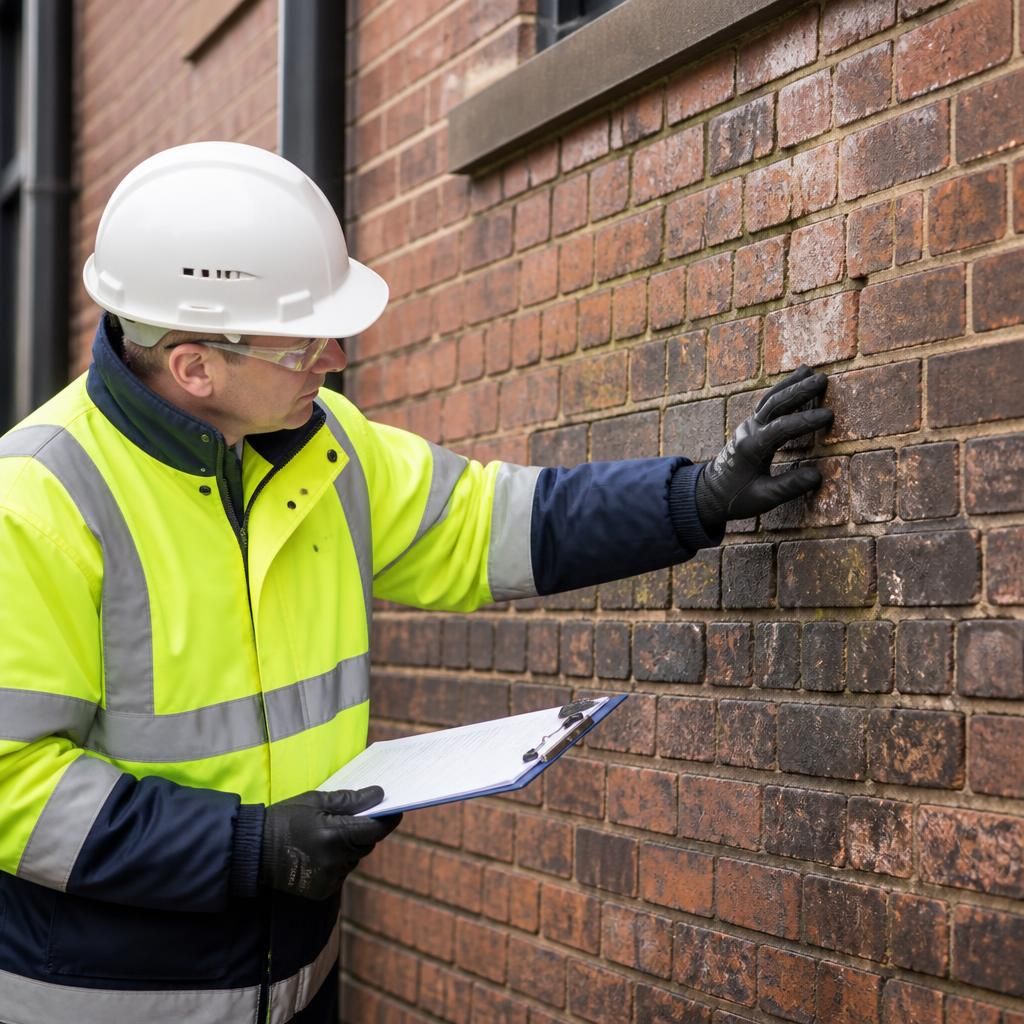
Allow brickwork and masonry to dry fully after steam cleaning before carrying out repairs or applying any protective treatment. Once dry, inspect the surface for open mortar joints, cracked or spalled units, failed seals, moisture marks, blocked drainage and recurring staining. Steam cleaning removes soiling that can conceal these defects, but it does not repair them.
Use compatible, breathable repair materials where required, particularly on older walls or masonry built with lime mortar. Keep gutters, downpipes, flashings and sills in good condition so water does not repeatedly run over the cleaned façade. Avoid impermeable coatings, abrasive cleaning and aggressive pressure washing unless a suitably experienced masonry professional has confirmed they are appropriate.
Arrange a Post-Cleaning Masonry Inspection
Arrange a post-cleaning masonry inspection to identify open joints, damaged units, moisture issues and drainage defects once the brickwork or masonry has dried. Contact Encanto Exterior Cleaning to discuss the appropriate inspection and any follow-up maintenance required.