
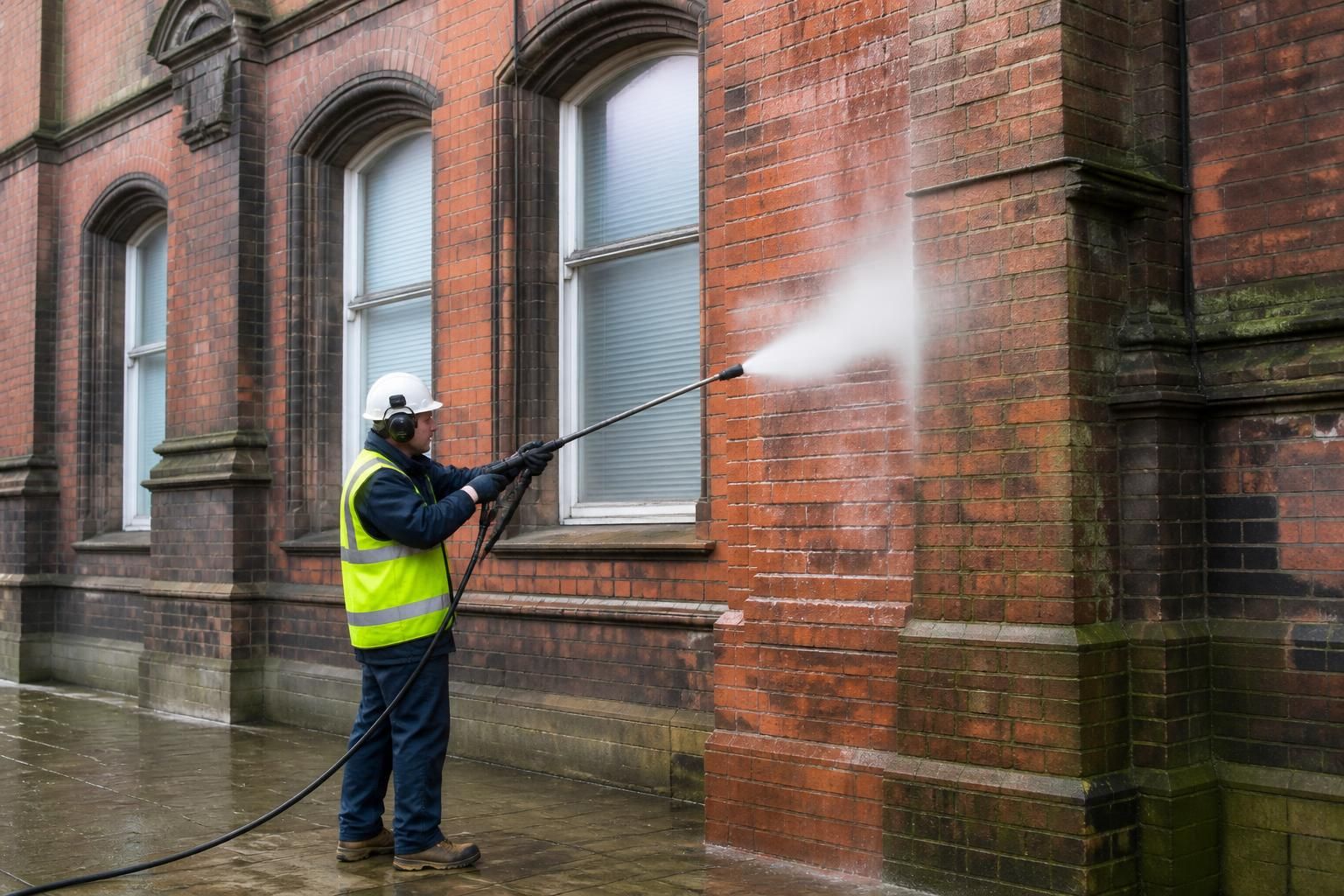
What factors should I consider when choosing a steam cleaning service for brickwork and masonry?
Choose a steam cleaning service with proven experience in brickwork and masonry, suitable low-pressure steam equipment, and a clear method for assessing the surface before work begins. Also check its health and safety procedures, insurance, access capability, wastewater controls and ability to provide a compatible cleaning specification for your building.
The right steam cleaning service for brickwork and masonry should be selected on technical competence, not simply on price or the equipment shown in a quotation. The contractor should be able to assess the masonry, identify the cause and type of soiling, choose a suitably controlled steam or heated-water system, and explain how the work will be carried out without damaging bricks, mortar, joints, coatings or adjacent materials.
Before appointing a contractor, consider the following areas.
Relevant brickwork and masonry experience
Look for specific experience with the type of building and surface being cleaned. Brick façades, stone elevations, terracotta, concrete masonry, pointing, arches and historic details can all respond differently to heat, moisture and pressure. A contractor experienced mainly in hard landscaping or general pressure washing may not have the knowledge required for a delicate façade or an older structure.
Ask whether the contractor has worked on comparable commercial, industrial, public or heritage properties. Relevant experience should include removing atmospheric soiling, carbon deposits, algae, moss, bird fouling, mortar staining, paint or other contaminants while preserving the masonry beneath. The contractor should also understand when cleaning is not the appropriate first step, such as where bricks are severely spalled, joints are failing or the surface has unstable coatings.
A proper survey before cleaning
A reliable service should inspect the building before providing a final cleaning specification. The survey should record the masonry type, age and condition, existing coatings, pointing, previous repairs, cracks, open joints, areas of deterioration and nearby materials that may be affected by water or heat.
The source of the staining should also be considered. Carbon deposits, biological growth, efflorescence, paint, rust, oil and cement residue may require different treatment. Cleaning the symptom without addressing a leaking gutter, defective coping, poor drainage or ongoing contamination can lead to rapid re-soiling or further damage.
For larger or sensitive projects, the survey should include photographs, access observations, an outline method statement and recommendations for protecting windows, doors, electrical equipment, landscaping and internal areas.
Suitable steam cleaning equipment and control
Steam cleaning for masonry should be controlled rather than unnecessarily aggressive. Ask what type of heated or steam-cleaning equipment will be used and how the operator will adjust temperature, flow and pressure for different parts of the building. The most powerful setting is not automatically the most suitable setting.
The equipment should allow the operator to work at a pressure and temperature appropriate to the substrate. This is particularly important for softer or weathered bricks, friable mortar, historic masonry and surfaces with vulnerable finishes. The service should also use suitable nozzles, working distances and cleaning techniques rather than holding a concentrated jet too close to the surface.
Steam cleaning is not the same as conventional high-pressure washing. It can use lower water volumes and controlled heat to soften or lift deposits, but poor technique can still cause damage. A competent contractor will explain these limitations and will not describe steam as a risk-free process for every surface.
Test patches and agreed results
A test patch is an important part of selecting a service. It allows the contractor to confirm how the masonry, pointing and soiling respond before the full elevation is treated. The test should be carried out in a representative, inconspicuous area and should be reviewed once the surface has dried.
The test should assess more than visual brightness. Check whether the brick face remains intact, whether mortar has been loosened, whether colour variation has been exposed and whether any coating or previous repair has been affected. A suitable contractor should explain what level of cleaning is realistic. Some discolouration may be ingrained, and attempting to remove every mark can cause more harm than leaving a stable residue.
The agreed result and method should be recorded in the quotation or cleaning specification. This helps avoid disputes about whether the objective is light surface cleaning, removal of a specific contaminant, preparation for repair or a more intensive restoration process.
Understanding of masonry condition and limitations
Steam cleaning should not be used to conceal defects that require building maintenance. Before work begins, the contractor should identify loose bricks, failing pointing, open cracks, damaged render, defective sealants and areas where water may enter the building. These defects may need to be repaired or protected before cleaning.
Older brickwork and masonry can be more vulnerable because of weathering, previous cleaning, inappropriate repointing or long-term moisture exposure. A contractor should be prepared to recommend a gentler approach, localised cleaning or repair work instead of applying the same process across the entire building.
If the property is listed, located in a conservation area or contains historic fabric, confirm whether the building owner, conservation professional or local authority needs to be consulted. Cleaning may alter the appearance of an elevation and, in some circumstances, approval may be relevant.
Health and safety procedures
Request the contractor’s risk assessment and method statement before work starts. These documents should address hot water or steam, pressurised equipment, slips, falling debris, electrical hazards, public access, traffic, working at height and possible exposure to contaminated deposits.
Where access equipment is needed, check that it is suitable for the ground conditions, the building height and the working position. Operators should be trained and authorised to use the relevant equipment, with exclusion zones and controls in place below the work area. The contractor should also explain how residents, employees, visitors and passing members of the public will be kept away from the cleaning operation.
Insurance should be appropriate for the scale and nature of the work. This normally includes suitable public liability cover and, where applicable, employers’ liability cover. It is reasonable to request evidence of insurance and relevant training or competency records before appointing a contractor for a substantial project.
Access and protection of the surrounding property
Commercial masonry cleaning often involves scaffolding, mobile elevated work platforms, towers or other access systems. The contractor should include access planning in the quotation rather than treating it as an afterthought. Consider the location of parked vehicles, pedestrian routes, loading areas, overhead obstructions, roof edges and restricted internal access.
Windows, vents, doors, signage, lighting, security systems and vulnerable finishes should be identified and protected. The contractor should also state how overspray, loosened deposits and dirty water will be contained. This is particularly important where the building adjoins a public footpath, occupied premises or sensitive landscaping.
Water use, wastewater and environmental controls
Ask how wastewater, removed deposits and cleaning residues will be managed. Water should not be allowed to enter surface-water drains or adjacent land if it contains oil, paint, heavy soiling, chemical residue or other contaminants. The method may require drain protection, collection, filtration, temporary bunding or controlled disposal.
A responsible contractor should explain the cleaning agents, if any, that will be used alongside steam. Steam alone may be suitable for some deposits, while other contamination may require a compatible treatment. Any chemical should be selected for the masonry and handled in accordance with its safety data and disposal requirements. Avoid a service that cannot clearly describe what enters the drainage system and how it is controlled.
Clear pricing and scope of work
Compare quotations on the basis of the full scope rather than the headline price. The quotation should state the areas to be cleaned, the proposed method, access arrangements, protection, preparation, test patches, wastewater controls, removal of residues, working hours and any exclusions.
Clarify whether repairs, repointing, stain removal beyond the agreed scope, traffic management, scaffolding, permits and follow-up visits are included. A very low quotation may omit essential controls or assume that more aggressive pressure and repeated passes will be needed once work begins.
The contractor should explain what happens if the test patch shows that the masonry is more fragile than expected or that the staining cannot be removed safely. A staged approach, with approval required before additional work, provides better control over both risk and cost.
References, records and aftercare
For a commercial property, ask for references or examples of comparable work and confirm that the contractor can provide completion records. Useful documentation may include before-and-after photographs, the final method used, areas treated, observations about defects and recommendations for maintenance.
After cleaning, the service should explain what the building needs next. This may include allowing masonry to dry, checking gutters and downpipes, replacing failed pointing, removing remaining biological growth, repairing water entry points or carrying out periodic inspections. Cleaning should form part of the building’s maintenance plan rather than being treated as a substitute for repair.
In practical terms, the strongest choice is a contractor that combines masonry knowledge with controlled steam-cleaning equipment, documented safety procedures, competent access planning and responsible wastewater management. A detailed survey, representative test patch and clearly written specification provide the best indication that the proposed service is suitable for the building and that the cleaning will be carried out to an agreed, realistic standard.
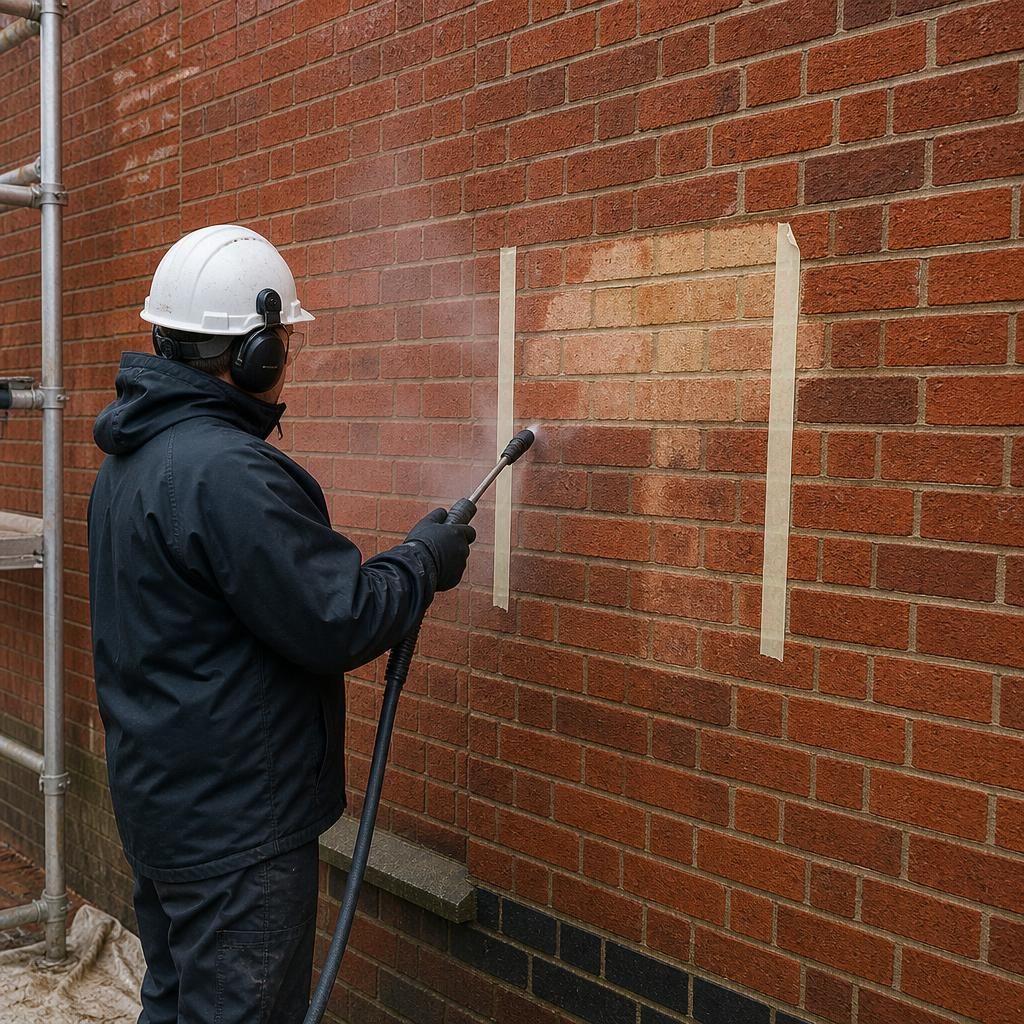
A representative test patch is one of the most important checks when choosing a steam cleaning service for brickwork and masonry. It shows how the surface, mortar and particular type of soiling respond to the proposed temperature, pressure, water flow and cleaning technique before the full area is treated.
The contractor should complete the test in a discreet but typical location, then review it after the masonry has dried. Check for clean, intact brick faces, sound pointing and any changes to coatings or colour. The agreed result should be recorded in the cleaning specification, including areas where staining may remain because removing it would risk damaging the masonry.